Iraq launches overland oil exports to bypass the Strait of Hormuz, signaling a major shift in Middle East energy routes
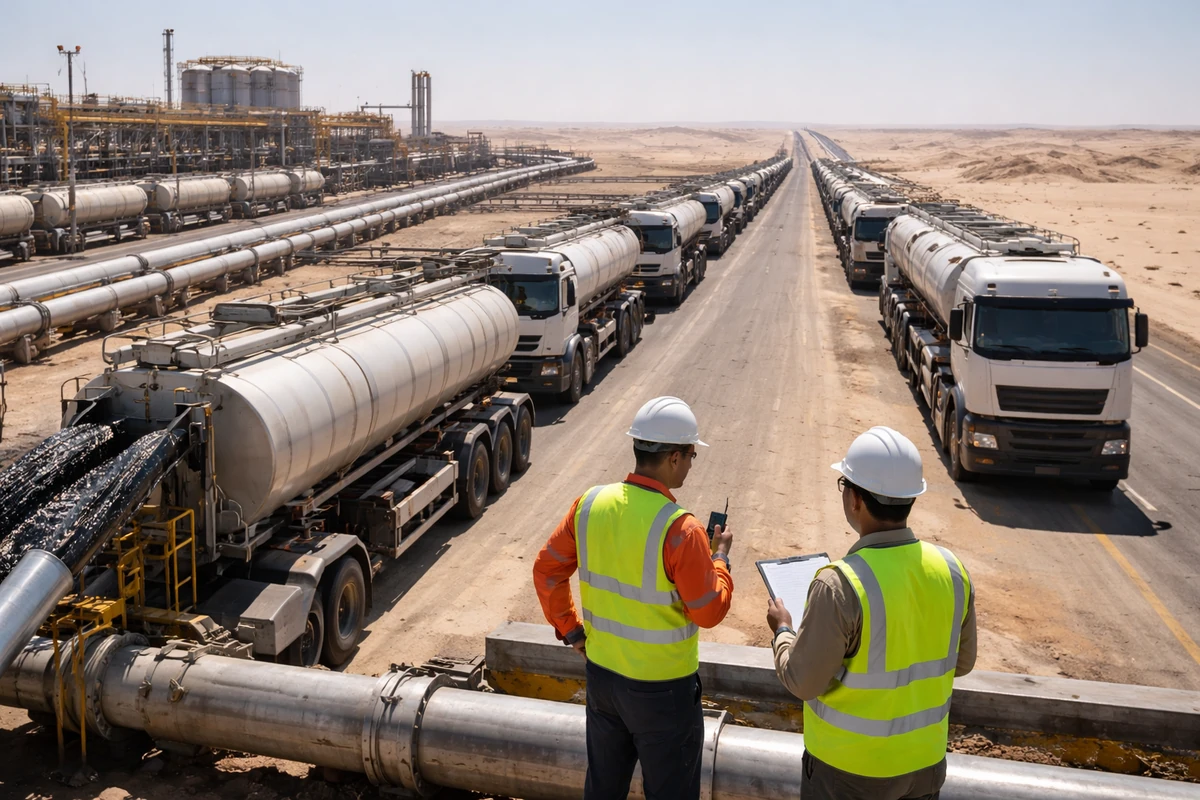
A new route around one of the world’s biggest oil chokepoints
Iraq said on April 2, 2026, that it has begun exporting oil through an overland route designed to bypass the Strait of Hormuz, a narrow waterway at the mouth of the Persian Gulf that has long been one of the most strategically sensitive passages in the global energy trade. The announcement marks a potentially significant shift not only for Iraq’s economy, but also for energy markets across Asia and beyond.
For American readers, the easiest comparison may be this: Imagine if a major share of U.S. oil exports had to pass through a single, vulnerable shipping lane off a geopolitical rival’s coastline, and Washington suddenly found a way to route some of that supply through pipelines and land terminals instead. That is roughly the scale of what is at stake in the Gulf, where the Strait of Hormuz functions as a maritime bottleneck for a substantial portion of the world’s seaborne crude.
Iraq’s government said it intends to use the new route to reduce dependence on Hormuz and eventually move more than 1 million barrels a day through the alternative corridor. To support that goal, officials said they have spent recent months reinforcing pipelines and expanding related infrastructure. If those ambitions are realized, the move could reshape how traders, importers and governments think about risk in the Middle East oil market.
The timing is notable. Tensions involving Iran have repeatedly raised concerns about disruptions in and around the strait. Even when oil keeps flowing, the mere possibility of conflict can rattle markets, push up insurance costs and inject volatility into prices paid by consumers thousands of miles away. Iraq’s decision reflects a broader lesson that energy-importing countries and producing states alike have learned over the last several years: resilience matters almost as much as supply.
That is one reason this development is drawing attention well beyond Baghdad. In South Korea, a country heavily dependent on imported energy, policymakers are likely to see the new Iraqi route as more than a regional logistics story. It may represent a test case in whether Middle East producers can create more reliable supply chains in an era shaped by war, sanctions, maritime insecurity and rising strategic competition.
Why the Strait of Hormuz matters so much
The Strait of Hormuz is one of those places that many Americans may have heard mentioned during military crises, but fewer may fully appreciate in economic terms. It is a narrow channel between Iran and Oman that connects the Persian Gulf to the Gulf of Oman and the Arabian Sea. In practical terms, it is a gateway through which massive volumes of crude oil, condensate and liquefied natural gas move from producers such as Saudi Arabia, Iraq, Kuwait, the United Arab Emirates and Qatar to customers in Asia, Europe and other markets.
Because so much energy supply passes through that single corridor, any threat there can have outsized effects. It does not take a full blockade to move prices. A missile strike, the seizure of a tanker, harassment by patrol boats, or even a surge in political rhetoric can be enough to spook traders. In recent years, markets have repeatedly demonstrated that perceived risk in the Gulf can translate quickly into higher freight costs, steeper insurance premiums and nervous buying by countries that do not want to be caught short.
For the United States, whose direct dependence on Middle East crude has declined from earlier decades thanks to domestic production growth, the strait still matters deeply because oil is priced in a global market. Americans do not get a free pass if trouble in the Gulf drives up benchmark crude prices. The result can still show up at the gas pump, in airline tickets, in shipping costs and in broader inflation pressure.
That is why any effort by a major producer to diversify away from Hormuz gets attention in Washington, Seoul, Tokyo, Beijing and Brussels. It is also why Iraq’s new overland export route is being watched as a strategic development, not merely an engineering project. If Baghdad can move meaningful volumes of oil without relying on that waterway, it may slightly reduce one of the global economy’s chronic pressure points.
Still, bypass routes are not magic solutions. Pipelines can be sabotaged. Overland terminals require security. Cross-border arrangements depend on stable political relationships. And even if Iraq succeeds in sending 1 million barrels a day through an alternative route, a large share of Gulf energy will continue to move through Hormuz for the foreseeable future. In other words, this is not the end of the chokepoint’s relevance. But it could be the start of a more diversified system.
Iraq’s economic gamble and its domestic stakes
For Iraq, the move is about more than geopolitics. It is also a high-stakes economic calculation. Oil remains the backbone of Iraq’s economy and the primary source of government revenue. Like other energy-rich states, Iraq depends heavily on export earnings to fund salaries, public services, infrastructure and social spending. When exports are constrained or prices fall, the effects can ripple quickly through state finances and public stability.
That makes export reliability a core national interest. Iraqi leaders have been under pressure to improve economic performance, create jobs and show that oil wealth can be translated into tangible improvements in daily life. Expanding export capacity through an overland route gives Baghdad a chance to present itself as proactive rather than vulnerable. It allows officials to argue that they are not simply waiting for regional tensions to ease, but are building an insurance policy against them.
The government’s public target of eventually exporting more than 1 million barrels a day via this route is especially ambitious. To put that in perspective, that is enough oil to matter not just to Iraq’s fiscal outlook, but to the balance of supply in Asian markets. If sustained, that level could give Iraq more leverage with buyers, more flexibility in contract negotiations and more confidence in planning around long-term infrastructure spending.
There are political implications at home as well. In Iraq, oil policy is often inseparable from questions of governance, regional power sharing and state authority. New pipelines and expanded logistics networks can create jobs and attract investment, but they also raise familiar questions: Who controls the revenue? Which regions benefit from the infrastructure? Can the state secure the route against armed groups and criminal networks? And will ordinary Iraqis actually see the gains?
Those concerns help explain why international reaction, though broadly positive, is likely to remain cautious. Investors and importing countries will not judge the project solely by the opening announcement. They will be looking for steady operations, transparent governance and evidence that the route can withstand both political shocks and security threats. In energy markets, confidence is earned barrel by barrel, shipment by shipment.
What this means for global oil markets
Iraq’s move comes at a time when global energy markets are already adapting to a new era of fragmentation. The old assumption that supply chains would gradually become more efficient and more globalized has been weakened by Russia’s war in Ukraine, sanctions disputes, Red Sea shipping threats, U.S.-China rivalry and a growing tendency for countries to think in terms of strategic resilience rather than pure market logic.
Against that backdrop, a new Iraqi export corridor could have an impact that extends beyond the headline volume it carries. Markets pay attention not only to current supply, but to optionality, meaning the number of ways producers can get oil to customers. The more routes available, the harder it is for any single disruption to cause panic. That can help moderate volatility, even if the new route does not immediately transform global balances.
For traders, the key questions will be practical. How quickly can Iraq ramp up throughput? How reliable is the infrastructure? What are the transport costs compared with maritime shipment through Hormuz? Are there legal or insurance complications linked to the overland route? And perhaps most important, can Iraq maintain exports through the route during periods of regional tension, when its strategic value would be tested most clearly?
If the answer to those questions turns out to be yes, the route could add a stabilizing element to an often fragile market. That does not necessarily mean prices will fall dramatically. Oil pricing depends on a web of factors, including OPEC+ policy, global demand, refinery conditions, currency movements and broader geopolitical risk. But more secure export pathways can reduce the sort of sudden fear premium that tends to build when traders worry that one incident in one narrow channel could snarl a significant share of global supply.
There is also a signaling effect. Other producers in the region may look at Iraq’s effort as a reminder that export diversification is not optional. It is increasingly part of national security planning. Gulf states have spent years building ports, storage facilities, pipelines and downstream industries to reduce single-point vulnerability. Iraq’s announcement fits squarely into that trend.
For American consumers, the consequences may seem distant, but they are not abstract. Energy shocks travel fast through the global economy. If Iraq can help reduce the market’s exposure to one of the world’s most sensitive chokepoints, the benefits can show up indirectly in more stable fuel costs, steadier shipping prices and less turbulence in commodity markets overall.
Why South Korea is paying close attention
Although the story begins in Iraq, one reason it matters in the Korean context is South Korea’s heavy reliance on imported energy. South Korea is one of the world’s leading industrial economies, but it has relatively limited domestic oil and gas resources. That means it depends on stable overseas supplies to keep factories running, homes heated and transport systems moving. A disruption in Middle East exports is not a distant diplomatic issue for Seoul. It is an immediate economic concern.
For readers in the United States, South Korea’s position is somewhat analogous to that of Japan or much of Europe before the recent scramble for alternative supplies: a highly advanced economy with major manufacturing capacity, deep exposure to global trade and little room for complacency about energy security. South Korea imports large quantities of crude from the Middle East, and routes through the Strait of Hormuz have long been central to that supply chain.
That is why Iraq’s new overland export route could matter to Seoul in several ways. First, it potentially provides an additional layer of supply security. If some Iraqi crude can reach international markets without passing through Hormuz, South Korean refiners may gain more confidence that at least part of their sourcing will be insulated from maritime disruption in the Gulf.
Second, it may improve price stability at the margin. South Korea is particularly vulnerable to volatility because it imports so much of the energy it consumes. Even modest reductions in shipping risk or insurance uncertainty can make a difference, especially for refiners and petrochemical companies operating on thin margins in highly competitive global markets.
Third, the development reinforces a broader policy debate in Seoul about diversification. South Korea has long sought to balance cost, reliability and strategic exposure in its energy procurement. Iraqi oil moving through an alternative route could become part of that balancing act, alongside efforts to widen supplier pools, expand storage reserves and invest in lower-carbon energy sources over the longer term.
There is also a political layer. South Korean officials have generally approached Middle East energy issues with a mix of caution and pragmatism, seeking stable ties with producers while avoiding entanglement in regional rivalries. A more reliable Iraqi export route could be welcomed in Seoul as a practical improvement that does not require dramatic shifts in diplomacy. In that sense, the story resonates in Korea not because it is flashy, but because it speaks directly to the everyday logic of energy security.
The Iran factor and the wider regional picture
No discussion of a Hormuz bypass is complete without acknowledging the shadow cast by Iran. The strait sits next to Iranian territory, and Tehran’s relationship with its Arab neighbors, the United States and the wider international system has long influenced how secure that shipping lane appears. Even when direct conflict does not erupt, tensions involving sanctions, naval incidents and proxy confrontations can increase the perceived risk of moving cargo through the area.
Iraq’s decision to expand overland exports does not necessarily represent a direct challenge to Iran, but it does reduce the degree to which Iraqi oil must rely on a corridor where Iran has geographic proximity and strategic influence. That alone gives the move wider geopolitical significance. In the Middle East, infrastructure is rarely just infrastructure. Pipelines, ports and export terminals often reflect underlying alignments, rivalries and calculations about future crises.
International reaction is therefore likely to be supportive in principle but measured in tone. Energy-importing countries generally favor anything that lowers the risk of supply disruption. At the same time, governments and companies will be careful not to overstate the shift or frame it in ways that inflame regional tensions. The preferred language will likely center on resilience, diversification and market stability rather than confrontation.
There are also legal and security questions that could shape the route’s future. Cross-border energy transport depends on agreements, regulatory clarity and physical protection. If the corridor runs through or near areas vulnerable to unrest, outside partners will want reassurances about insurance, maintenance and emergency response. The route’s international credibility will depend not just on barrels shipped, but on whether those shipments can continue without interruption under stress.
That point is especially important because energy markets have a long memory. Traders remember past outages, sabotage incidents and political disputes that disrupted flows. Iraq will need to demonstrate that this route is not merely available, but durable. If it can do so, Baghdad may gain strategic room to maneuver in a region where dependence on any single transit point has increasingly come to look like a liability.
What comes next
The most immediate test for Iraq’s new export strategy will be operational rather than rhetorical. Announcing a route is one thing; sustaining significant flows through it is another. The coming months will likely be defined by technical questions about capacity, maintenance and throughput, along with close monitoring by buyers, insurers and market analysts.
If Iraq can steadily increase exports along the new corridor, it may emerge as a notable case study in how energy-producing states adapt to a world of persistent geopolitical risk. That could encourage additional investment in regional infrastructure and give importing countries, including South Korea, another reason to revisit how they manage supply exposure to chokepoints such as Hormuz.
For the broader market, the development should be seen less as a dramatic break and more as a meaningful evolution. The Strait of Hormuz will remain essential to the global energy system. But Iraq’s move suggests that producers are no longer willing to treat that dependence as fixed. In a world shaped by sanctions, conflict and fragile shipping lanes, flexibility has become a source of power.
That is ultimately why this story matters beyond Iraq and beyond the Middle East. It reflects a larger shift in the global economy: nations are increasingly redesigning the routes that sustain modern life, from semiconductors to food to fuel, in order to make them less vulnerable to a single point of failure. Oil may be an old industry, but the strategic logic driving Iraq’s decision is distinctly modern.
For American audiences, the lesson is straightforward. What happens in a narrow waterway half a world away can still influence inflation, trade and geopolitical stability at home. And when a country like Iraq finds a new way around that vulnerability, it is not just a local infrastructure story. It is a reminder that energy security remains one of the clearest places where geography, politics and everyday economics still collide.
Comments
Post a Comment