LG’s win over Doosan was about more than bragging rights: In Seoul’s biggest baseball rivalry, the Twins are chasing first place
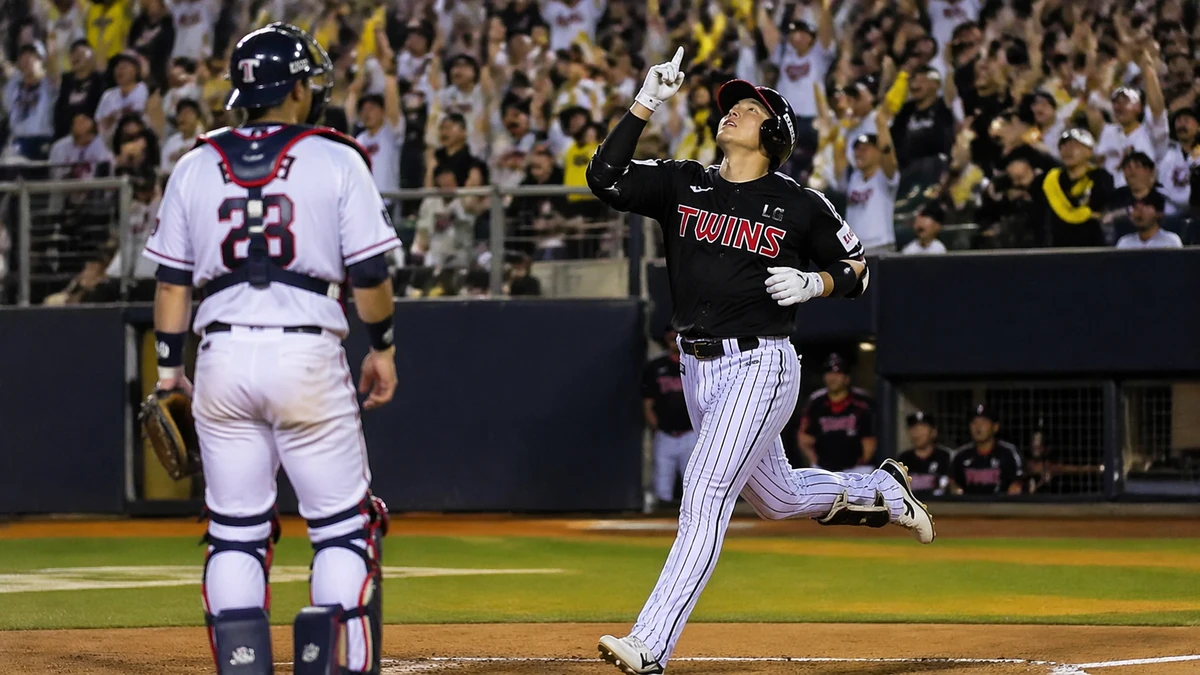
A rivalry game that meant more than one win
On the scoreboard, it looked straightforward enough: LG Twins 4, Doosan Bears 1. In the standings, it counted the same as any other regular-season game in April. But in the KBO League, South Korea’s top professional baseball circuit, Friday’s result at Jamsil Baseball Stadium in Seoul carried the kind of weight that goes beyond a single number in the win column.
LG’s victory in the season’s first so-called “Jamsil rival” matchup pushed the club to 15-7, tightening the race at the top of the league table and moving the Twins within a half-game of first-place KT Wiz, which stood at 16-7. Doosan, meanwhile, fell to 9-13-1 and remained stuck in the lower half of the standings, sharing seventh place and still looking for a formula that can turn an uneven start into something more stable.
For American fans, the easiest comparison is a crosstown rivalry layered on top of a pennant chase. Think Cubs-White Sox if both teams shared the same ballpark, or Yankees-Mets if every meeting unfolded under the same roof, in the same neighborhood, with daily reminders that one club’s momentum is the other’s frustration. That is part of what makes LG-Doosan different from a standard divisional contest: The teams are not just from the same city. They share Jamsil, one of the most recognizable baseball venues in South Korea, and that creates a rivalry built as much on proximity and identity as on standings.
So while the final score was tidy, the significance was not. LG did what strong early-season contenders tend to do. It grabbed control in the middle innings, protected a slim lead without panic, then added insurance late in a way that reflected discipline rather than desperation. Doosan did the opposite. The Bears spent the night reacting, not dictating, and in a rivalry game that can shape mood as much as math, that matters.
At this point in the season, every team can still talk about small sample sizes and plenty of baseball left. That is true. But it is also true that early patterns begin to harden faster than teams would like, especially in a league where momentum, bullpen trust and lineup sequencing can define the first half. LG’s 4-1 win suggested a club with a structure for winning tense games. Doosan’s loss suggested a team still searching for one.
Why Jamsil matters in Korean baseball
To understand why this game resonated, it helps to understand what Jamsil means in the Korean sports landscape. Located in southeastern Seoul, Jamsil Baseball Stadium has long been one of the symbolic homes of the KBO. It is not merely a venue; it is a shared civic stage, where school loyalties, family allegiances and corporate-backed team identities all intersect. Both LG and Doosan call it home, which means their rivalry is not built around travel, regional distance or even ballpark culture in the American sense. It is about who owns the atmosphere in the same space.
That shared-home arrangement intensifies everything. There is no true road trip, no change of scenery, no emotional reset that comes with boarding a plane and leaving town. When these teams meet, they are competing not only for standings points but also for local legitimacy. Fans in Seoul know that a Jamsil rivalry game can change the emotional temperature of a weekend even if it does not dramatically reshape the entire season.
For U.S. readers less familiar with KBO culture, it is also worth noting that Korean baseball often places a strong premium on rhythm and collective flow. Those ideas can sound abstract, but they show up clearly in how games are discussed. Analysts and fans alike pay close attention not just to whether a team won, but to how it scored, when it seized the initiative and whether it looked composed in leverage moments. In other words, a two-run single in the ninth inning may matter less for the raw box score than for what it says about a lineup’s ability to manufacture pressure.
That framework fits Friday’s game almost perfectly. LG did not overwhelm Doosan with power. It did not put up a football score. Instead, it created what Korean baseball observers often describe as a good winning “flow”: an early breakthrough, steady control, and a late inning that removed doubt. Those details are why the game felt like more than a routine April result.
And because this was the first Jamsil rivalry game of the 2026 season, it also set a tone. First meetings in any rivalry are often overinterpreted, but they still matter because they establish emotional leverage. LG entered and left looking like a team with a clear sense of purpose. Doosan left with more questions than answers.
Moon Bo-kyung’s night showed how LG is built to win
If there was one player who best captured LG’s approach, it was Moon Bo-kyung. He delivered a run-scoring hit in the third inning to help the Twins strike first, then came back in the ninth with a two-run single that effectively shut the door. Statistically, those are just RBI hits. Contextually, they were the game.
In the third, LG turned a one-out opportunity with runners at first and third into two runs, getting timely production from Chun Sung-ho and Moon. The inning itself was not explosive, but it was efficient. That distinction matters. Good teams do not always need a crooked-number inning full of extra-base hits. Sometimes they simply need a hitter who can make sure traffic on the bases turns into a lead. LG got exactly that.
The bigger statement came in the ninth. Holding a slim edge, the Twins loaded the bases through consecutive walks to Shin Min-jae and Hong Chang-ki, followed by an intentional walk to Austin Dean. The sequence told its own story. Doosan, trying to avoid the bigger damage that can come from giving a dangerous hitter something to drive, chose a cautious route. Instead of escaping pressure, that decision intensified it. Moon then lined a two-run hit that gave LG the breathing room it had been missing all night.
For American readers, this is the type of inning managers and front offices love because it is repeatable. It was not built on one lucky swing. It started with plate discipline, continued with a strategic decision by the defense and ended with a middle-of-the-order hitter cashing in. Walks, pressure, timely contact: those are not glamorous traits, but over a long season they separate teams that hang around the top from teams that drift back toward .500.
Moon’s performance also highlighted a larger truth about LG’s lineup. A strong offense is not only about star power or home run totals. It is about having someone who can finish an inning that others helped create. The Twins showed that chain in full: on-base ability at the top, enough respect from the opposition to alter pitch selection and sequencing, and a hitter ready to punish a compromised situation. That is a winning blueprint in any league.
More broadly, the game underscored a point Korean baseball people often emphasize: The weight of runs depends on their timing. A run in the third that establishes control is different from a run in the eighth when trailing by five. A two-run single in the ninth of a tense rivalry game does more than pad a lead; it changes the emotional reading of the night. LG did not merely outscore Doosan. It produced in the game’s heaviest moments. That is why the result felt so revealing.
LG is no longer looking sideways; it is looking up
The immediate significance of the win is clear in the standings. LG is a half-game behind first-place KT Wiz, which means the Twins are not just playing well; they are applying daily pressure at the top. In a long season, that can be as important as leading outright. Contenders do not need to be in first every morning. They need to remain close enough that one stumble by the leader can change the picture instantly.
That is where LG sits now. The club’s 15-7 record keeps it squarely in the top tier of the KBO race, alongside KT and SSG Landers, which was also among the early leaders. Even at this early date, the league table appears to be dividing into zones: the clubs above .600 and those already fighting to avoid being left behind. LG’s win helped preserve its place in the group that can realistically think not just about playoff positioning, but about controlling the regular-season race.
That may be the most important takeaway from Friday: LG’s real target right now is not Doosan. It is first place. Rivalry games are emotional by nature, but strong teams treat them as opportunities to advance larger goals. The Twins did that. They took care of the local opponent, yes, but the bigger consequence was preserving pressure on KT and maintaining distance from teams trying to close from behind.
There is a balancing act here. LG cannot focus solely on the leader because third-place clubs can create pressure from below. SSG, for instance, has also been close enough to make every result matter. But that is exactly why a well-managed rivalry win has value beyond sentiment. Lose this game, and LG would have weakened its pursuit of the top while also making the race behind it more uncomfortable. Win it, and the Twins get both benefits at once: the leader remains within reach, and the cushion behind them holds.
Baseball seasons are filled with nights that feel bigger in hindsight than they do in the moment. This could be one of them. If LG continues to contend through the spring and into summer, Friday’s game may be remembered not because of the margin, but because it showed how the club intends to stay in the fight: patient at the plate, calm under rivalry pressure, and opportunistic when the opening finally appears.
For Doosan, the problem was not only losing but how it lost
A one-run defeat in extra innings can be dismissed as bad luck. A wild slugfest can be written off as a strange night. This was neither. Doosan lost in a way that is harder to ignore because it exposed the team’s current limitations without much ambiguity.
The Bears fell behind first, never fully regained control and then watched the game slip away for good in the late innings. In other words, they lost the battle for tempo from start to finish. That is a more concerning pattern than a single mistake or one bad pitch. It suggests a team that still lacks a reliable script for climbing back into games against stronger opponents.
At 9-13-1, Doosan is not buried. It is still early enough for one hot stretch to change the standings dramatically. But the gap to the top is already noticeable, and the path back toward the break-even point of .500 is becoming more demanding. In that context, rivalry games are supposed to serve as launch points. They are high-energy settings where a team can flip a narrative quickly, energize the fan base and carry momentum into the next week. Instead, Doosan handed LG a game that reinforced the Twins’ upward trajectory.
There is also a psychological cost. Because both teams share Jamsil, losses to the other side carry a unique sting. Fans see the same dugouts, the same outfield backdrop, the same home grounds used as a stage for the opponent’s celebration. In the American sports imagination, it would be like losing a marquee series to a co-tenant that then gets to claim symbolic ownership of the building for the night. That is not just a box-score issue. It affects tone, confidence and outside scrutiny.
What Doosan needs now is not necessarily one dramatic overhaul but evidence that it can redirect the flow of a game. That could mean scoring first, mounting a midgame rally or applying late pressure to a bullpen that has grown comfortable. Against LG, it did none of those things decisively. The Bears’ challenge is not only mechanical, in the sense of fixing the bats or stabilizing the pitching staff. It is structural. They need to create innings that feel dangerous to the other side rather than merely hopeful to themselves.
That is why this loss lands harder than the standings alone would suggest. Doosan did not simply drop a rivalry game. It missed an opportunity to define the terms of its own rebound.
The next game now carries even more weight
The two teams were set to meet again Saturday afternoon at Jamsil, with LG sending Tolhurst to the mound and Doosan countering with Choi Min-seok. On paper, it is just the next game in a weekend series. In reality, it now feels like a referendum on whether Friday was an isolated result or the beginning of a more durable storyline.
For LG, the assignment is simple in concept and difficult in execution: repeat the formula. Score early if possible, trust the pitching, and keep the game within a structure that allows the lineup’s patience to matter late. If the Twins can do that again, they do more than win a series. They deepen the sense that this club is playing from a place of maturity and control, not just talent.
For Doosan, the stakes are more urgent. The Bears do not necessarily need a masterpiece, but they do need a different shape of game. They need to put LG on the defensive. They need an inning or two that changes the emotional balance. If Friday’s pattern repeats, the damage will extend beyond one more loss. It will create the impression of a team being pulled backward by a rival that already looks more complete.
Starting pitchers always matter, but in moments like this they represent more than their own stat lines. Tolhurst is pitching to sustain a chase at the top of the league. Choi is pitching to help his team find an on-ramp back into the season. That is a lot to ask in April, yet that is precisely how early series between teams in opposite directions can start to feel. One side is trying to make a good week into a trend. The other is trying to stop a bad stretch from turning into an identity.
These are the kinds of series that tell observers when the standings are beginning to mean something real. Not final, certainly, but real. The KBO season is long enough to allow for reversals, but not so long that teams can comfortably ignore the clues in front of them. LG looks like a club with a credible shot at first place. Doosan looks like a club that needs to rediscover the basics of dictating a game.
A snapshot of a league starting to sort itself out
What happened at Jamsil also fit a broader league-wide pattern. Around the KBO, the first month often serves as a sorting period, when preseason expectations collide with actual depth, bullpen reliability and lineup consistency. By late April, the table can begin to show which teams are built to sustain pressure and which are vulnerable to drift.
That appears to be the stage the league is entering now. KT, LG and SSG have all been playing at a pace that suggests legitimate top-tier ambitions. Other clubs, including Doosan, are already feeling the pressure of not letting the leaders get too far out in front. This does not mean the race is settled. Far from it. But it does mean games like Friday’s start to matter in a more consequential way, because they help determine whether the league remains tightly packed or begins to separate into tiers.
For American readers familiar with the rhythms of Major League Baseball, the comparison might be the point in late April or early May when analysts stop saying “it’s early” quite so automatically. Records still fluctuate, but the tone changes. A team starts looking like a real division threat. Another starts hearing questions about whether its roster has enough. That is where these KBO clubs are moving now.
LG’s 4-1 win over Doosan was a reminder that in baseball, the most important story is not always the loudest one. There was no dramatic comeback, no extra-inning thriller, no viral chaos. Instead, there was something subtler and perhaps more revealing: a contender acting like a contender, and a struggling team failing to interrupt that script.
That is why the game mattered. Not because LG beat its rival in a shared stadium, though that always matters in Seoul. And not only because the Twins gained ground in the standings, though they did. It mattered because the way LG won suggested a club with a coherent plan for the season’s next phase. In a league beginning to take shape, that may prove far more important than the four runs themselves.
Comments
Post a Comment