NCT’s Mark exits SM and the group, raising bigger questions about how K-pop’s franchise model holds together
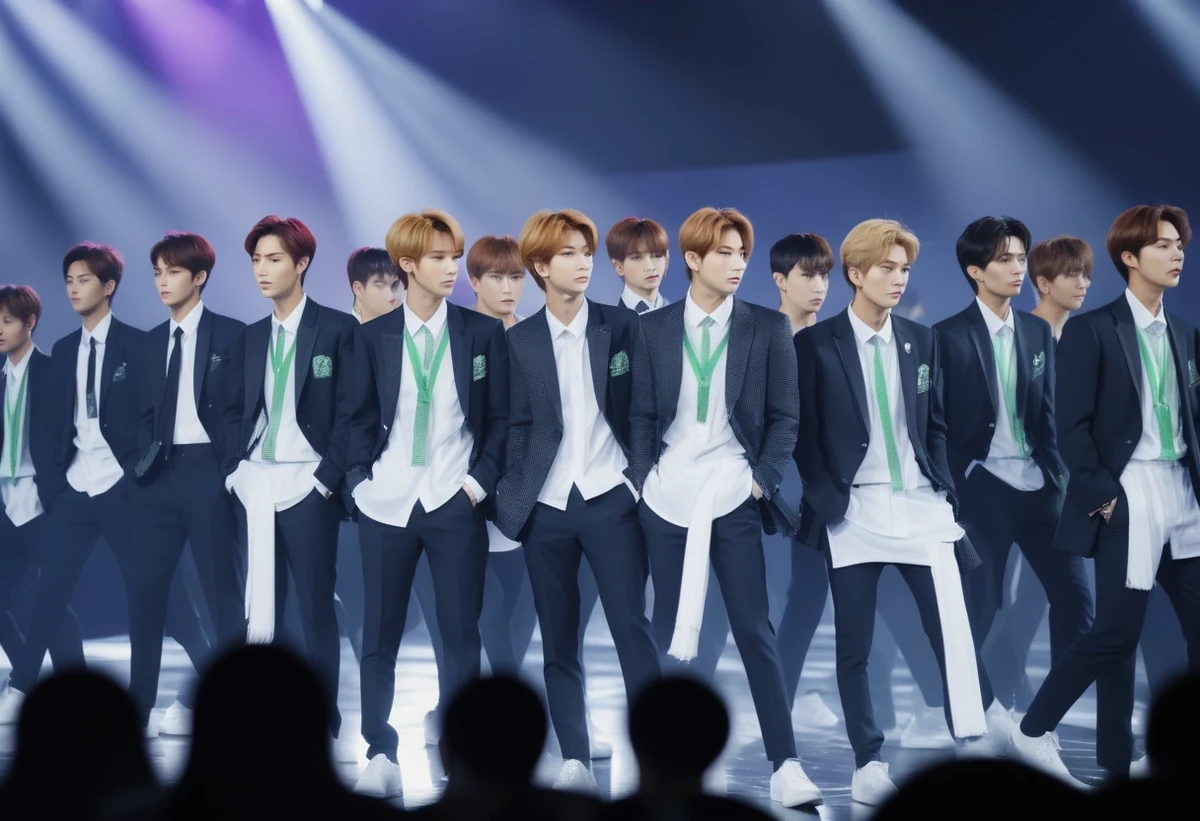
A major K-pop departure with consequences beyond one lineup change
Mark, one of the most recognizable faces in NCT, is leaving both the group and SM Entertainment, according to a report by South Korea’s Yonhap News Agency on April 3. In the fast-moving world of K-pop, where member changes, contract renewals and agency statements can all become headline news in a matter of hours, that may sound at first like a familiar entertainment-industry development. It is not. For the Korean music business, and for global fans who have followed NCT as one of the defining projects of the modern idol era, this is the kind of event that forces a much bigger conversation.
The significance starts with who Mark is inside the NCT ecosystem. For years, he has been regarded as one of the brand’s central figures: a performer with strong rap skills, stage presence, broad fan recognition and an ability to communicate across markets. In a group structure as large and fluid as NCT’s, visibility is not distributed evenly. Some members become emotional anchors for fans, shorthand for the group’s identity and reliable drivers of attention in a crowded marketplace. Mark has long fit that description.
But the story is not only about a popular idol deciding to move on. It is also about timing and what his exit says about the current K-pop business model. The Korean music industry in 2026 is deep into an era shaped by global touring, fan-platform competition, multiteam brand strategies and more sophisticated negotiations over artists’ rights and careers. In that environment, the departure of a key member from one of K-pop’s most ambitious expandable-group concepts lands less like a routine personnel update and more like a stress test for the system itself.
For American readers, one useful comparison might be the difference between a cast member leaving a hit franchise and a star departing a traditional band. NCT has elements of both. It was built not simply as one fixed act, but as a scalable entertainment property with multiple units, rotating combinations and a long-term corporate strategy behind it. That makes member changes easier to imagine on paper than in practice. Companies can say the system is bigger than any one person. Fans, however, usually remember the people first.
That tension is at the heart of why this moment matters. The contract may be over, but the commercial and symbolic impact is just beginning. In K-pop, departures are rarely confined to legal documents. They ripple through fan spending, tour expectations, streaming behavior, online discourse and the company’s reputation for managing talent. When a star with Mark’s profile exits, the market immediately begins asking the same question: Was this a brand built to withstand change, or a system that depended more heavily on certain faces than it wanted to admit?
Why Mark’s role in NCT mattered so much
To understand the scale of this news, it helps to understand how NCT works. Unlike many pop groups that debut with a fixed lineup and a straightforward identity, NCT was designed by SM Entertainment as an expandable brand. Over time, that concept produced multiple subunits, shifting combinations of members and regionally targeted strategies. It was one of the boldest attempts by a major K-pop agency to turn the idol group into something closer to a modular franchise.
That structure gave SM flexibility. It allowed the company to spread members across projects, tailor music and promotions to different audiences and keep the brand active on multiple fronts at once. From a business standpoint, it was a sophisticated answer to a central K-pop challenge: how to extend the commercial life of a group while continuously generating new narratives for fans to follow.
Yet the NCT model has always carried an internal contradiction. The more a company emphasizes system, scale and interchangeability, the more it risks overlooking the fact that fandom is deeply personal. Fans may buy into the larger brand, but they usually form their strongest attachment to individual members: their voices, personalities, friendships, growth arcs and perceived struggles. In American terms, it is the difference between liking the Marvel brand and having a favorite character whose absence changes whether you show up for the next movie.
Mark occupied an unusually important place in that emotional equation. His visibility across the NCT brand, along with his performance credibility and broad appeal, made him more than a contributor in a large ensemble. He was one of the figures who helped casual audiences recognize NCT and helped committed fans connect the sprawling structure into something coherent. In groups with many members, not everyone carries the same symbolic weight. Replacing technical functions, like lines in a song or formations in choreography, is one thing. Replacing symbolic centrality is another.
That is why this departure is so difficult for any entertainment company to manage with a simple “the team will continue” message. Of course the team can continue. The more important issue is whether fans will continue to feel the same urgency, loyalty and emotional investment. A lineup can be adjusted overnight. Rebuilding trust, habit and attachment takes far longer.
The larger issue: K-pop’s system-versus-star dilemma
For years, the K-pop industry has tried to refine a system powerful enough to reduce dependence on any one artist. Training pipelines, elaborate debut planning, tightly coordinated management, digital fan communities and high-volume content production all serve that goal. The agency, in theory, creates a durable platform that can outlast individual careers. This model has helped Korean entertainment companies scale internationally in a way few music industries have managed.
But the market keeps revealing a stubborn truth: Stars still matter, and often more than the system would like to admit. Fans may enter through a group, yet many remain because of the bond they form with specific members. As K-pop has globalized, that dynamic has only intensified. International audiences discover artists through clips, fancams, interviews, livestreams and social media moments that spotlight individual charisma. Personal branding travels fast. Sometimes it travels faster than the group’s official narrative.
Mark’s exit throws that contradiction back into view. SM can point to NCT’s structure and history of evolution. Industry analysts can note that entertainment companies have weathered departures before. Both statements are true. But neither erases the possibility that a key artist’s departure can expose the limits of an otherwise sophisticated system. In fact, the more elaborate the system becomes, the more revealing it is when one highly important person leaves and the market reacts as if a foundation stone has shifted.
This is not unique to Korea. American entertainment has seen versions of the same pattern. Streaming platforms and studios often talk about intellectual property as the main asset, but franchises still rise and fall on whether audiences remain attached to the people embodying them. The music business does something similar when labels talk about catalogs and pipelines while fans obsess over singular artists. K-pop, despite its reputation for highly managed production, has never escaped this basic cultural rule. It may industrialize stardom, but it cannot fully standardize emotional attachment.
The question now is whether the K-pop business is entering a period in which artists with enough recognition, leverage and global reach increasingly choose paths outside traditional long-term exclusive arrangements. If so, Mark’s departure will not be remembered only as a major NCT story. It may come to represent a broader shift in bargaining power between agencies and the stars they helped create.
What this means for SM Entertainment and the NCT brand
For SM Entertainment, the immediate challenge is not simply operational. It is reputational. In the Korean idol industry, fans are often as sensitive to how a change is handled as to the change itself. A departure that appears respectful, clear and professionally managed can still be painful, but it is less likely to spiral into prolonged backlash. A departure that feels abrupt, opaque or poorly communicated can damage confidence in the company far beyond one artist or one group cycle.
That puts pressure on SM to do several things at once. It needs to explain the transition in a way that appears coherent and respectful, even if all underlying details are not publicly disclosed. It needs to present a credible roadmap for NCT’s future activities. And it needs to reassure fans that the remaining members are not being left in uncertainty. In K-pop, ambiguity is rarely neutral. It invites rumor, factionalism and competing narratives that can quickly dominate online conversation.
There is also a practical artistic issue. NCT’s music and performances have never been reducible to a single member, but neither are they untouched by the loss of a central figure. A departure like this affects line distribution, stage dynamics, promotional chemistry, interview tone and the broader story fans tell themselves about the group. That story matters more than outsiders sometimes realize. K-pop fandom is not built only on songs. It is built on continuity, intimacy and a long-running sense of shared history.
Another challenge is what Korean industry observers sometimes describe as fan fatigue. Long-running idol brands ask their audiences to adapt repeatedly: to new units, new concepts, new schedules, changing interpersonal dynamics and now, sometimes, major departures. Each adjustment requires emotional labor from fans. They must decide whether to stay all-in, redirect their loyalty toward an individual member, or step back from spending altogether. When companies ask for too many recalibrations in too short a period, some portion of the audience inevitably disengages.
That matters because K-pop fandom is not just symbolic support. It is measurable economic behavior. Album purchases, concert tickets, merchandise, paid community subscriptions, voting activity, streaming campaigns and social promotion all reflect fan confidence. A large brand like NCT may not see an immediate collapse. But over time, the numbers can reveal whether the group was truly resilient or whether its stability depended more heavily on certain members than internal messaging suggested.
In that sense, SM is now facing a test of brand elasticity. Can NCT remain compelling to the public and emotionally satisfying to its fandom after losing one of its most recognizable members? The answer will not come from one press release. It will emerge over comeback cycles, tour attendance, digital engagement and the mood of the fandom over months, not days.
Why fandom reaction matters so much in Korea’s pop economy
In the United States, it is easy to think of fans mainly as listeners or consumers. In K-pop, fandom often functions more like a mobilized economic base. Dedicated fan communities do not merely react to content; they actively shape commercial outcomes. They buy multiple album versions, organize streaming drives, fill arenas, fund ad campaigns, elevate social media trends and provide the kind of recurring revenue that many Western acts would envy.
That is why, when a major member departure is announced, the industry immediately watches fan sentiment with extraordinary attention. The emotional response is inseparable from the business response. Anger can become canceled orders. Confusion can become lower participation. Loyalty can become strong support for a departing artist’s next chapter. A call for patience can buy time for a company to stabilize the situation. In every case, feelings become metrics quickly.
Two issues are likely to matter most here. The first is transparency. Fans do not necessarily expect every contractual detail to be made public. But they do expect a message that feels credible and respectful. If the company and the artist appear to be treating each other professionally, audiences are more likely to absorb the news without immediate escalation. If the messaging feels vague or evasive, online speculation can fill the gap within minutes.
The second issue is certainty about what comes next. If remaining group activities are clearly outlined, fans have something concrete to hold onto. If the future appears undefined, anxiety spreads more easily through the fandom. In the age of global social platforms, that process happens fast. Korean statements are translated instantly, clipped into posts, debated in real time and reinterpreted across markets from Southeast Asia to North America and Europe. When official information is sparse, unofficial narratives often win the first round.
That dynamic has become one of the defining features of modern K-pop. Entertainment companies no longer communicate only with a domestic fan club and local media. They are managing a multilingual, permanently online audience that reads tone as carefully as content. A short, ambiguous statement may have once contained a crisis. Now it can amplify it. For that reason alone, how SM and Mark frame this separation could matter almost as much as the separation itself.
Fandom is also capable of split responses. Some fans will prioritize Mark’s independence and support whatever he does next. Others will focus on protecting NCT and the remaining members. Still others may direct frustration at the company, especially if they feel a larger pattern of management issues is being confirmed. Those reactions are not merely emotional camps; they can lead to different spending behaviors, which is why agencies and investors alike take them seriously.
A changing contract landscape for established idols
One of the most important points in this story is that the end of an exclusive contract does not automatically mean conflict, collapse or career risk. In fact, the opposite may increasingly be true. Across the Korean entertainment business, contract structures have been growing more flexible. Artists with enough market value can separate functions that were once bundled together under one agency: recorded music, management, touring, brand endorsements, overseas distribution and creative production.
That shift reflects a broader maturation of the industry. Earlier generations of idols often had fewer options and depended more heavily on a single company to provide training, debut opportunities, media access and career continuity. Today, top artists operate in a more diversified ecosystem. Global digital platforms, stronger personal followings and more international business partners mean that a recognizable performer may no longer need one all-encompassing agency relationship to remain viable.
For someone in Mark’s position, that creates multiple possible paths. He could prioritize solo music. He could pursue a project aimed more directly at international markets. He could take greater creative control or distribute responsibilities across different partners. None of those outcomes has been fully defined by the information currently available, and it would be premature to state a specific direction as fact. Still, the range of plausible options is itself part of the story.
For agencies, this trend presents a strategic challenge. The traditional formula — launch the artist, retain the artist for the long term, keep most activities under one roof — is no longer guaranteed to hold. If companies want to keep top performers, they may need to offer more than exposure and infrastructure. They may need to address workload, revenue split, health, creative participation, scheduling flexibility and long-term career design with much greater sophistication.
That is especially true in groups that operate under a multiteam or multiunit structure. Such models can increase efficiency and visibility, but they can also create concentration risk, where a few heavily featured members carry a disproportionate share of the brand’s symbolic and promotional burden. Over time, those members may have stronger incentives to consider careers outside the original framework, particularly if they believe their individual brand has become strong enough to stand on its own.
If that is where the K-pop industry is headed, then Mark’s departure may serve as a case study in the next phase of idol labor relations: not a dramatic break with the old system, but a gradual rebalancing of power within it.
What American audiences should watch next
For readers in the United States and other English-speaking markets, the temptation may be to reduce this to a familiar celebrity story: a star leaves a major company and goes solo. But that framing misses what makes K-pop distinct. Korean idol groups are not just bands. They are highly structured entertainment ecosystems, supported by years of training, dense fan communities and business models that depend on sustained emotional participation. That is why a single member’s exit can trigger questions about corporate strategy, fandom psychology and the future of a franchise-style group format.
The next phase of this story will likely unfold on several levels at once. First is communication: what SM says, what Mark says and whether those messages feel aligned or strained. Second is continuity: how NCT reorganizes musically and publicly without one of its most visible members. Third is market performance: whether fans continue to spend, stream and show up with the same intensity. And fourth is precedent: whether other artists and agencies interpret this as another sign that top-tier idols can successfully renegotiate the terms of their careers.
There is also a cultural lesson here for global audiences that consume K-pop mainly through songs and viral clips. The Korean Wave, or hallyu, has often been celebrated as a model of creative export, and for good reason. It has produced a level of international influence once thought unlikely for a non-English-language pop system. But behind that success are constant negotiations over labor, branding, identity and sustainability. The polished stage performance is only the visible surface of a much more complex machine.
Mark’s departure does not prove that the machine is broken. It does, however, suggest that the machine is under new pressure. As artists gain more leverage and audiences become more attached to individual narratives, the balance between company-designed systems and star-driven value becomes harder to manage. NCT was built as one of K-pop’s clearest experiments in scale and flexibility. If a change this significant forces the brand into a period of recalibration, the rest of the industry will be watching closely.
In the end, that is why April 3 drew so much attention in Korea’s music market. It was not simply because a well-known idol left a famous company. It was because the move touched nearly every major question facing K-pop in 2026: whether multiteam brands can remain emotionally cohesive, whether fans stay loyal to systems or to people, whether agencies can still secure long-term control over top talent and whether the future of K-pop belongs more to corporate architecture or to artists who now know their own market power.
For now, the departure leaves both uncertainty and opportunity. For SM and NCT, it is a test of resilience. For Mark, it may be the opening chapter of a more independent career. And for the industry, it is another reminder that even in one of the world’s most carefully engineered pop systems, the human element remains the hardest thing to replace.
Comments
Post a Comment