Why South Korea Is Turning to AI Now
South Korea is preparing for one of the biggest tests yet of how artificial intelligence can reshape everyday medicine, and the stakes are much larger than adding another digital tool to a doctor’s office. The country’s Health Ministry said April 9 it plans to push what it calls an AI transformation across the full cycle of chronic disease care, from predicting who is likely to get sick to helping patients stay on medication, flagging early warning signs of complications and preventing hospital readmissions.
For American readers, think of the challenge this way: imagine trying to manage heart disease, diabetes and high blood pressure for tens of millions of people in a system already under strain from rising costs and an aging population. That is the corner South Korea is turning into now. The issue is not a sudden epidemic but a quieter, more familiar one: the long, expensive burden of chronic illness that accumulates over years and, if poorly managed, ends in strokes, heart attacks, kidney failure, blindness and repeated hospital stays.
South Korea’s numbers help explain the urgency. Roughly 13 million people are believed to be living with hypertension, or high blood pressure. About 6 million have diabetes. Around 12 million are estimated to have dyslipidemia, a disorder involving unhealthy cholesterol or fat levels in the blood that sharply raises cardiovascular risk. Those are enormous figures in a country of about 51 million people. Layer onto that a rapidly aging society. By 2026, more than 20% of South Korea’s population is projected to be 65 or older, pushing the country firmly into what demographers call a “super-aged” society.
That demographic shift matters because chronic diseases are fundamentally management problems. They are rarely solved in one dramatic intervention. A patient might see a doctor for a few minutes, get a prescription and a warning to eat better or exercise more, then return home to months of real-life obstacles: missed pills, delayed lab work, transportation challenges, confusing care transitions and symptoms that can worsen quietly between appointments. South Korean policymakers increasingly believe the old model of waiting for people to show up in clinic is not enough.
The government’s message, in effect, is that the country can no longer afford to manage chronic disease only after a patient is already in trouble. AI, officials hope, can help shift the system upstream.
The Scale of the Chronic Disease Burden
The broad global context is familiar. Chronic diseases account for roughly 80% of deaths worldwide, according to figures widely cited in public health discussions. That includes cardiovascular disease, diabetes and other long-running illnesses that dominate mortality in both rich and middle-income countries. South Korea, despite its reputation for modern hospitals, universal health insurance and high life expectancy, is not exempt.
In some ways, South Korea resembles the United States and other developed nations: infectious disease threats still matter, but the biggest pressure on the health system comes from conditions that require continuous, coordinated care over years. High blood pressure often has few obvious symptoms until it contributes to a stroke or heart attack. Type 2 diabetes can quietly damage the kidneys, eyes and nerves long before a patient feels acutely ill. Dyslipidemia may not seem urgent to a patient at all, even though it can be part of the same pathway toward a major cardiac event.
Those diseases also create an economic squeeze that extends well beyond doctor visits. Once diabetes progresses to kidney complications, the costs are no longer limited to medications and routine checkups. They can expand to dialysis, hospital admissions and treatment for cardiovascular events. Stroke survivors may need long rehabilitation or family caregiving. Older adults with heart failure can cycle in and out of emergency rooms and inpatient wards. The bill is paid not only by a national insurance system but also by households, employers and family members who shoulder lost income and caregiving labor.
For South Korea, this pressure is especially intense because the country is aging quickly after decades of low birth rates. In American terms, it is as if the Medicare-era share of the population were growing rapidly while the rest of the health system still relied heavily on brief office-based encounters and fragmented data. The result is a mismatch between the type of illness people have and the structure of the care system designed to treat it.
The government’s AI push reflects recognition that the hardest part of chronic disease treatment is not writing the prescription. It is everything that happens after the patient leaves the exam room.
What “Full-Cycle AI” Actually Means
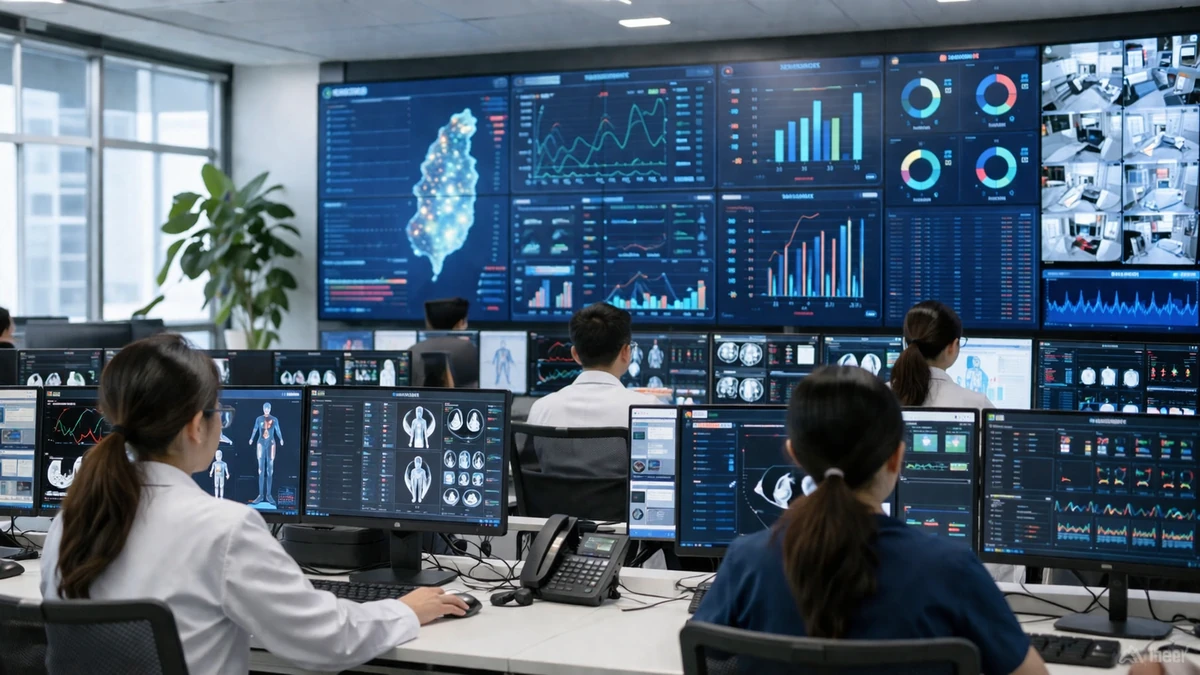
One of the more important details in South Korea’s plan is that officials are not talking only about AI as a diagnostic tool, such as software that reads an X-ray or scans a retinal image. Instead, they are talking about what amounts to a data-driven operating system for chronic disease care.
That “full-cycle” concept can be broken down into several stages. First comes risk prediction and early screening. Using health checkup results, medical histories, prescription records, family history, weight changes and lifestyle information, an AI system could identify people at high risk of developing hypertension or diabetes in the next one to three years. This would be less about replacing a doctor’s judgment and more about helping the system find people before they become expensive emergency cases.
Second is early intervention after diagnosis. Many patients fall off the care pathway soon after they are first told they have a chronic disease or pre-disease condition. Borderline lab results can seem abstract. Starting a lifelong medication regimen can feel overwhelming. AI-supported systems might be used to prompt follow-up education on diet, exercise and medication adherence during this vulnerable period, when habits are still being formed.
Third is long-term monitoring. This is where the technology becomes more familiar to Americans who have seen the rise of smartwatches, remote blood pressure cuffs and continuous glucose monitors. South Korean officials envision a care model that incorporates data from home blood pressure devices, glucose sensors, pharmacy dispensing records, mobile questionnaires and possibly wearable activity trackers. The idea is not simply to collect more information, but to spot meaningful changes while the patient is still at home.
Fourth is deterioration prediction and triage. A patient whose blood sugar rises repeatedly at dawn, whose weight suddenly increases, whose physical activity drops sharply and who fails to pick up a prescription may be moving toward a serious problem. For someone with heart failure, a modest gain in weight can signal fluid retention and impending decompensation. AI tools could be used to rank which patients need attention first so nurses, dietitians, coordinators and physicians focus scarce time on the highest-risk cases.
Fifth is complication prevention and post-acute management. Many of the worst outcomes in chronic disease occur because essential screenings and follow-up tests are delayed or skipped. An AI-enabled system could identify patients overdue for kidney function tests, retinal exams or foot checks and trigger reminders or outreach before a preventable complication becomes permanent.
In plain English, South Korea is trying to use AI less like a futuristic gadget and more like a traffic control system for chronic disease.
Why the Promise Is So Appealing
The strongest argument for this strategy is that it targets one of the most wasteful features of modern medicine: waiting until a patient becomes expensive. In both South Korea and the United States, healthcare systems are far better at treating acute crises than they are at preventing them. AI’s promise is that it may help narrow that gap by spotting deterioration earlier and making it harder for patients to disappear between appointments.
That could be especially valuable for conditions that are easy to underestimate. High blood pressure is notorious for being silent. Some patients look fine in a clinic but record significantly higher readings at home, a phenomenon sometimes called masked hypertension. Others refill prescriptions irregularly or take medicine inconsistently while appearing stable in brief office visits. In diabetes care, blood glucose values alone do not always reveal the whole picture; changes in sleep, activity, weight or meal patterns can be part of a worsening trend before a crisis emerges.
If AI tools work as intended, they could help clinicians intervene before “something big” happens. That means fewer strokes, fewer heart attacks, fewer preventable emergency room visits and fewer costly admissions for heart failure or diabetic complications. International research has repeatedly suggested that remote monitoring and personalized feedback can lower readmission rates and reduce emergency use in certain high-risk patient groups, though results vary depending on how the program is designed and which patients are enrolled.
There is also a major access argument. South Korea has world-class urban hospitals, but like many countries it faces regional gaps, workforce shortages and practical barriers for older adults, especially in rural or coastal areas. For an elderly person with limited mobility, traveling for routine monitoring can be burdensome. For someone living alone, deterioration may go unnoticed until it becomes dangerous. In those cases, AI-assisted home monitoring is not merely a convenience. It can be a way to sustain treatment continuity.
Done well, the model could also strengthen primary care rather than concentrate power in big hospitals. That distinction matters. If AI becomes a premium service available mainly through large medical centers in Seoul, it could widen existing inequalities. But if neighborhood clinics and smaller regional hospitals get standardized tools that help them identify high-risk patients and coordinate with specialists when necessary, the effect could be the opposite.
The key question is whether South Korea can build AI into the workflow of ordinary care, not just pilot it in glossy demonstrations.
The Hard Part Is Not the Technology
For all the excitement around AI, the biggest obstacles are likely to be institutional, not computational. South Korea’s own discussion around the policy reflects this reality. Reimbursement is one of the first hurdles. If physicians, nurses and care coordinators are expected to review remote data, call patients, adjust care plans and document interventions, someone has to pay for that work. Without a payment structure, AI alerts risk becoming yet another administrative burden layered onto already busy clinicians.
This is a familiar debate in the United States, where telehealth, remote patient monitoring and value-based care models have all run into the same problem: technology can generate information, but information does not improve outcomes unless healthcare workers have the time and incentive to act on it. South Korea’s single-payer National Health Insurance system gives the government more leverage than U.S. insurers have individually, but it does not eliminate the challenge. If the reimbursement system remains geared toward in-person visits and procedures, then “full-cycle AI” may remain more slogan than system.
Data integration is another major barrier. Chronic disease care draws on many different streams of information: hospital electronic medical records, insurance claims, pharmacy records, national health screening data, home monitoring devices and patient-reported inputs. Those datasets are often stored in separate silos, formatted differently and governed by different institutions. AI systems tend to look impressive when fed clean, comprehensive datasets in controlled settings. Real health systems are much messier.
Then there is the question of alert fatigue. Clinicians already deal with endless notifications from electronic systems. If AI tools flood medical staff with warnings but do not clearly prioritize which ones matter, the result may be more burnout rather than better care. The most important design question may not be what the algorithm can detect, but who responds when it does. If an alert flags a likely medication adherence problem, does a nurse call the patient? Does a pharmacist intervene? Does a care coordinator arrange follow-up? Technology without a human response pathway is just noise.
Algorithm bias is another concern, especially in healthcare systems that move quickly to automate risk scoring. Bias does not necessarily mean overt discrimination written into code. It can emerge when models are trained on incomplete or unrepresentative data, when they perform differently across age groups, regions or socioeconomic backgrounds, or when proxies for health risk unintentionally encode inequality. In South Korea, where rural access, income disparities and digital literacy gaps all shape care, AI could misclassify patients if those social realities are not accounted for.
Privacy may prove just as politically sensitive. A truly integrated chronic disease system would likely combine insurance claims, clinical records, biometric data and home-generated data points. That is enormously valuable for care coordination, but also raises questions about consent, storage, cybersecurity and secondary use. In a country with high digital adoption, public expectations around convenience are strong, but so are concerns about surveillance and data misuse. Health information is among the most sensitive categories of personal data anywhere.
What Korea’s Experiment Could Mean Beyond Korea
South Korea’s push matters beyond its own borders because it sits at the intersection of several global trends: rapid aging, mounting chronic disease costs, high digital connectivity and political pressure to show that AI can solve real social problems rather than just generate hype. Many countries, including the United States, are asking versions of the same question. Can AI make healthcare more proactive, more personalized and less wasteful?
South Korea may be unusually well positioned to try. It has a technologically sophisticated population, broad health coverage, substantial national health screening infrastructure and a government capable of pushing policy direction across the system. It also has one of the world’s fastest-aging populations, which gives officials strong incentive to act quickly. In that sense, the country can serve as a kind of early stress test for AI-enabled chronic care in an advanced economy.
American policymakers and healthcare executives will likely be watching closely, even if the systems differ. The U.S. is more fragmented, more market-driven and more uneven in digital access. But the underlying problem is similar. The United States spends enormous sums on diseases that often become catastrophic only after years of inconsistent management. South Korea’s effort is a reminder that the most important AI applications in medicine may not be the flashiest ones. They may be the ones that help a patient remember medication, catch an overdue eye exam or prompt intervention before a hospitalization.
There is also a cultural dimension worth explaining. South Korea’s healthcare system is often praised for speed and access, but like many East Asian societies it has long relied on a high-volume, visit-centered pattern of care, especially in outpatient settings. Brief consultations are common. That can work reasonably well for acute care but is less ideal for behavior-heavy chronic illnesses, where success depends on what patients do every day outside the clinic. The AI transition now under discussion is, in part, an attempt to compensate for that longstanding weakness.
If it succeeds, the lesson for other countries will not simply be that AI is useful. It will be that healthcare systems need to be reorganized around continuity, follow-up and prevention if they want technology to matter.
The Real Test Ahead
South Korea’s announcement marks the beginning of a policy trial, not the end of one. The phrase “AI transformation” can sound sweeping, but chronic disease care is unforgiving to vague promises. Success will depend on practical details: whether reimbursement rewards continuous management, whether data systems can actually talk to one another, whether rural clinics get support, whether privacy protections are credible and whether patients trust the tools enough to stay engaged.
There is a risk, as in many AI initiatives, that the conversation will focus too much on the software and too little on the healthcare workers and patients expected to use it. Chronic disease care is not a one-click solution. It depends on habit, trust, motivation, transportation, family support and the ability to navigate a bureaucracy. No algorithm erases those realities.
Still, the underlying logic of South Korea’s move is hard to dismiss. When a country is facing millions of people with hypertension, diabetes and lipid disorders, alongside a swelling elderly population, the cost of doing nothing becomes its own kind of policy decision. Waiting for patients to worsen is not neutral. It is expensive, inequitable and increasingly unsustainable.
That is why South Korea’s AI push deserves attention. It is not just another digital health headline. It is a test of whether a modern healthcare system can move from treating chronic illness as a series of isolated appointments to managing it as a continuous, data-informed relationship. For a rapidly aging democracy trying to keep both patients and public finances afloat, that may be one of the defining health policy questions of the next decade.
And for other countries watching from the outside, including the United States, the most revealing part of the experiment may be this: whether AI can help medicine do something deceptively simple but historically difficult — find people earlier, keep them connected and prevent avoidable suffering before it becomes a crisis.
Comments
Post a Comment