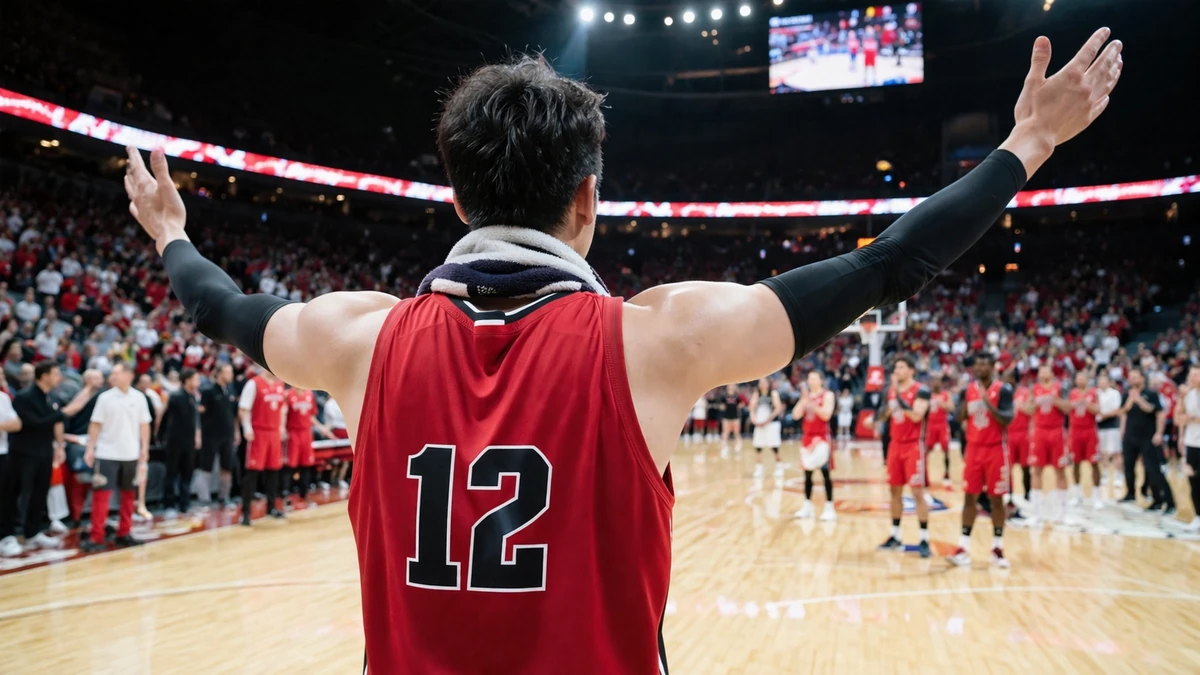
The End of an Era for Korean Basketball
The announcement of Ham Ji-hoon’s retirement on April 9, 2026, marks more than just the departure of a single player. For Ulsan Hyundai Mobis and the Korean Basketball League (KBL), it is the loss of a cornerstone player whose influence extended far beyond scoring stats. After 18 seasons with Hyundai Mobis, Ham’s decision to retire leaves a significant gap in both the team’s structure and the broader KBL landscape, calling attention to issues facing the league, such as the evolving role of domestic big men and the future of the league’s tactical direction.
Ham Ji-hoon’s Unique Legacy in Korean Basketball
Ham’s career trajectory is unlike that of many other stars in the league. He was not known for flashy scoring titles or highlights, but rather for his consistency and tactical awareness. Throughout his 18 seasons, Ham maintained double-digit scoring averages and was a vital part of Hyundai Mobis’ operations, both offensively and defensively. His skill set as a high-post passer and his ability to read defensive rotations helped bridge the gap between the team’s defense and offense. In a league often dominated by foreign big men and young, fast-paced guards, Ham’s decision-making speed and his unique playstyle set him apart as one of the last of his kind in Korean basketball.
Why the ‘One-Club’ Legacy is Rare Today
In today’s professional sports landscape, particularly in basketball, players switching teams has become the norm. The free agency market has expanded, and teams are increasingly looking for cost-effective solutions that fit into their tactical needs. This has made it rare for players to spend their entire careers with a single team. Ham’s longevity with Hyundai Mobis is thus noteworthy—not just because of loyalty, but because he consistently adapted to changing team needs over time. From being the centerpiece of the team’s offense in his prime years to gradually transitioning into a valuable bench leader later in his career, Ham’s versatility is a testament to his self-awareness and his team-first mentality.
More Than Just Stats: The True Value of Ham Ji-hoon
When evaluating Ham Ji-hoon’s career, it’s easy to focus on the numbers—his points, rebounds, and assists. However, his true value to Hyundai Mobis and the KBL goes far beyond these metrics. Ham’s ability to function as a ‘connector’—linking defense and offense seamlessly—was crucial in a league that relies heavily on foreign players for scoring. He was a secondary playmaker who could create opportunities for teammates, particularly in half-court sets when the team needed to break through defensive pressure. His understanding of the game allowed him to fill a unique role, one that many big men in the league today cannot replicate due to the current focus on faster-paced, guard-centric basketball.
What Hyundai Mobis Faces Post-Ham Ji-hoon
In the immediate aftermath of Ham’s retirement, Hyundai Mobis faces a challenging transition. The most obvious loss is tactical: the team will lose a player who could orchestrate plays from the high post and serve as a key passing hub for the offense. Furthermore, his leadership in high-pressure situations cannot be easily replaced. Over the years, Ham’s calm presence helped guide the team through long losing streaks, injuries, and changes in the roster. His departure also leaves a gap in mentorship for younger forwards and big men coming up through the ranks. Hyundai Mobis will need to adjust its offensive and defensive schemes to compensate for his absence.
The Larger Issue: The State of Domestic Big Men in Korean Basketball
Ham Ji-hoon’s retirement is not just a loss for Hyundai Mobis but for the entire KBL, as it highlights the league’s ongoing issue with developing domestic big men. While Korea has produced a wealth of talented guards over the years, the country has struggled to develop versatile forwards and big men who can contribute both offensively and defensively at the highest level. The reliance on foreign players for this role has stunted the growth of homegrown talent, and Ham’s departure marks a tipping point in a system that has failed to cultivate players who can fill his shoes. This is particularly problematic given the international nature of the sport and the increasing need for Korean players to compete on the global stage, where versatility and multi-dimensional players are essential.
The Road Ahead: KBL’s Strategic Crossroads
Ham Ji-hoon’s retirement forces KBL to confront some difficult questions about its future. As the league becomes faster and more guard-driven, it risks losing its tactical diversity, especially when it comes to big men who can connect defense to offense. For Hyundai Mobis, the challenge will be to rebuild its identity without Ham, while the league as a whole must find ways to encourage the development of domestic big men who can contribute in multifaceted roles. The league will need to adapt to the changing times, but the question remains: how will KBL address these structural issues and develop players who can perform at both the tactical and physical levels required for international success?
Comments
Post a Comment