South Korea’s Central Bank Nominee Becomes a Political Flashpoint, Showing How Economic Power Is Fought Over in Seoul
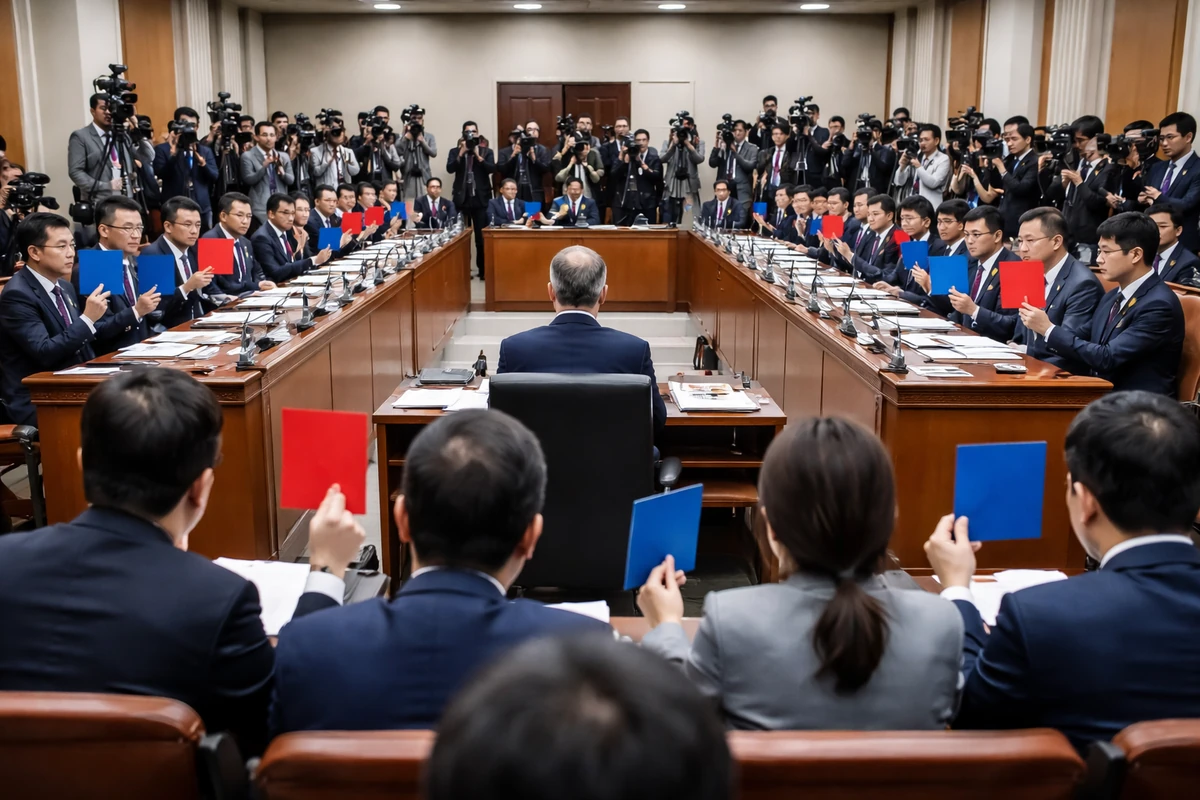
A central bank hearing that turned into a bigger political battle
What might have looked, on paper, like a routine confirmation hearing in South Korea turned into something much larger this week: an early and highly symbolic fight over who gets to define economic legitimacy in the country’s new political era.
At a parliamentary hearing on April 15, Shin Hyun-song, the nominee to lead the Bank of Korea, faced sharp questioning from lawmakers over both his professional credentials and his personal background. By the end of the day, the National Assembly committee reviewing his nomination failed to adopt the customary hearing report, a procedural step that carries no small political meaning in Seoul. The breakdown signaled that the clash was not simply about whether Shin is qualified to run the central bank. It was also about whether the new government can install its preferred economic leadership without first winning a broader argument over what kind of expertise counts, what kind of life experience matters, and who can credibly claim to speak for ordinary Koreans in a period of economic anxiety.
For American readers, an approximate comparison would be a Federal Reserve chair nominee whose hearing veers away from inflation, interest rates and financial stability and instead becomes a referendum on elite technocracy, globalism and whether a policy expert who has spent years abroad is too detached from the economic realities facing workers, homeowners and small businesses. In South Korea, where confirmation hearings often double as political theater and moral vetting, those lines are even more blurred.
The result was a made-for-politics moment. The governing camp portrayed Shin as a globally respected financial expert with exactly the kind of experience a trade-dependent, export-driven economy needs in a volatile world. Conservative opposition lawmakers argued that a central bank chief cannot simply be a polished international economist; he must also be rooted in the country whose monetary policy he would guide. Their criticism focused heavily on his years living overseas and on personal matters they said raised questions about representativeness and public accountability.
The clash matters because the Bank of Korea is not just another economic bureaucracy. It sets interest rates, helps anchor inflation expectations, sends signals to currency and bond markets, and speaks for South Korea to global investors at moments when a single sentence can move markets. A dispute over who leads it is, almost by definition, a dispute over the country’s economic story.
Why the hearing report matters in South Korean politics
To an American audience, the failure to adopt a hearing report may sound technical, even minor. In South Korea, it is neither. The hearing report is not merely paperwork. It functions as a political marker, a shorthand verdict about whether a nominee has cleared at least a basic threshold of parliamentary scrutiny. When it is adopted, even after a contentious hearing, it suggests that the legislature and executive branch still share some minimum ground. When it is not adopted, the message is that consensus has collapsed.
That does not automatically end a nomination. Depending on the office and the legal structure around the appointment, presidents in South Korea can sometimes move forward even without full parliamentary cooperation. But the absence of a report leaves a stain. It brands the nominee as contested and gives the opposition an easy line of attack: this person was not rejected only by political rivals, but failed to win even the procedural acknowledgment that the review process had run its course in an orderly way.
That is why the day’s most important political development may not have been any individual exchange in the hearing room. It was the breakdown that followed. The committee’s inability to adopt the report said, in effect, that the fight had expanded far beyond ordinary vetting. Instead of debating only one man’s résumé, lawmakers were arguing over the philosophical foundation of the new administration’s economic appointments.
In Washington, confirmation battles can become proxies for larger ideological fights: the role of the administrative state, Wall Street versus Main Street, or expertise versus populist suspicion of elites. South Korea has its own version of that dynamic, but it often plays out even more starkly because personnel decisions are treated as moral and symbolic tests as much as policy ones. Hearings routinely examine family matters, finances, schooling, military service and real estate dealings alongside professional competence. Critics call the process invasive and sometimes performative. Defenders say it is one of the few tools the opposition has to check presidential power.
That broader context helps explain why the failure to adopt Shin’s report landed as more than a procedural hiccup. It was a warning shot about the political weather ahead, especially for a government trying to shape the country’s economic direction through appointments to high-profile posts.
Two competing arguments: world-class expertise vs. rootedness at home
At the center of the hearing was a simple question: Is Shin the right person to lead South Korea’s central bank? But the governing and opposition parties answered it using entirely different standards.
The governing Democratic Party, according to accounts of the hearing, framed Shin as an internationally accomplished financial scholar and policymaker, someone whose work and reputation reflect well on South Korea and whose technical expertise matches the demands of the office. In that telling, the core job of the Bank of Korea governor is to understand monetary policy, financial markets, global capital flows and crisis risk. On those terms, Shin appears to have a strong case. His backers argue that in an economy as exposed to global shocks as South Korea’s, international experience is not a luxury. It is the job description.
That argument resonates with a long-standing current in South Korean policymaking: the belief that the country’s survival and prosperity depend on reading the outside world accurately and responding quickly. South Korea is one of America’s treaty allies, a major exporter, a semiconductor powerhouse and a deeply integrated player in global markets. Its economy can feel the effects of U.S. Federal Reserve decisions, Chinese demand shifts and geopolitical tensions with unusual speed. For supporters of Shin, a candidate who can navigate those forces at a high level is a strategic asset.
The conservative opposition saw the matter differently. Their criticism zeroed in on Shin’s years abroad, his life circumstances and what they presented as a gap between elite international credentials and lived familiarity with Korean society. In South Korean political language, this is not just a lifestyle question. It is a question about representation and empathy. Can someone who has spent substantial time overseas truly understand the pressure on households facing high borrowing costs, small business owners struggling with debt, and young Koreans shut out of housing markets?
That line of attack can sound jarring to outsiders, especially when it brushes up against rhetoric about whether a candidate is “close enough” to the country in an emotional or social sense. But in South Korea, public officials are often judged not only on whether they know policy, but on whether they are seen as sharing the fate of the people affected by it. The opposition’s point was not simply that Shin lived abroad. It was that a central banker who symbolizes economic authority must also be legible to the public as someone grounded in national reality, not just global finance.
That is a familiar democratic tension, even if the vocabulary is distinctly Korean. Americans have seen versions of it in debates over “coastal elites,” Ivy League technocrats and whether public institutions are run by people who understand life outside rarefied professional circles. South Korea’s version is shaped by its own history, social hierarchy and intense sensitivity to fairness, but the underlying question would not be foreign to U.S. readers: When times are hard, do voters want the best expert money can find, or someone they believe understands the country from the inside out?
Why central bank appointments are never really apolitical
On the surface, the governor of the Bank of Korea is not a partisan office in the way a cabinet minister or party leader is. Central banks are supposed to be independent, or at least insulated enough from day-to-day politics to make credible decisions about inflation, rates and market stability. But the moment of appointing a central bank chief is rarely apolitical, and in South Korea it may be especially charged.
The reason is straightforward. Interest rate decisions affect mortgages, business loans, investment, unemployment and the exchange rate. Public comments from the central bank can shape market expectations and influence how both domestic and foreign investors read the government’s economic strategy. So even if the institution is formally independent, the selection of its leader becomes a high-stakes political choice.
That appears to be what happened in Shin’s case. The opposition’s resistance was not only about personal scrutiny. It was also a way of contesting the image the new government wants to project: competent, globally fluent, market-reassuring and in command of economic policy. Blocking the easy adoption of the hearing report allows opponents to muddy that image from the outset. It says, in effect, that this is not a universally respected expert stepping into office, but a disputed figure whose worldview and public standing are fair game for continued attack.
From the governing party’s perspective, that makes compromise difficult. If the administration wants to reassure markets and international observers, it has every incentive to emphasize Shin’s global profile, academic accomplishments and familiarity with international financial networks. Those are the qualities investors, ratings agencies and foreign policymakers often prize. Retreating from that argument would mean conceding the opposition’s premise that international credentials can be politically toxic in a country whose economy depends heavily on external trust.
So the fight becomes symbolic. The opposition says South Korea’s economic “face” cannot appear distant from everyday Korean life. The governing side says the country’s economic face must be someone who can speak credibly to the world. Both arguments have force. Neither is likely to disappear soon.
This is one reason personnel battles in Seoul can become stand-ins for policy battles not yet fully fought. Lawmakers are not only questioning a nominee. They are setting the terms for how future debates will be framed: expertise versus accessibility, global competitiveness versus domestic rootedness, technocratic competence versus democratic legitimacy. Shin’s hearing condensed all of those tensions into one room.
The politics of international experience in a country built on global ties
One of the most revealing parts of the dispute is how differently the same biography can be interpreted. To supporters, Shin’s international career is proof of excellence. To critics, it can be reframed as distance.
That tension speaks to a larger debate in South Korea about what “global” means in politics. In business, technology and culture, South Korea has spent decades building itself into a country that punches above its weight internationally. American audiences know this through K-pop, Oscar-winning films like “Parasite,” global brands like Samsung and Hyundai, and a foreign policy that increasingly positions Seoul as a consequential middle power. The country’s success story has been built in no small part on outward reach.
Yet in domestic politics, internationalism can be a double-edged sword. A candidate who is celebrated abroad may still be questioned at home over whether he understands local social pressures, rising household debt, stagnant opportunities for some younger workers and the precarious lives of small business owners. In other words, international prestige does not automatically translate into domestic political comfort.
That is especially true when economic insecurity is high. South Koreans, like Americans, experience monetary policy not as an abstract theory but as monthly pain or relief. Interest rates shape what families pay on variable-rate loans. They affect apartment prices, business credit and consumer confidence. In that environment, a politician can gain traction by asking whether a globe-trotting expert really grasps the emotional and social texture behind the numbers.
The hearing reflected that divide. The governing party treated international stature as a straightforward qualification for central bank leadership. The opposition argued that technical sophistication alone is insufficient if it is not paired with public trust and a demonstrated connection to Korean life. This is not just an argument about one nominee. It is a contest over economic narrative.
Put differently, the governing party is telling a story about South Korea as a nation that must compete in a complex world and therefore needs globally recognized talent in key posts. The opposition is telling a story about democratic accountability, cultural groundedness and the need for senior officials to reflect the lived realities of the public they serve. Both stories draw on genuine political instincts. The battle is over which one has greater emotional credibility with voters.
More than one nomination: A preview of fights to come
The failed hearing report also matters because it is likely to shape how future appointments are contested. Once an opposition party demonstrates that it can turn a confirmation hearing into a referendum on broader governing philosophy, there is every reason to use the same tactic again.
That is particularly true in a legislature where direct control over executive policy may be limited or fragmented. Hearings become one of the most visible opportunities to slow, stigmatize or redefine a president’s agenda. A ministerial nominee, a regulator or a central banker can each become a proxy target for larger frustration with the administration. In media terms, personnel battles are attractive because they are personal, dramatic and easier to narrate than abstract policy disputes.
For the opposition, stopping the report from being adopted sends a message beyond Shin himself. It tells the government that any appointment carrying the scent of elite insulation, global technocracy or ethical ambiguity will face a hard landing. It also alerts future nominees that professional distinction alone will not shield them from attacks over biography, lifestyle and symbolic fit.
For the governing party, the strategic response is likely to be equally clear. It will try to frame such resistance as obstruction, partisan overreach or the politicization of expertise at a time when economic stability should come first. The argument practically writes itself: South Korea faces external uncertainties, financial volatility and global competition, so the country cannot afford to reject highly credentialed experts for reasons that supporters portray as irrelevant or ideological.
That framing war matters because public opinion in South Korea is often finely balanced and highly responsive to tone. Voters may dislike partisan trench warfare, but they also care deeply about fairness and integrity in public office. A government that seems dismissive of public skepticism can pay a price. An opposition that appears to be nitpicking or weaponizing private matters can also overplay its hand.
What happened at Shin’s hearing suggests that both sides believe the upside of confrontation outweighs the risk. That alone tells us something important about the current political climate: economic appointments are no longer just administrative decisions. They are frontline political events.
What the episode says about South Korea’s broader economic debate
In the end, the dispute over Shin Hyun-song is best understood not as an isolated controversy but as a window into South Korea’s bigger struggle over how it wants to be governed economically.
One vision emphasizes expertise, institutional credibility and the ability to communicate with the world’s financial centers. It assumes that in a country as globally exposed as South Korea, economic leadership must be internationally sophisticated and technically confident. A central bank governor in this vision is part steward, part signal-sender, part interpreter of a deeply interconnected global economy.
The other vision puts greater weight on democratic connection, social texture and the political meaning of public office. It asks whether economic officials understand the moral stakes of household debt, youth frustration, aging demographics and widening perceptions of inequality. It treats public service not merely as a matter of expertise, but of social embeddedness and ethical resonance.
Neither of these visions is uniquely Korean. Americans hear echoes of them in debates over the Federal Reserve, Treasury Department appointments, trade policy and the role of experts in democratic life. But South Korea’s version is sharpened by several national traits: a highly educated electorate, intense media scrutiny, a history of fast development led by powerful state institutions, and a political culture in which personal biography is often read as evidence of public character.
That is why the collapse of the hearing report mattered. It crystallized a question that will likely hover over the new government’s entire economic team: Is internationalism a sign of strength or a source of distance? Is expertise enough, or must it be visibly rooted in everyday Korean life? And who gets to decide what kind of person can credibly represent the country’s economic future?
Those are not procedural questions. They are political ones, and increasingly they are the terms on which South Korea’s next economic fights will be waged. Whether Shin ultimately takes office or not, his hearing has already done something more enduring. It has shown that in Seoul, control of economic institutions is also a battle over language, symbolism and the public meaning of authority.
For foreign investors and diplomats, the immediate takeaway may be that South Korea’s democratic institutions remain intensely competitive, even over offices designed to stand somewhat apart from partisan politics. For ordinary South Koreans, the meaning may be more immediate: the people who set interest rates and steady markets are no longer being judged only by the numbers they know, but by whether the public believes they belong at the center of national life.
And for anyone watching from the United States, the episode offers a familiar lesson in a distinctly Korean form. In an age of distrust, no technocrat is just a technocrat. Not when the economy feels personal. Not when political parties are searching for leverage. And not when the fight over one nomination can stand in for a much larger struggle over whose vision of the country will prevail.
Comments
Post a Comment