South Korea’s New Crackdown on Drugged Driving Highlights a Risk Many Americans Know Too Well: It’s Not Just Illegal Drugs
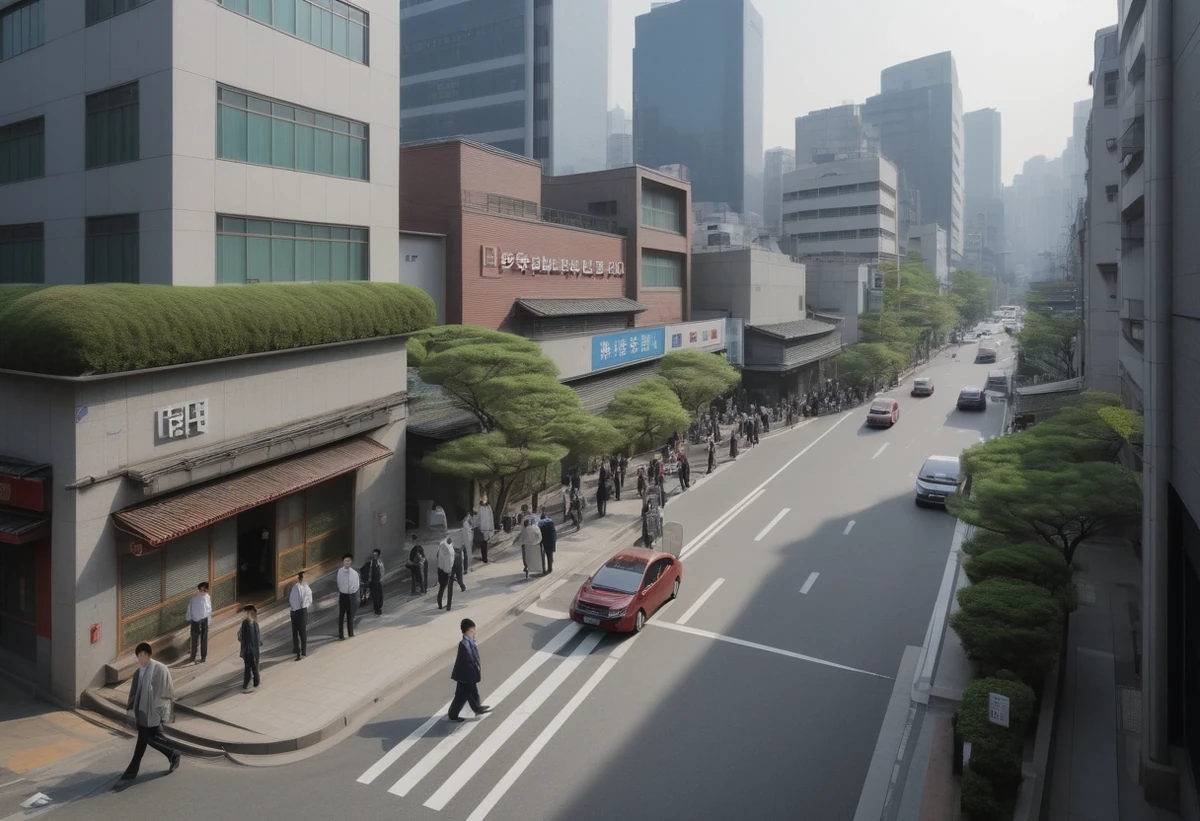
South Korea opens a new front in traffic safety
South Korea this month launched its first special nationwide crackdown aimed specifically at drugged driving, marking a significant shift in how the country talks about road safety. For years, public debate in South Korea around dangerous driving has focused overwhelmingly on alcohol, much as it did in the United States before campaigns by groups such as Mothers Against Drunk Driving helped turn DUI from a tolerated offense into a major social taboo. Now Korean authorities are trying to send a broader message: A driver can be dangerously impaired not only by beer, liquor or illegal narcotics, but also by sleeping pills, anti-anxiety medication, strong painkillers and even some common cold remedies.
According to the Korean news agency Yonhap, police began the special enforcement effort on April 2, 2026. The move comes amid growing concern that a category of risky behavior once associated mainly with illicit drug use is in fact much wider and more ordinary. In practical terms, that means a person who took a legally prescribed sedative after a sleepless night, or an over-the-counter cold medicine before getting behind the wheel, could present a serious hazard on the road.
That broader framing matters in South Korea, where public safety campaigns often gain force only after repeated tragedies, sharper enforcement and a cultural shift in what the public considers unacceptable. Drunk driving has already gone through that evolution. Drugged driving has not. Korean officials appear to be trying to accelerate that change before the issue becomes even more entrenched.
What makes the South Korean case particularly notable is that the crackdown is not simply about catching people who used illegal substances. It is also about confronting a more uncomfortable truth that many countries, including the United States, have struggled with: Medication taken for legitimate treatment can still impair a driver’s judgment, attention, reaction time and coordination. And unlike alcohol, where a blood alcohol concentration can serve as a relatively standardized benchmark, drug impairment is far harder to define on a single number.
That complexity is at the heart of the Korean debate. Police can warn the public, doctors and pharmacists can advise patients, and lawmakers can toughen penalties. But if no simple threshold exists to show when a driver has crossed from medicated to impaired, enforcement becomes much more subjective, and the public can remain confused about what conduct is actually forbidden.
In that sense, South Korea’s first special crackdown is about more than citations or arrests. It is an attempt to move a gray-area safety problem into the mainstream of public discussion. The question it raises is one American readers may recognize immediately: If millions of people take medications that can cause drowsiness or slower reactions, how should society draw the line between treatment and danger?
Why drugged driving is harder to police than drunk driving
At first glance, drugged driving can sound like a close cousin of drunk driving. Both involve impairment. Both can end in crashes, injury or death. Both can be prosecuted criminally. But in real-world enforcement, the comparison quickly breaks down.
Alcohol is relatively straightforward by legal standards. In the United States, every state uses blood alcohol concentration limits, and police have a set of familiar tools: field sobriety tests, breath tests, blood draws and decades of case law. That does not mean DUI enforcement is simple, but the system rests on a widely understood scientific and legal framework.
Drugged driving does not offer that same clarity. The Korean article underscores a key point: Punishment generally does not hinge on the mere fact that someone took a drug. The core issue is whether the person was actually in a state that made driving unsafe. That distinction is crucial. The same sleep aid may leave one person slightly groggy and another person profoundly impaired. A prescribed anti-anxiety drug may affect a first-time user differently than someone who has taken it for months. A combination of medications, lack of sleep, age, alcohol use or an underlying medical condition can magnify the effects.
That means police and courts often must look beyond a toxicology result. Did the driver drift out of a lane? Miss a traffic signal? Respond slowly to questions? Show unusual physical symptoms? Cause or nearly cause a collision? Those situational clues can matter as much as the substance itself.
This is not just a Korean problem. In the U.S., officials have wrestled with the same challenge as marijuana legalization has spread and as concerns have grown about opioids, benzodiazepines and other medications that can impair driving. Unlike the 0.08 BAC standard for alcohol, there is no universally accepted equivalent for many drugs that neatly translates lab results into real-world driving impairment. A detectable substance in someone’s body does not automatically tell police, prosecutors or jurors how impaired the driver actually was at the time.
South Korea’s new enforcement push appears to acknowledge that reality. It also exposes a policy tension familiar in many democracies: Standards that are too vague can make laws hard to enforce consistently, but standards that are too rigid can unfairly punish people whose test results do not reflect meaningful impairment. In trying to address drugged driving more aggressively, Korean authorities are stepping directly into that tension.
The issue reaches far beyond illegal drugs
One reason the Korean crackdown is drawing attention is that it challenges a common public assumption. When many people hear the phrase “drugged driving,” they picture an obvious criminal scenario: someone using methamphetamine, cocaine or another illegal narcotic and then driving. That does happen, of course. But the Korean reporting makes clear that the danger extends far beyond illicit drugs.
Prescription and nonprescription medicines can also create risk, especially those known to cause drowsiness, dizziness, blurred vision or slowed reaction time. That includes some medications used to treat insomnia, anxiety, pain, allergies and colds. A person may be following a doctor’s instructions, trying to get through a workday while sick, or simply taking something routine from the pharmacy. None of that changes the fact that some medications can make operating a vehicle unsafe.
That is part of what gives the issue such social and political resonance in South Korea. It is not confined to a marginal group. It touches office workers, parents, retirees, delivery drivers and shift workers. In other words, it is not just a crime story. It is a public health and everyday safety story.
That framing is especially important in an aging society. South Korea, like Japan and increasingly the United States, is grappling with the consequences of an older population. Older adults are more likely to manage chronic conditions, more likely to take multiple medications at once, and more likely to experience stronger or more unpredictable side effects from drug interactions. A medicine that was manageable under ordinary conditions may become far riskier after poor sleep, illness or a second prescription added to the mix.
The Korean summary also points to another subtle danger: familiarity. People often assume that if they have taken the same medication before, it must be safe to drive. But long familiarity does not eliminate risk. Dosages change. Other medicines get added. The body changes with age. Stress, fatigue and dehydration alter how drugs are processed. The result is a kind of false confidence that may be harder to combat than outright ignorance.
American readers may recognize a similar dynamic from warning labels that say, “Do not operate heavy machinery,” a phrase so familiar it can fade into background noise. Most people understand it in theory. Far fewer treat it as a direct instruction that includes driving to the grocery store, picking up a child from school or taking a short trip across town. South Korea’s new crackdown suggests officials there are trying to make that connection unmistakable.
A culture gap in public awareness
One of the most significant points in the Korean discussion is not about toxicology or policing. It is about social perception. Drunk driving became widely condemned only after years of public education, repeated enforcement and a moral shift in how communities judged the behavior. South Korea, like the United States, has tightened laws and hardened public attitudes over time. Drugged driving has not yet undergone the same full cultural reckoning.
That gap shows up in casual assumptions: It is prescribed, so it must be fine. I am only a little sleepy. I am driving a short distance. I take this all the time. Those rationalizations are common because medication is associated with treatment and legality, not wrongdoing. The driver does not see himself as reckless. He sees himself as managing daily life.
In South Korea, that matters because public compliance often depends not only on what the law says but on whether society has internalized a behavior as clearly shameful or dangerous. Once a norm hardens, enforcement becomes easier because citizens begin policing themselves and one another. Before that point, a crackdown can feel abstract, confusing or even unfair.
The first special enforcement campaign may therefore be as much symbolic as practical. It puts drugged driving into the formal apparatus of policing and public warning. It signals that this is no longer a niche legal issue or a matter to be handled quietly after a crash. It is now part of the country’s broader traffic-safety agenda.
For Americans, there is a useful parallel in the long evolution of seat belt laws, anti-smoking campaigns and attitudes toward opioid misuse. Information by itself rarely changes behavior. Social repetition does. People need to hear the same message from police, doctors, pharmacists, employers, schools and family members before a safety norm becomes habitual.
South Korea appears to be at an earlier stage of that process on drugged driving. The fact that authorities felt the need to launch a dedicated special crackdown suggests officials believe public understanding still lags behind the risk. The campaign may catch some offenders. But its bigger purpose may be to force ordinary drivers to ask a question many have not routinely asked before: Can I safely drive after taking this medicine?
Enforcement alone will not solve the problem
The Korean reporting is clear-eyed about the limits of a police-centered response. A crackdown can draw headlines and perhaps deter some drivers, but it cannot by itself solve a problem this diffuse and medically complex.
One obstacle is detection. Unlike alcohol checkpoints, where officers can rely on a familiar battery of methods, drug impairment is often harder to identify on sight. Some drivers will show obvious signs. Others will not. A person may appear calm and coherent while still suffering degraded attention or reaction time. If enforcement depends heavily on outward symptoms, many risky cases may go unnoticed.
Another obstacle is evidence. Drug effects can shift over time, and reconstructing a driver’s exact condition at the moment of driving can be difficult after the fact. That means successful enforcement may require a more sophisticated chain of observation, testing, documentation and expert interpretation than many traffic stops currently provide. Without that infrastructure, authorities risk a gap between suspicion and proof.
There is also a trust issue. If the public sees cases where drivers are stopped but not charged, or charged under standards they do not understand, confidence in the system can erode. Too little enforcement makes the campaign look hollow. Too much reliance on subjective judgment can make it look arbitrary. That is one reason the Korean article stresses the need for more refined standards involving law enforcement, medicine and the courts.
In the United States, traffic safety experts have learned similar lessons. Lasting gains usually come from layered systems: clear guidance, public education, professional training, targeted enforcement, better data and preventive interventions before dangerous conduct occurs. By that standard, South Korea’s crackdown may be only the opening move in what has to become a broader institutional effort.
The success of the campaign, then, may not be best measured by how many drivers are caught. A more meaningful test is whether it changes habits before police ever get involved. Do drivers check labels more carefully? Do families think twice before letting an elderly relative drive after taking a sedating prescription? Do workers choose a taxi, bus or ride-hailing app instead of assuming they are “probably fine”?
If the answer to those questions begins to shift, the crackdown will have done something more important than produce statistics. It will have started moving public behavior.
Why doctors and pharmacists may be just as important as police
If the first line of defense against drugged driving is not the patrol officer but the medicine counter, then South Korea’s next steps may have to involve the health care system at least as much as law enforcement.
The Korean article argues that hospitals and pharmacies are where patients first encounter the risk, and that point is hard to dispute. Doctors prescribe the medication. Pharmacists explain how to take it. Warning labels and counseling are often the only chance to influence behavior before a person gets into a car. If those warnings are vague, rushed or treated as boilerplate, an important prevention opportunity is lost.
This is another area where American readers will find the issue familiar. Many prescription labels list side effects in dense, technical language. Patients often receive a rapid verbal summary or a stapled packet they may never fully read. Even when the warning is there, it may not answer the practical question the patient actually has: When exactly is it unsafe to drive, and for how long?
South Korea’s debate suggests a need for more direct, usable communication. Instead of tiny print and generic caution statements, officials and medical professionals may need clearer guidance on drowsiness risk, how long to avoid driving after a dose, and how alcohol or other medications can intensify impairment. Public messaging is more likely to work when it feels concrete and immediate, not legalistic.
Experts also point to the value of targeted outreach for higher-risk groups. Professional drivers who work nights, shift workers, older adults and people managing chronic illnesses may face a more complicated mix of fatigue, medication use and routine driving. Those groups may need tailored advice rather than one-size-fits-all warnings.
Over the long term, the Korean article argues, reducing drugged driving will require coordination across institutions that do not always operate in sync: police on the roads, physicians in clinics, pharmacists at dispensing counters, transportation agencies crafting public campaigns and citizens making everyday choices. That is a persuasive diagnosis. The problem sits at the intersection of criminal law, medicine, aging and transportation policy. No single agency can resolve it alone.
What South Korea’s debate says about a modern traffic risk
South Korea’s first special crackdown on drugged driving may seem, on the surface, like a narrow law-enforcement development. In reality, it reflects a broader challenge facing advanced societies where people are living longer, taking more medications and navigating busy roads under conditions of chronic fatigue and stress.
The issue is not whether police should stop drivers impaired by drugs. They should. The harder question is how societies define impairment fairly, communicate risk clearly and prevent harm before a patrol car ever enters the picture. South Korea is only beginning to answer those questions in a more public way.
For American readers, the story offers a reminder that road safety campaigns often lag behind the realities of daily life. The most dangerous driver is not always the one who fits the easiest stereotype. Sometimes it is someone who is sick, exhausted, medicated and convinced the trip is short enough not to matter. That combination can be every bit as dangerous as behavior the law and culture already know how to condemn.
In that sense, South Korea’s new enforcement effort is less about inventing a new problem than about naming one more honestly. Drugged driving is not just about narcotics raids or sensational criminal cases. It is also about ordinary medications, ordinary routines and ordinary people making small decisions that can have serious consequences.
If the campaign succeeds, it may do so not because it produces a flood of arrests, but because it normalizes a new safety habit: checking whether a medication and driving belong together. That may sound modest. But most durable public-safety victories begin with just such a shift, when a behavior once treated casually starts to feel obviously risky.
South Korea has already gone through that transformation with drunk driving. The country is now testing whether it can do something similar with drugged driving, even though the science is murkier, the legal standards are harder to pin down and the social boundaries are less obvious. That makes the task more complicated. It also makes it more urgent.
For now, the special crackdown serves as both warning and wake-up call. It tells drivers that legality does not equal safety, that treatment does not erase responsibility, and that public health and traffic safety are increasingly intertwined. Those lessons will resonate far beyond South Korea, including in the United States, where the same debate is already unfolding in courtrooms, clinics and on highways every day.
Comments
Post a Comment