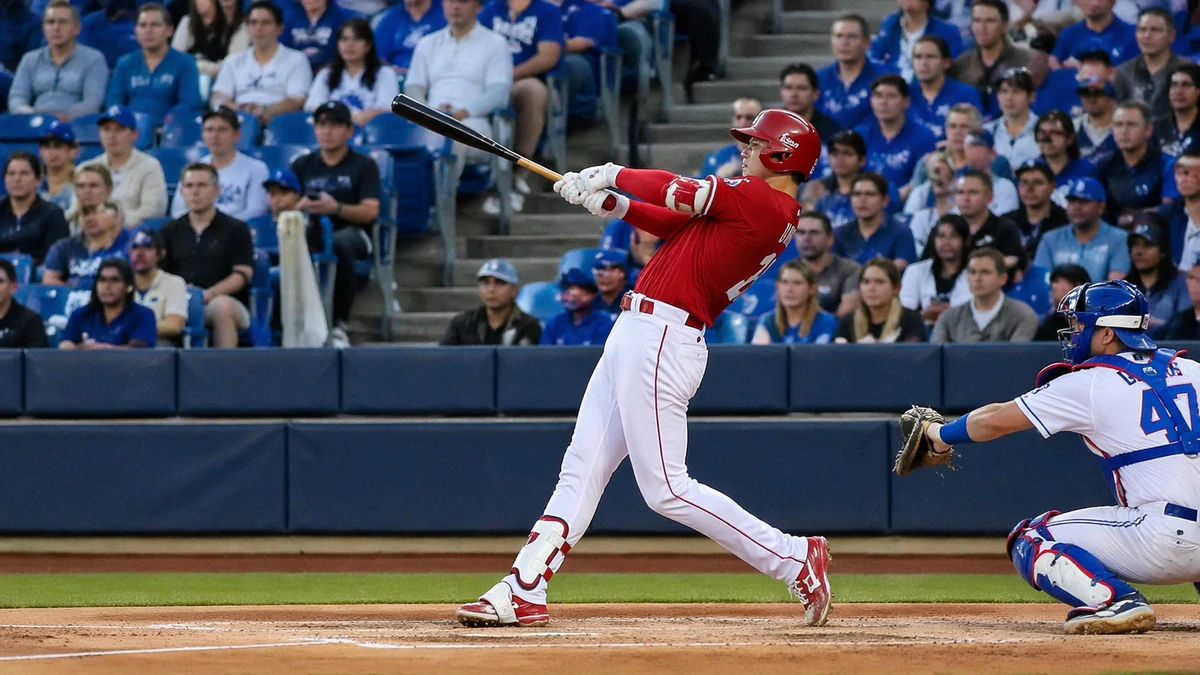
A record night that was about more than a record
On a cool April night in Daegu, one of the Korean Baseball Organization’s oldest opening-season records fell, but the number itself was only part of the story. SSG Landers infielder Park Seong-han opened the game with a single and stretched his hitting streak to 19 straight games to begin the 2026 season, breaking the previous mark of 18 set in 1982 by Kim Yong-hee of the Lotte Giants. Later, in the 10th inning, Park delivered again, driving in the go-ahead run in SSG’s 5-4 victory over the Samsung Lions at Daegu Samsung Lions Park.
For American fans, the easiest comparison is a player opening a Major League season with a hit in every game for nearly three weeks and then also supplying the game-winner in extra innings on the same night. It is the kind of performance that reads like a made-for-TV script. But in the Korean context, where the KBO season is intensely scrutinized from the first week and where every club plays under a bright mix of media attention, analytics and fan expectation, the feat carries an added layer of weight.
What made the night especially revealing was how clearly it illustrated the way SSG appears to want to win this season. This was not a one-man home run derby or a lucky bounce in the ninth. It was a game that showed lineup depth, a willingness to attack early in the count, and the sort of emotional steadiness that can decide close games over a long season. Park’s streak gave the evening its headline. The way SSG won may prove more important by summer.
Why 19 straight games matters in modern Korean baseball
Records from the early 1980s in Korean baseball are not easy to touch, partly because the sport itself has changed so dramatically. The KBO was founded in 1982, and that first era of Korean professional baseball looked very different from the modern game. Today’s pitchers throw harder, scouting reports are more detailed, and clubs lean much more heavily on matchup data and pitch-shape analysis. Maintaining a hit streak through the first 19 games of a season now requires more than a hot week. It demands a high level of preparation against a variety of pitching styles and game situations.
That is why Park’s streak resonates beyond a trivia note. A hit in 19 straight games to open a season means he has managed, at minimum, to disrupt the opposing game plan every night. It suggests consistency more than flash. In baseball, fans often talk about “seeing the ball well” or a player being “locked in,” but long streaks are usually built on something sturdier: pitch recognition, disciplined aggression and the ability to avoid letting one bad at-bat infect the next one.
There is also a cultural element to the way such records are received in South Korea. Korean sports culture places a strong emphasis on persistence, repetition and demonstrating reliability for the group, not just brilliance for its own sake. In that sense, Park’s streak lands as the kind of achievement that teammates, coaches and fans can rally around. It is not simply about individual star power. It represents steadiness, and steadiness is one of the most prized qualities in a sport where six-month seasons can expose every weakness.
The first-pitch swing said as much as the box score
After the game, Park said he went to the plate planning to swing at the first pitch. Against Samsung starter Choi Won-tae, he got a 144-kph fastball down in the zone and pulled it into right field for the record-breaking single. Converted for American readers, that fastball was roughly 89 mph, not overpowering by big-league standards but more than enough when located well and thrown with intent. What mattered was not the velocity but Park’s conviction. He had made up his mind before stepping in.
That decision says a lot about modern KBO hitting philosophy. Korean baseball is often stereotyped abroad as small-ball heavy, contact-oriented and conservative, and there is some historical truth in that image. But the contemporary KBO is more nuanced. Teams study opposing pitchers closely, and hitters increasingly look for specific windows to attack rather than merely trying to survive an at-bat. Park’s first-pitch swing was aggressive, but it was not reckless. It was a prepared bet on how Choi would try to get ahead.
There is also a psychological dimension here. In a game tied to a personal milestone, many hitters become passive. They tell themselves to be careful, work the count and avoid making an out on a pitcher’s pitch. Park went the other way. He understood that overthinking can be its own trap. By committing to an early-count plan, he removed hesitation from the equation. That matters because baseball, whether in Seoul, Daegu or St. Louis, often turns on which player is able to act decisively under the most mental pressure.
How SSG showed structural strength, not just star power
If Park had merely extended his streak and gone quiet, the game still would have been memorable. Instead, the rest of SSG’s offense helped turn it into a case study in team construction. According to Korean reports from the game, every SSG starter reached base. That is one of the clearest indicators that a lineup is functioning from top to bottom. It means the opposing pitcher and bullpen are not getting breathers at the bottom of the order, and it often points to the kind of offensive pressure that does not always show up through home runs alone.
That type of lineup depth is especially important in the KBO, where teams frequently have to win in different ways from series to series. The league’s style can look more volatile than Major League Baseball to American viewers because scoring can swing sharply based on bullpen usage, imported starting pitchers, defense and the quality of contact strings. A deep lineup gives a manager more ways to navigate those shifts. If the middle of the order is not slugging, the club can still manufacture stress with singles, walks and baserunners who force defensive decisions.
SSG’s win over Samsung felt like a broader signal that the club’s early improvement may be structural, not accidental. “Structural rebound” is a useful phrase here because it suggests something sturdier than a short hot streak. The Landers did not just ride one player’s bat. They showed the ability to stay competitive even after allowing the game’s first run, to keep creating traffic on the bases, and to preserve enough offensive clarity in extra innings to finish the job. For a team trying to reassert itself as a serious contender, that is more meaningful than a single explosive inning.
Extra innings revealed the kind of team SSG wants to be
The game was not a smooth, wire-to-wire march. Samsung scored first when veteran catcher Kang Min-ho doubled in a run off SSG starter Anthony Veneziano in the opening inning. That detail matters because it undercuts any temptation to frame the night as easy or inevitable. SSG had to recover from an early deficit in a road environment, settle the game down and keep returning pressure to the Lions. In a league where momentum is discussed almost as much as mechanics, that ability to absorb an early hit and keep playing clean baseball carries weight.
By the time the game reached the 10th inning, it had become a test of patience and lineup integrity. Extra innings in Korean baseball often expose which team can still produce disciplined at-bats after the game has already twisted through multiple momentum swings. Bullpens are heavily used in the KBO, and managers are often aggressive about matchups late, meaning hitters may see a parade of arms in a single night. Samsung reportedly used seven pitchers, yet SSG still found the decisive hit. That is not just about execution in one moment. It is about maintaining a coherent offensive approach deep into the game.
Park’s go-ahead RBI in the 10th completed the narrative arc, but it also highlighted something simpler: SSG did not look like a team waiting for a miracle swing. In close games, offenses can tighten into passivity, essentially hoping someone else will be the hero. SSG instead kept behaving like a club that expected the next productive plate appearance to come. Over a long season, that attitude can separate teams that collect respectable statistics from teams that consistently win one-run games.
What Park’s streak does to opposing teams
Hit streaks are often described from the hitter’s point of view, but they reshape the game for the other dugout as well. Once a player becomes known as the one who keeps extending a streak, every opposing battery is suddenly aware of him before the game begins. Pitchers and catchers may deny it publicly, but it is natural to spend more time discussing how to neutralize that one bat. In practical terms, a streaking hitter can force more careful sequencing, more mound conversations and more defensive shading, all of which can subtly affect how an entire inning unfolds.
That is part of the hidden value Park is creating for SSG. Even when he is not driving in three runs or hitting the ball out of the park, he establishes a baseline expectation that the lineup will start somewhere. Managers love certainty wherever they can find it, and baseball rarely offers much. A player who almost always seems to produce at least one quality offensive event in a game gives the coaching staff more flexibility with the rest of the order. They can be more patient with struggling power hitters or more creative with lineup combinations because the table is less likely to be empty every night.
It also adds fatigue for the opposition. In baseball, cumulative stress matters. Even a simple single can force a reliever to throw from the stretch, change his timing or expose a defender to a rushed throw. Over 19 straight games, Park has become the kind of hitter opponents feel obligated to “solve.” That does not guarantee future success, of course. Streaks end. But while they last, they alter how games are managed. That is one reason the achievement should be read as a team asset, not merely a personal heater.
The KBO standings underscore how little margin there is
The broader league picture makes SSG’s win look even more important. Elsewhere that night, LG beat Hanwha to move into second place, while kt climbed into first with its result against KIA. For readers less familiar with Korean baseball, that movement in the standings is a reminder that the early KBO table can tighten quickly. The league’s competitive balance often produces compressed standings in the opening months, and one extra-innings win in April can wind up mattering more than it seems at the time.
That dynamic is familiar to American sports fans who follow playoff races in baseball or the NFL’s hunt for wild-card positioning. A single result in late April may not dominate national conversation the way a pennant-race game in September does, but teams bank those wins all season. Clubs that repeatedly survive tense, high-leverage games tend to give themselves breathing room later. Clubs that let them slip often spend the summer chasing. SSG’s 5-4 win belongs in that first category because it was the kind of game that could easily have tilted the other way.
The movement by kt and LG also underscores another point: there is no room for a contender to admire itself too long in the KBO. Even on a night when one player makes league history, the standings continue to shift. That is part of what makes Korean baseball compelling. The atmospheres are loud, the fan culture is highly organized and musical, and the nightly scoreboard can feel like a chain reaction. SSG’s challenge now is not to celebrate Park’s streak as a completed story but to treat it as evidence that its current formula can hold up against serious competition.
What American readers should understand about the bigger picture
For an American audience, it is tempting to view a story like this as one charming baseball oddity from overseas: a record streak, a dramatic extra-inning finish, a packed stadium in a league that gained some U.S. attention during the pandemic. But that would undersell both the quality of the play and the strategic substance on display. The KBO is not Major League Baseball’s mirror image, yet it is also far from a novelty product. It is a mature professional league with its own history, internal rivalries and highly developed baseball language.
Park Seong-han’s night in Daegu offered a good entry point into that world because it connected the universal and the specifically Korean. The universal part is easy to recognize: a hitter in rhythm, a tense extra-inning road win, a clubhouse built on contributions throughout the lineup. The specifically Korean part includes the reverence for an opening-season record dating back to the league’s founding year, the intensity of fan response to consistency and effort, and the way a player’s achievement is almost immediately folded back into a discussion about the team’s collective shape.
That may be the most revealing takeaway from SSG’s 5-4 win. Park broke a record, but the deeper story was that his performance served as a blueprint for how the Landers can keep climbing. He attacked early, contributed late, and did it within an offense that kept handing off pressure from one hitter to the next. In a league where kt now sits on top and LG has surged into second, SSG does not have the luxury of relying on sentiment or highlights alone. It needs repeatable advantages. On Tuesday night in Daegu, Park’s bat provided one, and SSG looked like a team increasingly built to make that advantage count.
Comments
Post a Comment