Why South Korea’s New Mortgage Squeeze Is Rattling the Housing Market — Even for People Who Own Just One Home
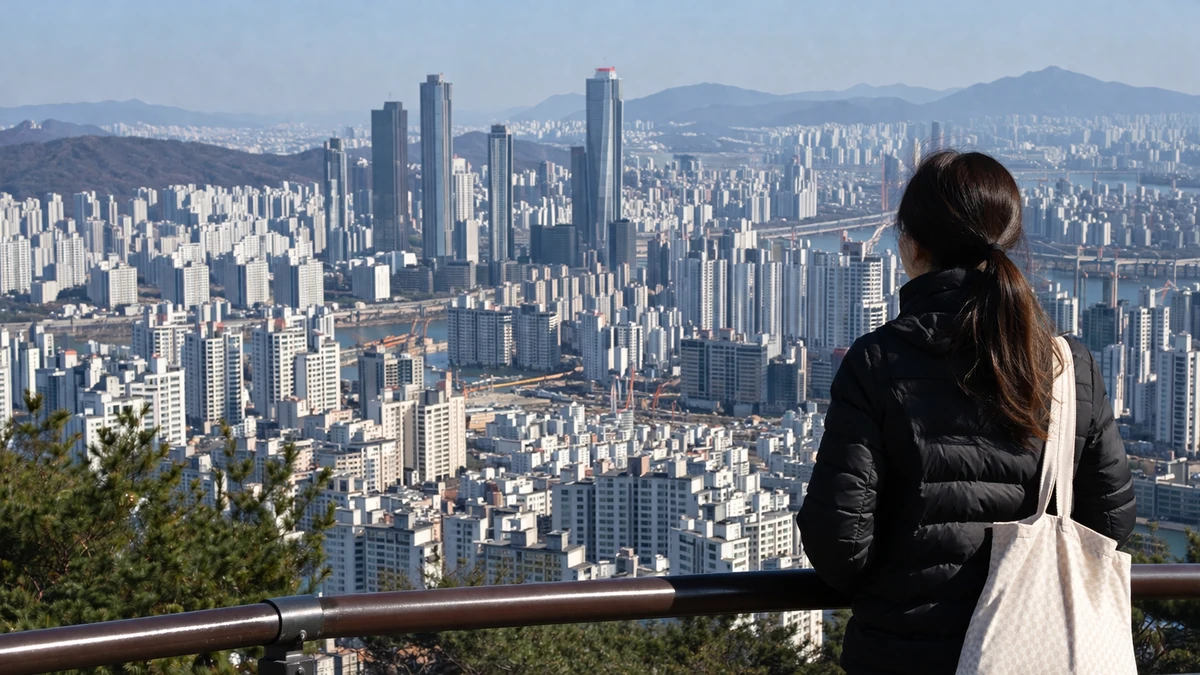
A housing rule change in South Korea is hitting a nerve far beyond speculators
South Korea’s real estate market has long been shaped by a simple political promise that keeps colliding with a complicated reality: Governments want to curb speculation and household debt, but ordinary families still need to move.
That tension is now on display again as concern spreads in Seoul and beyond over tighter mortgage screening for so-called one-home owners — people who already own a single residence but need financing to buy another home before selling the first, relocate for work, move into a larger apartment for a growing family, or bridge a timing gap in the country’s unusual rental system.
At the center of the latest debate is whether lenders and regulators are effectively expanding loan restrictions beyond investors with multiple properties and toward households that, in American terms, might look more like move-up buyers than speculators. The immediate panic appears to have outrun the confirmed facts. There is no clear evidence yet of a single new nationwide rule that flatly shuts one-home owners out of mortgage borrowing across the board. But the market reaction itself tells an important story: Korean buyers, sellers and tenants believe the ground may be shifting under them, and in real estate, that belief alone can slow transactions.
The issue has become even more sensitive because it appears to involve not only home mortgages but possible linkages to loans tied to South Korea’s signature rental arrangement, known as jeonse. For Americans unfamiliar with the system, jeonse is a lump-sum deposit lease in which a tenant gives the landlord a very large refundable deposit — often a substantial share of the home’s value — instead of paying monthly rent, or while paying only minimal monthly charges. It is one of the defining features of the Korean housing market, and it creates financing needs that do not map neatly onto the U.S. mortgage-and-rent model.
That means stricter loan screening is not just a banking story. It is a story about housing mobility, family timing, moving logistics and how one borrower’s financing problem can ripple through several linked contracts at once. In a country where many households rely on debt not only to buy homes but also to manage the transition from one residence to another, even incremental tightening can have consequences far beyond headline home prices.
As of early April 2026, the core question in South Korea is not whether mortgages have been “completely blocked” for one-home owners. It is whether lenders are increasingly treating them as a higher-risk category, subjecting them to tighter scrutiny at the same moment the economy and housing market remain fragile. If that trend solidifies, the effects could show up first in fewer transactions, longer closing times and more cautious households — before they show up in price charts.
Why one-home owners sit in a political gray zone
In the American political imagination, there is an obvious difference between a first-time buyer and a real estate investor with a portfolio of houses. South Korea’s policy debates often include a third category that is harder to place: the household that owns exactly one home.
On paper, that household may not look especially vulnerable. It already has housing wealth. It is not homeless. It is usually not the first in line for public support. But in practice, one-home owners often represent the very people who keep the housing market functioning: families moving to a better school district, couples buying a larger apartment after having a child, workers relocating closer to a job center, or adult children moving to accommodate aging parents.
That makes them a politically awkward group. Regulators do not want to create easy loopholes for speculative borrowing. Yet if they treat all one-home owners as if they are just one step away from becoming property flippers, they risk freezing ordinary life decisions that have little to do with speculation.
That distinction matters especially in South Korea, where major urban housing markets — above all Seoul and the surrounding capital region — are dominated by apartment living, sharp price gaps between neighborhoods, and intense competition around access to jobs, transit and schools. A family trying to move from a smaller apartment on the outskirts to a slightly larger one in a more convenient district may still face an enormous financing challenge, even if it plans to sell its current home shortly afterward.
In that sense, the Korean one-home owner is closer to an American move-up buyer squeezed by high rates and tight inventory than to a stereotypical landlord empire-builder. But because Korea’s housing booms have repeatedly been fueled by leverage, officials are wary of allowing any category of borrower to use debt in ways that could reignite price surges.
The result is a policy gray zone. Governments frame lending restrictions as a tool to control household debt and speculative demand. Households hear them as a possible threat to normal residential mobility. And because the official language of financial regulation can be narrower than the way banks apply it in practice, much of the market anxiety comes not from a published ban but from the fear of being caught unexpectedly in a tougher credit screen at the worst possible time.
The jeonse system makes Korean housing moves far more complicated than they look
To understand why this matters so much, Americans need to understand jeonse, one of the least intuitive but most important concepts in Korean housing.
Under jeonse, instead of paying traditional monthly rent, a tenant pays a large refundable deposit upfront, and the landlord returns that deposit when the lease ends. In some cases, monthly rent may be reduced or absent altogether. Historically, landlords used those deposits as investment capital or to finance their own property obligations. For tenants, jeonse could provide a path to relatively stable housing without the burden of full homeownership.
Imagine if, instead of paying $2,500 a month in rent, a tenant in a major U.S. city handed over a six-figure refundable deposit and expected to get it all back at the end of the lease. That is not a perfect analogy, but it gets close enough to show why cash flow, timing and credit access matter so much in Korea.
Because jeonse deposits can be enormous, households frequently rely on jeonse loans to assemble them. At the same time, homeowners may depend on incoming or outgoing deposits to settle previous obligations, fund a home purchase, or return money to a departing tenant. That creates a chain of interdependence that can be fragile. A landlord’s ability to return a deposit may depend on selling a home, securing financing or receiving a new tenant’s deposit. A buyer may need mortgage funding and temporary rental financing at the same time. A family moving between homes may temporarily occupy a rental unit while waiting for a sale to close.
Now add tighter scrutiny of both mortgage loans and jeonse-related borrowing, and the whole chain becomes more vulnerable. A person who, under looser conditions, could once manage the transition from old home to new home through a combination of sale proceeds, mortgage financing and a temporary rental arrangement may now find that one piece of the plan no longer qualifies. And if one piece fails, the rest of the transaction can unravel.
This is why market participants are so sensitive to any sign that mortgage rules for one-home owners could be linked to jeonse loan screening. The practical question is not simply whether someone can borrow. It is whether they can coordinate the several forms of financing needed to make a move happen on schedule. If lenders increasingly evaluate a borrower’s entire debt structure, repayment capacity, existing housing obligations and plans for returning tenant deposits, even families with stable incomes may discover that transactions once considered routine are now much harder to execute.
For outsiders, this can sound overly technical. Inside Korea, it is not technical at all. It is the mechanics of moving house.
What is actually known — and what remains murky
The recent uproar began with reports suggesting that one-home owners were being abruptly boxed out of housing finance, including through scrutiny that could reach jeonse lending. The strongest version of that claim — that there is now a formal nationwide blockade on such borrowers — appears to be ahead of the evidence.
What does seem credible is something subtler and, in some ways, more destabilizing: Banks may be tightening internal review standards, applying debt-service assessments more conservatively, examining existing loans more carefully and paying closer attention to how borrowers plan to dispose of their current home or return jeonse deposits. In plain English, it may not be that the law changed overnight so much as that risk tolerance inside the lending system is dropping.
That distinction matters. In housing markets, uncertainty can be just as chilling as outright restriction. If a buyer knows a rule is strict but clear, that buyer can plan around it. If the standard seems to vary by lender, branch, guarantor or documentation quality, households may pull back simply because they cannot predict what will be approved.
That is exactly why many analysts in Korea are focusing less on the dramatic language of “blocked loans” and more on the possibility that one-home owners are no longer being treated as presumptively safe borrowers. If mortgage and jeonse reviews are both becoming more exacting, the market may see a growing number of delayed closings, abandoned purchase contracts and households that decide not to move at all.
In a healthy, fast-moving real estate market, buyers and sellers can sometimes absorb that kind of uncertainty. But South Korea is not operating in a carefree boom environment where easy cash and bidding wars dominate every district. In a more tentative market, where sentiment is already mixed and transaction volume matters as much as pricing, shifts in financing confidence can have outsized effects.
That is why real estate professionals often say the first sign of stress is not necessarily a dramatic drop in prices. It is silence: fewer calls, fewer signed contracts, longer negotiations and more deals that die before settlement day.
The biggest risk may be fewer transactions, not an immediate price crash
Americans often judge housing markets by one headline number: Are prices going up or down? In South Korea’s current debate, that may be the wrong place to look first.
If tighter lending standards for one-home owners spread, the most immediate consequence may be weaker transaction volume. Buyers may postpone purchases until they have stronger confirmation from multiple banks. Sellers may keep asking prices steady but wait longer for a credible buyer who can actually complete financing. Entire chains of transactions can stall because each move depends on another closing first.
This matters because housing markets are ecosystems. When a one-home owner buys a new place and sells an old one, that is not one transaction but at least two, often linked to a tenant’s departure, another tenant’s arrival, a family’s moving schedule and one or more loan approvals. If one-home owners stop moving, supply does not appear where it normally would. Existing homes stay off the market longer. Buyers of larger homes hesitate. Sellers of smaller homes cannot exit. The ladder jams.
That is why the debate in Korea is not just about demand in the abstract. It is about mobility. A market with reduced mobility can feel frozen even if nominal prices do not immediately collapse. In expensive parts of Seoul and the greater metropolitan area, where upgrading from one apartment to another often requires both timing precision and heavy financing, the effect could be especially pronounced.
In less expensive or weaker regional markets, the outcome may look different. There, demand may already be soft, and additional loan caution could simply mean fewer trades, period. Instead of dramatic repricing, the market could move toward what Korean analysts sometimes call transaction disappearance — homes listed, but little movement.
That scenario would not be unfamiliar to Americans who watched the U.S. market seize up when mortgage rates surged and would-be sellers refused to give up older, cheaper loans. Korea’s circumstances are different, especially because of jeonse, but the broader logic is similar: Housing markets can lock up not only because homes are unaffordable, but because financing uncertainty makes everyone afraid of getting stuck halfway through a move.
The rental market could feel the pressure, too
The impact is not limited to home sales. Korea’s rental market could also feel strain if mortgage tightening and jeonse loan scrutiny begin to overlap more heavily.
When one-home owners cannot smoothly sell an existing home before moving into a new one, they often need temporary housing solutions. Some may plan to use jeonse while waiting. Others may need to return a departing tenant’s deposit from the old home before they have fully closed the next transaction. If financing does not arrive as expected, the calendar becomes a problem.
That can create stress across several parties at once: the homeowner, the outgoing tenant waiting for a deposit refund, the incoming buyer, and possibly a landlord at a temporary rental unit. A delay in one loan approval can therefore have consequences similar to a missed domino in a chain reaction.
For American readers, think of a family trying to buy a new suburban home before selling its old townhouse, while also needing a bridge loan, a security deposit and a coordinated closing date — except multiply the financial stakes because the rental deposit itself may equal a very large chunk of the home’s value. That is the kind of pressure the Korean system can produce.
If uncertainty rises, two broad patterns may emerge. First, households may become more conservative and delay signing contracts altogether. Second, the market may tilt further toward buyers and renters with more cash on hand. In other words, access to housing may increasingly favor those who can self-finance timing gaps rather than rely on bank approval.
That kind of shift can deepen inequality even without a dramatic headline price move. Wealthier households stay mobile. Middle-class households with decent incomes but limited liquid assets get stuck. In the long run, that can reshape who gets to trade up, who remains in place, and who bears the greatest risk from policy uncertainty.
It also raises a broader concern for policymakers. If the goal is to reduce speculative leverage, but the side effect is to make ordinary housing transitions harder for non-wealthy households, then the market may end up less dynamic and less equitable at the same time.
Why regulators are tightening — and why the backlash is also understandable
To be clear, South Korean authorities are not acting without reason. Household debt has been a persistent economic concern, and past housing booms have shown how easy credit can inflate property prices and widen inequality. Officials also know that some borrowers who technically qualify as one-home owners may still be using leverage in ways that function more like investment behavior than pure residential need.
From that perspective, stricter scrutiny of a borrower’s total debt burden, repayment ability and related financing arrangements is rational. If a borrower already has significant obligations and is attempting to layer mortgage borrowing on top of jeonse-linked exposure, banks and regulators may reasonably conclude that the transaction carries more risk than it once appeared to.
But public backlash is understandable, too, because life-cycle housing moves do not fit neatly into anti-speculation frameworks. Families have children. Parents age. Jobs change. School priorities shift. In Korea, where moving to a different neighborhood can have major implications for commute times and educational options, the decision to change homes is often deeply practical rather than speculative.
That is where policy language and market reality collide. A regulator may see “duplicate ownership,” “temporary overlap,” or “additional leverage.” A family may see a 90-day mismatch between selling one apartment and moving into another. A bank may classify both situations under a similar risk umbrella, but households experience them very differently.
The deeper issue, then, is not just whether rules are tight. It is whether they are clear, predictable and capable of distinguishing between leverage used to chase appreciation and leverage used to manage a normal move. If the screening process becomes too opaque, risk-averse behavior can spread far beyond the intended targets.
That is especially important in a market already primed to overreact to wording. Korean property markets are famously sensitive to policy signals, and official phrasing can shape sentiment almost as much as the substance of the rule itself. A single message that implies one-home owners are no longer exempt from closer scrutiny can change behavior immediately, even before any formal nationwide practice is uniformly implemented.
What households will be watching next
For Korean households navigating this environment, the practical advice emerging from the market is straightforward, if not comforting: Verify everything before signing. That means checking timelines for selling an existing home, confirming how much debt counts against repayment ratios, preparing documentation for cash flow and income, and asking multiple financial institutions the same questions rather than relying on a single branch’s answer.
That level of caution is necessary because actual approval outcomes may vary depending on a lender’s internal standards, the role of guaranty agencies, the borrower’s debt profile and the specifics of the home transition plan. A household may find that one bank sees a manageable move while another sees a layered risk.
Special attention is likely to fall on several factors: whether the borrower must dispose of the existing home within a certain deadline; whether tenant deposits from the old home must be returned before or after the new purchase closes; whether the household is relying on both a mortgage and a jeonse loan; and whether exceptions exist for contracts signed before any formal policy change.
Those details matter more than ideological labels like “tightening” or “loosening.” In South Korea’s housing market, the line between a workable transaction and a failed one often comes down to implementation: which borrowers are covered, what grace periods exist, how existing contracts are treated and whether a bank has discretion to account for real-world moving schedules.
That is why April 2026 could prove important even if it does not produce an immediate market collapse. The current controversy is sending a clear signal that one-home owners can no longer assume they sit comfortably outside the scope of housing-finance crackdowns. Whether that turns into a lasting structural change will depend on what banks do next, how regulators communicate and whether households receive enough clarity to keep moving.
For now, the market’s message is less about panic than about vulnerability. In a housing system as debt-dependent and timing-sensitive as South Korea’s, the question is not only who can buy, but who can move. And if moving becomes too financially uncertain for ordinary one-home families, the consequences may spread well beyond any single mortgage category — into the basic rhythm of how Korean households rent, buy, sell and build the next stage of their lives.
Comments
Post a Comment