A city known for flavor gets recognized for trust
For many travelers, a memorable city begins with a meal. A bowl of noodles in Hanoi, barbecue in Austin, deep-dish pizza in Chicago, tacos in Mexico City — food often becomes the shorthand for a place. In South Korea, one of the cities most closely tied to that kind of culinary identity is Jeonju, a mid-sized city in the country’s southwest that has long been regarded by Koreans as a destination for traditional food.
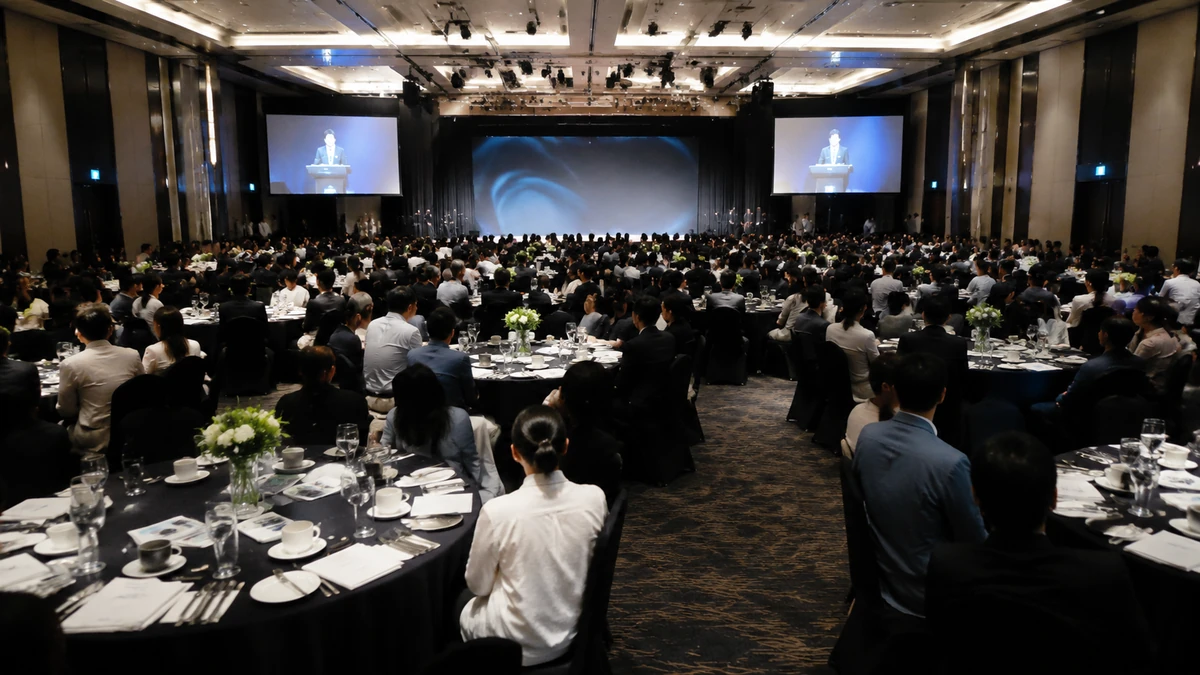
Now Jeonju is being recognized for something less romantic but arguably just as important: food safety and hygiene. The city is set to receive a commendation from the South Korean prime minister after being named an outstanding local government in the country’s food culture improvement program, according to the Yonhap News Agency. The honor will be presented at a national ceremony marking the 25th Food Safety Day in Seoul.
For American readers, the distinction may sound technical, even bureaucratic. But in South Korea, where local governments play a major role in shaping the dining environment through inspections, sanitation initiatives and public campaigns, such an award carries real meaning. It suggests that Jeonju is not only a city with a strong culinary brand, but one that has been judged by national authorities to be maintaining that reputation through systems of public oversight.
That matters because destination dining has changed. In an era when tourism boards across the world market neighborhoods through food halls, street food and local specialties, the competition is no longer just about which place looks most authentic on Instagram. It is also about whether visitors feel safe eating there, whether restaurants operate in clean conditions, and whether local officials treat food culture as part of public infrastructure rather than just entertainment.
Jeonju’s latest recognition points to that shift. It suggests that in modern tourism, especially in Asia’s highly competitive domestic travel market, being delicious is no longer enough. A city also has to be dependable.
Why Jeonju matters in Korean food culture
To understand why this award resonates in South Korea, it helps to understand Jeonju’s place in the national imagination. Jeonju is often described in Korean media as one of the country’s signature food cities, a place where visitors go not only for landmarks but for a full culinary experience. If Seoul represents the fast-moving capital and Busan the coastal port city with a strong seafood identity, Jeonju is often associated with preservation, tradition and regional taste.
It is perhaps best known internationally for bibimbap, the colorful rice dish topped with vegetables, meat, egg and chili paste that has become one of Korea’s most recognizable exports. Jeonju-style bibimbap is treated by many Koreans as a benchmark version of the dish. But the city’s food reputation goes much deeper than a single menu item. It is also linked to traditional side dishes, or banchan; to hanok village tourism, where visitors stroll among restored Korean traditional houses; and to the broader idea that Jeonju offers an older, more regionally rooted version of Korean cuisine.
For Americans trying to place it, Jeonju occupies a role somewhat like Charleston, South Carolina, or New Orleans does in the United States — not identical, but comparable in the sense that its food identity is inseparable from its historical identity. People do not go there only to eat, but eating becomes central to understanding the place.
That is why the new award matters. Jeonju did not need help becoming known as a food city. That image was already well established. What this recognition does is expand the meaning of that brand. It says that the city’s value is not just cultural nostalgia or culinary prestige, but the more practical work of maintaining standards that make large-scale food tourism sustainable.
For foreign visitors, that may be especially significant. Travelers can appreciate a traditional market, a regional dish or a family-run restaurant, but what often determines whether a destination earns repeat visits is a less visible layer of confidence: Do local authorities take hygiene seriously? Are restaurants being monitored? Is food culture being managed as a public responsibility?
By winning national recognition in food culture improvement, Jeonju is effectively answering yes.
What the award actually means in South Korea
The commendation itself is not a tourism slogan invented by the city. It is tied to an annual evaluation conducted by South Korea’s Ministry of Food and Drug Safety, the central government body responsible for food and pharmaceutical regulation. Each year, the ministry reviews the performance of local governments across the country in projects aimed at improving food culture.
That phrase, “food culture improvement,” may sound vague in English, but in the Korean public-policy context it typically refers to a mix of sanitation, food safety, restaurant practices, public education and efforts to create healthier, cleaner and more trustworthy dining environments. In other words, it is not just about promoting restaurants or celebrating cuisine. It is about the conditions under which food is prepared, served and experienced.
This year, according to Yonhap, Jeonju and Bupyeong District in Incheon were selected for the prime minister’s commendation among local municipalities. In a centralized and highly competitive administrative culture like South Korea’s, such a distinction is not trivial. It represents formal recognition that a city’s local governance has produced results considered exemplary at the national level.
For U.S. audiences, the closest analogy might be a city known for food tourism receiving national praise not merely from a travel magazine, but from federal public health authorities for the way it supports clean and safe restaurant environments. The appeal is less glamorous than a “best food city” ranking, but in many ways more substantive.
The symbolism is also important. The award is being presented at Food Safety Day, a government-backed observance that puts public trust at the center of the discussion. That setting underscores the point: This is not simply a hospitality story. It is a governance story.
And that distinction matters in a country where local governments increasingly use quality-of-life metrics to bolster competitiveness. South Korea’s regional cities have spent years trying to distinguish themselves as domestic travel destinations beyond Seoul. Food has become one of the most effective tools for doing so. But as more places market themselves through local cuisine, the question naturally follows: Who is doing the harder work of maintaining standards behind the scenes?
Jeonju’s recognition suggests the city has found a way to connect culinary identity with administrative credibility.
From “tasty” to “reliable”: a bigger shift in tourism
What may be most noteworthy about this story is the subtle but important change in vocabulary it invites. Jeonju has long been described as a “delicious city,” to borrow the spirit of how Korean tourism language often frames regional destinations. After this award, it can also be described as a city recognized for hygiene and safety.
That may sound like a small distinction, but it reflects a larger evolution in travel culture, both in South Korea and globally. For years, food tourism often leaned on emotional cues: authenticity, atmosphere, tradition, hidden gems. Those remain powerful selling points. But travelers, especially after the pandemic, also think more explicitly about public health, transparency and systems that support safe consumption.
That does not mean travelers expect a rustic food market to feel like a laboratory. It means they increasingly view trust as part of the dining experience. A meal can be adventurous and rooted in tradition while still being served in an environment shaped by strong safety standards. In fact, the most successful tourism destinations today are often those that make those two things feel compatible rather than contradictory.
Jeonju’s award speaks directly to that balance. The city’s food reputation has historically been tied to sensory richness: generous spreads of side dishes, long-simmered broths, traditional Korean table settings and local specialties that emphasize depth over spectacle. What the commendation adds is the idea that these experiences are being supported by a more durable public framework.
For American readers, this may be a familiar dynamic in a different form. Cities like Portland, Oregon, and New Orleans do not build food reputations on flavor alone. Their long-term credibility depends on a network of inspections, municipal standards, business practices and civic management that helps keep the experience appealing at scale. Travelers may never think about those systems when they are seated at a table, but they absolutely feel the results.
That is the broader lesson here. Tourism is often marketed through image, but sustained through management. In that sense, Jeonju’s recognition is less about image enhancement than about image reinforcement. It confirms that the city’s brand is not floating free of public policy. It is being supported by it.
Why this news matters to foreign visitors
For someone planning a first trip to South Korea, Jeonju may not be as instantly recognizable as Seoul, Busan or Jeju Island. International itineraries often prioritize the capital, the Demilitarized Zone, K-pop landmarks, beaches or mountain temples. But within South Korea, Jeonju has long been a staple destination for domestic travelers interested in food, history and a slower, more traditional urban atmosphere.
This award gives foreign visitors another reason to pay attention. In practical terms, it suggests that Jeonju’s appeal is not limited to postcard charm or culinary hype. It is also a place where the local dining environment has received official recognition from the national government.
That can be especially meaningful for visitors who are curious about Korean food beyond what they have seen in Korean barbecue chains or Korean fried chicken spots in the United States. Jeonju offers access to a different side of Korean cuisine — one less centered on trendy exports and more connected to regional identity and traditional preparation.
There is also a broader cultural point worth making. In South Korea, food is not just a matter of taste. It is deeply tied to hospitality, social ritual and local pride. A city’s culinary reputation can shape how it is perceived nationally. That is one reason municipal investment in food-related quality is taken seriously. When a city does well in this area, it is not merely enhancing restaurant business; it is reinforcing civic identity.
For international readers, the takeaway is straightforward: Jeonju is signaling that it wants to be known not only as a place where Korean food tastes authentic, but as a place where the broader eating environment meets a high standard of confidence. In an age of increasing global travel, that kind of message travels well.
It also reflects a larger truth about modern Korean tourism. South Korea is no longer selling itself abroad only through megacity dynamism, K-pop and technology. It is also increasingly highlighting regional destinations with distinct cultural ecosystems. Cities like Jeonju become important in that strategy because they offer texture: local traditions, preserved architecture, slower rhythms and cuisine that feels tied to place.
When those places can pair charm with credible public oversight, they become easier to recommend to a broader international audience.
A regional story with national implications
At first glance, this might read like a routine local-government success story. But viewed more closely, it says something about how South Korea is redefining competitiveness among its cities. Rather than relying entirely on splashy festivals or branding campaigns, local governments are increasingly being measured by whether they can turn everyday systems into public assets.
Food is an ideal arena for that because it sits at the intersection of culture, tourism, health and commerce. A city can build excitement around its signature dishes, but if the dining environment feels inconsistent or poorly maintained, that excitement becomes hard to sustain. Conversely, when local authorities create a culture of trust around food, they strengthen the foundation on which tourism can grow.
That is why Jeonju’s commendation should not be dismissed as just another award. It reflects a policy mindset in which the ordinary mechanics of city management — inspections, oversight, standards and public messaging — become part of the tourism economy.
The contrast with other social news out of South Korea on the same day is telling. Yonhap also reported on a labor-related court case involving the head of a regional newspaper in Jeju accused of failing to pay large sums in wages and severance. The two stories have nothing directly to do with one another, but together they highlight an underlying theme in regional life: public trust is built or broken through systems of responsibility.
In one case, accountability is being tested in court. In the other, it is being affirmed through national recognition. Both point to the same principle. Whether in labor practices or food safety, the reputation of a place depends not only on image, but on whether institutions function credibly.
Seen that way, Jeonju’s food culture award is about more than sanitation. It is about the civic discipline behind a city’s public face.
What Jeonju’s recognition says about Korea’s next tourism pitch
If there is a larger message in Jeonju’s moment, it is that South Korea’s regional tourism story is becoming more mature. The country has already proven it can capture global attention through culture, from K-dramas and K-pop to beauty products and cuisine. The next challenge is persuading travelers that its lesser-known cities offer not only charm, but consistency and care.
Jeonju is well positioned for that conversation. It already has the cultural capital: a strong domestic reputation, a historic core, famous dishes and a clear sense of identity. What the prime minister’s commendation adds is institutional validation. It says that the city’s attractiveness is not just being performed for visitors; it is being supported through governance.
For American readers, this may be one of the more interesting developments in how Korean localities are presenting themselves. The global spread of Korean culture has made many people familiar with the country’s entertainment and major brands. But the deeper story now unfolding is about how regional cities are translating cultural cachet into long-term trust.
That process is less flashy than a hit Netflix series or a viral food trend, but it may ultimately be more important. Travelers remember a city not only for what they saw or ate, but for whether the experience felt secure, welcoming and well run. Those impressions shape return visits, recommendations and international reputation.
Jeonju’s new recognition captures that idea neatly. It is still the city many Koreans think of when they think about traditional food. But it is also becoming a case study in how a culinary destination protects its brand: not by relying solely on heritage, but by investing in the systems that make heritage usable in the present.
In that sense, the story from Seoul this week is not merely that Jeonju won an award. It is that one of South Korea’s most iconic food cities is being recognized for evolving from a place celebrated for taste into a place respected for trust. For a tourism economy increasingly shaped by both experience and accountability, that may be the most important distinction of all.
Comments
Post a Comment