A South Korean City Tries a New Approach to Child Hunger: Digital Meal Vouchers Paired With Health Guidance
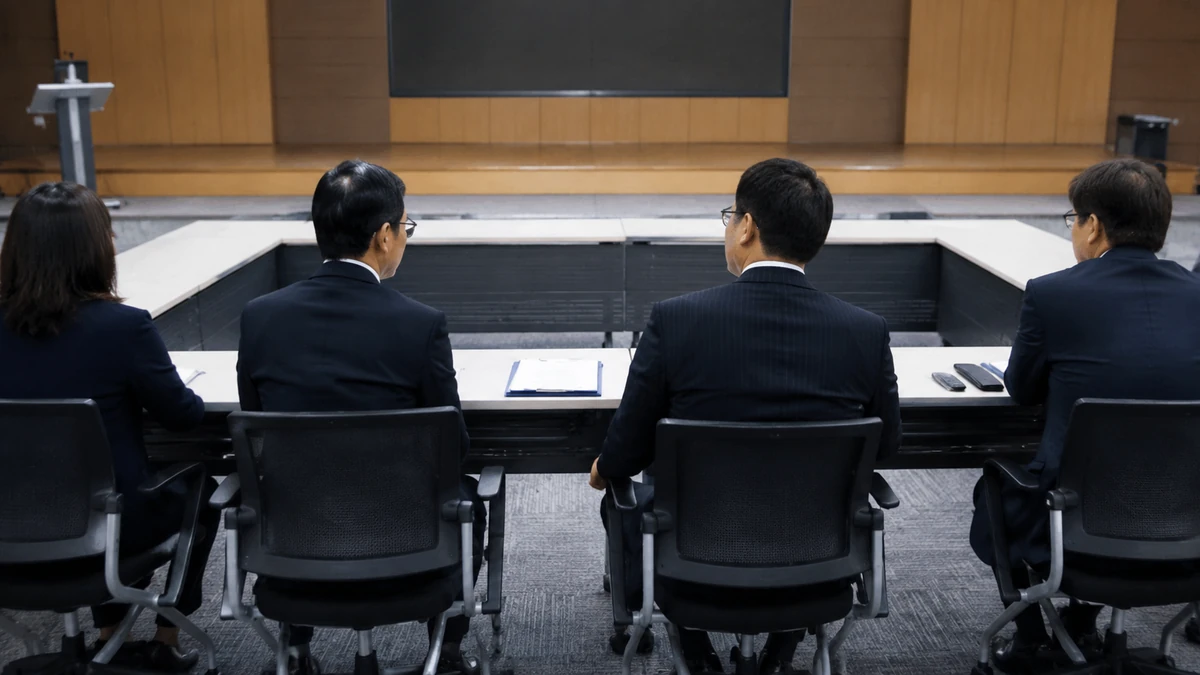
Incheon expands child hunger aid beyond a single meal
Incheon, one of South Korea’s largest cities and home to the country’s main international airport, is launching a new child welfare effort that city officials say is meant to do more than simply help children get through the day. Under an agreement announced Wednesday, the city will work with the Korea Association of Health Promotion and a private social-impact platform company, Nanum Vitamin, to provide mobile meal vouchers for children at risk of missing meals, along with tailored health and nutrition information.
The initiative is aimed especially at school vacation periods and other times when the risk of child hunger rises. That timing matters. In South Korea, as in the United States, school can function as more than a place for classes. It is also part of the daily safety net that helps structure children’s routines, including regular access to lunch and, in some cases, other meals. When school is out, that support can weaken, and the burden shifts back onto families that may already be under financial strain.
According to the city, the new framework is designed to connect immediate food support with longer-term health management. The Korea Association of Health Promotion is contributing 150 million won, or roughly more than $100,000 at current exchange rates, while Nanum Vitamin will use its app-based platform, called Naviyam, to distribute digital meal vouchers and child-specific health information. The city’s message is clear: preventing hunger is important, but so is shaping the conditions for healthy growth.
For American readers, the idea may sound like a hybrid of school meal assistance, a digital benefits card and a public health information campaign rolled into one. That combination is what makes the Incheon program notable. It reflects a broader shift in social policy, in South Korea and elsewhere, from emergency response alone toward a more preventive model that tries to intervene before short-term hardship hardens into long-term inequality.
In practical terms, the program recognizes something that pediatricians and anti-hunger advocates have long said: missing meals is not just a matter of temporary discomfort. It can affect energy, concentration, sleep patterns, emotional stability and the development of lasting eating habits. The city’s decision to link food access with health guidance suggests that officials are treating child hunger not simply as a welfare issue, but as part of a wider public health challenge.
Why school breaks can become a pressure point for vulnerable children
One of the most striking parts of the Incheon announcement is its focus on vacations and other high-risk periods. That may sound like a small administrative detail, but it gets at a larger reality. For many children, the rhythm of daily life changes significantly when school closes. Meals become less predictable. Sleep schedules shift. Parents or guardians who work long hours may have a harder time supervising what children eat and when.
That dynamic is hardly unique to South Korea. In the United States, local school districts and community groups have long grappled with what happens when the academic year ends and students lose regular access to school cafeterias. Summer meal programs exist in many parts of the country for exactly that reason. The challenge has never been just whether food is technically available; it is whether it is easy to access, socially acceptable to use and consistent enough to become part of a child’s routine.
Incheon’s approach appears to be built around that same insight. By specifying vacations and periods of elevated risk, city officials are signaling that hunger does not strike on a uniform schedule. It tends to worsen when everyday routines break down. Rather than waiting until a crisis becomes visible, the city is trying to place support closer to the moment when vulnerability increases.
That preventive logic is important. Public policy often reacts after harm has already occurred: after a child has fallen behind in school, after a health problem has surfaced, after a family has reached a breaking point. What Incheon is attempting is more modest but potentially more effective: help families bridge the gap before the damage deepens. A mobile voucher, if delivered quickly and redeemed easily, can serve as an immediate tool in those moments when a paper application, a trip to an office or a complicated verification process might be enough to stop someone from getting help.
There is also a question of dignity. Anti-hunger advocates in many countries have noted that families sometimes avoid programs that feel overly visible or stigmatizing. Digital distribution can reduce some of that friction. A voucher received and used through a smartphone may feel less exposing than standing in line for assistance or presenting a paper coupon. In a highly connected country like South Korea, where smartphone use is widespread and digital platforms are woven into daily life, that convenience can make a real difference in whether aid reaches children when it is needed.
From feeding children to supporting healthy growth
The language of the agreement matters almost as much as the mechanics. Rather than framing the policy only as support for children who miss meals, Incheon is emphasizing healthy growth. That might sound like bureaucratic wording, but it points to a significant evolution in how local governments understand child welfare.
For years, many hunger-response programs around the world have centered on a basic question: Did the child receive a meal? That remains the first and most urgent concern, and for good reason. But the Incheon model suggests officials are also asking a second question: What kind of relationship to food is being built over time?
The distinction is important. A single meal can solve an immediate problem, but nutrition and health are cumulative. What children eat repeatedly, how regularly they eat, and what guidance families receive about nutrition all shape growth and long-term well-being. By pairing meal vouchers with customized health information, the city is trying to move beyond one-off relief and toward a system that may help reinforce healthier habits.
That does not mean information alone will transform children’s diets. Families make food choices under real constraints, including cost, time, availability and caregiving pressures. No app can erase those structural realities. Still, public health experts often note that information works best when it is paired with actual access. Telling a child or parent what a balanced meal looks like is of limited use if there is no practical way to obtain food in the first place. Incheon’s model attempts to align the two: access to a meal and guidance about nutrition in the same channel.
There is a larger policy trend here as well. Across many advanced economies, governments are investing more in prevention rather than waiting for poor health outcomes to show up in clinics and hospitals. In children, that means paying attention to everyday conditions such as sleep, diet, exercise and routine. South Korea, with its high-tech infrastructure and strong local government networks, has increasingly experimented with delivering public services in ways that are embedded in daily life rather than confined to traditional institutions.
Seen in that light, the Incheon agreement is not just about food assistance. It is part of an effort to redefine what a child health policy looks like on the ground. Instead of treating nutrition, welfare and health education as separate boxes, the city is bundling them into a single intervention that families can use in real time.
The money behind the program — and why that matters
The funding component gives the announcement more weight than a typical policy pledge. The Korea Association of Health Promotion said it will donate 150 million won to support the effort, money that will be used to provide mobile meal vouchers for children. In policy terms, that matters because too many public announcements stop at the level of aspiration. This one comes with a defined source of funding and a stated use for the money.
To be sure, 150 million won is not a massive sum in the context of a major city. It will not solve child hunger on its own, and no one should pretend otherwise. But targeted funding can still be meaningful when it is attached to a specific delivery mechanism and a clearly defined period of risk, such as school vacations. In other words, the practical question is not just how large the number is, but how precisely the funds are used.
There is also something revealing about the structure of the partnership itself. The city is not acting alone. A health association is supplying funds, and a private platform company is providing the digital distribution channel. That division of labor reflects a reality that local governments in many countries face: complex social problems rarely fit neatly inside a single agency’s boundaries. Hunger intersects with health. Health intersects with information access. Information access increasingly depends on digital tools.
For American readers, the arrangement may resemble the way city governments sometimes work with nonprofits, hospital systems and tech partners to fill service gaps. Such partnerships can expand reach and speed. They can also raise questions about accountability, privacy and long-term sustainability. Those questions are likely to matter in South Korea, too, especially if similar programs spread or scale up.
Still, as a local governance model, the Incheon effort is notable because it does not rely solely on city bureaucracy. It uses outside funding and a private-sector platform to strengthen the public safety net. Supporters would argue that this is a practical response to modern social needs. Critics may ask whether essential welfare services should depend on philanthropic donations or app-based intermediaries. Both views are worth watching as the program develops.
At a minimum, the financial commitment gives the policy operational credibility. It suggests this is not merely symbolic messaging about child well-being, but an attempt to put resources behind a more integrated approach to nutrition and health.
Why a mobile voucher system fits South Korea’s digital landscape
The use of mobile meal vouchers is not just a technological flourish. In South Korea, digital platforms are central to everyday life in ways that can surprise outsiders. People commonly use smartphones for banking, transportation, shopping, government notices and social services. Local governments often work with digital systems to improve the speed and convenience of public programs.
That context helps explain why an app-based model makes sense in Incheon. A mobile voucher can be issued quickly, updated easily and redeemed without the physical limitations of paper coupons. For families, that can mean fewer administrative hassles. For the city and its partners, it can mean clearer tracking of how benefits are distributed and used, though details about oversight and data protections will remain important.
The health information component also fits this broader digital culture. If a parent or child is already accessing a voucher through an app, it is relatively easy to attach tailored nutrition guidance, reminders or basic health information in the same place. The app then becomes more than a payment tool; it becomes a point of contact between public policy and daily behavior.
That said, digital convenience is not the same as universal access. Even in a country with high smartphone penetration, not every family navigates apps with the same ease. Some households may face challenges related to digital literacy, disability, language or unstable phone service. Any program that relies on a platform has to account for the possibility that the people most in need may also be those who encounter the most barriers to using it.
There is also the question of what kind of information children and caregivers will receive. The announcement emphasized customized health information for children, but the success of that piece will depend on execution. Guidance needs to be clear, culturally appropriate and genuinely useful, not just generic advice that gets ignored. If families are expected to use the app as more than a voucher wallet, then the information it provides must be easy to understand and tied to real choices people can make within their circumstances.
Even with those caveats, the digital design gives the program an immediacy that older welfare systems often lack. It reflects an increasingly common belief in South Korean public administration: that a program is only as effective as its delivery mechanism. If a benefit is too slow, too complicated or too awkward to use, it may exist on paper but fail in practice. Incheon appears to be trying to close that gap.
A broader lesson about access in South Korean health policy
The Incheon announcement also fits into a wider story unfolding in South Korea about access — not only to hospitals and doctors, but to the practical conditions that shape health before anyone ever seeks medical care. On the same day as the Incheon news, another local government initiative drew attention in a different part of the country: Chuncheon, a city in northeastern South Korea, publicized a mobile medical service aimed at older rural residents and agricultural workers who may have difficulty reaching health facilities.
The two efforts serve very different populations. One focuses on children at risk of hunger in an urban region. The other addresses medical access for rural residents. But they share a common assumption: health outcomes are shaped not just by need, but by the ease or difficulty of reaching help. In one case, the barrier is access to meals during vulnerable periods. In the other, it is access to medical services in places where distance and infrastructure matter.
That overlap is revealing. It suggests local governments in South Korea are increasingly moving away from a passive model in which residents are expected to find and navigate services on their own. Instead, services are being designed to move closer to daily life — through mobile clinics, digital apps, targeted outreach and location-specific interventions.
For Americans, there is a familiar parallel. In the United States, many of the hardest public health problems are no longer understood solely as hospital issues. They are tied to transportation, food access, housing, family schedules and information gaps. The phrase “social determinants of health” has become common in policy discussions for exactly this reason. South Korea may use different language and institutions, but the underlying logic is similar.
Incheon’s program illustrates that logic in a particularly concrete way. The city is treating a meal not just as a calorie transaction, but as part of a larger health ecosystem. It is also acknowledging that service design matters. A child who qualifies for help but cannot easily use it is not meaningfully protected. Bringing together funding, digital delivery and health information is an attempt to reduce that gap between eligibility and real-life access.
What to watch as the program moves from announcement to reality
The bigger test will come not in the signing ceremony, but in implementation. The city has outlined an approach that is easy to understand and politically appealing: provide children with digital meal vouchers during periods of greater hunger risk and pair those vouchers with tailored health information. Whether that model succeeds will depend on several practical questions.
First, how accurately can the system reach the children who need it most? That includes identifying eligible recipients in a timely way and ensuring that support arrives when school schedules or household circumstances create real risk. A well-designed benefit that arrives too late is still a weak safety net.
Second, how usable will the voucher system be for families? Convenience is one of the program’s main selling points. If the app is easy to navigate and the vouchers can be redeemed without confusion or social stigma, that could significantly improve uptake. If the process proves more cumbersome than advertised, some of the policy’s promise could fade quickly.
Third, how meaningful will the health information be? Officials have framed the effort as a shift from meal provision alone to nutrition and health support. That is an ambitious and worthwhile goal. But it will require information that is not only personalized, but actionable. Families need guidance that respects how people actually live, shop and eat — especially under budget pressure.
Finally, there is the question of continuity. Programs aimed at children are often most effective when they are not isolated events. The real value of Incheon’s initiative may depend on whether it becomes part of a broader, sustained child health strategy rather than a temporary campaign tied to one funding stream or one high-profile announcement.
Even at this early stage, though, the program sends a clear message about where local health policy may be headed in South Korea. It suggests that officials are increasingly interested in integrated responses that connect welfare, nutrition, digital access and prevention. In that sense, the initiative is about more than food assistance. It is about rethinking what public support should look like in the everyday lives of children.
That is a challenge cities around the world are still trying to solve. Hunger is urgent, but healthy growth is cumulative. Incheon’s new effort does not eliminate that tension. What it does do is acknowledge that the best response may not be choosing between emergency aid and long-term health policy, but finding ways to join them together before children fall through the cracks.
Comments
Post a Comment