A small sentence with big consequences
In American sports, the survival of a league can sometimes hinge on a deep-pocketed owner, a TV deal or a city willing to keep a franchise alive. In South Korea this week, that stabilizing force appeared in the form of a brief but consequential statement of intent from SOOP, a digital streaming platform company formerly known as AfreecaTV. According to South Korean reports, the company told the Korea Volleyball Federation, or KOVO, on Tuesday that it intends to acquire the women’s professional volleyball club currently owned by Pepper Savings Bank.
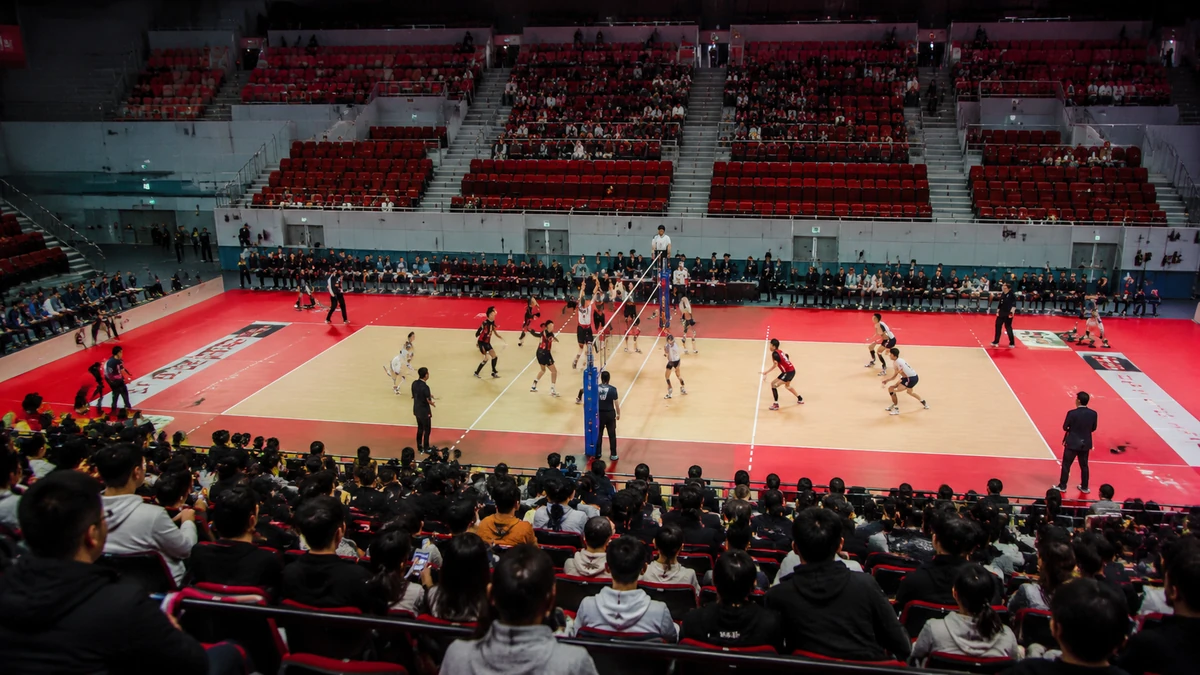
On paper, that may sound like a routine ownership story — one company out, another company in. But in the context of Korean women’s volleyball, the implications are much larger. If the deal is completed, the women’s top-flight league is expected to remain at seven clubs, preserving the structure that underpins the season schedule, competitive balance, ticket sales, media planning and the habits of fans who follow the sport week after week.
That is why the reaction in Korean volleyball circles has been outsized relative to the spareness of the announcement. This was not simply a rumor on social media or a speculative leak. Reports say SOOP formally delivered its intention to KOVO, and the matter was shared with the league’s clubs. No final transfer has been completed, and the process still requires league approval and related steps. But for a sports ecosystem that had reason to fear contraction, even the official expression of interest functions as a signal flare: There is, at least for now, a plausible path to continuity.
For readers in the United States, it may help to think of it less as a blockbuster acquisition and more as a league-preservation story. In niche or mid-tier sports markets, the number of franchises is not just a statistic. It can determine whether a season feels viable, whether sponsors stay engaged and whether fans believe the product they love will still look recognizable next year. That is the mood surrounding this development in South Korea — relief first, details later.
And in a country where women’s volleyball has carved out a meaningful space in the sports culture, continuity matters. The league does not operate on the same global scale as the NBA, Premier League or even South Korea’s baseball circuit. But it occupies an important domestic role, with a loyal fan base, televised matches and a place in the broader Korean sports conversation. Saving a team from disappearing, or preventing the league from shrinking, is therefore not just an accounting exercise. It is a defense of the league’s credibility.
Why seven teams matters more than it sounds
To an outsider, the difference between a seven-team league and a six-team league may seem minor. In practice, it can be the difference between stability and prolonged disruption. A league’s number of teams affects everything from the format of the schedule to travel planning, roster-building timelines, television inventory and sponsor expectations. It also shapes the rhythm of fandom. Supporters learn when the season peaks, which rivalries matter and how to follow a familiar competitive arc. When a team disappears, that rhythm breaks.
That concern appears to be at the heart of the strong response to SOOP’s interest in buying the Pepper Savings Bank club. South Korean reports framed the potential acquisition as a way of preserving the seven-club structure in the women’s league. The significance here is less about expansion than about survival. No one is celebrating a flashy new entrant shaking up the market; instead, fans and league officials appear to be reacting to the prospect that the existing framework may hold.
That distinction is important in Korean sports, where many professional teams are owned by corporations rather than independently operated local ownership groups in the American mold. Team names often reflect company brands, and clubs can function as both competitive organizations and marketing vehicles. That structure means changes in corporate strategy can have direct effects on the sports landscape. If a company decides a team no longer aligns with its priorities, the consequences can reverberate through an entire league.
American readers might compare it, loosely, to the way regional sports fortunes can change when a major owner walks away from a WNBA, NWSL or minor league franchise. The scale and business model are different, but the principle is familiar: In a league that is still building long-term commercial strength, every team matters disproportionately. Losing one does not just subtract one logo from the standings. It unsettles the entire architecture.
That is why this story has been received less as corporate maneuvering and more as a test of the league’s staying power. A preserved seven-team setup means players can prepare for a season with fewer unknowns. Clubs can budget against a stable format. Fans can invest emotionally in a league that still resembles the one they supported last season. In sports, predictability is not always exciting on the court, but it is often essential off it.
The hurdles are not gone, but the process is moving
For now, the story remains procedural as much as it is emotional. Reports indicate that KOVO has communicated the development to relevant clubs and may convene an extraordinary board meeting as early as next week to begin the process of approving SOOP’s membership in the league. That detail matters because it shows the proposal has moved beyond casual interest and into the machinery of league governance.
In South Korea, as elsewhere, the purchase of a professional sports team is not complete simply because a buyer wants in. League rules, financial standards, membership requirements and negotiations with existing stakeholders all come into play. The reporting around this case has been careful on that point: If the acquisition is finalized, the seven-team structure is expected to remain intact. That “if” is doing real work. The direction is clearer than it was before, but the ending has not yet been written.
Still, in the world of sports administration, momentum matters. Once a buyer has formally notified the league and the board begins preparing to review membership, the conversation changes. The focus shifts from whether anyone is interested to whether the terms can be approved and executed. In that sense, SOOP’s move seems to have changed the psychological state of the league. The most immediate fear — that the women’s league might be forced to confront a sudden structural reduction — has eased, at least somewhat.
That does not mean skepticism has disappeared. Seasoned sports executives and reporters know that proposed transactions can stall over governance disputes, timing, financing or disagreements among league members. Korean coverage has also been measured, emphasizing that the process remains underway rather than settled. But it is precisely because the stakes are structural that even incremental progress feels significant.
The broader lesson is one American sports fans would recognize. League stability often depends on mundane but decisive institutional steps: board votes, membership approvals, transfer agreements and negotiated fees. Those moments rarely produce the drama of a championship game, yet they can have a deeper long-term effect. A franchise saved in a conference room can matter as much to a league’s future as a star player saved at the trade deadline.
The money issue appears to have been the turning point
If there was a central obstacle in these talks, Korean reporting suggests it was money — specifically fees tied to joining the league and contributing to the sport’s development fund. That is not surprising. In virtually every sports market, the hardest part of saving or relocating a franchise is often not vision or branding but the terms of entry. Who pays what, and under what conditions, can determine whether a deal lives or dies.
According to reports citing a volleyball industry official, KOVO had initially sought an entry fee of roughly 2 billion won, or about $1.4 million at current exchange rates, using a standard associated with a new team. SOOP reportedly resisted that demand, making negotiations difficult. For American readers, the number itself may not sound staggering by major U.S. professional sports standards. But scale matters. In a league outside the financial orbit of the NFL, NBA or Major League Baseball, such fees can become serious sticking points.
The same reports say the two sides eventually reached what was described as a dramatic agreement after adjusting the total amount. The exact structure of that compromise has not been fully laid out in the summary available, but its significance is obvious. Once the biggest cost-related barrier was addressed, the path toward membership and acquisition became much more realistic.
That may be the most tangible takeaway from this episode. Sports leagues are often described in lofty language about tradition, identity and fandom, and all of that is real. But when it comes to whether a team survives, spreadsheets can matter more than sentiment. If SOOP and KOVO were able to bridge the gap on fees and development contributions, then the story is not merely that a tech-platform company wants a volleyball team. It is that the league and the buyer appear to have found a financial formula that could keep the league whole.
In that sense, the episode reflects a familiar tension in modern sports. Leagues want to protect standards and ensure that incoming owners are serious, solvent and committed. Buyers want a rational entry price and a structure that gives them room to invest in operations, marketing and talent rather than simply paying for permission to enter. The balance between those goals is delicate. Too strict, and you scare off rescuers. Too lenient, and you weaken the institution. KOVO appears to be trying to thread that needle.
For fans, the negotiations may sound dry. But there is a direct human consequence. When ownership questions linger, players face uncertainty, employees worry about jobs and supporters wonder whether their rituals — attending matches, following favorite athletes, investing in rivalries — are about to be disrupted. Financial agreement, in that light, is not just a business solution. It is a social stabilizer for the league community.
Why a streaming company wants a volleyball club
SOOP’s interest also points to a broader trend in global sports: the increasing overlap between athletic competition and digital content platforms. SOOP is not a traditional manufacturing conglomerate or a legacy financial institution. It is an internet broadcasting company, known in Korea for livestreaming and digital creator culture, and previously operated under the better-known name AfreecaTV. That background makes this potential acquisition especially interesting.
Sports teams today are not only competitive entities. They are content engines. They generate live events, highlight clips, behind-the-scenes footage, athlete personalities, community engagement and year-round discussion. For a platform company, a professional team can serve as both a branding asset and a pipeline for audience engagement. It offers not just ticket revenue or sponsorship possibilities, but a way to connect sports fans to a broader media ecosystem.
That does not mean SOOP’s intentions should be overstated. At this stage, the confirmed facts are limited: It has communicated its intent to acquire the club, and league membership procedures are expected to follow. There is not yet a public blueprint showing how the company would run the team, integrate digital content strategies or reshape the fan experience. Any specific claims beyond that would be speculation.
But the symbolism is still worth noting. Around the world, sports are increasingly shaped by media companies, streaming services and digital-native businesses that see live competition as one of the few reliably communal viewing experiences left. In the United States, audiences have already watched the rise of Amazon in NFL broadcasting, Apple in Major League Soccer and Netflix in sports documentary storytelling. Korea’s case is different in scale and structure, but it belongs to the same broad story: Sports are no longer just played; they are packaged, distributed and monetized through digital ecosystems.
For women’s volleyball in South Korea, that could eventually matter a great deal. The sport already benefits from dedicated fans and television exposure, but a digital-platform owner could, in theory, open new avenues for engagement, especially among younger viewers accustomed to consuming sports through clips, chat-enabled streams and creator-led commentary rather than only through conventional broadcast formats. Whether SOOP pursues that path remains to be seen. But its very presence in this conversation underlines how the business of sports is evolving.
There is also a cultural angle. South Korea is one of the world’s most digitally connected societies, with a sophisticated online media culture and a population highly fluent in platform-based entertainment. The notion that a streaming company might see strategic value in a women’s volleyball team is therefore not as strange as it might first sound to outsiders. In Korea, the boundary between entertainment, fandom, online communities and sports is often more porous than Americans might expect.
What this means for Korean women’s sports
The importance of this story goes beyond league bookkeeping. Women’s professional sports around the world often operate with less margin for error than men’s leagues. They may have strong fan communities and compelling competition, but they are still more vulnerable to ownership instability, uneven sponsorship markets and questions about long-term investment. South Korea’s women’s volleyball league is no exception.
That is part of why preserving the existing seven-team structure carries symbolic weight. It suggests that, even amid ownership turbulence, the women’s game is worth sustaining at its current scale. In practical terms, that means maintaining opportunities for athletes, preserving roster spots and protecting a platform that supports the visibility of women’s professional sports in Korea. Every team in such a league functions as more than a business unit. It is also part of the infrastructure for women’s athletic careers.
American readers may see echoes of debates closer to home. Whether the subject is the WNBA’s expansion strategy, women’s soccer club valuations or media investment in women’s college sports, the same underlying question keeps surfacing: Are institutions willing to treat women’s sports as durable, long-term properties rather than fragile side projects? This episode in Korea does not answer that question definitively, but it does offer an encouraging sign. At a moment of uncertainty, a new corporate player appears willing to step in rather than let the league contract.
The fan perspective should not be overlooked either. One reason this news has been greeted positively is that sports fans often experience structural instability as a breach of trust. They build routines around teams. They buy merchandise, learn player narratives, make time for matches and pass along allegiances to friends or family. When a league loses a team, what disappears is not just a line item on a balance sheet but part of a social world. The possibility of keeping that world intact matters.
And in South Korea, where organized fandom can be intense, digitally savvy and emotionally invested, continuity is especially valuable. Supporters are not simply passive viewers. They are active participants in a broader culture of cheering sections, online discussion and identification with teams and players. A stable league structure gives that culture room to grow instead of forcing it into another period of uncertainty.
The next test is whether intention becomes completion
For now, the most important thing to remember is that this remains an unfolding story. SOOP has expressed its intent to acquire the Pepper Savings Bank women’s volleyball club, and KOVO is expected to begin formal procedures related to league membership. Reports also indicate that a major financial hurdle has been addressed through negotiation. Those are meaningful developments. They are not, however, the same as a finalized transaction.
The next phase will be watched closely because it will determine whether this moment becomes a true turning point or simply a near miss. If the process concludes successfully, the women’s league appears likely to retain its seven-team structure, preserving continuity for the upcoming season and offering reassurance to players, fans and sponsors. If complications emerge, the uncertainty could return quickly.
Even with that caution, the direction of travel matters. In sports, as in politics or business, a formal declaration can alter the landscape before the ink is dry. By stepping forward when the league’s structure seemed vulnerable, SOOP has already changed the conversation. The question is no longer whether the women’s league might shrink without resistance. It is whether Korea’s volleyball authorities and a digital-media company can finish the work of turning intention into institutional stability.
That, ultimately, is what makes this more than a local ownership item. It is a story about how modern sports survive: through negotiated finances, league governance, media evolution and the persistent demands of fandom. It is also a reminder that women’s sports leagues, whether in Seoul or Seattle, often live at the intersection of cultural importance and economic fragility. When a new investor steps in, the result can feel less like a transaction than a reprieve.
For American readers who may not follow Korean volleyball closely, the lesson is simple. A league does not need to be globally dominant for its survival to matter. Sometimes the most revealing sports stories are not about championships or celebrity stars. They are about whether the institutions underneath the games can endure. In South Korea this week, women’s volleyball got a reason to believe it can.
Comments
Post a Comment