Massive Attack, Pixies give South Korea’s Pentaport Rock Festival a global jolt — and a broader story about music beyond K-pop
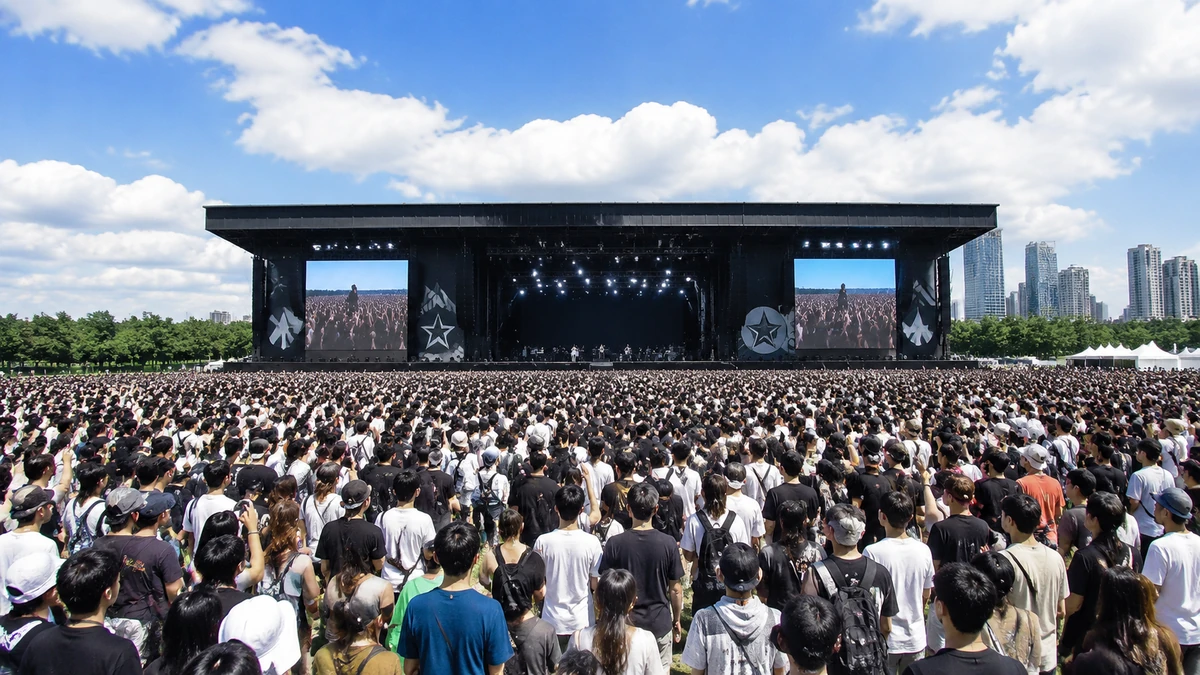
A summer rock festival in South Korea is making an unmistakably global statement
South Korea’s best-known rock festival is aiming for one of its most internationally resonant editions yet. Organizers of the 2026 Pentaport Rock Festival announced a second wave of performers this week, adding British trip-hop pioneers Massive Attack and influential American alternative rock band Pixies to a lineup that already signaled big ambitions. The three-day festival is scheduled for July 31 through Aug. 2 at Songdo Moonlight Festival Park in Incheon, a city west of Seoul that often serves as an international gateway to the country.
For American readers, the headline names alone explain why this announcement matters. Massive Attack helped define a moody, genre-blurring sound that shaped late-20th-century popular music far beyond Britain, while Pixies are widely regarded as one of the most important bands in alternative rock history, with an influence that stretches from Nirvana to Radiohead and countless indie acts that followed. Put those names on the same bill in South Korea, alongside a strong slate of Korean bands, and the festival begins to look less like a regional event and more like a cultural crossroads.
That is the larger significance of this year’s Pentaport announcement. It is not simply that major Western acts are playing in Asia. Big international tours routinely stop in Tokyo, Singapore and, increasingly, Seoul. The more interesting story is that a Korean festival long associated with the country’s domestic rock scene is presenting itself as a place where several generations of music history can meet: British sonic experimentation, American college-rock legacy and a distinctly Korean live-music culture that remains overshadowed abroad by the enormous global success of K-pop.
For many Americans, South Korean popular music is nearly synonymous with K-pop idols, synchronized choreography and meticulously produced arena spectacles. That image is not wrong, but it is incomplete. Pentaport offers a corrective. Its lineup points to a South Korean music ecosystem that is broader, messier, more band-driven and more stylistically adventurous than many casual international observers realize. In that sense, the festival is doing something that major American festivals such as Coachella, Lollapalooza or Bonnaroo have long done well: turning curation itself into the story.
Why Massive Attack and Pixies still matter in 2026
Massive Attack’s inclusion adds a particular kind of gravitas. Formed in Bristol, England, in 1988, the group became central to what came to be called trip-hop, though the band’s music has always resisted easy labels. Its work fused electronic music, hip-hop, soul, dub and rock into something atmospheric, politically charged and often emotionally unsettling. Songs such as “Unfinished Sympathy” and “Teardrop” have endured not because they fit neatly into one radio format, but because they opened a lane for music that could be both intimate and cinematic, experimental and accessible.
That matters in today’s streaming era more than it might have a decade ago. Younger listeners increasingly discover music through playlists, algorithms and short-form video clips rather than genre gatekeepers. In that environment, a band like Massive Attack can feel newly current. Its sound, once considered adventurous and niche, now resembles the kind of fluid genre mixing that defines how many listeners consume music in 2026. What once sounded like boundary-pushing experimentation now sounds like an early blueprint for the musical pluralism of the present.
Pixies bring a different kind of weight. Formed in Boston in 1986, the band altered the trajectory of alternative rock with its quiet-loud dynamics, surreal lyricism and ability to make melody feel unstable in thrilling ways. For many American readers, the easiest point of reference is “Where Is My Mind?,” which gained lasting mainstream recognition after its use in the closing scene of the 1999 film “Fight Club.” But reducing Pixies to one famous sync placement would undersell the band’s place in rock history. Their catalog helped define the sensibility that would dominate college radio, underground clubs and eventually the alt-rock mainstream.
The symbolism of pairing Massive Attack and Pixies is especially potent because these are not interchangeable nostalgia acts. They represent different chapters and different aesthetics. Massive Attack evokes the cross-pollination of British club culture, political art and post-industrial mood. Pixies evoke the strange, abrasive and catchy DNA of American independent rock before it became a market category. Together, they make Pentaport feel like a festival built around music history without being trapped by it.
That distinction is crucial. Festivals everywhere have struggled with how to balance legacy bookings with contemporary relevance. Book too many heritage acts and the event can feel like a museum. Book only younger names and organizers risk losing a sense of occasion. Pentaport appears to be trying for a middle path, one in which iconic acts provide the emotional architecture while newer and local performers give the event its present-tense pulse.
Pentaport’s rise says a lot about South Korea’s changing concert market
To understand why this lineup is drawing attention, it helps to understand what Pentaport represents inside South Korea. Established as one of the country’s premier rock festivals, Pentaport has long occupied a different lane from the idol-centered pop industry that dominates international headlines. In a media environment where Korean entertainment exports are often discussed through the lens of hit dramas, streaming rankings and K-pop fandom, Pentaport stands for another side of the country’s cultural identity: the live-band tradition, the indie circuit and the festival audience that prizes discovery as much as spectacle.
That audience has grown up in a country whose music industry has become more sophisticated about live events. South Korea is no longer just a stop on a global tour because of its consumer spending power or its proximity to other Asian markets. It is increasingly a place where the audience is perceived as musically literate, digitally engaged and open to a wide range of genres. In practical terms, that means promoters can sell not just tickets, but a narrative. A booking no longer says only, “This famous foreign act is coming to Korea.” It also says, “This festival belongs on the same international map as other destination events.”
That helps explain why Pixies’ planned appearance as part of the band’s 40th-anniversary world tour carries extra meaning. In the old model of global touring, Asian dates could sometimes feel like an afterthought — profitable, perhaps, but peripheral to the prestige stops in North America and Europe. Increasingly, South Korea is being framed differently: not as a detour, but as a core market and a meaningful audience. For Pentaport, landing a band on an anniversary tour signals recognition that the festival remains relevant within international routing and reputation.
There is also a deeper cultural shift at work. South Korea’s concert business, like the American live-entertainment sector, has learned that curation is its own form of value. In an age when almost any song is available instantly on a phone, festivals justify themselves by creating combinations listeners cannot replicate at home. The draw is not merely hearing songs performed live. It is being inside a temporary cultural world where artists from different generations, countries and styles illuminate one another. Pentaport’s second lineup announcement appears designed with exactly that logic in mind.
For American audiences familiar with the branding power of events like Austin City Limits or Outside Lands, that may sound obvious. But in South Korea, where international coverage still often flattens music coverage into idol news and chart performance, a lineup like this can function as a quiet argument about national musical identity. It suggests that the Korean live scene wants to be understood not only through polished global pop exports, but through the rougher, riskier and more eclectic language of festivals.
The Korean artists on the bill may be the most important part of the story
If Pentaport were simply importing two famous Western acts and surrounding them with filler, the announcement would be less interesting. Instead, organizers also named a group of Korean performers that reflects the variety of the country’s contemporary band culture: Hyukoh, Sultan of the Disco, Na Sang-hyun Band, Dabda, Leenalchi and Say Sue Me-adjacent currents of indie and crossover sensibility, among others represented in the broader festival ecosystem. Even for readers unfamiliar with those names, the structure of the lineup matters. The Korean acts are not framed as opening entertainment before the stars arrive. They are part of the festival’s identity.
Hyukoh is perhaps the easiest entry point for foreign readers. The band has built a reputation for pairing mainstream visibility with indie credibility, an increasingly rare feat in any market. In American terms, Hyukoh occupies a space somewhat analogous to acts that can show up on festival posters, television soundtracks and carefully curated playlists without losing the aura of a serious band. Their presence helps bridge the gap between international curiosity and domestic relevance.
Sultan of the Disco brings a more flamboyant energy, known for mixing groove-heavy band arrangements with a theatrical stage presence. Leenalchi is especially notable because the group has drawn attention for reworking elements of traditional Korean musical expression into a modern band context. For U.S. readers, this deserves some explanation. Korean traditional performance, including vocal styles descended from forms such as pansori, can carry a different rhythmic and emotional logic from Western pop songwriting. When a modern Korean act incorporates those textures into a festival lineup that also includes bands like Pixies and Massive Attack, it signals not novelty for novelty’s sake, but a confidence that Korean music can speak in its own vocabulary while still belonging in a global conversation.
That point is easy to miss if one’s mental model of Korean music begins and ends with idol groups. Pentaport’s lineup hints at a more layered reality. South Korea has indie bands, art-pop experimenters, groove acts, electronic hybrids and musicians who are actively reinterpreting local traditions. The result is not a rejection of K-pop, but an expansion beyond it. Much as American music cannot be fully explained by Top 40 radio, Korean music cannot be fully understood by looking only at what travels most effectively on social media and international streaming charts.
This is why the festival’s Korean bookings matter so much. They help transform the event from a prestige showcase into a portrait of a scene. For foreign fans visiting out of curiosity, those acts may become the discovery. For domestic audiences, they keep the festival grounded in the country’s own musical present. And for Pentaport as a brand, they prevent the event from becoming dependent on imported star power alone.
A festival like this can challenge the narrow way many outsiders see Korean music
There is a broader media angle here that deserves attention. The global rise of Korean popular culture has been one of the defining entertainment stories of the past decade. But global success often creates its own distortions. K-pop became so visible that it started to stand in for all Korean music, much as Hollywood can sometimes stand in for all American film in the eyes of foreign audiences. The effect is understandable but limiting. It can reduce a complex cultural landscape to its most exportable surface.
Pentaport pushes against that flattening. By putting a Korean festival in conversation with artists whose significance is legible to American and British rock listeners, the lineup creates a bridge. It invites foreign audiences into Korean music culture through familiar names, then broadens the field of vision. Someone drawn in by Pixies may leave having discovered Hyukoh or Leenalchi. Someone interested in Massive Attack’s genre fusion may see a Korean scene equally uninterested in rigid boundaries.
That is one reason festivals remain culturally powerful even in a fragmented media era. They can create accidental encounters. Algorithms tend to deepen existing preferences; festivals can interrupt them. A fan who buys a ticket for one act is exposed to others not because a platform predicted a taste match, but because of physical proximity, curiosity and the simple momentum of the day. In that sense, the live festival remains one of the few spaces where cultural discovery is social, collective and unscripted.
For South Korea, that matters because live performance can communicate something that glossy entertainment exports often cannot: texture. A festival audience reveals how people listen, how they dress for summer heat, how they move between stages, how local bands command a crowd and how international acts are absorbed into a domestic setting rather than treated as exotic visitors. These are subtle forms of cultural information, but they often shape how a place is understood more than any press release does.
The timing also matters. As music consumption becomes faster, shorter and more atomized, long-form live experience can feel almost countercultural. An event built around artists with deep catalogs and decades of accumulated meaning offers a reminder that music is not only content. It is memory, environment and shared attention. That may be part of why a lineup featuring Massive Attack and Pixies can still feel urgent rather than merely retrospective.
Incheon becomes a fitting backdrop for a festival with international ambitions
The location is not incidental. Incheon, often known to Americans primarily for its airport or for its central role in Korean War history, has in recent decades increasingly presented itself as a forward-looking international city. Songdo, where the festival is set to take place, is part of a high-profile urban development district built with global connectivity in mind. Holding a major rock festival there carries symbolic weight. It places the event in a landscape associated with transnational flow — people, capital, technology and now, increasingly, culture.
That symbolism aligns neatly with Pentaport’s identity. The festival’s name has long suggested a port city open to exchange, and its programming appears to embrace that metaphor literally. Incheon becomes a meeting point where a Bristol group known for atmospheric, politically tinged soundscapes and a Boston-born alt-rock institution can share billing with Korean bands working from their own local histories and ambitions.
For international tourists or expatriates in South Korea, that also makes the festival more legible as a destination event. Seoul remains the country’s cultural center in the minds of many visitors, but Incheon’s accessibility can be an asset. In practical terms, the city is easy to reach and already geared toward international traffic. In narrative terms, it lets Pentaport present itself as more than a concert series; it becomes part of South Korea’s broader argument that its cultural reach now extends well beyond a single genre and a single city image.
American festivalgoers would recognize the formula immediately. A memorable location can become inseparable from the event itself, whether that is the California desert, a Chicago lakefront or a Tennessee farm. Pentaport’s urban-coastal setting gives it its own version of that identity. The combination of summer weather, open-air staging and a lineup built around both legacy and discovery is precisely the kind of formula that can turn an annual gathering into a cultural marker.
What this lineup ultimately says about South Korea’s place in global music
The biggest takeaway from Pentaport’s latest announcement is not simply that South Korea can attract major foreign acts. That much is already clear. The more revealing fact is that a Korean festival can use those acts to tell a richer story about itself. Massive Attack brings experimentation and atmosphere. Pixies bring rock-historical authority and a touchstone for multiple generations of listeners. The Korean artists bring immediacy, local identity and the promise of surprise. Together, they form a lineup that does not ask audiences to choose between nostalgia and discovery, or between global prestige and domestic substance.
That is a mature curatorial stance, and it reflects a maturing market. South Korean audiences are being treated not simply as consumers eager for foreign names, but as listeners capable of reading context, lineage and artistic contrast. Organizers appear to understand that the modern festivalgoer wants more than celebrity. They want a point of view.
For English-speaking readers, especially those whose introduction to Korean entertainment has come through K-pop, Pentaport offers a useful reminder that South Korea’s musical story is far bigger than any one export phenomenon. It includes guitar bands, experimental hybrids, theatrical funk, reinterpretations of tradition and a live circuit that can sustain meaningful encounters between local artists and international icons. In other words, it looks a lot more like a full national music culture than a niche adjunct to a global pop machine.
That may be why this particular lineup announcement lands with unusual force. It arrives at a moment when international audiences are primed to pay attention to Korean culture, but may still be learning how broad that culture really is. Pentaport is seizing that opening. By bringing together Massive Attack, Pixies and a carefully assembled group of Korean artists, it is making a persuasive case that South Korea’s summer festival season deserves a place on the global music calendar — not as a curiosity, but as a serious destination for listeners who care about how music travels, evolves and connects across borders.
When the gates open in Incheon next summer, the festival will offer more than a weekend of performances. It will offer a snapshot of where global music culture stands in 2026: less siloed by genre, more open to historical depth and increasingly shaped by audiences outside the traditional Western centers of the industry. Pentaport may still be best known in Korea as a flagship rock festival. But with a lineup like this, it is also making a broader claim — that some of the most interesting conversations in contemporary music are happening exactly where global audiences have not always thought to look.
Comments
Post a Comment