A breakout hit that says more than its ranking
Netflix has a new Korean breakout, and this time the buzz is not just about another addictive series from Seoul climbing the platform’s charts. It is about what that success says regarding where Korean television is headed next.
The new series, “Girigo,” an occult-inflected young adult horror drama set in a high school, rose to No. 1 globally in Netflix’s non-English TV category in its second week after debuting near the top of the rankings only days after release, according to South Korean reporting. On the surface, that makes it the latest in a long line of Korean exports to cut through the crowded global streaming market. But the more revealing story is what kind of Korean show is resonating now, and why.
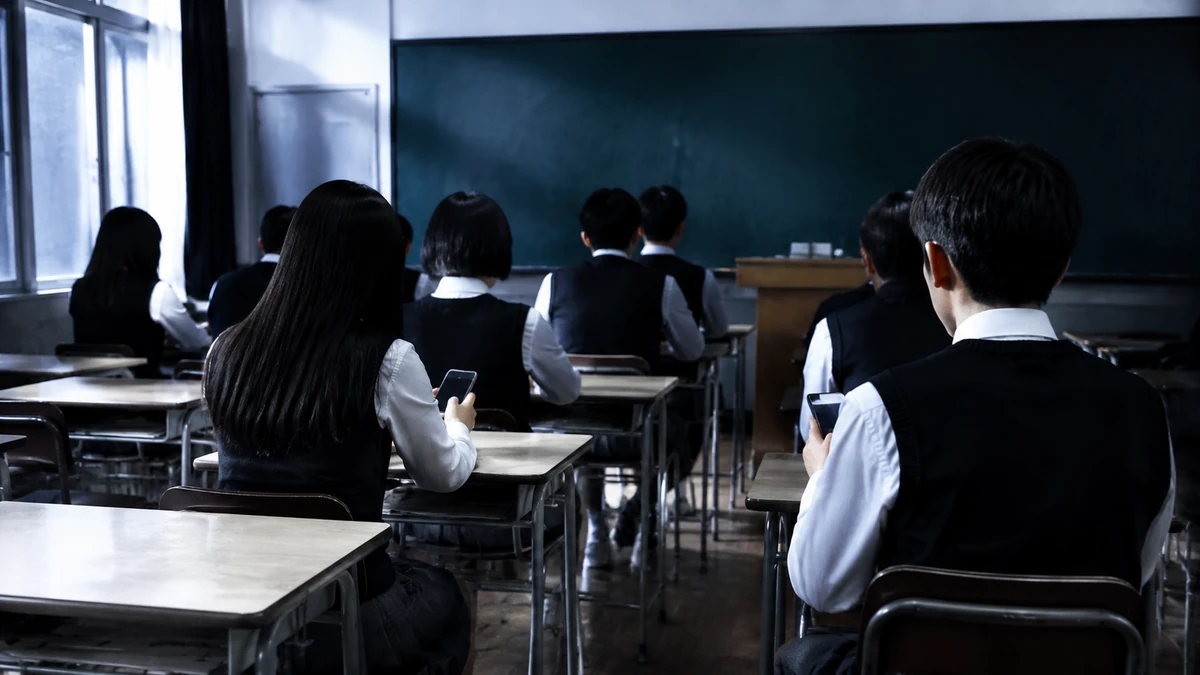
“Girigo” centers on five high school students trying to escape the consequences of a mysterious smartphone app that grants wishes and then unleashes curses, suspicion and a brutal struggle to survive. That setup sounds like familiar streaming-era bait: teenagers, technology, supernatural peril and social paranoia, all wrapped into one bingeable package. Yet the show appears to have landed for a deeper reason. It reflects a striking transformation in one of South Korea’s most recognizable TV settings: the classroom.
For years, school dramas in Korea, much like teen dramas in the United States, often doubled as stories about first love, friendship, ambition and the awkward tenderness of growing up. Think of the emotional place that a U.S. audience might associate with titles such as “Friday Night Lights,” “Euphoria,” “Gossip Girl” or even older high school classics like “The Breakfast Club,” depending on the decade. The setting may vary, but the school itself traditionally functions as a crucible of identity. It is where social status hardens, loyalties are tested and adulthood begins to come into view.
What “Girigo” suggests is that, in the Korean imagination at least, the school is no longer primarily a stage for romance or self-discovery. It is becoming a pressure chamber. The hallways and classrooms remain the same, but the emotional weather has changed. Rather than innocence and possibility, these stories now emphasize dread, control, competition and the claustrophobic fear of being trapped with people who know everything about you.
That shift matters because Korean entertainment has become one of the world’s most influential cultural engines. When a Korean series breaks out, global audiences are not just consuming another hit. They are often getting a window into how South Korean creators are rethinking family, class, ambition, gender and youth. In “Girigo,” the real headline may be less about a No. 1 finish than about the arrival of a darker grammar for Korean school stories — one that translates especially well to an age shaped by algorithmic attention, social comparison and chronic anxiety.
Why the high school setting hits differently in South Korea
To understand why this trend is drawing attention, it helps to understand what school means in South Korea. Education occupies an unusually powerful place in Korean social life, not merely as a route to learning but as a central pathway to status, family pride and future economic stability. High school is often portrayed as intensely competitive, with students navigating long study hours, after-school academies known as hagwons and relentless pressure surrounding college admissions.
American audiences may be familiar with school stress in a general sense, especially in affluent suburban communities or among students chasing elite college admissions. But in South Korea, educational competition is often understood as more systemwide, more concentrated and more openly defining of a student’s social reality. That does not mean every Korean student lives in constant misery, nor that every school story is a social critique. It does mean the setting carries a built-in tension that filmmakers and showrunners can easily intensify.
That is one reason the Korean term “hakwonmul,” broadly referring to school-set dramas or youth stories, has become so flexible. What once often suggested campus romance, coming-of-age emotion or academic rivalry can now accommodate thrillers, horror, survival games and occult tales. In practical terms, that means the school is no longer just the backdrop. It is the mechanism.
In “Girigo,” the cursed app is not simply a supernatural gimmick. It is a precise symbol for how teenage life is experienced now. For many adolescents, in Korea and elsewhere, the smartphone is not a device separate from social life. It is social life. It is where friendships are maintained, hierarchies are measured, secrets circulate and belonging is negotiated minute by minute. An app that promises to grant wishes taps directly into the emotional logic of adolescence: the craving to be seen, chosen, envied, forgiven or remade. That the same app quickly becomes a channel for terror is what gives the premise its sting.
For American viewers, the closest reference point may be the way shows such as “Black Mirror,” “Yellowjackets” or “Heathers” use genre exaggeration to expose the cruelty already embedded in teenage social systems. But Korean creators often drive the tension through a particularly compressed environment. The class structure, the peer surveillance, the rumors, the pressure not to stand out too much while still succeeding — all of it can make the school feel less like a campus than a sealed ecosystem. The horror does not have to break in from the outside. It is already incubating inside the group.
From first love to survival horror
The rise of “Girigo” fits a broader change in Korean school-centered storytelling. The most notable difference is tonal. Where earlier dramas frequently highlighted emotional growth, idealism or youthful innocence, newer works are increasingly interested in what happens when those values collapse under pressure.
That does not mean sweetness has vanished from Korean television. Romantic dramas remain hugely popular, and school-age stories still sometimes trade in nostalgia and hope. But the center of gravity has shifted. Some of the most internationally visible Korean youth series in recent years have leaned into cruelty, fear and systems of punishment. The emotional vocabulary has changed from butterflies and heartbreak to suspicion, isolation, social violence and survival.
“Girigo” appears to crystallize that transition. According to the Korean reporting, critics and viewers have responded not simply to the scares but to the show’s sensory portrait of teenage desperation and anxiety. That is an important distinction. The curse is frightening, but what makes the drama work is that the supernatural threat seems inseparable from emotions the characters already carry: envy, distrust, loneliness, insecurity and the fear of being judged.
In that sense, the series follows a broader global pattern in prestige and streaming television, where genre is often used less as escapism than as diagnosis. Horror and thrillers have become especially useful for depicting emotional states that might otherwise feel too abstract or too familiar. Anxiety becomes a monster. Social exclusion becomes a death sentence. A need for approval becomes a literal pact with darkness.
What makes Korean school dramas distinctive is how efficiently they weaponize ordinary space. A classroom, a hallway, a lunch table, a group chat, a school rooftop — these are places almost everyone recognizes. Yet in contemporary Korean genre storytelling, they can feel as dangerous as any haunted house. The effect is unsettling precisely because nothing about the setting is inherently exotic. It is ordinary, and that ordinariness is what makes the threat believable.
For overseas audiences, that combination of familiarity and specificity is part of the appeal. Viewers do not need to understand every detail of the Korean educational system to grasp the social stakes of a school story. But the Korean version of that world often amplifies certain pressures in a way that feels fresh, even when the emotions themselves are universal. The school becomes a location where global anxieties — status, loneliness, digital dependency, moral compromise — are distilled into an especially intense form.
The school as a closed world
One of the most telling ideas in the Korean discussion around “Girigo” is that the school now functions as a closed or sealed space, ideal for dark genre storytelling. That concept is key to understanding why these shows are so effective.
A closed setting naturally heightens suspense. It narrows the options for escape, forces characters into repeated contact and makes every rumor or alliance matter more. American audiences know this structure well from everything from locked-room mysteries to summer-camp slashers. But the high school setting adds another dimension because students are not just physically confined. They are socially pinned in place.
Teenagers cannot easily leave their reputations behind. They see the same classmates every day. Their identities are constantly mirrored back to them through gossip, exclusion, admiration and humiliation. Within that kind of system, a small disruption can quickly spiral into full-scale panic. A leaked secret, a manipulated vote, a dangerous app or a viral accusation can spread with terrifying speed.
That is what gives a series like “Girigo” its double tension. The characters are dealing not only with a paranormal force but with the breakdown of trust among friends who once shared everything. In many horror stories, the threat comes from the unknown stranger, the masked killer or the creature in the dark. Here, the threat also comes from the nearest person — the friend in the next seat, the classmate in the group chat, the person who knows which wish you made and why.
This is one reason Korean school thrillers often feel so emotionally sharp. They understand that adolescence is already a kind of survival contest, even without literal monsters. Add a curse, a virus or a coercive social rule, and the drama does not feel imported into teenage life. It feels like teenage life rendered visible.
In the American imagination, school often swings between two poles in pop culture: a sentimental proving ground and a battleground of hierarchy. Korean creators are increasingly collapsing those poles into one. The school is still where identity is formed, but that formation happens through confrontation with systems that are merciless, irrational or impossible to fully escape. The result is not merely darker entertainment. It is a reinterpretation of what youth itself looks like on screen.
‘Girigo’ joins a growing Korean trend
“Girigo” does not stand alone. It joins a line of Korean series that have reengineered the school setting into a site of collective dread. Two of the clearest examples are “Pyramid Game” and “All of Us Are Dead,” both of which have helped define this darker phase of Korean youth storytelling for international audiences.
“Pyramid Game” is built around a cruel class voting system that determines who will be ostracized, effectively turning bullying into an organized social order. “All of Us Are Dead,” by contrast, uses a zombie outbreak to trap students on campus and force them into life-or-death decisions. On paper, those premises are wildly different. One is social and psychological, the other apocalyptic and kinetic. Yet they share essential DNA with “Girigo.”
In all three, the students occupy the same fundamental environment: school. In all three, the crisis intensifies through peer dynamics rather than through a single villain acting alone. And in all three, the conflict emerges from a system or condition that rapidly transforms everyday life into a question of survival. A class vote, a cursed app and a viral infection are different devices, but each one flips the school day into a moral emergency.
That common structure helps explain why these shows travel so well internationally. Global audiences may not know the nuances of Korean slang, school customs or academic routines, but they understand what it means to be trapped in a social order that suddenly turns hostile. They understand the feeling of wanting to belong while fearing exposure. They understand the terror of realizing that ordinary rules no longer protect you.
It is also worth noting that Korean creators have become especially adept at blending genre thrills with social observation. This is part of what has made Korean film and television so influential over the past decade. From “Parasite” to “Squid Game” to a wide range of dramas and thrillers, Korean storytelling often embeds commentary on hierarchy, inequality and collective pressure inside narratives built for mass entertainment. “Girigo,” based on the reporting out of Seoul, seems to operate in that same tradition, using supernatural horror to get at something uncomfortably realistic about how teenagers live now.
That formula is not uniquely Korean, but Korean creators have proven unusually skilled at calibrating it for both domestic and global consumption. They can make a story feel deeply rooted in Korean social structures while still legible to viewers in Los Angeles, London or Manila. That balance of local specificity and universal emotional logic is one of the great strengths of the Korean Wave, or Hallyu, the term used to describe the global spread of South Korean popular culture.
Why global audiences are responding now
The timing of “Girigo’s” rise matters. The international appetite for Korean content is no longer new, and the novelty factor alone cannot explain a global No. 1 finish. Instead, the show appears to be connecting with a broader mood in popular culture.
Audiences around the world have spent the past several years consuming stories shaped by instability: pandemic fallout, mental health strain, digital overload, social fragmentation and economic insecurity. Teenagers have often been at the center of that unease. Even in countries with very different school systems, young people have become symbols of how modern life feels increasingly mediated, monitored and precarious.
That may be why a horror series about a wish-granting app gone wrong resonates beyond Korea. It captures an anxiety that is not limited by language or nationality. Many people, especially younger viewers, understand the lure of a device that seems to offer instant transformation. They also understand how quickly online validation can mutate into shame, obsession or danger. The supernatural frame simply gives shape to a fear that is already familiar.
There is also the Netflix factor. Streaming platforms have trained audiences to sample stories from outside their own language communities, especially when the hook is strong and the stakes are immediate. Korean series have benefited enormously from that shift, but they have not succeeded on accessibility alone. They have succeeded because the storytelling is often bold, emotionally direct and structurally ruthless. “Girigo,” by all indications, delivers on precisely those qualities.
For American viewers, the deeper appeal may lie in the way Korean shows often take adolescent emotions more seriously than U.S. teen entertainment has traditionally done. Not always, of course, but often enough to notice. Korean youth dramas and thrillers tend to treat social humiliation, institutional pressure and emotional repression not as side plots but as foundational forces. That gives even the most sensational premise a certain gravity.
In that sense, the success of “Girigo” says something larger about the evolution of the Korean Wave. The export story is no longer just about K-pop idols, glossy romance dramas or prestige survival thrillers starring adults. Korean creators are now shaping the global conversation around youth narratives too, and doing so with a tonal confidence that feels increasingly influential. The school drama, once a familiar and often sentimental form, has become a laboratory for some of the sharpest genre experimentation in Korean television.
What ‘Girigo’ may mean for the future of K-drama
If “Girigo” is remembered as more than a temporary streaming sensation, it will likely be because it marks an inflection point in how Korean school stories are understood abroad. The classroom is no longer just where young characters prepare for life. It is where life’s pressures arrive early, concentrated and often weaponized.
That does not mean every future Korean youth drama will turn to occult horror or survival mechanics. Trends in entertainment rarely move in only one direction. Romantic and nostalgic school stories will continue to exist, just as American teen TV still makes room for both sweetness and cynicism. But “Girigo” strengthens the case that the darker, more psychologically charged version of the Korean school drama is not a niche offshoot. It is becoming central.
That evolution should interest anyone tracking where global television is headed. In an era when the most successful stories often fuse genre spectacle with social unease, Korean creators are showing how a hyperlocal setting can carry worldwide emotional force. A classroom in Seoul can feel as immediate to a viewer in Chicago as a hallway in an American suburb, because the core tensions — belonging, comparison, fear, ambition, betrayal — are shared. What changes is the intensity and the lens.
For now, “Girigo” stands as the latest evidence that Korean television continues to reinvent forms that many viewers thought they already knew. The school drama is not disappearing. It is mutating. And in that mutation, Korean storytellers may have found one of the most potent ways yet to speak to a global audience living with its own versions of dread.
If the old classroom drama promised growth and romance, the new one asks a harsher question: What happens when the place meant to shape you becomes the place that exposes everything you fear? Judging by the worldwide response to “Girigo,” that is a question viewers everywhere are ready to confront.
Comments
Post a Comment