North Korea’s U-17 Women Rout Japan 5-1 for Asian Title, Sending a Loud Message About the Region’s Soccer Future
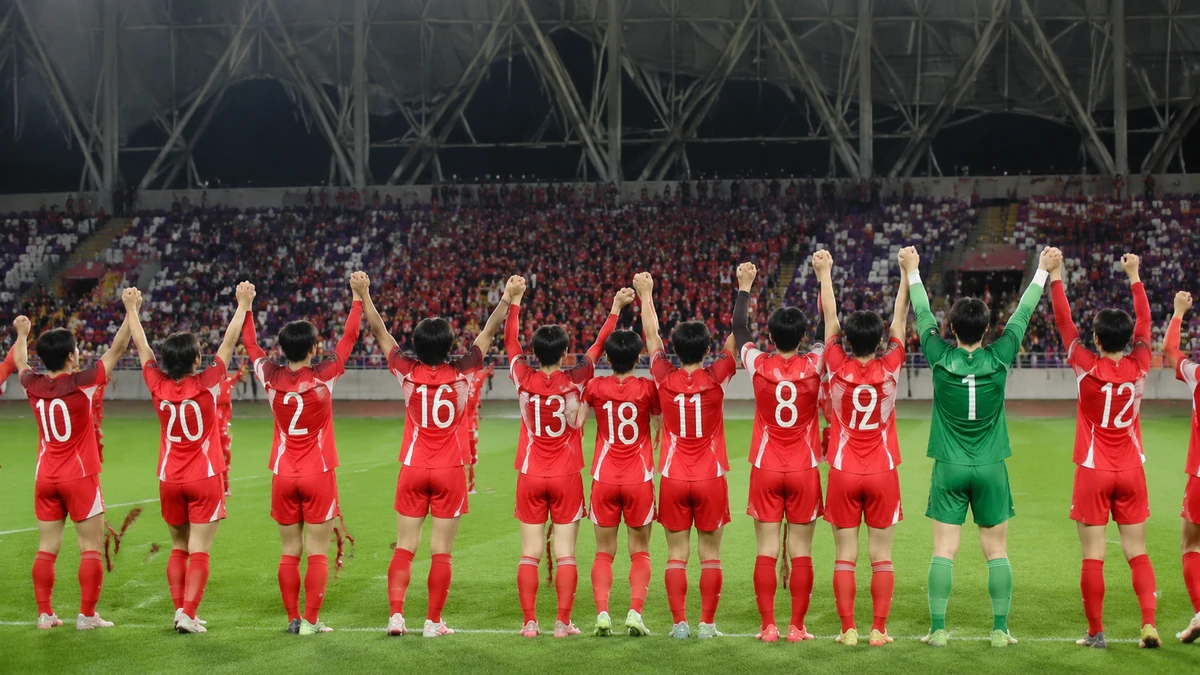
A one-sided final on one of Asia’s biggest youth stages
North Korea’s under-17 women’s national team delivered the kind of championship performance that turns a youth tournament into a major statement. In the final of the AFC U-17 Women’s Asian Cup on May 17 in Suzhou, China, North Korea overwhelmed Japan 5-1, claiming its fifth title in the competition and establishing itself as the most decorated team in the tournament’s history.
The score alone makes the result stand out. Finals between elite programs, especially in a region as strong as East Asia, are usually tight, tactical and decided by a single moment. This one was not. North Korea seized control, answered Japan’s only goal almost immediately and then buried the match with a flood of late scoring. Forward Yu Jong Hyang scored four times, the sort of individual performance that can define not only a final but an entire age group’s reputation.
For American readers, the closest comparison might be a blue-blood college basketball program not just winning a conference championship, but blowing out its biggest rival in the title game while setting a new record for all-time championships. It was not merely that North Korea won. It was how decisively it won, and against whom.
Japan came into the final as one of the giants of girls’ and women’s soccer in Asia. Its senior women’s national team won the 2011 Women’s World Cup and has long been admired for its technical style and organized play. At youth level, Japan has also been one of the region’s model programs. So a 5-1 result in a continental final is not just a trophy result. It is a shock to the balance of expectations.
The win also gave North Korea back-to-back titles after winning the previous edition in Indonesia in 2024. Repeating in any sport is difficult; repeating at the international level often says more about a program than a single breakthrough title ever could. It suggests a pipeline, a structure and a standard that can survive beyond one lucky group of players.
That is what made the night in Suzhou feel larger than a youth competition. It looked like a marker of depth, not just a moment of form.
Yu Jong Hyang’s four-goal masterpiece
Every championship game has a central figure, and this one belonged to Yu. She scored in the 30th minute to open the scoring, added another five minutes into the second half, then capped a hat trick in the 81st minute before adding her fourth in the 89th. Four goals in any final is extraordinary. Four against Japan, in a game that decides the best team in Asia at this age level, is something else entirely.
What made Yu’s performance especially striking was not simply the total. It was the timing. Her first goal gave North Korea a deserved edge after a strong opening half hour. Her second created separation just after halftime, often one of the most psychologically important moments in a match. Her third and fourth arrived late, after the competitive tension had tilted decisively in North Korea’s favor, and served as punctuation marks on a dominant night.
That pattern matters because it shows she was not just finishing off chances once the game had already opened up. She shaped the game’s rhythm from beginning to end. In American sports terms, this was less like a player padding stats in garbage time and more like a star taking over every key stretch: the first breakthrough, the momentum swing after intermission, the dagger and then the exclamation point.
There was also a supporting contribution that should not be overlooked. After Japan pulled one back in the 53rd minute through Hayashi Yumi and briefly hinted at a comeback, North Korea responded just two minutes later with a goal from Kim Won Sim. That quick answer may have been the turning point that removed any suspense from the contest. Teams in finals are often judged by how they react after conceding. North Korea’s response was immediate and ruthless.
For scouts, coaches and analysts, those details matter almost as much as the result. Youth tournaments are about identifying future senior national team players, but they are also about understanding temperament. Can a player score under pressure? Can a team reset after a setback? Can a leading side avoid panic when the opponent grabs momentum? North Korea’s answer to each question in this match was yes.
Yu’s name is now likely to travel far beyond the usual circle of Asian youth soccer followers. In women’s soccer, breakout performances at youth tournaments have often served as early introductions to future stars. Not every youth standout becomes a senior legend, of course, but these moments are watched closely because they can be early clues about where the women’s game is headed next.
Why this result matters beyond one trophy
On paper, this was a youth tournament final. In practice, it carried the weight of a regional power test. East Asia has long been one of the most competitive zones in women’s soccer, with Japan traditionally serving as a global reference point and North Korea often viewed as a formidable but less consistently visible force, especially to Western audiences.
That visibility gap is important. North Korean sports achievements are often filtered through politics, limited media access and the country’s relative isolation. For many Americans, North Korea is generally associated with nuclear diplomacy, missiles and authoritarian rule, not with a highly successful girls’ soccer system. But on the field, especially in women’s and youth football, North Korea has compiled a record that demands serious attention.
Its fifth U-17 Women’s Asian Cup title moved it past Japan’s four and gave it sole possession of the tournament record. In sports, records help simplify history. They become shorthand for sustained excellence. When a team moves to the top of an all-time list by beating the previous co-leader 5-1 in the final, the symbolism is hard to miss.
This is why the score line matters so much. A 1-0 win on a set piece would still have delivered the title. A penalty shootout would still have counted the same in the official record book. But a four-goal margin in a continental final tells a different story. It suggests command of the match, not survival. It points to superior finishing, better control of momentum and perhaps a deeper comfort level in the occasion.
None of that guarantees future dominance at the senior level. Youth success does not always translate cleanly into senior success, in soccer or any other sport. American fans have seen this in basketball, baseball and soccer alike, where age-group stars sometimes plateau while late bloomers emerge later. Still, youth tournaments often offer a revealing preview of future strength because they show what kind of talent pipeline a country is producing.
From that perspective, North Korea’s title is significant not just for what it says about this group of teenagers, but for what it suggests about the country’s continued investment in women’s soccer development. A program does not accidentally dominate a regional competition over multiple cycles. It needs coaching continuity, player identification and a style that can be repeated under pressure.
That is the broader message from Suzhou: North Korea’s girls’ program remains one of the central forces in Asian soccer, and perhaps one of the least understood by audiences outside the region.
The Japan factor makes the statement louder
If North Korea had beaten a surprise finalist by four goals, the title would still have been impressive. Doing it against Japan is what gives the win its wider resonance.
Japan has long represented a benchmark in women’s soccer. The country’s women’s national team, widely known by the nickname Nadeshiko Japan, helped popularize a technical, possession-based approach that many American fans would recognize as a contrast to the more physical, direct style traditionally associated with parts of the U.S. game. Japan’s success at the senior level has also influenced expectations at the youth level. Its teams are assumed to be disciplined, polished and difficult to break down.
That is why a 5-1 final against Japan stands out even more than the trophy count. It cuts against the normal script of a heavyweight final. These games usually begin cautiously, with both sides probing for mistakes. Instead, North Korea gradually tilted the match in its favor and then accelerated away from a respected opponent.
Japan did have a brief opening. Hayashi’s goal in the 53rd minute narrowed the score to 2-1 and, for a moment, raised the possibility of a tense finish. Anyone who has watched soccer knows how dangerous that stretch can be for the team in front. A single concession can change body language, invite pressure and shift the crowd. But North Korea restored the two-goal cushion within two minutes, a response that suggested a team not merely playing well, but playing with conviction.
That sequence may be the most revealing part of the game for analysts. Good teams score. Great teams answer punches immediately. In American football, coaches talk about “responding after adversity.” In basketball, teams are judged by whether they can stop a run. Soccer has its own version of that principle, and North Korea passed the test decisively.
The rivalry element adds another layer. While “rivalry” in East Asian soccer does not map perfectly onto the way Americans think about Yankees-Red Sox or Duke-North Carolina, there is a real competitive edge when regional heavyweights meet, especially in a final. These matches are not only about a trophy. They are also about prestige, hierarchy and long-term bragging rights in one of the sport’s most technically demanding regions.
For that reason, the result is likely to be remembered not simply as a championship, but as a warning shot. Japan remains one of Asia’s elite programs. But on this night, North Korea looked faster, sharper and more clinical.
A reminder that youth tournaments often preview the future
In many parts of the world, youth international soccer can seem distant to casual fans. It does not carry the commercial weight of the FIFA Women’s World Cup or the Olympic tournament, and the players are often unfamiliar outside their home countries. Yet within the sport, these tournaments matter a great deal. They are treated as development labs, scouting showcases and early indicators of which countries are building sustainable success.
That is especially true in women’s soccer, where the global competitive map is still evolving. The United States remains one of the sport’s flagship powers, but the margin between top programs has narrowed as investments in girls’ development have expanded around the world. Countries that build strong U-17 and U-20 structures often use those age groups as launching pads for future senior teams.
North Korea’s performance in this tournament fits that pattern. According to reports from the competition, the team did not simply scrape through the knockout rounds. It crushed Thailand 6-0 in the quarterfinals and then closed the tournament by overwhelming Japan 5-1 in the final. Across the most pressure-filled stage of the bracket, it showed repeated scoring power rather than a one-game spike.
That consistency is important. In knockout soccer, score lines can be deceptive. One team might run up goals against a weaker opponent and then struggle when faced with elite resistance. North Korea’s path suggests something sturdier. The goals kept coming even as the stakes rose and the competition strengthened.
For American readers who follow youth sports, there is a familiar logic here. Dominant performances in high-level travel soccer, national team camps or the NCAA tournament do not automatically predict pro stardom, but they do tell you which systems are producing organized, confident players. The same is true internationally. A youth team that repeatedly handles big moments with poise is usually backed by more than raw talent.
And that may be the real takeaway. North Korea’s victory should not be reduced to one explosive scorer or one bad night for Japan. It should also be read as evidence that the country continues to produce competitive, cohesive women’s teams at the developmental level. In a sport where the next generation can reshape the senior landscape quickly, that is news with a long shelf life.
The cultural and political context American audiences may miss
Any story involving North Korea arrives with layers that go beyond sports. That can make it hard for American audiences to separate the game itself from the country’s political image. Yet part of covering international sport responsibly is recognizing when athletic achievement deserves to be understood on its own terms, even while acknowledging the broader context.
North Korea, officially known as the Democratic People’s Republic of Korea, has a long history of prioritizing sports as a source of national prestige. Like some Cold War-era sports systems Americans may remember from the Soviet bloc or East Germany, the country has often treated international competition as a stage for projecting discipline, strength and national legitimacy. Success in events such as weightlifting, gymnastics and women’s soccer has therefore carried symbolic value beyond medals and trophies.
Women’s soccer, in particular, has been one of North Korea’s strongest international team sports. That can surprise U.S. readers who are more accustomed to hearing about South Korea’s cultural exports, such as K-pop, Korean dramas and Oscar-winning films, or Japan’s wider visibility in global sports and entertainment. North Korea is far less present in everyday American cultural life, which means its sports accomplishments can feel disconnected from familiar narratives.
There is also the matter of access. Compared with Japan, South Korea or even China, North Korean teams are covered less extensively by international media, and players are often less known individually. That lack of exposure can create the impression that a result like this came out of nowhere. In reality, North Korea has been a recurring force in girls’ and women’s football for years.
Understanding that context does not require overlooking the country’s political realities. It simply means recognizing that sporting development can exist alongside isolation and state control. For journalists, the challenge is to avoid caricature. North Korea is not only a security story, and its athletes are not only extensions of geopolitics. They are also competitors operating in a regional sports ecosystem with its own history, standards and rivalries.
From an American perspective, there is another useful lens: think of youth sports as both national branding and long-term infrastructure. When a country keeps winning age-group titles, it is not just having a good weekend. It is building a reputation, reinforcing internal systems and shaping the next wave of competition. That is what happened in Suzhou.
What this could mean for women’s soccer in Asia
The immediate consequence of the final is clear: North Korea leaves as champion and record holder. The larger question is what the result may signal for women’s soccer in Asia over the next several years.
Japan is not going away. Neither are other regional powers, including South Korea, China and emerging programs that continue to invest in the girls’ game. But North Korea’s repeat title and emphatic win suggest that the regional hierarchy remains fluid, especially at the youth level. The country’s ability to produce another championship cohort raises the possibility that it will have a strong generation moving toward older age groups and, eventually, the senior national team.
That matters in a global women’s game where Asian teams have often combined technical precision with tactical discipline. If North Korea can carry even part of this attacking sharpness forward, it could become a more prominent factor in future Asian championships and World Cup qualifying races. Development is rarely linear, and some youth stars disappear before reaching the top level. But when a team wins in such commanding fashion, it earns the benefit of serious attention.
There is also a larger lesson here about the globalization of women’s soccer. American audiences, accustomed to seeing the U.S. women’s national team as a measuring stick, are increasingly being asked to understand a more crowded field of contenders. Europe’s rise has changed that picture dramatically, and Asia continues to produce technically excellent sides with deep soccer cultures. Results like this one underscore that the game’s future will not be shaped by a handful of familiar powers alone.
For now, the defining image is simple: a North Korean team celebrating after dismantling Japan in a continental final, with Yu Jong Hyang at the center of the night. In a tournament meant to spotlight the future, North Korea did more than win a trophy. It announced, in unmistakable terms, that it intends to remain part of that future.
And in sports, as in politics, sometimes the clearest message is the scoreboard.
Comments
Post a Comment