On Parents Day in South Korea, Doctors Say Small Changes in an Older Parent’s Habits Can Be the First Warning Sign
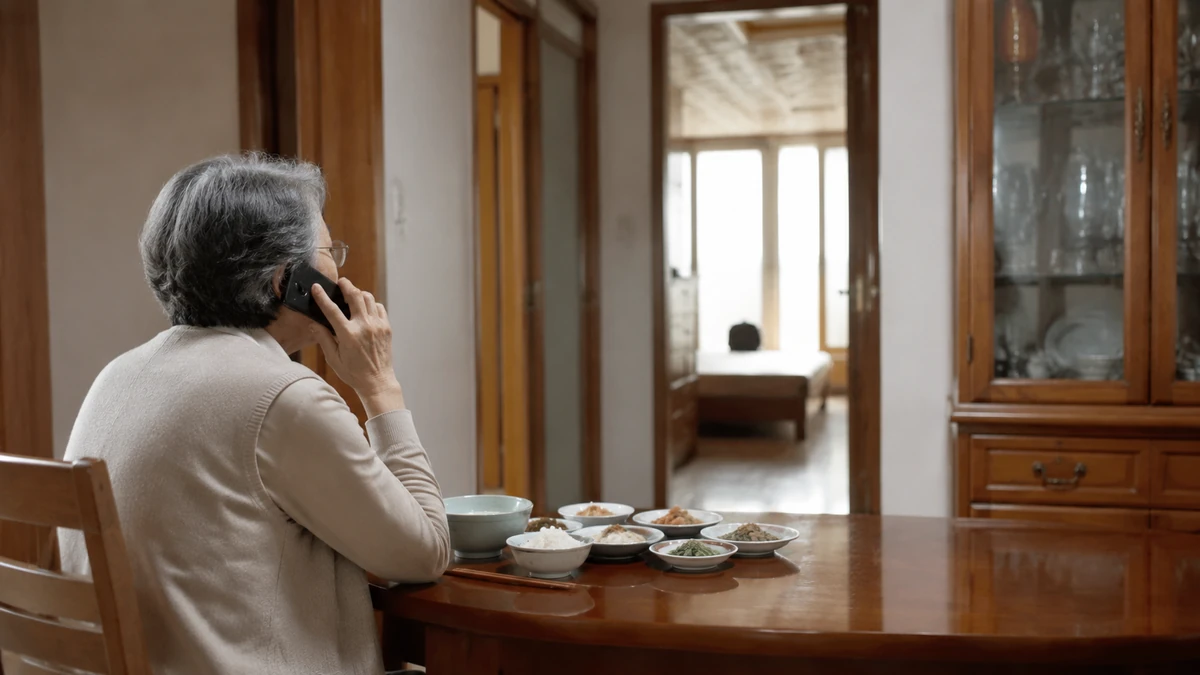
A family holiday with a deeper message
In South Korea, Parents Day is usually marked with carnations, family meals and phone calls home. The holiday, observed on May 8, occupies a cultural space that may feel familiar to Americans who think of Mother’s Day and Father’s Day, but with a broader emphasis on honoring both parents at once. For many families, it is a sentimental occasion: children visit, adult sons and daughters call from other cities, and grandparents gather with relatives they may not see often.
This year, one of the country’s largest hospitals used that holiday to deliver a practical message that resonates far beyond South Korea: when it comes to aging parents, the earliest warning signs of illness may look less like a dramatic medical emergency and more like a subtle shift in everyday behavior.
According to guidance highlighted by Seoul Asan Medical Center and reported by Yonhap News Agency, families checking in on elderly parents should pay close attention to small but noticeable changes from the usual routine. A parent who suddenly eats much less, speaks less, moves more slowly, or repeats the same questions may not simply be “getting older.” Those changes, especially when they appear suddenly, can be an early signal that something is wrong.
The point is important because many people, in Korea and elsewhere, still think of health emergencies in blunt, cinematic terms: chest pain, collapse, a trip to the emergency room in an ambulance. But doctors say that for older adults, trouble often announces itself much earlier and much more quietly. A shorter conversation. A skipped meal. A flat tone of voice. A question asked twice, then a third time. Those moments are easy to dismiss, particularly when families want to believe everything is fine.
That tendency to explain away new symptoms as normal aging can be costly. The hospital says about 30% of emergency cases involving older adults are delayed because early symptoms are mistaken for ordinary signs of aging, pushing back diagnosis and treatment. In an era when both the United States and South Korea are grappling with rapidly aging populations, that warning carries weight on both sides of the Pacific.
Why a quiet change can matter more than a dramatic symptom
The central idea behind the hospital’s advice is deceptively simple: the issue is not age itself, but change. Aging usually unfolds gradually. Emergency warning signs often do not. A parent who has been slowly slowing down over several years presents one kind of picture. A parent who, within days or weeks, seems unusually withdrawn, confused, weak or uninterested in eating presents another.
That distinction can be difficult for family members to judge, especially in modern households where adult children may not see their parents every day. In the United States, many families are separated by states; in South Korea, increasingly by cities and work schedules. A son in Busan may speak to his mother in Seoul only on weekends. A daughter in Chicago may see her father in Arizona only on holidays. In both cases, the relationship is loving but intermittent, which means there may be no easy way to notice when a small change began.
That is why doctors are urging families to treat reunions and routine phone calls as more than social obligations. They are opportunities to notice function, cognition and habits in real time. A holiday check-in becomes, in effect, an informal wellness screen.
For American readers, the idea may sound similar to what geriatric specialists often tell families around Thanksgiving or Christmas: if an older relative seems suddenly different from the person you spoke to a month ago, do not assume it is just age. The Korean doctors are making the same point, but through the lens of Parents Day, a holiday that naturally brings generations into closer contact.
What makes the message compelling is its practicality. Families are not being asked to diagnose a stroke, heart attack or dementia on their own. They are being asked to notice when a parent is not acting like themselves and to take that seriously enough to seek medical evaluation sooner rather than later.
The four clues families are most likely to notice first
The guidance from Seoul Asan Medical Center focuses on four observable signs that ordinary family members can spot without medical training. The first is appetite. If an older parent is eating noticeably less than usual, skipping meals or acting as though eating has become burdensome, that may be more than a passing preference. Appetite reflects a great deal about a person’s overall condition, including energy, mood, pain levels, digestive problems and general resilience. A reduced appetite can be easy to wave off as pickiness or “just not being hungry,” but when it is a clear change, it deserves attention.
The second sign is speech, including how much a parent talks and the energy or clarity in their voice. A once-chatty parent who suddenly offers clipped answers, sounds unusually tired or disengaged, or no longer seems interested in conversation may be showing a shift in either physical or cognitive health. On a phone call, this might be the earliest signal available. There is no need to overinterpret every quiet mood, but a marked change from the norm matters.
The third clue is slowed behavior or movement. Families who see an older parent in person may notice that getting up from a chair takes longer, walking across a room seems more labored, or daily tasks appear oddly difficult. Slowness can have many causes, from weakness and pain to infection or cardiovascular trouble. The critical point is not to guess which one applies, but to recognize that a new slowdown is a data point, not background noise.
The fourth sign is repetition, especially repeated questions. Asking the same thing multiple times can point to changes in memory, attention or overall cognition. It can also show up on a phone call before anything else becomes obvious. If a parent repeats questions that were just answered or appears to lose track of the conversation in unusual ways, relatives should not automatically chalk it up to absentmindedness.
None of these signs, by themselves, guarantee a medical emergency. But taken together, they form the sort of pattern family members are uniquely positioned to see first. Doctors may encounter the patient later, after symptoms have progressed. Relatives are often the first witnesses to the earliest disruption in daily life.
When “it’s probably just old age” becomes a dangerous assumption
Few phrases are more comforting, or more potentially misleading, than “That’s normal for someone their age.” Families use it out of love, denial, exhaustion and sometimes simple uncertainty. Older adults may use it, too, because they do not want to worry their children, do not want to go to the hospital, or have internalized the idea that discomfort is simply part of getting older.
But doctors say that mindset can delay care at precisely the moment when time matters most. Seoul Asan Medical Center pointed to heart disease, including heart attacks, as a prime example of a condition in which early recognition and quick hospital care can make a major difference. That principle is universal. In emergency medicine, the first challenge is often not the treatment itself but getting the patient to the right place before the window for effective intervention narrows.
Older adults are especially vulnerable to missing that window because symptoms do not always look textbook. An elderly patient may not present the way a younger patient would. Fatigue, reduced appetite, confusion, slowed responses or a vague sense of not feeling right can all precede clearer signs of serious illness. Families may interpret those changes as ordinary aging. The older adult may minimize them. Together, those instincts can postpone evaluation until the situation becomes harder to reverse.
For Americans, this may echo warnings around sepsis, falls, dehydration or atypical heart attack symptoms in seniors. A grandparent who “just seems off” is not offering much for a dramatic television script, but in real life, that vague impression is often the first clue worth following. The same logic applies in South Korea, where the rapid pace of population aging has made elder care a growing public concern.
South Korea is one of the fastest-aging societies in the world, a demographic shift driven by longer life expectancy and one of the lowest birth rates on the planet. The United States is aging more slowly, but the trend is still unmistakable as Baby Boomers move deeper into old age. In both countries, more families are living with the same basic challenge: how to tell the difference between expected aging and a health problem that should not wait.
Why doctors want families to observe and write things down
One of the most practical parts of the hospital’s advice is also one of the least glamorous: observe and keep a record. Kim Jun-sung, a professor in the emergency department at Seoul Asan Medical Center, emphasized that sudden changes in function, cognition or habits can signal an emergency and that carefully observing and documenting changes can help reduce harm by prompting timely action.
That recommendation is more useful than it may sound at first. In the stress of a medical visit, families are often asked some version of the same question: When did this start? Without notes, the answer can become muddy. Was it last Tuesday, or the week before? Had he been eating less for two days, or two weeks? Did she repeat the same story once, or several times over the last month?
Memory is subjective, especially when relatives are comparing impressions from scattered visits and phone calls. A simple written log can turn vague worry into something concrete: appetite down since Sunday; asked the same question three times on Wednesday’s call; unusually quiet at dinner on Friday; noticeably slower walking to the bathroom this weekend. That level of detail can help clinicians understand the timeline and severity of a change much more quickly.
Documentation can also reduce family conflict. Anyone who has helped care for aging parents knows how easily siblings can disagree. One child thinks Mom is fine. Another thinks Dad needs to be seen immediately. One relative visits often and normalizes gradual decline. Another visits less often and is alarmed by the contrast. Notes do not erase those tensions, but they give families a shared factual basis for discussion.
For American readers, the concept is similar to keeping a symptom journal for a child with fevers or a parent with memory concerns. It is not an act of panic. It is a tool for clearer decision-making. In elder care, where changes can be subtle and cumulative, that clarity can be the difference between acting in time and realizing later that warning signs were there all along.
Why a phone call may reveal more than families realize
The Korean guidance is especially notable for stressing that observation does not require a face-to-face visit. In a world where families are geographically dispersed, the phone remains one of the most accessible ways to monitor change. That matters in South Korea, where work culture and urban concentration often pull younger generations away from their parents’ homes. It matters just as much in the United States, where long-distance family life is commonplace.
A phone call cannot show whether a parent is shuffling across the kitchen or leaving unopened mail on the table. But it can reveal a great deal about speech, processing speed, mood and repetition. Is your mother slower to answer than usual? Does your father sound less animated? Are they struggling to follow the thread of the conversation? Do they ask the same question again after you just answered it?
Because the call itself feels routine, these clues can be easy to miss. Yet in some cases, they are more obvious by phone than in person. Without visual distractions, a listener may be more likely to notice long pauses, flat affect, confusion or repeated prompts. Even a change in the rhythm of a conversation can be meaningful when compared with how that person typically sounds.
This is where cultural context matters. In Korea, calling parents on Parents Day is not only a courtesy; it is part of a broader tradition of filial attention, the social expectation that adult children remain engaged in the wellbeing of their elders. That idea has roots in Confucian values that continue to shape family relationships across much of East Asia, even as modern life complicates how care is delivered. American culture may frame the obligation differently, but the practical takeaway is similar: regular contact can function as an early warning system.
A quick check-in, then, should not be treated as a box to tick. It can be a meaningful chance to notice whether an older loved one still sounds like themselves. If they do not, it may be time for follow-up questions, another call, a visit or a doctor’s appointment.
A message that travels well beyond South Korea
Although the advice surfaced in connection with a Korean holiday, it speaks to a broader reality facing aging societies around the world. Health care does not begin only when someone enters a clinic or an emergency room. It begins much earlier, in the home, in family routines, in conversations and in the mundane details of daily life that loved ones are most likely to notice first.
That is what makes this guidance more than a seasonal reminder attached to Parents Day. It is a public health lesson disguised as common sense: when an older parent’s daily patterns change suddenly, the change itself matters. Families do not need to become amateur diagnosticians. They do need to resist the temptation to dismiss every new problem as a natural part of getting older.
For Americans reading this from a distance, the Korean setting may feel specific, but the emotional landscape is familiar. Adult children worry from afar. Older parents insist they are fine. Families are busy, scattered and sometimes uncertain about what counts as serious. In that environment, the most useful advice is often the most basic: notice what is different, write it down, and do not wait too long to ask a professional.
Holidays centered on parents can encourage gratitude, nostalgia and obligation. They can also, if families let them, become moments of attention. That may be the real lesson in the Korean doctors’ warning. A visit home is not only a reunion. A phone call is not only a ritual. Both can be opportunities to catch the small signs that appear before a health crisis becomes impossible to ignore.
And in a time when more families are navigating the uncertainties of aging, that kind of attention may be one of the most valuable gifts an adult child can offer.
Comments
Post a Comment