A new K-pop distribution play comes into focus
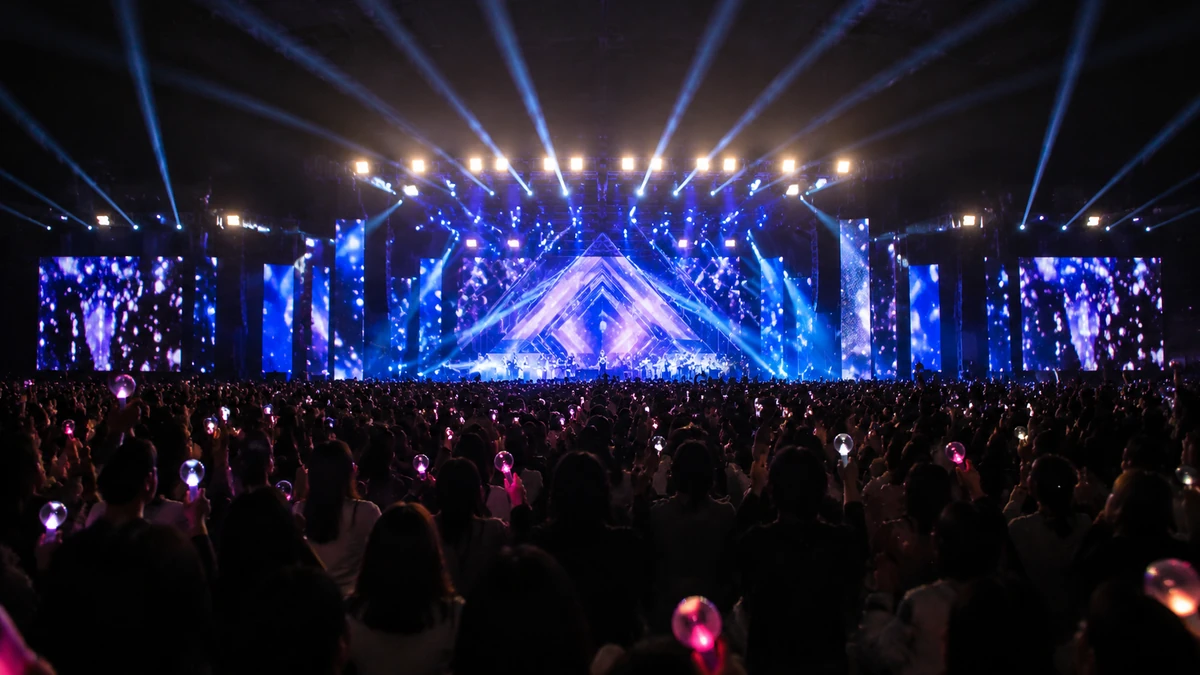
Samsung Electronics and SM Entertainment are rolling out a new kind of K-pop partnership, one that says as much about the future of television as it does about the future of pop music. The two South Korean giants said Samsung TV Plus, Samsung’s ad-supported free streaming service, will launch a program called “Monthly SM Concert,” a recurring concert series built around regularly scheduled K-pop performance broadcasts.
That may sound simple at first glance: a tech company and an entertainment company teaming up to show concerts on streaming television. But the deeper significance is in the format. These are not being presented as one-off specials or fan-club exclusives. They are being programmed as repeatable, scheduled events on Samsung TV Network, or STN, and on the SMTOWN channel, airing Saturdays at 7 p.m. local time in the markets where they are available.
For American audiences, the easiest comparison may be the blending of old-school cable habits with modern streaming economics. Imagine if a major record label took concert films from its biggest acts and programmed them the way MTV once scheduled “Unplugged” or the way network television used to build anticipation around a weekly special, only now delivered through a free streaming platform supported by ads rather than a cable bill or monthly subscription.
That shift matters because it suggests K-pop’s business model is broadening again. For years, the genre’s international growth has been driven by digital singles, social media clips, YouTube virality, livestreams and highly organized fan communities willing to pay for albums, merch and premium online access. Samsung and SM are now testing a more mainstream television-style model, one designed not just for devoted fans but also for casual viewers who might stop on a concert the same way they might land on a sports replay or a music documentary.
In other words, this is not just about putting more K-pop on screens. It is about changing how those screens are used, and about making concert footage a recurring programming asset rather than a special-occasion product.
Why the monthly format matters
The most notable part of the announcement is embedded in the word “monthly.” Samsung previously exclusively live-streamed “SMTOWN LIVE 2025 in L.A.,” but this new arrangement expands that relationship from a single large event into an ongoing release schedule with a new artist performance each month.
That kind of regularity may sound routine in television, where viewers have long been trained to return at a certain time for a favorite show. In K-pop, however, it marks a more deliberate attempt to turn concert viewing into a habit. Concert films and performance recordings have traditionally circulated as DVD packages, paid livestreams, limited theatrical events or premium digital products aimed squarely at existing fandoms. By contrast, a monthly series on a free streaming platform creates a dependable cadence. Fans know another installment is coming. Platforms know they have a recurring event that can bring viewers back. Advertisers know they are buying into an audience pattern rather than a single spike.
That is a meaningful evolution in the entertainment business. In the streaming era, the race is no longer only about whether a company has popular content. It is also about whether it can create repeat visitation and routine viewing. Netflix built its scale with subscription depth. YouTube built it with endless short-form discovery. Free ad-supported television, often referred to in the industry as FAST, is trying to build it with lean-back viewing: channels, schedules and familiar television behaviors updated for the internet age.
Samsung TV Plus is part of that FAST ecosystem. FAST stands for free ad-supported streaming television, a model in which viewers do not pay a subscription fee but watch programming with commercial interruptions. In the United States, the closest parallels include Pluto TV, Tubi’s live offerings, The Roku Channel and some of the free live channel hubs now embedded into smart TVs. What Samsung and SM are doing is applying that model to K-pop concerts in a more systematic way.
For SM, one of the foundational companies in modern K-pop, the benefits are obvious. Its artists and performances remain visible between album cycles and tours. Its concerts can function as durable media products, not just events that end when the last encore does. For Samsung, the arrangement helps turn its television platform into more than a utility. It becomes a destination, and one with exclusive programming tied to one of South Korea’s most globally recognized entertainment brands.
The recurring structure also hints at something larger: concerts are no longer merely promotional support for albums. They are increasingly central pieces of media strategy in their own right.
From fan-only product to broader audience reach
One of the enduring tensions in K-pop has been the balance between exclusivity and scale. The industry thrives on highly mobilized fandoms. Fans buy multiple album versions, chase collectible photo cards, vote in online contests and often pay for premium access to livestreams, membership platforms and tour content. At the same time, K-pop’s biggest companies want to keep expanding beyond those core fan circles into wider, more casual audiences around the world.
The Samsung-SM partnership sits squarely in that tension. By placing concert content on a free ad-supported platform, the companies are signaling that not every valuable piece of K-pop media needs to live behind a paywall. That does not mean fan monetization goes away. Premium tiers, exclusive merchandise, ticketing and paid digital experiences are still deeply embedded in the business. But it does mean concert footage can now serve a dual purpose: reinforcing loyalty among existing fans while also functioning as a low-friction entry point for newcomers.
That distinction is especially important in the United States and other English-speaking markets, where many viewers may know the broad outlines of K-pop without following specific groups. They may have heard of BTS, Blackpink or a handful of viral songs on TikTok, but they do not necessarily know the internal structure of Korean entertainment agencies, the significance of “comebacks,” or the way fandom culture drives the business. A free concert stream on a familiar device lowers the barrier to sampling a group. Someone who would never buy access to a specialty fan platform might still watch a performance if it appears in a home TV interface at no added cost.
For K-pop companies, that is a valuable funnel. Live performance remains one of the strongest proofs of an act’s appeal. A music video can be tightly edited and algorithmically served. A concert film communicates something else: stage presence, audience energy, choreography endurance and the scale of an act’s real-world support. In American pop, concert films from artists such as Taylor Swift or Beyoncé have become cultural events partly because they translate the communal power of a live show into a format that can be rewatched, shared and monetized across windows. K-pop companies have clearly taken note of that dynamic.
There is also a subtle strategic point here. As subscription fatigue sets in for many consumers, free streaming is becoming more attractive. Households that feel maxed out on Netflix, Disney+, Max and Spotify may still be willing to sit through ads for a desirable event. K-pop companies, always quick to adapt to changing digital habits, appear increasingly willing to treat free access not as a downgrade but as a scale engine.
The first featured concert says a lot
The first title in the series is scheduled for Aug. 30: “NCT WISH First Concert Tour into the WISH: Our WISH Encore in Seoul.” That choice is revealing.
NCT WISH is part of SM’s broader NCT universe, a multi-unit K-pop project that can be difficult for outsiders to parse. For readers less familiar with the structure, NCT is not a single fixed group in the traditional Western boy-band mold. It is a brand architecture made up of different subunits, each with distinct members and market strategies. That modular approach is one of the ways Korean agencies have experimented with scale, localization and audience segmentation.
Choosing NCT WISH for the first installment suggests Samsung and SM are not only using the series to spotlight their most universally established names. They are also using it to reinforce emerging acts and deepen the ecosystem around newer artists. An encore concert in Seoul carries built-in symbolism. In the concert business, an “encore” signals demand strong enough to justify a return performance. It says the show was not just mounted; it was successful enough to extend. Packaging that encore as streaming content allows SM to preserve the energy of a live moment while widening its afterlife.
That is increasingly how modern entertainment works. An offline event is no longer the end product. It becomes source material for additional windows: clips for social media, behind-the-scenes footage, premium fan edits, documentary packaging and now recurring FAST programming. The concert may be over in the arena, but digitally it keeps generating audience touchpoints.
For fans who were there in person, a performance stream can act as a continuation of the memory, much like sports fans rewatching a championship game or music fans revisiting a landmark festival set. For those who were not there, it can serve as an onboarding moment. That matters in K-pop, where the path from casual curiosity to active fandom often begins with performance. Choreography, visual storytelling and crowd interaction are not side elements in this genre; they are central to the product.
The fact that this content is not merely a music video but a full concert presentation also underscores how the value of stage footage has changed. In a previous era, concert recordings might have been considered supplemental. Now they are increasingly premium, strategic and platform-defining.
K-pop’s global map keeps expanding — but not always in the expected order
Samsung said the concert series will be available in five countries: South Korea, Australia, New Zealand, Brazil and Mexico. Even without the United States in the initial list, that rollout is telling.
First, it shows that K-pop distribution is no longer built solely around the old assumptions of geographic hierarchy, where success in America is treated as the singular benchmark of global relevance. Brazil and Mexico have become crucial markets for Korean pop, with highly active fan communities, strong social media participation and growing importance on tour maps. Australia and New Zealand, meanwhile, offer high digital connectivity and English-language accessibility, making them useful test beds for international programming strategies.
Second, the country mix illustrates how platform-based expansion can bypass some of the traditional friction of international media distribution. In the past, exporting concert content often required a more complicated patchwork of local broadcasters, licensing agreements, subtitles, marketing partnerships and event-specific ticketing platforms. Smart TV ecosystems and built-in streaming hubs can streamline parts of that process. If the app infrastructure is already in place, the content can travel more quickly and appear inside a familiar interface rather than asking viewers to seek out a niche service.
That shift may seem technical, but it reflects a broader change in how global entertainment circulates. International growth is no longer measured only by album sales, Billboard rankings or sold-out arenas. It is also measured by where content appears by default, how easy it is to access and whether it can become part of ordinary household viewing habits.
For American readers, one useful analogy is the way international soccer steadily moved from a specialty interest into mainstream sports consumption in the United States. It was not just that more fans cared. It was that more matches became routinely available on familiar platforms, at predictable times, with easier entry points. Access shaped habit, and habit shaped market growth. K-pop appears to be following a similar logic in the video space.
The fixed Saturday release time reinforces that point. Scheduling still matters, even in an age of on-demand everything. Sports, awards shows and prestige weekly television have all shown that audiences continue to respond to shared timing. A designated hour can create social chatter, fandom coordination and a sense of occasion. For K-pop, where communities are already highly networked online, that appointment-based structure could amplify engagement.
Samsung is no longer just selling screens
Another reason this story matters is that it highlights how hardware companies increasingly behave like media companies. Samsung is still, first and foremost, a global electronics manufacturer. But in the smart TV era, making the screen is only part of the business. The other part is controlling the ecosystem users encounter when they turn it on: the interface, the recommendations, the channels and the exclusive content that makes a platform feel sticky.
That is where Samsung TV Plus comes in. The service helps Samsung compete not merely on picture quality or industrial design but on user experience. If viewers associate a Samsung television with easy access to distinctive free entertainment, that strengthens the company’s broader value proposition. It also lets Samsung capture ad revenue and viewer data in ways that traditional hardware sales do not.
SM, on the other side of the deal, is acting less like a label in the old American sense and more like an intellectual-property company that produces artists, stories, events and adaptable media assets. In South Korea’s entertainment system, agencies like SM often play a far more vertically integrated role than many Western labels. They recruit and train artists, shape concepts, manage releases, organize tours and oversee brand-building across multiple formats. In that sense, SM is well positioned to think of concert footage not as leftover material but as a programmable content library.
Samsung executive Choi Jun-heon, head of the TV Plus Group in the company’s Visual Display Business, said the company plans to expand differentiated entertainment content by leveraging Samsung TV Plus technology and its connected viewing experience. That language may sound corporate, but it points to a real competitive battleground. In streaming, the contest is not simply over who owns a piece of content. It is over how seamlessly that content fits into daily behavior and how often viewers are prompted to return.
There is also a screen-specific logic to concert programming. At a time when so much music discovery happens on phones through short clips, full-length concerts remain one of the clearest justifications for the living-room TV. A performance film benefits from scale, sound and sustained attention. The choreography lands differently on a large screen. The crowd noise feels more immersive. The format rewards the kind of focused, communal viewing that smart TV platforms want to encourage.
Why this matters beyond entertainment headlines
On one level, this is a straightforward entertainment-business announcement: Samsung and SM are launching a branded K-pop concert series on a free streaming service. On another, it is a small but useful case study in where the global media business is headed.
For years, much of the conversation around K-pop’s international rise focused on celebrity milestones: chart records, Coachella appearances, stadium dates, fashion deals and social media reach. Those stories remain important, but they can obscure the less glamorous machinery that sustains long-term growth. Distribution structure matters. Platform strategy matters. Programming decisions matter. And increasingly, those factors may tell us as much about the next phase of K-pop as any single hit song does.
What Samsung and SM appear to understand is that scale in 2025 is not just about making people interested. It is about making that interest routine. A monthly concert series, a weekly time slot, ad-supported accessibility and multi-country rollout all point toward an industrial logic built around repeat consumption. The goal is not only to create buzz, but to normalize the presence of K-pop in everyday media use.
That normalization could have broader consequences. If concert films become standard fare on free streaming platforms, more Korean entertainment companies may follow with their own channel strategies. Rival agencies could treat archives, tour footage and live specials as evergreen television inventory. Device makers and streaming distributors could compete for exclusive artist partnerships. And viewers who are not already embedded in fandom culture could encounter K-pop in a more casual, habitual way than before.
That does not mean every experiment will succeed. FAST is a crowded space, and attention is hard to hold. Exclusivity can help, but only if audiences know the programming exists and care enough to return. There is also the question of how these releases will be localized, subtitled and promoted outside Korea. Global access is not just about distribution pipes; it is also about context. American and English-speaking audiences often need a bit of cultural framing to understand artist lineups, fandom structures and why a concert stop in Seoul carries symbolic weight.
Still, the direction is clear. K-pop is moving beyond a model centered mainly on songs and fandom transactions into one that treats platform-native viewing behavior as a core part of the business. In that sense, this is not simply a story about a concert series. It is a story about how one of the world’s most exportable pop industries is adapting to the next stage of media convergence.
Samsung is betting that free streaming can make K-pop concerts feel like television events. SM is betting that television-style repetition can make concert content more valuable over time. If they are right, the living room may become an increasingly important front in the global competition for music audiences — and K-pop, once again, may be a step ahead in figuring out how to get there.
Comments
Post a Comment