A new kind of public health house call
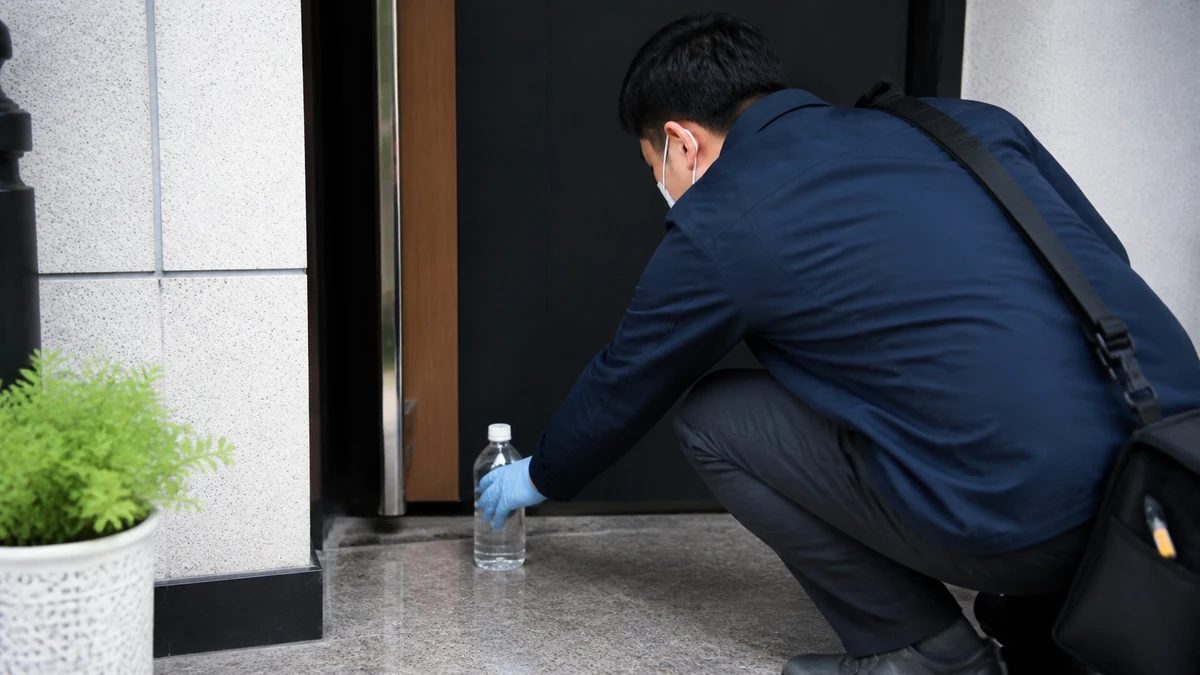
In Seoul, city officials are trying something strikingly simple: If residents want their tap water checked, they no longer have to wait at home for an inspector to knock on the door. Starting May 6, people can fill a clean, sealed container with tap water, leave it outside their apartment door or at another designated pickup spot, and have it collected for a free quality test.
At first glance, that may sound like a minor bureaucratic tweak. In practice, it marks a notable shift in how one of Asia’s most densely populated cities is thinking about public health, convenience and trust in the water coming out of the kitchen faucet.
The service, run by the Seoul city government, updates an existing program known as “Our Home Arisu,” a free water testing initiative tied to the city’s tap water system. “Arisu” is the brand name Seoul uses for its municipal tap water, much the way some American cities promote local utilities with their own public-facing campaigns. Under the old model, testing was centered on in-person visits. Under the new one, the city is adapting the process to fit the rhythms of modern urban life: irregular work hours, single-person households and a post-pandemic comfort with contact-free services.
For American readers, a useful comparison might be the difference between having to schedule a technician to come inside your home and being able to leave a package for pickup on your porch. The science of the service has not changed. The logistics have. And when it comes to public participation, logistics often make all the difference.
That matters because water quality is one of those foundational health issues that people often take for granted until something goes wrong. People may spend money on vitamins, gym memberships or wearable health trackers, but rarely stop to think about the water they drink every day, cook with and use to brush their teeth. Seoul’s updated approach recognizes a basic truth of public health: A service is only as effective as people’s willingness and ability to use it.
The city says it aims to conduct 10,000 tests by the end of the year, a sign that this is not being treated as a small pilot program but as a broader effort to normalize household water checks as part of everyday life.
Why Seoul is changing the system now
Seoul has cited two main reasons for the change: the rise in single-person households and the normalization of non-face-to-face routines. Those explanations may sound administrative, but they point to deeper social changes that are hardly unique to South Korea.
Like many major cities around the world, Seoul has seen more people living alone, working unpredictable schedules and managing daily life with fewer fixed routines. In South Korea, the growth of one-person households has become one of the most significant demographic shifts of the last decade, reshaping everything from housing design to grocery shopping to public policy. A service that requires a resident to be home at a specific hour for a city worker’s visit may function well on paper, but it can easily become impractical in real life.
Americans have seen similar patterns play out in everything from telehealth to grocery delivery to no-contact package drop-offs. The pandemic accelerated expectations that services should meet people where they are, rather than force them into a rigid system. Seoul’s move reflects that same logic. Instead of assuming residents can rearrange their schedules around an inspection, the city is redesigning the inspection around residents’ schedules.
There is also a psychological dimension. Even when people care about health and safety, they may postpone an in-home inspection if it feels inconvenient or intrusive. For some, especially those living alone, letting a stranger into the home can feel burdensome. For others, it is simply one more thing to coordinate in a busy week. By reducing the human interaction required to participate, the city is lowering the threshold for action.
That kind of change may sound mundane, but in public administration it can be decisive. Many government services fail not because the underlying idea is bad, but because the path from awareness to participation is too cumbersome. “Leave a bottle at the door” is the kind of instruction that can cut through that friction. It translates a formal inspection process into something that feels as intuitive as setting out recycling or leaving out a return package.
In that sense, the Seoul program is not just about testing water. It is about redesigning access. And access, especially in public health, often determines whether a program remains a niche offering or becomes a widely used civic tool.
What the city is actually testing for
According to Seoul officials, the free test looks at four indicators: iron, copper, pH and turbidity. That may seem like a short list, but each metric offers practical clues about the condition of the water and, importantly, the condition of the pipes it passes through before reaching a kitchen sink.
Iron and copper can be especially relevant in older buildings or buildings with aging plumbing. Elevated levels do not necessarily mean the citywide water supply is compromised; sometimes they point instead to issues inside the building or household piping. That distinction matters. One of the perennial challenges of water quality is that consumers experience water locally, at the tap, even though the system behind it stretches across treatment plants, distribution lines and private plumbing.
pH measures how acidic or alkaline water is, while turbidity refers to how clear or cloudy it appears, typically as an indicator of suspended particles. For many residents, concerns about drinking water begin with subjective impressions: an unusual taste, an odd smell, discoloration or sediment. Formal testing helps move beyond guesswork. Rather than relying on suspicion or reassurance alone, the city can provide a measured assessment based on standard criteria.
That is one of the more important aspects of the Seoul service. It is not simply a pass-fail label handed down from the government. The testing is designed to identify whether the water meets drinking water quality standards and whether there may be a plumbing-related issue that needs attention. If a problem is found, the service is also meant to connect households to follow-up measures.
For American readers, the distinction between water source and household plumbing may bring to mind a familiar lesson from water crises in the United States: The safety of water depends not only on treatment at the municipal level but also on the infrastructure it travels through. In the U.S., high-profile incidents such as Flint, Michigan, made clear that public confidence in tap water can be damaged when oversight fails or infrastructure deteriorates. Seoul’s system is not responding to a scandal of that magnitude, but it is addressing the same broader reality: trust in drinking water is strongest when residents have practical ways to verify what is reaching their own homes.
By focusing on a few core indicators and making the test easy to request, the city is trying to turn water quality from an abstract municipal promise into a checkable part of daily life.
Public health works best when it is easy to use
There is a larger lesson in Seoul’s new system, and it extends well beyond water. Public health services are often judged by their scientific rigor, but they are also shaped by user experience. If a service is technically sound but inconvenient, participation can lag. When participation lags, the public benefit shrinks.
That may be why this seemingly modest announcement deserves attention. The city is not introducing a flashy new technology, a smart-home device or a high-profile environmental campaign. Instead, it is doing something less glamorous and arguably more important: removing friction from a basic health safeguard.
The mechanics are straightforward. Residents make a reservation, place tap water in a clean, sealed container, and leave it at the door or a specified location. A city employee or water inspector picks it up, conducts the test, and sends the result by text message or written notice. In administrative terms, it is a small redesign. In behavioral terms, it could be a powerful nudge.
Americans are familiar with this kind of shift in other areas. Screening programs, vaccine drives and mail-in health kits all tend to see higher participation when they are built around convenience. The simpler the action required, the less likely people are to delay it. That logic is especially important for preventative measures. By definition, preventative care addresses problems before they become urgent, which means it often competes with the human tendency to put off anything that is not immediately pressing.
Water is a textbook example. People interact with it constantly, but unless there is an obvious problem, most do not think of it as something requiring routine attention. That is understandable. Yet the city’s framing suggests a more modern view of household health: checking the quality of drinking water should be treated less like an extraordinary intervention and more like a practical, occasional part of caring for one’s living environment.
There is also a subtle equity argument here. Services that require time, scheduling flexibility and comfort with in-person interactions can unintentionally favor people with more resources or more stable routines. A contact-free pickup system does not solve every access problem, but it can make a public service easier to use for workers with long hours, residents who are wary of inviting strangers in, older adults who prefer simpler procedures, and anyone who might otherwise decide the hassle is not worth it.
In other words, convenience is not just a customer-service issue. It can be a public-health strategy.
Trust matters as much as convenience
A second development in South Korea underscores another side of this story: accessibility only matters if the results are credible. On the same day Seoul’s new collection-based testing system was highlighted, officials in the southeastern city of Ulsan announced that the Ulsan Institute of Health and Environment had been deemed fit in a national proficiency test related to water quality and drinking water analysis.
That evaluation, organized by the National Institute of Environmental Research, assessed analytical capability across 28 categories, including 16 in water quality and 12 in drinking water. The process uses standardized samples to test not just laboratory analysis but also broader competence in sampling and equipment operation.
For many readers, this may sound like technical background more suited to a trade journal than a news story. But it is central to the social contract behind any public testing program. A resident receiving a text message about the quality of the water in their home is being asked to trust not just the convenience of the service, but the chain of professional standards behind it.
That is the quiet infrastructure of public confidence. The bottle left outside an apartment door is the visible part. Less visible are the calibration protocols, trained technicians, standardized methods and institutional review systems that make the result meaningful.
In the United States, public trust in institutions has become more fragile across many domains, from elections to public health to environmental oversight. South Korea is not immune to those pressures, but it has also built a reputation for strong administrative execution in many areas of daily life, from transit systems to digital services. The combination of easier access in Seoul and validated laboratory competence in Ulsan offers a useful example of how trust is built: not through slogans alone, but through systems that are both usable and verifiable.
The Ulsan announcement does not directly change what Seoul residents do on May 6. But it helps explain the broader environment in which these services operate. If governments want citizens to engage with preventative programs, they must provide more than an invitation. They must show that the results are backed by reliable methods and accountable institutions.
What this says about Korea’s approach to everyday governance
For international audiences, one of the most revealing things about this story is how ordinary it is. This is not a breakthrough in biotechnology, not a viral social media controversy and not a geopolitical flashpoint. It is a local government trying to make a routine health service more practical. Yet that very ordinariness says something important about contemporary South Korea.
Much of the outside world encounters Korea through its biggest exports: K-pop, Korean dramas, cutting-edge electronics and high-stakes diplomacy involving North Korea, China or the United States. Those are real and significant parts of the country’s global profile. But they can overshadow the quieter story of how Korean cities are constantly fine-tuning urban life through detailed, highly responsive public administration.
Seoul’s decision fits into that pattern. The city is not reinventing water safety; it is adjusting service delivery to match how residents actually live. In a society where apartment living is common, delivery logistics are highly developed and digital coordination is second nature, a doorstep sample pickup makes intuitive sense. The cultural context matters here. South Korea’s dense urban housing patterns and highly networked service economy make it easier to imagine government borrowing the convenience logic of private-sector delivery systems.
For Americans, it may be helpful to think of this as a city hall version of the “frictionless” design that tech companies and retailers have spent years perfecting. The difference is that the goal here is not to sell something but to make a public safeguard easier to use. That may be one of the clearest signs of administrative maturity: when governments learn not only how to regulate and provide services, but how to deliver them in forms people will actually embrace.
It also reflects a preventive mindset. Health news often focuses on hospitals, treatments and emergencies. This story belongs to a less dramatic but equally consequential category: the public systems that help reduce risk before illness enters the picture. Safe drinking water is easy to overlook precisely because it is so basic. But basic systems are what make daily life stable.
If Seoul reaches its goal of 10,000 tests by year’s end, the number will matter less as a statistic than as a sign of habit formation. The deeper question is whether residents begin to see water checks not as rare interventions for households already worried about a problem, but as a routine option available whenever reassurance is needed.
A small policy change with broad relevance
There is a reason this local story in Seoul travels well beyond South Korea. Every city wrestles with a version of the same challenge: how to turn public services from formal entitlements into practical tools people actually use. The answer is often not grand innovation. It is thoughtful design.
By shifting from an in-home visit model to a collection-based system, Seoul is making a simple bet. More people will check their drinking water if the city asks less of them. That is a modest claim, but a persuasive one. It recognizes that even when health and safety are involved, convenience shapes behavior.
The policy also sends a subtle message about what government can be at its best. It can be present without being intrusive, protective without being paternalistic, and technical without being inaccessible. Residents do not need to understand the chemistry of water testing in detail to benefit from a system that gives them a realistic way to confirm what they are drinking.
For American readers accustomed to debates about aging infrastructure, water safety and uneven public services, Seoul’s new approach may feel both familiar and aspirational. Familiar, because the underlying concern about tap water exists everywhere. Aspirational, because the response is so practical. No app-heavy gimmick, no expensive home installation, no elaborate bureaucracy for the user. Just a clean bottle, a pickup, a test and a result.
That is why the most important part of Seoul’s announcement is not simply that free testing exists. It is that the testing has become easier to access. In public health, that distinction can determine whether a policy remains a well-meaning option in a government brochure or becomes part of how a city quietly takes care of its people.
And in a moment when trust in institutions often hinges on whether they can meet daily needs in visible, competent ways, that kind of quiet care may be one of the most meaningful forms of governance there is.
Comments
Post a Comment