South Korea warns of an early ‘dead zone’ season off its southern coast, underscoring climate risks for fishing communities
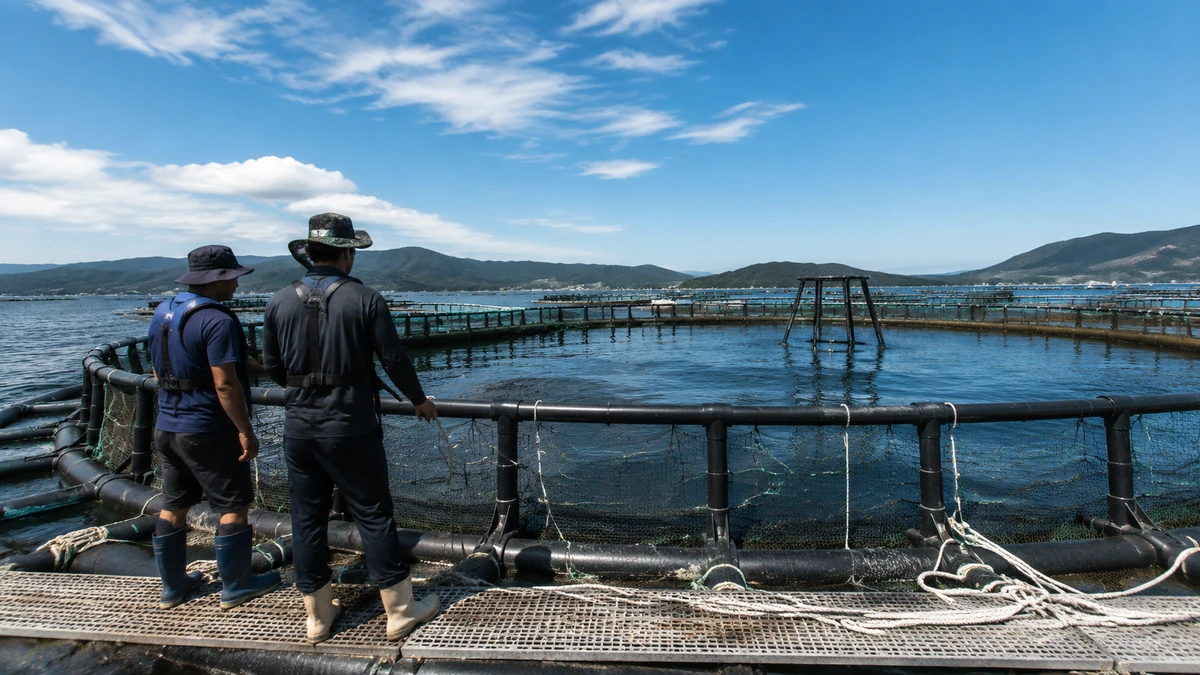
A climate warning from the water
South Korea’s national fisheries research agency is warning that a dangerous ocean condition known informally as a marine “dead zone” could arrive earlier than usual this year along parts of the country’s southern coast, an unusually direct sign of how climate change is beginning to reorder the calendar for coastal communities.
The National Institute of Fisheries Science, a government-backed marine and fisheries research body, said this week that oxygen-depleted water masses are likely to form sooner than in past years in the South Sea, the broad body of water off Korea’s southern shoreline. The agency’s concern is not simply about an environmental shift below the surface. In practical terms, lower oxygen levels in seawater can kill farmed fish and shellfish, rattle local fishing economies and force officials and producers into a more urgent mode of monitoring and response.
For American readers, the easiest comparison may be the seasonal “dead zone” in the Gulf of Mexico, where nutrient runoff, heat and water stratification can reduce oxygen levels enough to threaten marine life. South Korea’s situation is not identical in scale or cause, but the underlying lesson is familiar: when ocean conditions change faster than expected, working waterfronts feel it first.
In South Korea, that makes this more than a niche fisheries story. It is also a story about climate adaptation, regional livelihoods and the increasingly thin margin for error in places that depend on the sea. The warning from Korean scientists reflects a broader reality that communities from Louisiana to Maine, from Alaska to the Carolinas, would recognize. Environmental disruption is no longer only a long-term abstraction measured in reports and summit pledges. It is changing the timing of work, the expectations of business and the risk calculations of families whose income depends on stable seasons.
The agency’s announcement, delivered as part of its ongoing seasonal outlook, suggests that this year’s shift may be especially important because it involves timing as much as intensity. A risk that comes earlier can be harder to manage than one that arrives on schedule. Farmers, fishers and local officials may have less time to prepare equipment, move stock, strengthen surveillance or adjust operations. When nature starts running ahead of the traditional timetable, the entire response system has to move with it.
What South Korea means by an oxygen-deficient water mass
The Korean term used by officials refers to a body of seawater in which dissolved oxygen falls to 3 milligrams per liter or less, a level low enough to put serious stress on marine organisms and, in some cases, cause die-offs. In plain English, it means parts of the sea can become difficult or impossible for fish and shellfish to survive in, especially in crowded aquaculture settings where animals cannot simply swim away.
That threshold matters because oxygen is as essential underwater as it is on land. When dissolved oxygen levels plunge, fish can suffocate, shellfish can weaken or die, and entire aquaculture operations can suffer steep losses. This has become a recurring seasonal concern in parts of South Korea, where coastal fish farming is a major industry and a central part of local economies.
South Korea is one of the world’s most seafood-oriented countries, with coastal communities deeply tied to aquaculture and marine harvests. Farmed fish, oysters, mussels and other seafood products are not only economic commodities but also part of the food culture that shapes daily life. For American audiences, it may help to think of aquaculture zones in South Korea as a mix of working harbors, family businesses and specialized agricultural districts — except the fields are in the water.
That is why the warning carries social weight beyond the scientific terminology. A decline in dissolved oxygen is not merely a matter for marine biologists. It can translate quickly into lost income for fish farmers, anxiety among coastal residents and additional costs for local governments that must expand monitoring and response efforts. As in American farming communities facing drought, wildfire or flooding, the science is inseparable from the question of who absorbs the damage.
Korean officials emphasized that this is not a one-off anomaly. Oxygen-deficient water masses have caused damage in prior years, especially to farmed marine life. The concern now is that climate conditions may be pushing the problem earlier into the season, shrinking the window for prevention and making already vulnerable communities more exposed.
The numbers behind the warning
The research agency pointed to conditions in Jaran Bay, a southern coastal inlet in South Gyeongsang Province, as a concrete example of why it believes the risk is elevated this year. Compared with the same period last year, the area has seen air temperatures rise by roughly 2 degrees Celsius, surface water temperatures increase by about 1 degree Celsius and cumulative rainfall climb by around 100 millimeters.
Those figures may sound modest in isolation, especially to readers used to large climate statistics, but in marine systems they can be significant. Warmer surface waters can strengthen stratification, a process in which layers of water become more separated rather than mixing freely. When that happens, oxygen from the atmosphere is less able to reach deeper layers. At the same time, heavier rainfall can alter salinity and water structure, further affecting how oxygen circulates through coastal areas.
In other words, warmer air, warmer surface water and more rain can combine to create a kind of underwater trap. Oxygen replenishment slows, organic matter decomposes and consumes available oxygen, and marine organisms can find themselves living in increasingly hostile conditions.
For U.S. readers, this is similar in principle to what scientists often describe in estuaries and bays along American coastlines, where water layering, heat and runoff can produce pockets of low oxygen. The details vary from one place to another, but the mechanism is widely understood: warmer, more unstable climate conditions can make already vulnerable coastal ecosystems less resilient.
The South Korean agency said an artificial intelligence-based model projects that the oxygen-deficient water mass could appear sooner than it did last year. That detail is notable not because artificial intelligence is a magic solution, but because it shows how governments are increasingly trying to move from reactive crisis management to predictive environmental management. In a world of shifting seasons, traditional knowledge alone may no longer be enough to determine when danger is coming.
That evolution mirrors changes in the United States, where weather agencies, water managers and fisheries scientists are also leaning more heavily on predictive tools, satellite data and real-time sensors. The aim is the same on both sides of the Pacific: to give local communities a fighting chance against environmental disruptions that no longer behave according to old norms.
Why timing matters as much as severity
The most important part of the Korean warning may not be that oxygen-depleted water can form — that is already a known seasonal threat — but that it may arrive earlier than expected. Timing is often the hidden force in climate-related damage. A familiar hazard can become much more disruptive when it shows up ahead of schedule.
That is true in agriculture when a late frost follows an early bloom. It is true during hurricane season when storms intensify over unusually warm water. And it is true in fisheries when producers plan stocking, feeding, harvesting and equipment maintenance around historical patterns that suddenly stop holding.
In South Korea’s southern coastal waters, fish farming and coastal harvesting operate with a deep dependence on seasonal rhythms. If a low-oxygen event develops sooner than normal, fish farmers may have less time to relocate stock, increase aeration, reduce density, change feeding practices or coordinate with local authorities. Officials, meanwhile, may have to deploy monitoring resources earlier and more intensively than their standard schedules anticipate.
The result is a chain reaction that extends beyond the water itself. Lower oxygen levels can lead to fish kills. Fish kills can bring financial losses. Financial losses can unsettle household budgets, regional supply chains and local confidence. In smaller coastal communities, where marine industries often serve as economic anchors, the effects can spread quickly.
That is one reason this story belongs in the broader public conversation about climate change rather than being confined to an industry bulletin. Climate disruptions do not only matter when they produce spectacular disasters such as typhoons, floods or wildfires. They also matter when they quietly shift the timing of ordinary life in ways that make work more fragile and planning less reliable.
In that sense, the Korean agency’s alert is a warning about tempo. Climate change is not just making some risks larger. It is making some risks faster. And when the clock accelerates, institutions have to do the same.
A threat to aquaculture and coastal livelihoods
South Korea’s southern coast is home to extensive aquaculture activity, including fish and shellfish farming that supports local jobs and regional food supplies. In many of these communities, aquaculture is not a side business. It is a primary economic engine, much as shrimping, oyster harvesting or salmon fishing can define local economies in parts of the United States.
That makes oxygen-deficient water a direct livelihood issue. When officials warn of possible die-offs, they are warning about balance sheets, payrolls and family incomes. A marine science update can quickly become a kitchen-table concern.
There is also a psychological dimension. Repeated climate-related disruptions wear on communities even when each individual event is manageable. A fish farmer facing a single low-oxygen episode may view it as bad luck. A farmer facing such events year after year, and now earlier in the season, may begin to see the business itself as less predictable and more precarious. Over time, that can affect investment decisions, labor retention and the willingness of younger generations to remain in the industry.
American readers have seen versions of this story before, whether in drought-stressed ranching towns in the West, lobster communities tracking changing waters in New England or Gulf Coast fishers coping with storms, heat and pollution. The specifics differ, but the pattern is recognizable: climate stress reaches communities not just through headline disasters, but through mounting uncertainty in the industries that organize local life.
In South Korea, seafood also carries social and cultural significance that goes beyond economics. Coastal foodways remain deeply woven into daily meals, local identity and regional markets. Losses in aquaculture can therefore affect not only producers but also processors, distributors, restaurants and consumers. The story begins in seawater chemistry, but it does not end there.
That is what gives this warning broader relevance. It is a reminder that marine climate impacts are not remote ecological curiosities. They are part of the same larger story playing out around the world: the systems that feed people and sustain communities are being pushed into more volatile patterns.
How South Korea is responding
The National Institute of Fisheries Science said it plans to strengthen surveillance by using real-time monitoring equipment to observe low-oxygen conditions more closely. That is a practical response and, in many ways, an unavoidable one. If the environment is changing more quickly, the only responsible option is to watch it more closely.
Real-time observation matters because oxygen conditions in coastal waters can shift rapidly, especially when heat, rainfall and water layering interact. The sooner officials and fish farmers know what is happening, the more options they may have to limit damage. Monitoring does not eliminate the risk, but it can buy time, and in environmental management, time is often the most valuable commodity.
The use of AI-based forecasting is also significant. In policy terms, it signals a shift toward anticipatory governance — the idea that public institutions should not simply document damage after it occurs, but should use data and modeling to predict where and when problems are likely to emerge. The technology itself is less important than the governing philosophy behind it.
This approach is increasingly common in climate-sensitive sectors around the world. Forecasting tools are now used to anticipate floods, harmful algal blooms, wildfire spread, crop stress and disease patterns. South Korea’s use of predictive modeling for low-oxygen events fits within that larger trend. It is a recognition that as seasonal patterns become less reliable, governments must build systems that are more dynamic, more local and more continuous.
Still, monitoring has limits. Sensors and models can improve preparedness, but they do not resolve the underlying climate pressures making these events more likely or more erratic. If warming seas and changing rainfall patterns continue, the challenge for coastal communities may grow more difficult even with better technology.
That tension — between improved adaptation and escalating environmental pressure — is central to climate policy everywhere. Better tools can reduce losses and save livelihoods, but they cannot fully substitute for a stable climate. South Korea’s warning captures that dilemma in miniature.
Why this local Korean story has global meaning
At first glance, a warning about oxygen-poor water in a South Korean bay may seem far removed from readers in the United States or elsewhere in the English-speaking world. But the story resonates precisely because it is so local. Climate change is often discussed as a global phenomenon, yet people encounter it in intensely place-specific ways — through the bay where they fish, the farm they work, the road that floods or the season that no longer arrives on time.
What happened in South Korea this week is a case study in how global warming is translated into the language of daily life. The warning was built from specific measurements: roughly 2 degrees Celsius warmer air, about 1 degree Celsius warmer surface water and around 100 millimeters more cumulative rainfall in a named coastal area. Those are not abstract numbers. They are the kind of changes that can alter management decisions, raise costs and increase fear in communities that depend on environmental stability.
It also highlights a point often lost in broader climate debates. Risk is not defined only by whether something happens, but by when it happens and how prepared a society is to respond. An earlier low-oxygen event can force faster decisions, higher monitoring costs and steeper losses even if the phenomenon itself is not unprecedented.
That is why this is best understood not as an isolated Korean marine story, but as part of a growing worldwide pattern. Coastal regions in many countries are dealing with warmer waters, changing precipitation, disrupted fisheries and mounting pressure to modernize environmental monitoring. The names of the places differ. The underlying challenge is increasingly the same.
For South Korea, the immediate issue is whether fish farmers and local authorities can stay ahead of an early season of oxygen depletion. For the rest of the world, the broader message is unmistakable: climate change is not waiting politely at the end of the century. It is already changing local calendars, local industries and local expectations.
The warning from Korean scientists is therefore more than a technical bulletin. It is a public signal about what adaptation now looks like in practice — earlier alerts, denser surveillance, more predictive tools and a growing recognition that communities can no longer rely on yesterday’s seasonal assumptions. The sea, like the climate that shapes it, may no longer be running on the old schedule. And for the people whose lives are tied to the water, that change is not theoretical. It is arriving right on time — or perhaps, increasingly, ahead of it.
Comments
Post a Comment