South Korean Inspectors Find School Lunch Supply Violations at 18 Companies, Raising Questions About Food Safety Oversight
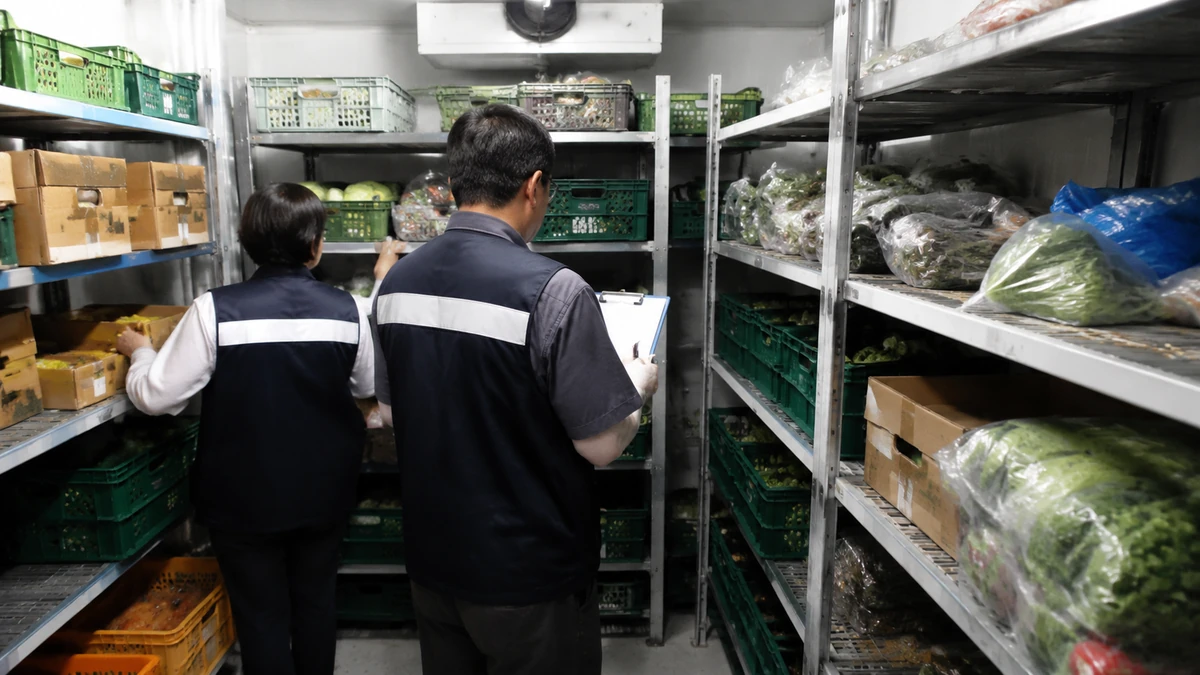
A routine inspection exposed weak links in a system millions of families trust
South Korean authorities say they uncovered illegal practices at 18 companies supplying food for school lunches in Gyeonggi Province, the populous region that surrounds Seoul, in a case that is likely to resonate far beyond one round of inspections. The findings point to gaps not only in sanitation but also in record-keeping, labeling and basic compliance across the supply chain that feeds students every school day.
According to provincial officials, a special judicial police unit operated by Gyeonggi Province inspected 240 school meal suppliers between last month’s 20th and 30th and found 20 violations at 18 companies. The violations ranged from licensing issues and failures to meet food and livestock product standards to lapses in required self-inspections, storage of expired products, labeling problems and missing transaction and production records.
For American readers, the closest parallel may be the combination of a state agriculture department, health inspectors and law enforcement investigators examining vendors that supply public school cafeterias. In South Korea, school lunch is not a side issue in family life. It is a central part of the education system and of the social contract around child care, public education and government responsibility. Students typically eat lunch at school as part of a highly organized meal program, and parents generally expect those meals to be safe, nutritious and carefully monitored.
That is why the case is drawing attention as more than a narrow food industry matter. When problems appear in a school meal supply chain, the concern is not only whether rules were broken on paper. It is whether a hidden breakdown earlier in storage, processing or distribution could affect large numbers of children at once. In a system where many students are served the same food on the same day, small failures upstream can carry outsized consequences downstream.
The numbers alone do not suggest a system in total collapse. Most of the companies inspected were not cited. But the mix of violations matters. Regulators did not find one isolated issue repeated over and over. Instead, they found trouble across multiple points of control, from legal authorization and product standards to documentation and expiration-date management. That pattern suggests vulnerabilities in the safety net itself.
Why school lunch matters so much in South Korea
To understand why this story is significant in South Korea, it helps to understand the role school meals play there. In the United States, parents may picture a cafeteria line, district contracts and periodic debates about nutrition standards, processed foods or free lunch funding. South Korea has its own versions of those debates, but school lunch also carries additional weight because of how central education is to family life and how much trust households place in the institutions surrounding it.
South Korean students often spend long days in academic settings, and the school meal is part of a broader framework that supports working parents and the country’s intense educational culture. Public sensitivity to children’s well-being is high, and food safety issues involving schools can quickly become a matter of national concern. In that sense, this inspection is about more than whether a vendor kept the right paperwork. It touches a deeper public expectation that spaces associated with children, especially schools, should meet especially strict standards.
That expectation is not unique to Korea. Americans have seen similar public reactions when contamination or mismanagement affects school cafeterias, infant formula, day care centers or children’s medicine. The emotional logic is the same: families may tolerate a certain amount of risk in ordinary consumer life, but when the state is directly or indirectly responsible for what children eat, the tolerance for error drops sharply.
In South Korea, the school lunch system also functions as a collective service rather than an individualized consumer choice. Parents are not shopping among dozens of lunch providers each morning. Schools and local authorities depend on a supply network to deliver food at scale, which means the quality of oversight matters as much as the quality of the food itself. If that oversight slips, families have limited ability to see the problem for themselves before meals are served.
That is one reason surprise inspections and public disclosures carry so much importance. They are among the few tools available to reveal what is happening inside warehouses, processing facilities and logistics operations that the average parent or student never sees.
The violations were varied, and that may be the most troubling part
Officials said the 20 violations fell into several categories. Four cases involved problems related to business permits or authorization. Another four involved violations of standards or specifications for food and livestock products. Four more involved failures to comply with mandatory in-house quality testing requirements.
In addition, inspectors found three cases involving the storage of products past their consumption deadline, two cases involving food labeling violations, two cases in which companies failed to prepare required materials records or production logs, and one case involving the failure to retain transaction records.
On their own, some of those categories may sound technical, the kind of bureaucratic infractions that can blur together in government releases. But in food safety, technical rules are often the front line of prevention. Labels matter because they help workers identify what a product is, how it should be handled and when it should no longer be used. Transaction records matter because they make it possible to trace where food came from and where it went if a problem later surfaces. Production logs matter because they help investigators reconstruct what happened, when and under what conditions.
For American readers, this is similar to why U.S. regulators emphasize traceability in outbreaks linked to romaine lettuce, deli meats or peanut butter. If a school district or a public health agency cannot determine where a product moved through the chain, its ability to respond quickly shrinks. The harm is not only in the initial lapse. It is in the weakened capacity to contain damage after the fact.
The same applies to self-inspection obligations. Required internal quality checks are not meant to replace government enforcement. They are meant to create a baseline culture of compliance before an outside inspector ever walks in the door. When a company fails to carry out those checks, it suggests that the problem may not be a single bad day but a broader pattern of neglect.
That helps explain why the findings are being read as a warning sign. A permit violation points to one kind of breakdown. Expired product storage points to another. Missing records point to still another. When all of them appear in a single inspection campaign, the message is not merely that some companies made mistakes. It is that multiple layers of control may be weaker than parents and schools assume.
One freezer case offered a vivid example of how ordinary rules can become real risks
Among the cases disclosed by officials, one company in Yongin stood out for the clarity with which it illustrated the stakes. Authorities said the company operated a freezer as a refrigerator without obtaining approval from health authorities for that change.
At first glance, that may sound like a dry administrative issue. But in food handling, the distinction between frozen and refrigerated storage is foundational. Different foods require different temperature controls to maintain quality and reduce risk. Changing how a storage unit is used without authorization can undermine assumptions built into a company’s approved operating plan and into the regulator’s oversight.
Officials did not say in the summary whether a specific health hazard was confirmed in that case or which products were involved. Still, the point is not trivial. In a school meal supply chain, the most basic storage rules exist for a reason. They are designed to keep products within predictable conditions before they ever arrive at a kitchen serving children.
This is where supply-chain stories often become difficult for the public to grasp. Families see the final meal. They do not see the warehouse temperature log, the labeling station, the inspection certificate or the internal test results. The risk is largely invisible unless regulators bring it into view. That makes enforcement actions like this one one of the few windows the public has into the parts of food distribution that are normally hidden.
It also highlights a broader truth familiar to U.S. readers after years of headlines about ports, trucking backlogs and grocery shortages: supply chains are only as trustworthy as their least visible links. In the case of school lunches, those links matter even more because the end consumer is not a casual shopper but a child in a classroom.
This is a food story, but it is also a story about public trust
South Korean officials framed the inspection as a matter of school meal safety, but the implications reach into a larger question: how much confidence should the public place in systems of public care that operate mostly out of sight?
School lunch sits at the intersection of food policy, education and social welfare. Parents hand children over to schools with the expectation that the state and its contractors will meet basic standards of safety. When vendors fail to comply with those standards, even in ways that do not immediately produce a visible illness outbreak, confidence in the broader system can erode.
That dynamic is easy for Americans to recognize. In the United States, trust in public institutions is already fragile in many places, and stories involving children often amplify that anxiety. Whether the issue is drinking water in schools, aging school buses, lead exposure, cafeteria nutrition or COVID-era ventilation, the public tends to read these stories not as isolated technical problems but as tests of whether institutions are doing their job.
South Korea is no different in that respect. A school lunch scandal is not merely about one business cutting corners. It raises the question of whether the safeguards around a daily public service are strong enough to deserve trust. The answer depends not only on whether violations are found, but on whether authorities can show they are detecting problems early, disclosing them clearly and imposing consequences that deter repeat behavior.
That helps explain why the inspection numbers matter less than the principle behind them. Eighteen companies out of 240 does not automatically mean most suppliers are unsafe. But it does mean regulators found enough noncompliance to justify public concern, especially because the violations touched several core parts of food safety management at once.
It also reinforces a point food safety experts regularly make: the absence of a known outbreak is not the same as the presence of a strong prevention system. Sometimes the most important inspections are the ones that catch vulnerabilities before they become headlines about sick children.
The Korean system includes a specialized enforcement arm that Americans may not know
One detail that may be unfamiliar to readers outside South Korea is the role of the Gyeonggi special judicial police. The unit is a provincial investigative body that can handle certain public safety and regulatory violations, including matters involving food. It is not identical to a local police department in the American sense, nor is it simply a health inspector’s office. Think of it as a specialized enforcement mechanism designed to give local government more direct tools to investigate and crack down on violations in areas considered important to public welfare.
That structure reflects a broader feature of South Korean governance: a willingness to use targeted administrative enforcement units in areas where public risk and regulatory detail overlap. In food safety, that can mean blending inspections, documentation review and legal enforcement more tightly than some Americans might expect from a purely local health department model.
For U.S. readers, a rough comparison might be a coordinated action involving state investigators, agriculture regulators and health officials, especially in a context where the public expects fast and visible accountability. The existence of such a unit underscores how seriously Korean authorities treat issues that affect schools, children and public confidence.
The province’s decision to release detailed categories of violations is also significant. Transparency in this kind of case matters because it helps the public distinguish between rumor and evidence. Without specifics, school food stories can quickly become vehicles for generalized panic. With specifics, parents and educators can better understand whether the issue centers on sanitation, documentation, storage, fraud or some combination of them.
That does not eliminate fear, but it does create a more informed conversation. It also increases pressure on suppliers to treat paperwork not as red tape but as part of the safety system itself.
The timing also highlighted how South Korea is trying to strengthen food oversight from both ends
On the same day the inspection findings were announced, South Korea’s Ministry of Food and Drug Safety said it had awarded about 125 million won in prize money, roughly equivalent to tens of thousands of U.S. dollars, to employees recognized for exceptional performance. The ministry said it selected seven outstanding achievements at its first special performance award ceremony.
The two developments are not the same story, and it would be a mistake to treat them as a single government campaign without evidence. Still, taken together, they offer an interesting snapshot of how South Korean food administration is trying to function. On one side is enforcement: surprise checks, citations and public disclosure of violations. On the other is internal incentive-building: rewarding officials for work deemed especially effective.
For an American audience, the idea is familiar even if the structure differs. Governments often rely on both punishment and performance incentives to make regulatory systems work. The principle is simple. Rules matter more when agencies have reasons to enforce them aggressively and when frontline officials have incentives to innovate, investigate and follow through.
In South Korea, where public expectations for administrative responsiveness are high, that balancing act can be especially visible. Citizens often expect officials not just to manage crises after they happen but to demonstrate competence in preventing them. Reward systems for bureaucratic performance are one way governments try to strengthen that culture internally.
Whether such incentives actually improve outcomes is a larger policy question. But the same-day announcements created a symbolic contrast: one branch of the system rewarding strong administrative performance, another exposing failures in the private sector supplying children’s meals. Together, they suggest a government trying to show that food safety depends both on internal capacity and external scrutiny.
What comes next will matter as much as the inspection itself
The immediate lesson from the Gyeonggi case is not that every school lunch in South Korea is suddenly suspect. It is that school meal safety depends on continuous compliance, not occasional reassurance. A one-time sweep can reveal weak points, but it cannot by itself guarantee lasting change.
What matters next is follow-through. That includes penalties where warranted, corrective action by the companies involved, repeat inspections and continued public disclosure. It may also include a broader review of whether current oversight is frequent enough and whether suppliers face the right incentives to maintain standards every day, not just when they think inspectors might appear.
For parents, the most important issue is visibility. School meal supply chains are inherently opaque to the families who depend on them. That makes transparency by regulators especially important. When authorities disclose how many facilities were checked, how many were cited and what kinds of violations were found, they give the public something more useful than vague assurances. They provide evidence that oversight is happening and that weaknesses are being documented rather than ignored.
There is also a broader takeaway that travels well beyond South Korea. In any country, public food programs are judged not only by cost and convenience but by the credibility of the systems behind them. If the supply chain is rushed, records are sloppy, labels are wrong or expiration controls are weak, trust can unravel even before a major health event occurs.
That is why this inspection campaign matters. It is not only a local enforcement story from a province outside Seoul. It is a reminder that food safety in public institutions depends on mundane disciplines that are easy to overlook until they fail: permits, logs, temperature controls, inspection routines, traceability and honest labeling. None of these are glamorous. All of them are essential.
For American readers, the story may feel both foreign and familiar. The names of the agencies are different, and the cultural centrality of school lunch in South Korea has its own distinct context. But the core issue is universal. Families trust schools with their children every day. That trust extends to what is served on the lunch tray, and it reaches backward through every warehouse, delivery route and processing room that made that meal possible.
When regulators find cracks in that chain, the warning is bigger than a single inspection report. It is a signal that public trust must be earned not with slogans, but with systems that work when no one is watching.
Comments
Post a Comment