South Korea’s Choi Jeong Powers Team Title in Women’s Go, Showing Why One Veteran Still Shapes the Region’s Biggest Rivalries
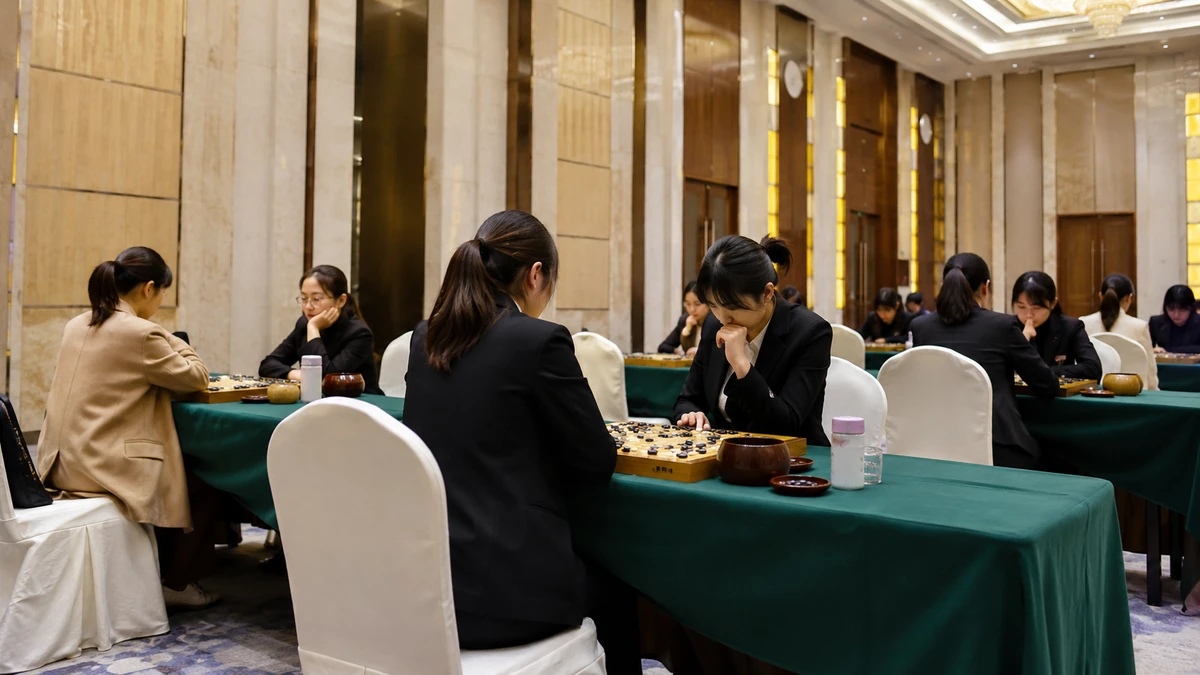
A veteran star takes over when the pressure peaks
In a sport that can look almost motionless to outsiders, the drama often arrives all at once. A player leans forward, studies the board in silence and places a single stone that changes everything. That was the story this week in eastern China, where South Korean Go star Choi Jeong delivered the kind of closing performance that sports fans everywhere recognize, even if they have never watched a professional board game.
Choi, a 9-dan professional widely regarded as the anchor of South Korea’s women’s Go program, won twice on Saturday at the ninth Tiantai Mountain Tiangeng Yunlu Cup World Women’s Team Championship in Taizhou, Zhejiang province. Those victories, over China’s Tang Jiawen and then Zhou Hongyu, helped drive South Korea to the team title in one of the most important women’s events in East Asian Go.
The results themselves were impressive enough: two wins in one day, both by resignation, against strong Chinese opposition on Chinese soil. But the larger story was the streak. Choi closed the tournament with four consecutive victories, adding Saturday’s wins to two more the previous day against China’s Wu Yizhi and Japan’s Ueno Asami. In a team competition defined by momentum and nerve, she did not merely contribute points. She changed the direction of the event.
For American readers, the simplest comparison may be a veteran pitcher taking the mound on short rest in October and somehow delivering again, or an NBA star carrying a team through the final minutes of back-to-back playoff games. Go, known as baduk in Korea, is a game of territory, patience and calculation, but elite competition creates familiar sports pressure. The moment gets bigger, the margin gets thinner and someone has to hold steady. This time, that player was Choi.
Her role in the South Korean lineup helps explain why the performance resonated so strongly back home. Korean coverage described her as the team’s “eldest sister,” a phrase that can sound overly sentimental in literal translation but carries real weight in Korean culture. It suggests not just seniority, but responsibility: the experienced figure expected to stabilize the group, absorb pressure and set the emotional tone. In this tournament, Choi lived up to the label in the most concrete way possible — by winning, and then winning again when the stakes rose.
Why this tournament matters beyond the niche world of Go
Go does not occupy the same space in American sports culture as football, basketball or baseball. Even chess, though it has grown more visible in the United States, has a broader public profile than Go. But in East Asia, professional Go remains a serious competitive and cultural arena, one with deep institutional support, television coverage, prize money and national prestige attached to it.
The Tiantai Mountain Cup is part of that world. The event brings together top women players from South Korea, China and Japan — the three countries at the center of modern professional Go. Korean reports have referred to the competition as a kind of women’s “Three Kingdoms” showdown, invoking a classic East Asian historical framework to describe a triangular rivalry with long memory and strong national overtones. In practical terms, it means every result is read not just as an individual win or loss, but as a measure of where each country stands in one of the region’s most intellectually prestigious sports.
That context matters because the championship is not a novelty event. Earlier editions of the tournament, held from 2012 through 2019, established it as a recurring stage for women’s team competition among the three Go powers. It represents continuity — a running test of depth, training systems and competitive identity. In international sports, repeated rivalry creates meaning. Think of the United States and Europe in the Ryder Cup, or the United States and Canada in women’s hockey. The event becomes larger than its bracket because it carries history from one edition to the next.
For South Korea, Saturday’s title signaled more than a successful weekend. It suggested that the country, long one of the world’s premier Go nations, still has the talent and resilience to reclaim center stage in a field where China has become increasingly formidable. And because Japan remains an important part of the competitive equation, every title in a Korea-China-Japan event feels like a statement about hierarchy in the region.
That may sound abstract to readers unfamiliar with the sport, but the emotional logic is straightforward. These are neighboring countries with intertwined histories, intense cultural competition and mature sports systems. When they meet in a championship setting, even a board game becomes an arena for national pride.
Four straight wins, and a title built on timing
The defining feature of Choi’s run was not simply that she won four games. It was when and how she won them. Team events in Go can swing quickly because each individual board influences the mood and strategy of the whole squad. A late collapse by one player can undo hours of careful positioning. A composed victory under pressure can revive an entire side.
According to Korean reports, Choi’s two wins on Saturday came in the tournament’s ninth and 10th games. In the morning session, she defeated China’s Tang Jiawen in 182 moves while playing white, forcing a resignation that kept South Korea firmly in the championship race. Later in the day, she returned for an even more significant assignment: facing Zhou Hongyu, the top-ranked Chinese woman player and China’s final representative in the competition. Choi won that game as well, in 198 moves, again by resignation.
Those move counts matter to Go followers because they suggest long, hard-fought battles rather than quick collapses. The game rewards discipline over impulsiveness, and the closing phase — where small endgame decisions can tilt the score — often separates the excellent from the merely good. The Korean summary of the event emphasized that South Korea’s day was turned around in the endgame, underscoring Choi’s ability to finish precisely when every point mattered.
That is part of what made the streak feel larger than a line on a results sheet. She had also won twice the day before, beating Wu Yizhi of China and Ueno Asami of Japan. By the time the title was decided, Choi had effectively carried South Korea through the tournament’s final stretch herself, beating elite opponents from all three competing countries in succession.
In most sports, sustained excellence under compressed conditions is what elevates a performance from very good to memorable. Back-to-back games, short rest, repeated high-leverage moments — these are the settings in which star reputations are made. Go may not involve sprinting or collision, but high-level tournament play brings its own strain. Hours of concentration, little margin for error and the need to reset mentally before the next opponent create a different but very real kind of fatigue. Choi’s four-match finish showed she handled all of it.
The meaning of “eldest sister” in Korean sports culture
One of the most culturally specific details in Korean coverage of Choi’s performance was the description of her as the team’s “eldest sister,” or mat-eonni. For English-speaking audiences, the phrase is worth unpacking because it points to how leadership is framed in Korea, especially in team settings.
In Korean, family terms often extend beyond the household and into school, work and sports. Age and seniority shape expectations in visible ways. The oldest woman in a female group may be treated not only as a veteran but as a caretaker, someone expected to provide stability and absorb burdens others cannot yet shoulder. In a national team environment, that can mean being the one trusted in the most uncomfortable moments.
Choi’s tournament offered a textbook example. She was South Korea’s third player in the late stages of the event, the one asked to keep the team afloat and then push it over the line. That responsibility was technical — win difficult games against top opposition — but it was also emotional. Team competitions can tighten everyone’s nerves. A steady veteran can calm the room simply by behaving like pressure is manageable.
American sports have their own versions of this role. It is the clubhouse leader who settles a young roster in the playoffs, the Olympic gymnast who has been through the chaos before, the national team captain whose confidence becomes contagious. The Korean phrase places extra emphasis on the relational side of that leadership. It is not just about being the best player; it is about being the person others instinctively look toward when the tournament begins to wobble.
That helps explain why Choi’s run drew attention beyond the raw achievement. The victories confirmed her class as a player, but they also reinforced her standing inside South Korea’s women’s program. At a moment when newer talents are emerging, she still appears to be the player most capable of taking the collective weight of expectation and turning it into results.
Korean reports also highlighted the wider team around her, including coach Choi Cheol-han and players Kim Eun-ji, Sumire Nakamura and Oh Yu-jin. That matters because team titles are always collective, even when one closer dominates the headlines. But it is equally true that some championships become associated with the athlete who seizes the decisive stretch. This one will likely be remembered that way.
Why the Zhou Hongyu win stood out
If one result captured the significance of the weekend, it was Choi’s victory over Zhou Hongyu. Zhou is not just another strong professional. She is the top-ranked women’s player in China, according to the Korean account, and she represented China’s last chance to stop South Korea’s title push. In other words, Choi was facing the host nation’s best remaining card at the sharpest possible moment.
That kind of matchup naturally carries symbolic weight. Sports fans understand the drama of beating the home favorite in front of a crowd primed for a comeback. When the opponent is also the country’s highest-ranked player, the psychological stakes rise even more. A win in that context does more than add to a tally. It sends a message about competitive hierarchy.
It also sharpened the tournament’s broader narrative. Women’s Go in East Asia is often discussed through national rivalry, especially in events featuring South Korea, China and Japan. So when a South Korean veteran beats China’s No. 1 player to secure the title in China, the story immediately becomes more vivid. It reads less like a routine tournament result and more like a climactic finish.
That does not mean the sport should be reduced to nationalism. The players themselves are part of a highly specialized professional world that crosses borders, and mutual respect among top competitors is common. But high-level sports always carry layers of meaning, and fans inevitably interpret certain wins as emblematic. Choi’s defeat of Zhou was one of those wins.
For casual readers, it may help to think of it as the final set of a Davis Cup tie or the last singles match in a Ryder Cup session, where one result can crystallize the whole event. The board is smaller, the room quieter and the tactics far more opaque to nonexperts. But the competitive tension is recognizable.
A reminder that South Korea’s sports identity is broader than baseball and soccer
When Americans think about South Korean sports, the first reference points are usually baseball, soccer, figure skating, archery or perhaps the global reach of esports. Go rarely makes that list, even though it has been one of the country’s most respected competitive traditions for decades. Results like this one are a reminder that South Korea’s sports identity also includes disciplines built on concentration, strategy and long apprenticeship.
That matters in part because women’s achievements in those spaces can be overlooked abroad. The global sports marketplace rewards visibility, and visibility tends to follow television deals, Olympic status and social media scale. Go, despite its rich history and strategic depth, operates outside much of that ecosystem in the English-speaking world. Yet within East Asia, winning a major cross-border team event remains an accomplishment of real significance.
Choi’s title-clinching stretch therefore works on two levels. Inside the Go community, it is a serious competitive feat against elite opposition. For broader audiences, it is a compelling sports story in a familiar shape: a veteran star rises in the closing stages, strings together win after win and carries her team to a title. The board may be unfamiliar, but the narrative is not.
It also says something about endurance in an era obsessed with the next prodigy. Choi has spent years near the top of women’s Go, and with longevity comes a different kind of pressure. Every new tournament invites comparison to younger rivals, stronger domestic challengers and changing international balance. Delivering four consecutive victories at a key team event is a forceful way of answering those questions.
For American readers trying to understand why this mattered, that may be the clearest takeaway. South Korea did not simply win another niche competition overseas. One of its most accomplished players stepped into the tensest stretch of a historic regional event and outplayed a sequence of top opponents from China and Japan. In any sport, that is headline material.
What comes next for women’s Go
The larger significance of this championship may be felt in how it shapes the conversation around women’s Go going forward. China has invested heavily in the game and remains a powerhouse. Japan, with its deep institutional history, continues to produce high-level talent. South Korea, for its part, has long treated Go as both a cultural inheritance and a modern professional pursuit. The result is a three-country rivalry that can still produce sharp, meaningful competition even in a fragmented global sports landscape.
For women players, that matters especially. Their events have not always received the same international attention as open competitions, but tournaments like the Tiantai Mountain Cup provide a stage where rivalries can build and reputations can deepen. Choi’s run is likely to become part of that evolving story — not just as a list of wins, but as a model of how a veteran can still define the terms of a title race.
If there is a broader lesson here, it is that some of the most compelling international sports stories still happen far from the biggest Western spotlights. They unfold in specialized arenas, in games many outsiders do not fully understand, and yet they reveal the same qualities audiences prize everywhere: poise, timing, resilience and the ability to deliver when the pressure narrows.
That is what Choi Jeong did in Taizhou. She met China’s challenge, handled Japan’s presence in the field, won four straight at the tournament’s business end and gave South Korea a title that looked all the more meaningful because of how it was earned. In sports, fans often remember not just who won, but the feel of the finish. This one had the unmistakable shape of a closer taking over the stage and refusing to let go.
Comments
Post a Comment