Yeon Sang-ho’s New Zombie Thriller Hits 1 Million Tickets in Four Days, Signaling Fresh Box-Office Strength for Korean Genre Cinema
A fast start for a familiar Korean box-office engine
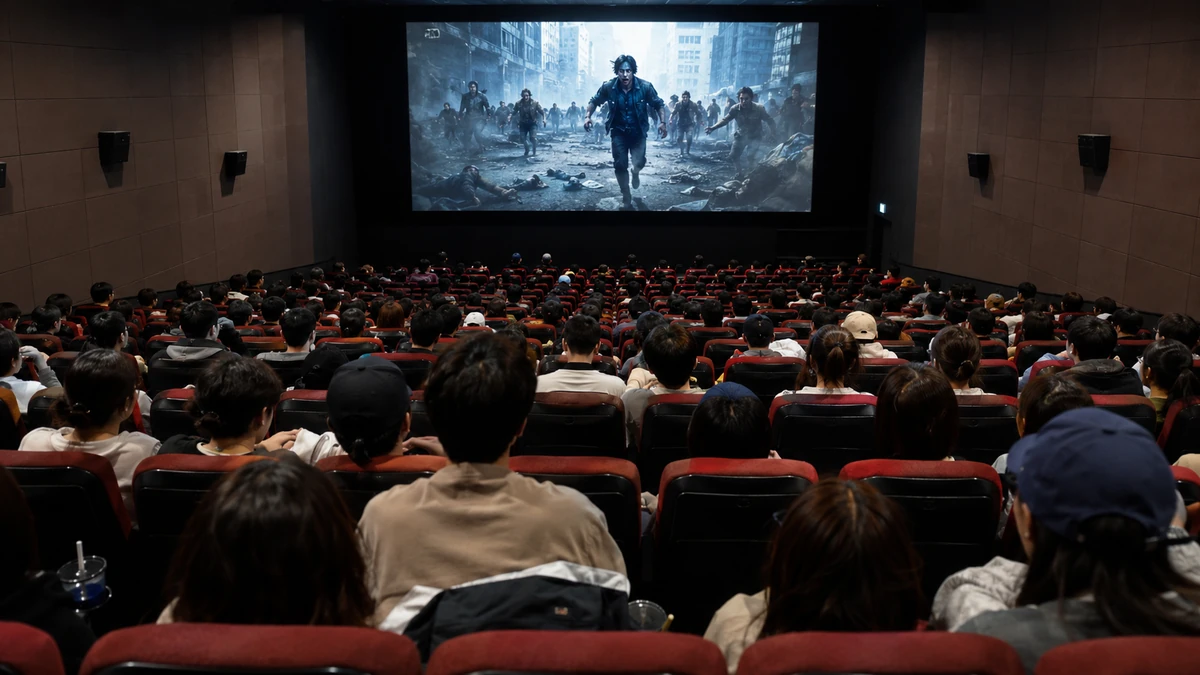
South Korean director Yeon Sang-ho, the filmmaker who helped redefine the modern zombie movie with 2016’s “Train to Busan,” has another early hit on his hands. His new film, “Colony,” crossed 1 million admissions on its fourth day in theaters, according to South Korean reports and distributor Showbox, making it the fastest release of the year in South Korea to reach that mark as of May 25, 2026.
For American readers, that milestone needs a little translation — not of language, but of moviegoing culture. In South Korea, box-office reporting is typically measured in admissions, or how many people bought tickets, rather than in dollar grosses. That means “1 million” is not shorthand for revenue. It is literally 1 million moviegoers showing up in seats. In a country with a population of about 52 million, that is a meaningful burst of public attention, especially in just four days.
The speed matters as much as the number. Hollywood studios often judge a film’s momentum by its opening weekend gross, social media chatter and holdover performance in week two. In South Korea, where moviegoers can make or break a release very quickly, early attendance is often read as a sign of concentrated audience interest. A movie that reaches 1 million admissions in four days is not just doing well; it is pulling the market toward itself.
That appears to be what “Colony” is doing. The film reportedly reached the milestone even faster than another major Korean theatrical hit released this year, which had also posted strong numbers. The comparison suggests that “Colony” is not merely benefiting from a slow marketplace or lack of competition. It is breaking through because people are actively choosing it, and choosing it quickly.
That kind of opening tells exhibitors, distributors and rivals something important: Korean moviegoers still respond powerfully to a well-packaged genre event, especially one tied to a recognizable filmmaker and a concept that promises a big-screen experience. For an industry still navigating the post-streaming era, that may be the most important takeaway of all.
What “Colony” is about, and why the setup works
Based on details released so far, “Colony” follows a group of survivors trapped inside a sealed building during an outbreak, with actress Jun Ji-hyun playing Se-jung, a professor of biotechnology. At first glance, that may sound familiar to anyone who has seen zombie cinema from “Night of the Living Dead” to “28 Days Later,” “World War Z” or, more recently, HBO’s “The Last of Us.” Infection spreads. Resources run short. Fear reshapes the social order. Human beings become as dangerous as the infected.
But the confined-building setup is a notable twist in emphasis. Instead of following an outbreak across a city, a country or a moving vehicle, the story compresses the crisis into one enclosed location. That matters because closed-space thrillers live or die by pressure. They force characters into prolonged contact, accelerate mistrust and make every hallway, doorway and stairwell a tactical problem. If “Train to Busan” used the forward momentum of a speeding train to keep panic in motion, “Colony” seems positioned to build dread through containment.
That is a structure American audiences will recognize from films like “Alien,” “The Raid,” “10 Cloverfield Lane” or “REC,” where confinement does not reduce stakes but intensifies them. The drama becomes less about whether civilization will collapse in the abstract and more about how people behave when they cannot simply run away. In that sense, the building itself becomes a character — a cage, a battleground and perhaps a laboratory.
The lead character’s profession adds another layer. Making Se-jung a biotechnology professor suggests that the film’s outbreak is not only a survival problem but also an intellectual and ethical one. That does not necessarily mean “Colony” becomes a science-heavy procedural. But it signals that the story may have more interest in cause and response than a standard “run from the monsters” thriller. Korean genre films, at their best, often use high-concept hooks to open broader questions about class, authority, institutional failure and scientific ambition. Even without more plot specifics, Se-jung’s background hints that the movie wants to anchor terror in systems as well as in flesh-and-blood chaos.
At the same time, the appeal of the film may be precisely that it does not need to reinvent the zombie wheel to attract audiences. It is enough to take a familiar genre grammar — infection, siege, moral compromise, sacrifice — and reassemble it with precision. In commercial cinema, execution often matters more than novelty. The opening numbers suggest Korean audiences believe Yeon has a compelling reason to return to material he has explored before.
Why Yeon Sang-ho still matters in the zombie genre
That trust begins with the director’s name. Yeon is not just another filmmaker trying his hand at horror. He is one of the central figures in South Korea’s recent genre boom, and for many international viewers he remains closely associated with the global rise of Korean popular cinema before “Parasite” made Oscars history and before “Squid Game” became a worldwide streaming obsession. “Train to Busan” introduced countless viewers outside Korea to a version of zombie storytelling that felt urgent, emotional and unmistakably local, even as it worked within a universally recognizable form.
That film was fast, brutal and deeply invested in social behavior under stress. Its horror came not only from the infected but also from selfishness, status anxiety and the way institutions falter when ordinary people most need them. Its 2020 follow-up, “Peninsula,” expanded the scale into a larger post-apocalyptic action setting. Whether audiences preferred one or the other, both films established Yeon as a director whose zombie stories were not side projects. They were a core part of his cinematic identity.
That kind of brand power is increasingly important in the theatrical business. In the United States, directors like Jordan Peele, Christopher Nolan and Denis Villeneuve can draw moviegoers partly because their names promise a certain kind of experience. South Korea has its own version of that dynamic. A director associated with a successful genre can become a quality marker, a shorthand for tone, pacing and ambition. When Yeon returns to zombies, viewers are not coming in cold. They are arriving with a built-in comparison set and with expectations formed over a decade.
Those expectations can cut both ways. A familiar genre plus a familiar filmmaker can create excitement, but it can also create skepticism if audiences feel they are being sold repetition. The early turnout for “Colony” suggests the first force is winning. Moviegoers appear to be reading the film not as a retread but as a meaningful new chapter in a body of work they already know how to value.
The presence of Jun Ji-hyun likely adds to that pull. Internationally, she may be best known to some viewers through Korean dramas or earlier film work, but in South Korea she is a marquee star whose casting alone raises a project’s profile. Pairing a major commercial director with a high-recognition lead actor is the kind of formula studios in any country understand well. It offers both familiarity and a new selling point: audiences know the genre, know the filmmaker and are curious about the specific combination this time.
Cannes, midnight buzz and Korean cinema’s many lanes
“Colony” also arrived with festival credentials. The film was invited to the Midnight Screening section at this year’s Cannes Film Festival, a slot often associated with bold, energetic and crowd-responsive genre titles. In practical terms, a Cannes invitation does not guarantee ticket sales. Plenty of festival films never become commercial hits. But a Cannes berth can change the conversation before a movie even opens. It gives the release an international stamp of attention and tells domestic audiences that the film is not just another assembly-line studio product.
For American audiences, it may help to think of Cannes as both a prestige engine and a global spotlight. U.S. viewers often associate top-tier film festivals with serious dramas, awards contenders and art-house fare. But festivals like Cannes also create important space for horror, thrillers and other genre work, especially in sidebars and special sections where audience reaction is part of the draw. A midnight slot can function like a badge: this is a movie designed to hit hard in a room full of people.
That matters for Korea’s film industry because it highlights one of the country’s enduring strengths. Korean cinema does not fit neatly into one export category. It is not only prestige cinema, only television drama, only K-pop-adjacent celebrity culture or only streaming content. It is all of those things at once. One Korean filmmaker may be associated with jury-room gravitas and awards-season attention; another may be commanding a midnight crowd with a visceral genre ride. Often, the same industry can do both at the same time.
That broader point is easy to miss in the United States, where Korean culture sometimes reaches mainstream conversation through a few dominant entry points — BTS, “Squid Game,” “Parasite,” “Minari,” maybe a breakout beauty trend or a restaurant boom in cities like Los Angeles and New York. But the Korean Wave, or “Hallyu,” has long been more structurally diverse than that. Its staying power comes from range. It can produce globally discussed art cinema, mass-market streaming dramas, local box-office juggernauts and internationally legible genre films without relying on a single style.
“Colony” seems to sit squarely in that intersection: a commercial Korean film with enough festival cachet to attract notice abroad and enough local appeal to become a domestic event. That combination helps explain why its opening is drawing attention beyond simple attendance numbers.
The audience reaction may matter even more than the opening number
Fast openings are useful, but they do not always tell the whole story. In any market, a heavily promoted movie can surge on curiosity and then collapse if viewers come away disappointed. That is especially true in horror and thriller filmmaking, where genre fans often arrive early and react loudly. In South Korea, one widely watched barometer is the CGV Egg Index, a customer response score from the country’s largest multiplex chain. “Colony” is currently reported at 87%, a figure local reports described as generally positive.
That is significant because it suggests the movie’s early business is not driven only by pre-release hype. Audience satisfaction appears solid enough to support holdover business, and the film’s advance reservation data points in the same direction. As of noon on May 25, local reports said “Colony” was leading ticket reservations with 47.5% of bookings and nearly 249,000 tickets reserved.
Those are the kinds of numbers that suggest both curiosity and follow-through. People who have already seen the movie are not necessarily scaring off the next wave. Instead, the film appears to be benefiting from the combination every theatrical release wants: strong awareness before opening, immediate turnout after opening and enough positive reaction to keep fresh audiences interested.
That momentum is especially meaningful in an era when theatrical attendance can no longer be taken for granted. In the United States, studios have spent years trying to answer the same question Korean distributors face now: what still gets people off the couch? Superhero fatigue, shortened release windows and the comfort of streaming have all changed audience habits. Korean theaters are dealing with their own version of that recalibration. So when a film cuts through, industry watchers notice.
Genre movies remain one of the strongest answers because they reward communal viewing. Zombies, jump scares, close-quarter tension and sudden reversals simply play differently with a crowd. The scream, the gasp and the momentary silence before a scene detonates are part of the product. A movie like “Colony,” with its outbreak premise and claustrophobic setting, is almost engineered for the multiplex experience. The same elements that might make it appealing at home can become much more intense in a packed theater.
That is why the box-office story here is bigger than one title. “Colony” appears to be demonstrating that Korean audiences still see a difference between content and event. Not everything that can be watched on a screen feels worth leaving home for. A tightly wound survival thriller from a director with a proven track record still can.
What this says about Korean commercial cinema right now
The strongest reading of “Colony’s” opening may be that Korean commercial cinema has not lost its ability to create a moment. For years, observers inside and outside South Korea have worried about the future of theatrical film in a media ecosystem dominated by streaming platforms, serialized storytelling and algorithm-driven consumption. Yet every so often, a movie arrives that reminds the market how quickly audience attention can still consolidate around a single release.
That is what seems to be happening now. “Colony” has several ingredients working in its favor: a proven genre, a director with an established brand, a star lead, a clear high-concept premise, international festival visibility and encouraging audience response. None of those factors alone guarantees success. Together, they can produce a feedback loop that is difficult for competitors to disrupt. People hear about the film, see that others are talking about it, notice the ticket sales, observe the positive crowd response and decide to join in while the conversation is hot.
That dynamic is hardly unique to Korea. American studios have built opening weekends on the same psychological machinery for decades. But in Korea, where cultural trends can move with exceptional speed and where domestic films often compete directly with Hollywood releases for mindshare, the effect can be especially visible. A breakout opening is not just a good weekend; it can reset the mood of the marketplace.
There is also something notable about the kind of movie doing the resetting. This is not, at least based on the available information, a soft prestige drama or a family-friendly crowd pleaser. It is a zombie thriller set in a sealed building. That points to the continued strength of Korean audiences’ relationship with darker, more intense commercial storytelling. Korea’s film industry has long excelled at producing movies that merge genre pleasures with emotional force and social tension. “Colony” appears to be tapping directly into that tradition.
And for English-speaking audiences who track the Korean Wave mainly through streaming hits or awards-season breakthroughs, the film offers a reminder that theaters remain central to the story. K-content is not only a digital phenomenon. It also still depends on movie stars, distributors, exhibition chains and the old-fashioned electricity of opening weekend.
If the film’s momentum holds, “Colony” could become one of the year’s defining local hits and another proof point that Yeon Sang-ho remains a formidable commercial force in zombie cinema. Even at this early stage, though, the message is already clear. Korean audiences have not grown tired of the genre. They have not stopped responding to sharply pitched theatrical events. And when the right combination of director, concept and timing comes together, they can still turn a movie into a national talking point in a matter of days.
For Hollywood, that is not just an interesting foreign box-office anecdote. It is a case study in how genre filmmaking, when treated as a serious popular form rather than disposable content, can still move crowds. South Korea has been teaching that lesson for years. With “Colony,” it may be doing it again.
Comments
Post a Comment