
A record-setting start to a local election that matters far beyond City Hall
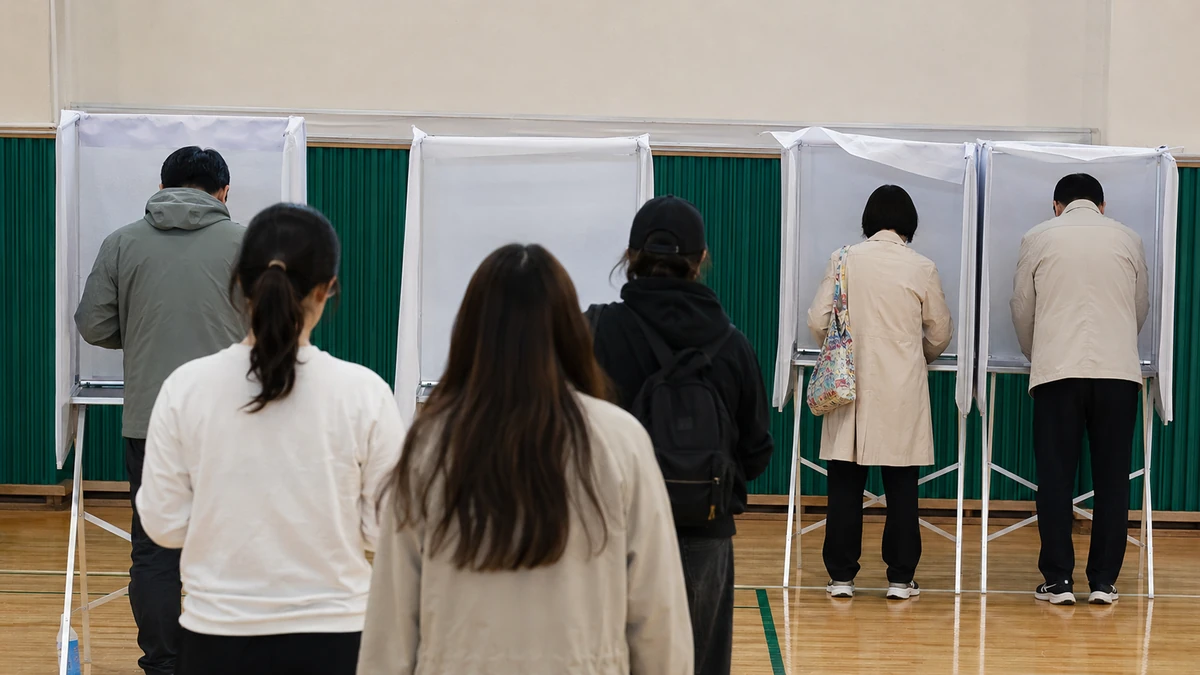
South Korea opened early voting for its nationwide local elections with a striking sign of civic engagement: By 6 p.m. on the first day, 11.6% of eligible voters had already cast ballots, according to the National Election Commission, the country’s independent election authority. That made it the highest first-day early voting rate ever recorded for a South Korean local election, topping the comparable pace from the last local races in 2022 by 1.42 percentage points.
On its face, that may sound like a routine campaign statistic, the kind of number political junkies trade on election night graphics. But in South Korea, where local elections decide governors, mayors, district chiefs and local council members across the country, the figure says something broader about the health of the democratic system. In the United States, midterm congressional races and gubernatorial contests often reveal whether voters are energized beyond a presidential cycle. In South Korea, local elections can serve a similar function. They are not merely administrative exercises. They shape public transportation, housing development, education budgets, social welfare programs and the daily relationship between citizens and the state.
The early turnout number matters because local elections are often seen as more vulnerable to voter fatigue than presidential or parliamentary races. National contests tend to revolve around well-known party leaders and high-stakes ideological battles. Local races are more granular. They ask voters to pay attention to the people who will manage neighborhoods, permits, sanitation, schools, development plans and community services. In many democracies, that kind of election can attract less excitement. South Korea’s opening-day record suggests the opposite this time: Voters are engaging early, and in large numbers, in a contest centered on local power.
That does not predict who will win. Early turnout is not the same thing as a clear partisan wave, and analysts are often too quick to read political prophecy into raw participation data. But it does signal something important: South Korean voters are not waiting on the sidelines. They are moving into the process early, and in a country where election administration has become increasingly sophisticated, that participation is a measure of both political interest and procedural trust.
For American readers more familiar with South Korea through K-pop, Oscar-winning films, Korean skincare brands or the latest Samsung device, this is a reminder that the country’s global influence rests not only on cultural exports and economic success. It also rests on a democratic machinery that functions regularly, visibly and, at least in moments like this, with strong public buy-in.
What local elections mean in South Korea
To understand why 11.6% on the first day of early voting matters, it helps to understand what is on the ballot. South Korea’s local elections are held nationwide and cover a wide range of offices at once. Voters choose leaders of larger provincial or metropolitan governments, heads of smaller municipal or district governments, and members of local assemblies. It is a sprawling exercise in self-government, closer in scope to a nationwide combination of gubernatorial, mayoral, county executive, city council and school-board-style elections than to any single American contest.
These races can have direct, practical consequences. Local officials influence housing approvals, redevelopment projects, social services, public health responses, transportation routes, local business regulation and education-related administration. In a country as densely populated and urbanized as South Korea, those decisions can quickly affect millions of people. A subway expansion, a zoning change, a local welfare initiative or a regional development plan can become a kitchen-table issue in the American sense: the kind of thing families talk about because it shapes rent, commute times, school access and neighborhood quality of life.
That is part of why the turnout figure carries meaning beyond the campaign horse race. In democracies around the world, one recurring concern is whether voters reserve their attention only for the biggest national spectacles while neglecting the institutions closest to their daily lives. South Korea’s first-day early voting record suggests many voters are treating local governance as consequential in its own right.
It also reflects the country’s political culture, where elections are frequent, highly organized and widely covered. South Korean citizens are used to robust electoral participation, intense media scrutiny and strong public expectations around political accountability. In that respect, the country resembles other advanced democracies where voters expect institutions to function efficiently and where elections are seen as a regular part of civic life rather than a rare or ceremonial event.
Still, there is a notable difference between South Korea and the United States. Americans are familiar with a patchwork election system that varies by state and even by county. Early voting rules, mail voting access and ballot procedures can differ sharply depending on where someone lives. South Korea’s system is more centralized and standardized. That can make nationwide participation trends easier to interpret. When turnout surges across the country, it is often read as a broad signal of public engagement rather than the byproduct of a few jurisdictions changing rules or expanding access on their own timetable.
Why early voting has become such an important democratic test
South Korea’s early voting system is designed to make participation easier by allowing people to cast ballots before Election Day. For readers outside the country, especially in the United States, the basic idea will be familiar. It resembles early in-person voting in many American states, offering flexibility to people who may be working, traveling, caregiving or otherwise unable to vote on the main day. But South Korea’s version has become especially notable because of how widely it is used and how central it has become to election administration.
The record first-day turnout suggests that early voting is not a symbolic convenience. It is functioning as an active, heavily used channel of participation. That matters because election reforms are often judged not by how elegant they look on paper, but by whether citizens actually use them. Many democracies spend years debating access, turnout and procedural design. South Korea’s numbers indicate that a structural solution meant to reduce time barriers is doing exactly that.
There is also a deeper democratic point here. Elections are not only about who wins office. They are also about whether citizens believe the process is accessible enough to enter and reliable enough to trust. When large numbers of voters show up early, that can indicate more than enthusiasm. It can indicate that the electorate sees the system as worth engaging with, and that the mechanics of voting have become normalized in everyday civic life.
That kind of normalization matters. In recent years, democracies from the United States to Europe to parts of Asia have faced recurring arguments over election legitimacy, turnout disparities and public confidence in the rules of the game. South Korea has hardly been immune to political polarization, but the strong use of early voting points to something that remains durable: A large share of voters still appears willing to act within institutional channels, and to do so quickly.
That is why the 11.6% figure can be read as a measure of democratic energy. Results come later, after ballots are counted. But the temperature of a democracy is often visible before that, in whether voters decide the process is worth their time. By that measure, South Korea entered this local election with unusual force.
The less visible side of voting: security, logistics and trust
High turnout does not sustain itself on excitement alone. It depends on voters believing that the ballot they cast will be securely handled and properly counted. That is where South Korea’s election logistics become part of the story.
On the same day the record early voting figure was announced, First Vice Interior Minister Kim Min-jae visited Seoul Central Post Office to inspect the handling and transport of ballots cast outside voters’ home districts. For overseas readers, this may sound like a minor bureaucratic detail. It is not. In South Korea’s system, a voter can cast an early ballot away from the district where that ballot must ultimately be counted. That makes transportation and chain-of-custody procedures crucial.
Officials said Kim checked the mailing process for those ballots, including security arrangements and vehicle escorts. Police officers accompany transport vehicles, and the government emphasized the importance of ensuring that every ballot safely reaches the appropriate election commission. His message to election workers was straightforward: Treat each vote as precious and make sure it arrives securely.
That scene says something important about modern democracy. A fair election is not confined to the few minutes a voter spends at a polling place. It extends through storage, transport, verification, oversight and interagency coordination. In the American context, think of the intense attention paid to ballot drop boxes, mail ballot signature checks, vote tabulation rooms and bipartisan poll-worker procedures. In South Korea, too, confidence depends on the invisible infrastructure behind the act of voting.
In fact, the logistics may be even more central when turnout is high. The more people use early voting, especially outside their home districts, the more pressure falls on election administrators, postal workers, local officials and police to keep the process secure and orderly. That does not make a system fragile. But it does mean capacity matters. A record turnout number becomes a test not only of public enthusiasm but of whether institutions can absorb that enthusiasm without compromising trust.
South Korea has built a reputation for administrative efficiency in many areas, from digital services to public transit to emergency response. Election administration is one more arena where competence carries political meaning. When officials visibly inspect ballot transport and emphasize procedural integrity, they are doing more than performing routine oversight. They are reinforcing the idea that the state takes electoral trust seriously.
Participation is rising, but so are the demands of enforcement
The first day of early voting also brought reports of election-related violations, a reminder that high participation does not automatically produce a perfectly orderly campaign environment. News reports from the southwestern regions of Gwangju and South Jeolla said authorities received complaints involving damaged campaign banners and business cards containing messages disparaging particular candidates.
Under South Korean election law, distributing or posting printed materials that support or oppose a party or candidate is tightly regulated outside specific legal allowances. For American readers, that may sound more restrictive than the broad political speech protections common in the United States. South Korea has a more rule-bound campaign culture in some respects, with election law playing a significant role in defining what is permissible during a campaign period.
That legal framework reflects a broader Korean emphasis on fairness, order and procedural discipline during elections. The trade-off, as critics sometimes note, is that stricter rules can invite disputes over the line between free expression and illegal electioneering. But the underlying point remains clear: When participation expands, so does the need for credible enforcement.
This is an underappreciated part of democratic resilience. People often talk about turnout as if more voters alone are proof of civic health. In reality, turnout and integrity have to rise together. The larger the electorate engaging in the process, the more important it becomes for authorities to respond quickly to misconduct, however minor it may seem. Damaged campaign materials and unauthorized leaflets are not in the same category as ballot tampering or systemic fraud. But left unaddressed, small violations can erode confidence in the fairness of the contest.
That is why the opening-day turnout record carries a dual meaning. It is both a sign of vitality and a management test. Election commissions, police, local governments and other agencies must show they can handle a high-volume, closely watched vote while keeping the rules intact. In a sense, the same record that flatters a democracy also places it under stress. The key question is whether institutions perform well under that stress.
Why international audiences should pay attention
For many Americans, South Korea enters the news through a familiar set of story lines: North Korea’s military threats, the rise of Korean pop culture, global semiconductor competition, trade policy and the strategic alliance with Washington. Elections below the presidential level often receive far less attention. But that can obscure an important reality. A country’s long-term political strength is not defined only by dramatic national transitions. It is also defined by how routinely and credibly it renews local power.
That is why this early voting record deserves notice outside South Korea. It shows a democracy where participation is not confined to a once-every-few-years national showdown. It is embedded in recurring institutions, including local government. That matters because local government is where citizens most directly experience whether democracy improves ordinary life.
For Americans, there is a useful comparison here. In the United States, frustration with Washington often coexists with strong concern about what happens at the statehouse, city council, school board or county commission. Debates about policing, housing affordability, transit, libraries and classroom policy can mobilize voters who feel distant from federal politics. South Korea’s local elections operate in a different institutional setting, but the basic democratic principle is recognizable: The issues closest to people’s lives can still bring them to the polls.
The record early turnout also offers a counterpoint to the common assumption that advanced democracies are trapped in a cycle of apathy, cynicism and institutional fatigue. Those forces certainly exist in South Korea, just as they do elsewhere. Yet the first-day numbers indicate that a substantial number of citizens still view voting as an effective and worthwhile act. In an era when democracies are often judged by their dysfunction, that is not a small thing.
There is another international lesson as well. South Korea’s experience suggests that participation can be strengthened when convenience and trust reinforce one another. Early voting expands access. Visible security and administrative oversight reinforce legitimacy. One without the other is often insufficient. Easy voting procedures that lack public trust can become politically vulnerable. Tight security measures that make participation cumbersome can depress turnout. What stands out in this case is the apparent combination of both.
What the number does — and does not — tell us politically
It is tempting to interpret a big turnout statistic as an omen for one party or faction. Political consultants everywhere try to do it. But the better reading of South Korea’s opening-day number is broader and more cautious.
The 11.6% first-day figure does not tell us which candidates are ahead or whether any particular bloc has gained an edge. Early turnout can reflect many factors: mobilization by multiple parties, heightened public interest in local races, the convenience of the voting schedule, demographic shifts in who prefers to vote early, or a general atmosphere of civic urgency. Without results, and without more detailed regional and demographic breakdowns, treating the figure as a partisan forecast would be premature.
What it does tell us is that voters are engaged earlier and more intensely than they were at the same point in the last local elections. That matters because participation itself is a form of political information. It tells candidates and parties that voters are not disengaged, not passive and not waiting to be persuaded at the last minute. In practical terms, it raises the stakes for the closing phase of the campaign. Messaging that relies on noise, provocation or procedural brinkmanship may land differently when a significant share of the electorate has already acted.
It also sends a message about representation. High participation strengthens the perceived legitimacy of whichever leaders emerge from the process. That does not mean everyone will accept every outcome happily; no democracy works that way. But it does mean the eventual winners will be chosen from a broader base of active citizens, which can deepen confidence in the result even among those who lose.
In that sense, the political meaning of the record is larger than victory or defeat. It lies in the relationship between the public and the system itself. South Korean voters are signaling that local politics is not an afterthought. They are showing that elections below the national spotlight can still command attention. And they are demonstrating that procedural democracy, often dismissed as dry or bureaucratic, can generate its own kind of momentum when citizens believe it is connected to real life.
A democratic signal that reaches beyond this election
As South Korea moves through the rest of its local election calendar, the record-setting first day of early voting should not be overinterpreted as a guarantee of any particular final turnout or political outcome. But it already establishes one clear fact: The election began with energy, and that energy came from ordinary voters choosing to participate early.
That may be the most important takeaway. In a global moment when democratic systems are frequently assessed through the lens of crisis, scandal or ideological conflict, South Korea has offered a different kind of image: citizens using a routine institutional pathway in unexpectedly large numbers. There is nothing flashy about ballot transport inspections, local assembly races or first-day turnout percentages. Yet this is often where democratic durability is actually measured.
The record matters because it captures three elements working together. First, there is institutional design: an early voting system that gives people flexibility. Second, there is administrative credibility: visible efforts to secure and transport ballots properly. Third, there is civic response: voters showing up and using the system at the highest first-day rate local elections have seen.
For international observers, and especially for American readers accustomed to fierce debates over voting access and election administration, the significance is easy to grasp. A democracy proves itself not only in moments of national drama, but in the repeated, procedural act of letting citizens decide who governs them and in the state’s ability to protect each ballot along the way.
South Korea’s first-day early voting number, 11.6%, is just a percentage. But it is also a democratic sentence written in figures: Voters are engaged, the process is active, and local government still matters enough to draw people in before Election Day even arrives.


0 Comments