South Korea’s Yang Hyun-jun starts as Celtic seals dramatic Scottish title, adding a World Cup subplot for Korean fans
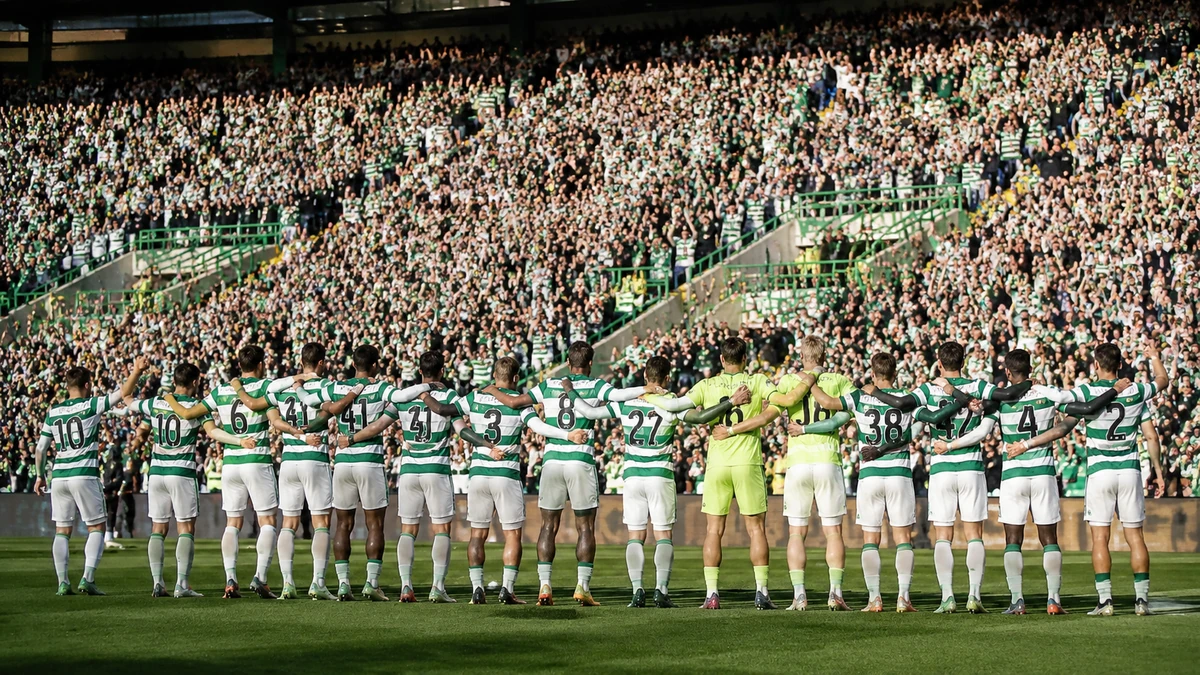
A title race decided on the final day
Celtic delivered the kind of finish that would resonate with sports fans anywhere: a must-win game, a historic rival in the standings, and a championship settled not by scoreboard watching but by beating the team directly in front of them. In the final match of the 2025-26 Scottish Premiership season, Celtic defeated Heart of Midlothian 3-1 to claim the league title, finishing on 82 points and edging Hearts, who ended with 80.
The result gave Celtic a fifth straight league crown and, just as significantly, a record 56th top-flight title, moving the Glasgow club past Rangers’ 55 and into sole possession of the most league championships in Scottish first-division history. For a club whose identity is inseparable from trophies, tradition and a giant global fan base, that number matters. It is not simply another title added to a crowded display case. It is a rewriting of one of the most meaningful statistical markers in Scottish soccer.
For American readers who do not follow the Scottish Premiership closely, think of it as a season finale with both standings pressure and historic stakes compressed into one night. Celtic entered the final round with little margin for error against the league leader. There was no comfortable runway, no opportunity to ease toward the finish line. The task was simple and severe: beat Hearts or risk losing the title. Celtic did exactly that, producing the kind of comeback victory that tends to live longer in club lore than a routine championship clincher in March or April.
That high-stakes context helps explain why this match drew interest far beyond Scotland. In South Korea, the game also served as a snapshot of where winger Yang Hyun-jun stands at a significant moment in his career. Yang, recently named to South Korea’s final roster for the 2026 FIFA World Cup in North America, started for Celtic in the title-deciding match. Even without an individual stat line dominating the headlines, the selection itself carried weight.
In elite soccer, starts in championship-deciding games are not ceremonial. They are signals of trust. Coaches do not hand out sentiment when a season is on the line. They choose players they believe can handle the tactical demands and emotional intensity of a game that can define months of work. Yang’s place in the starting lineup, then, mattered as much as any single highlight. It suggested that, at the end of a pressure-filled European season, he remained part of the answer for one of Scotland’s biggest clubs.
Why Yang’s start means more than a lineup note
To many American sports fans, the difference between “started” and “appeared” may sound like a minor detail. In global soccer, and especially in a league-title decider, it is often a meaningful distinction. A starting assignment reflects a manager’s confidence not only in a player’s talent but also in his reliability under pressure: his willingness to track back, his fit in the game plan, his awareness of the moment and his ability to execute with little room for mistakes.
That is why Yang’s role stood out in Korea, where national-team supporters closely track how players are being used at their clubs in Europe. South Korea has spent decades building a reputation as one of Asia’s most consistent soccer nations, and the country’s fans pay close attention to which players are merely attached to big clubs and which players are truly participating in decisive matches. In that sense, this was not just another European club result filtering across time zones. It was evidence of Yang’s current standing as he heads into the sport’s biggest tournament cycle.
The Korean article that prompted this coverage did not dwell on every touch or attacking action from Yang. That omission is notable in itself. Sometimes the broader context says more than the isolated play-by-play. Yang was in the starting 11 for a match that required a victory, against the first-place team, with a championship and a major historical milestone at stake. That alone tells readers a great deal about how he is viewed inside the club at this stage of the season.
For American audiences, it may help to think of this the way NBA or NFL fans interpret playoff usage. A player can have decent regular-season numbers, but what really shapes perception is whether the coaching staff trusts him in the fourth quarter of a Game 7 or on a critical drive in January. Yang’s selection functioned similarly. It was a statement about utility and trust in the most consequential setting available.
There is also a broader international angle. The 2026 World Cup, to be staged across the United States, Canada and Mexico, will place players like Yang in front of a far wider North American audience than they usually command. For those beginning to familiarize themselves with the South Korean roster, this Celtic appearance offers a useful clue. Yang is not simply a prospective squad member with theoretical upside. He is a player used by a title-chasing European club when the pressure peaks.
Celtic’s win carries the weight of history
Scottish soccer can sometimes be flattened in the American imagination into a simple story about Celtic and Rangers, the Glasgow giants whose rivalry ranks among the fiercest in world sports. But that shorthand, while not entirely wrong, can obscure the significance of moments like this one. Celtic’s 56th league title is meaningful not just because it adds to the club’s reputation, but because it reorders the historical hierarchy in a competition where counting championships remains one of the purest forms of bragging rights.
For decades, Celtic and Rangers have defined Scottish football’s landscape, with their rivalry shaped by class, religion, immigration and urban identity as much as by results on the field. Celtic, founded in the late 19th century, has long been associated with Glasgow’s Irish Catholic community, while Rangers historically drew from the city’s Protestant unionist tradition. Those divisions have evolved over time and should not be reduced to caricature, but they remain essential to understanding why league title totals matter so deeply. Every championship becomes part of a larger argument about identity, legacy and supremacy.
So when Celtic moved to 56 top-flight titles, surpassing Rangers’ 55, it was not merely a new number on a media guide page. It was a symbol with emotional and cultural force. Fans measure eras through these markers. Clubs recruit, spend and strategize with them in mind. History is never entirely in the past when the present keeps adding to it.
The fifth consecutive title matters, too, for a different reason. Winning once can be about a perfect storm of form, health and momentum. Winning five straight suggests structural power: recruitment that works, coaching continuity, squad depth and a culture that knows how to navigate a long season. In American terms, it resembles the difference between a surprise champion and a bona fide dynasty. Repetition changes the conversation. It shifts a club from being the winner of a season to the defining team of an era.
That is part of what made this final day so compelling. Celtic was not merely trying to preserve its reputation. It was trying to confirm that its current dominance could withstand the stress of a direct, high-pressure showdown. The club answered with a 3-1 victory that combined immediate competitive value with long-range historical consequence.
The heartbreak for Hearts, and why it sharpened the drama
If Celtic’s triumph felt cinematic, that was partly because of what was at stake on the other side. Hearts, one of Scotland’s most storied clubs outside Glasgow’s traditional power centers, entered the final day with a real chance to capture a league title for the first time since the 1959-60 season. That gap — 66 years — is long enough to stretch across multiple generations of supporters. Entire families can pass fandom down without ever seeing a championship.
That backdrop made Hearts more than a useful foil in Celtic’s celebration. They were a legitimate contender carrying their own emotional history into the match. For neutral fans, those are often the ingredients that elevate a title race from statistically interesting to genuinely memorable. One side is trying to preserve a dynasty and make history. The other is trying to end a drought so long it has become part of the club’s identity.
American readers may recognize the appeal of that contrast. It is the same narrative tension that makes fans lean in when a perennial powerhouse meets a franchise chasing its first title in decades. One fan base is defending status; the other is dreaming of release. Sports does not always produce neat storytelling, but on certain nights it comes close.
Hearts ultimately fell short, and there is no softening that reality. To come that close to a championship only to lose in the final round is the kind of disappointment supporters remember for years. But their role in the race gave Celtic’s achievement more weight, not less. Titles feel bigger when the opponent’s need is just as urgent and the pressure is shared. Celtic did not back into first place through a distant result elsewhere. It had to beat the team standing in its way, and that clarity gives the championship a clean, emphatic quality.
It also speaks to the appeal of soccer leagues when the final day truly matters. Many championships are settled early enough that the closing round becomes procedural. This one was not. The title hinged on a direct encounter between the top contenders. In a sport often criticized by casual American viewers for low scoring or opaque standings formulas, this was as straightforward and dramatic as it gets: win the game, win the league, make history.
What Korean fans are seeing in this moment
In South Korea, the significance of this result extends well beyond Celtic’s trophy count. The country’s soccer audience has grown increasingly global over the past two decades, following national-team players across Europe with intensity that mirrors how American basketball fans might track stars in different NBA markets. That habit was built in part by pioneers such as Park Ji-sung in the Premier League and has been amplified by the superstardom of Son Heung-min, whose career at Tottenham Hotspur turned regular Premier League viewing into a weekly ritual for many Korean households.
Within that environment, Yang’s start for Celtic is read as a progress report. Korean fans are not only asking whether one of their players is abroad, but whether he is trusted, improving and being tested in consequential moments. Club usage often becomes shorthand for national-team relevance. If a player is thriving in Europe under championship pressure, supporters tend to view that as a promising sign for Korea’s competitiveness on the international stage.
The Korean summary also emphasized that Yang has been included in South Korea’s final squad for the 2026 World Cup. That matters because roster inclusion and club deployment reinforce each other. One reflects a national team coach’s belief; the other reflects a club manager’s belief. When both line up, the player’s standing appears sturdier. It does not guarantee World Cup stardom, of course, and it would be an overreach to claim that one club match predicts tournament success. But it does offer a credible, present-tense indicator of form and trust.
There is another layer here for English-speaking audiences in North America. Because the 2026 World Cup will be held largely in the United States, more American fans will spend the next year learning not only the household names but also the supporting cast members who could shape matches from the wing, off the bench or in tactical rotations. Yang belongs in that conversation. He may not yet carry the name recognition of Asia’s biggest stars, but playing for Celtic in a title race gives him a platform and a level of experience that should not be dismissed.
And for Korean supporters, there is something emotionally satisfying about the timing of it all. The story is not rooted in controversy or transfer gossip or off-field noise. It is rooted in competition, selection and silverware. A Korean player started, his team won the league in dramatic fashion, and the setting underscored both his current standing and his potential importance heading into the World Cup. That is the kind of clean, affirming sports narrative fans in any country tend to embrace.
A global game, a local lens
One reason this story travels well is that it operates on several levels at once. For Scottish readers, it is about Celtic reclaiming the top line of the record book and continuing a run of domestic dominance. For Korean readers, it is also about Yang Hyun-jun and the evidence that he can hold a place in meaningful games at a major European club. For American and other English-speaking audiences, it offers a useful preview of one of the many international players who may arrive at the 2026 World Cup with more substance than fame.
It also reflects the way the modern sports audience consumes soccer. Fans no longer follow leagues in isolation. A title race in Scotland can matter in Seoul because a Korean international is involved. It can matter in the United States because the World Cup is coming to North America and viewers are beginning to map the players who will be part of it. The same match can carry different meanings depending on geography, but those meanings can coexist rather than compete.
There is a temptation, when covering international soccer for American readers, either to over-explain foreign leagues as if they are curiosities or to assume a level of familiarity that many casual readers simply do not have. This result invites a middle path. No, the Scottish Premiership does not command the same week-to-week attention in the United States as the English Premier League. But drama is drama, and a final-day showdown for a historic title needs little translation. Add a World Cup connection and an emerging South Korean player in the starting lineup, and the story becomes even more accessible.
What remains after the final whistle is a compact but powerful set of facts. Celtic beat Hearts 3-1. The victory delivered a fifth consecutive Scottish league title. It also gave Celtic a record 56th top-flight championship, pushing the club ahead of Rangers. And Yang Hyun-jun, named to South Korea’s final World Cup roster, started in the match that made it happen.
Those facts do not need embellishment to matter. They already describe a night when club history, national-team intrigue and end-of-season pressure all converged. Celtic got the trophy and the record. Hearts were left to absorb a near miss that will sting. And Yang walked off having taken part in one of the season’s biggest games, with the World Cup now looming on the horizon. For Korean fans, that is encouragement. For American readers preparing to watch a global tournament on home soil, it is a name worth remembering.
Comments
Post a Comment