Taeyang marks 20 years in K-pop with ‘Quintessence,’ a full-length album shaped by time, identity and a changing industry
A veteran K-pop star returns with a statement, not just a comeback
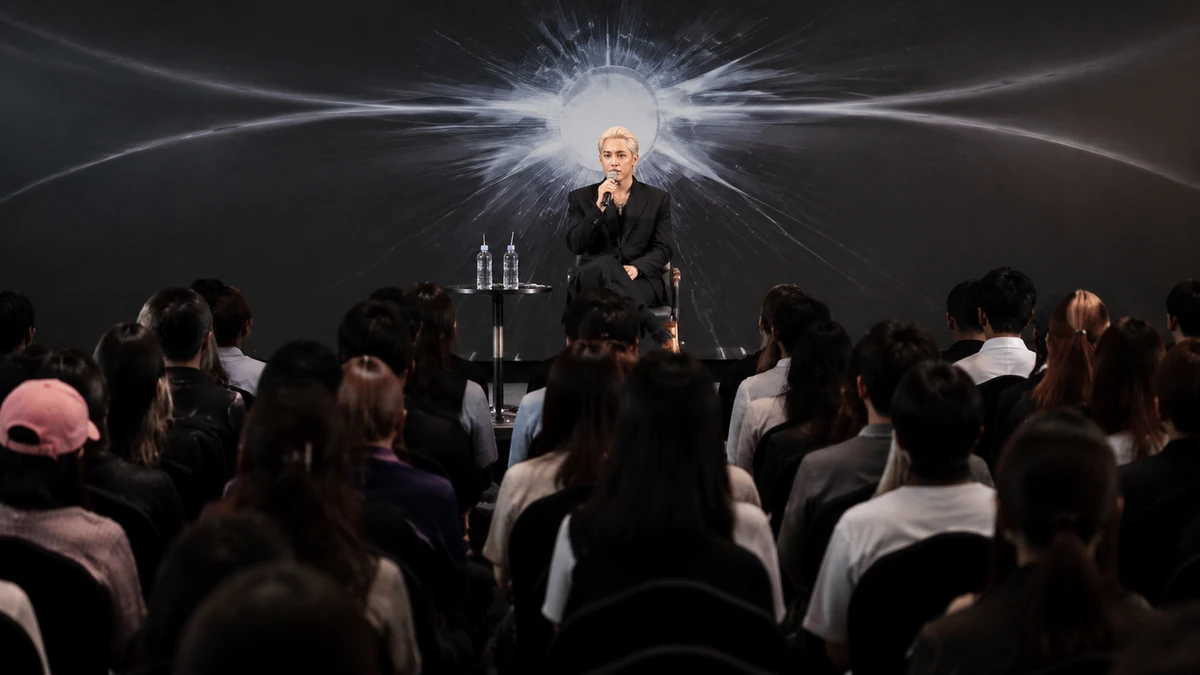
In pop music, anniversaries often invite nostalgia. For Taeyang, the South Korean singer best known as a member of the powerhouse group BigBang, they also seem to invite self-examination. At a listening event in Seoul on May 18, Taeyang introduced his fourth full-length solo album, Quintessence, calling it a project rooted in “essence” and “what is most like me.” The record arrives after a nine-year gap between studio albums and lands in the same year as his 20th anniversary since debut, a milestone that carries unusual weight in a fast-moving industry built on constant reinvention.
Those numbers alone help explain why the album matters. In American pop terms, imagine an artist with the longevity of a Justin Timberlake-era solo career, the generational imprint of a boy-band alumnus and the influence of an R&B-leaning performer returning not with a stand-alone streaming single, but with a full studio album meant to define who he is now. That is the space Taeyang is stepping into. He is not introducing himself to the public. He is revisiting the core of an identity that fans, critics and the broader K-pop business have been reading for two decades.
According to South Korea’s Yonhap News Agency, Taeyang told reporters and invited listeners that the date carried personal meaning as well: It was his birthday. He said he was happy to be able to give fans a good gift. In the ritual-heavy world of K-pop, where album releases, fan anniversaries and birthdays often become shared cultural events, the overlap was more than a scheduling detail. It turned the launch into a symbolic moment — part career marker, part personal celebration, part gesture of gratitude toward the audience that has followed him through multiple eras of Korean pop.
That symbolism is only part of the story. More important is the way Taeyang framed the album itself. He did not present it simply as a return after a long absence, or as an exercise in reviving past formulas. Instead, he spoke about the nerves that always come before releasing music, the mixed emotions that come from unveiling a year’s worth of work and the deeper question of what his musical “essence” really is. In an age when so much of global pop is optimized for speed, virality and short attention spans, that kind of framing stands out. Quintessence is being introduced less as a product drop than as an artist’s argument about who he has become.
Why a full-length album still means something in K-pop
For American listeners who mostly encounter K-pop through singles, music videos and social media clips, the emphasis on a full-length album may require a little context. K-pop is a hit-driven business like any other modern pop market, and in recent years it has embraced the same digital logic that shapes the U.S. industry: shorter promotional cycles, single-first strategies and a steady churn of content designed to keep audiences engaged. That makes a studio album — especially from an established star — more significant than it might appear on paper.
A full album in this context is not just a bundle of songs. It is one of the few remaining formats that allows a pop artist to build a broader world: to trace moods, themes and contradictions across a larger canvas. When Taeyang says he chose the title Quintessence because he was inspired by the idea of “essence” and “the purest form” of something, he is signaling that the project should be understood as a cohesive artistic statement. He spent a year preparing it, he said, thinking and researching what “essence” means and how to carry that idea through his music.
That language matters because it positions the album against the grain of contemporary consumption. Streaming has taught audiences to expect constant updates, quick hooks and immediate emotional payoff. A title like Quintessence suggests the opposite impulse: distillation, reflection and the patient work of deciding what remains after trend cycles and commercial noise fall away. For a K-pop artist, whose career has unfolded under relentless public scrutiny and rapid industry turnover, the search for essence is also a search for durability.
There is another layer here that American readers may find familiar. Veteran artists in the United States often talk about stripping away excess as they age in public, whether in rock, hip-hop, country or R&B. They stop trying to chase youth and instead start curating identity. Taeyang appears to be doing something similar, but within a Korean idol system that has historically demanded both polish and perpetual novelty. His stated goal — finding something that feels both “most like me” and “new” — captures a tension that every long-running pop artist faces. Familiarity is an asset, but it can harden into repetition. Novelty is necessary, but it can look like drift if it abandons the qualities audiences came for in the first place.
Taeyang’s place in K-pop history helps explain the stakes
To understand why this release is drawing attention, it helps to understand Taeyang’s place in South Korean pop. He debuted as a member of BigBang, one of the defining K-pop groups of the late 2000s and 2010s. BigBang helped shape the modern image of K-pop as a global export, combining pop spectacle, fashion influence, genre experimentation and individual star power in ways that expanded the field beyond its regional base. For many international fans, BigBang was part of an early wave of discovery — a group that arrived before K-pop became fully normalized in the American mainstream.
Within that group, Taeyang became especially associated with sleek R&B vocals, disciplined performance and a seriousness that distinguished him from some of the more flamboyant corners of idol culture. If BigBang was often seen as rebellious or trend-setting, Taeyang’s solo identity leaned toward emotional precision and musical focus. That history makes his current framing of Quintessence feel especially apt. He is an artist whose appeal has long been tied not just to fame, but to the sense that he has a recognizable inner musical language.
His 20th anniversary is significant in a South Korean industry where career longevity is never guaranteed. K-pop trainees often spend years preparing for a debut that may or may not lead to commercial stability. Even successful artists can face abrupt shifts in public taste, label strategy or group dynamics. To reach two decades with a clear public identity is itself an achievement. To use that anniversary not merely for a greatest-hits-style celebration, but for a project centered on personal essence, suggests confidence as well as introspection.
It also reflects a broader maturation in K-pop. For years, international coverage often reduced the genre to spectacle: synchronized choreography, immaculate visuals, fan armies and industrial efficiency. Those elements are real, but they are not the whole story. Increasingly, K-pop also includes artists navigating midcareer questions that will sound familiar to anyone who follows pop broadly: What do you owe your past? How do you innovate without erasing yourself? What does aging look like in a youth-obsessed business? Taeyang’s new album, at least as he describes it, enters that conversation directly.
The timing matters: Coachella, BigBang and the pressures of a dense year
Taeyang said he had been busy, explaining that he was preparing both for BigBang-related work connected to Coachella and for the completion of his solo album. For American readers, Coachella is an instantly recognizable benchmark — less just a festival than a pop-cultural proving ground where artists manage not only performances but image, momentum and global visibility. Balancing a major festival stage with the creation of a full studio album would be a demanding schedule for any artist. For a performer working in two lanes at once — group icon and solo musician — it speaks to the intensity of this moment in his career.
That detail also helps round out the image of Taeyang as both performer and album artist. The skill set required for a large-scale festival appearance is not the same as the one required to complete a reflective, concept-driven full-length record. One demands external energy, stage command and instant communication with massive crowds. The other requires quieter judgment: selecting material, refining sonic identity and sustaining concentration over time. His comments suggest that Quintessence was built not in isolation from spectacle, but alongside it — which may be one reason the album is being framed as a distillation of who he is.
In the American pop landscape, artists often separate those modes. The blockbuster live performer and the inward-facing album maker are sometimes treated as different archetypes. K-pop, by contrast, often asks stars to master both at once. Idols are expected to sing, dance, market, appear on camera, cultivate fan intimacy and carry narrative arcs that stretch across years. Taeyang’s remarks about not seeming to have had a day off after Coachella capture that pressure in unusually plain terms. The polished result audiences see is built on overlapping demands that are both creative and industrial.
That is one reason the phrase “I prepared this album for a year” resonates beyond simple scheduling. In a business that can prize perpetual output, time itself becomes part of the statement. To emphasize the yearlong process is to ask listeners to value concentration, craft and development. It suggests that the album’s meaning lies not only in the final track list, but in the deliberation behind it.
A birthday release becomes a fan ritual in Korean pop culture
Taeyang’s comment that the release date was also his birthday may sound like a light personal aside, but in K-pop it carries a richer cultural charge. Fan culture in South Korea and across the global K-pop ecosystem is highly organized and deeply participatory. Birthdays, debut anniversaries, military discharge dates, comeback weeks and tour stops can all become occasions for collective celebration. Fans do not simply consume the music; they often build calendars, fund projects, decorate public spaces, stream songs in coordinated campaigns and mark milestones almost as civic events within fandom communities.
So when Taeyang describes the album as a good gift to fans, he is speaking in a language that Korean pop audiences understand instinctively. The relationship between star and fandom is commercial, yes, but it is also structured around reciprocity, memory and emotional labor. Fans support artists over long gaps, through changing trends and through periods when visibility may be lower. A major release after nine years is therefore received not only as entertainment, but as the closing of a long wait shared by a community.
For American audiences, the closest comparison might be the way legacy acts or beloved pop stars generate multigenerational feeling — the sense that a new release can reconnect people to a specific phase of their own lives. Taeyang’s 20th anniversary almost certainly means different things to different listeners. For some, he is tied to early YouTube-era K-pop discovery. For others, he is a soundtrack to teenage years, college years or the first moment Korean pop felt global rather than niche. That accumulated memory gives a release like Quintessence emotional meaning beyond chart performance.
The birthday coincidence intensifies that meaning because it collapses public and private time into one shared event. An artist’s personal milestone becomes a communal celebration. In a pop culture economy increasingly driven by parasocial closeness, K-pop has developed some of the most elaborate forms of that intimacy. Taeyang’s phrasing — simple, thankful, gift-oriented — fits squarely within that tradition while also feeling sincere enough to avoid the canned sentimentality that can sometimes accompany promotional cycles.
What ‘quintessence’ says about an artist at midcareer
The most intriguing part of Taeyang’s presentation may be the album title itself. “Quintessence” is not the kind of word usually chosen for easy virality. It is abstract, philosophical and slightly old-fashioned in English, invoking the purest concentrated form of something. That makes it a striking title for a contemporary pop release and a revealing one. It implies that the album is less interested in reinvention for its own sake than in extraction — boiling a long career down to the qualities that remain indispensable.
That concept is particularly compelling at the 20-year mark. Early in a career, artists often define themselves by expansion: more genres, bigger stages, broader influence, louder imagery. At midcareer, the more difficult task can be reduction. What stays when the hype cycles pass? What aspects of style are core, not ornamental? Taeyang’s comments suggest he approached the album as a process of asking those questions, not assuming he already knew the answers.
That framing also avoids a common trap in anniversary projects: sentimentality without purpose. Plenty of veteran acts commemorate milestones by leaning heavily on retrospection, offering familiar aesthetics and trading on legacy. There is nothing inherently wrong with that, but it can make an anniversary release feel museum-like, more archival than alive. Taeyang appears to be after something different. By pairing “most like me” with “new,” he is trying to treat identity as active rather than fixed. In other words, essence is not a frozen past. It is a set of durable qualities that can still generate fresh work.
In that sense, Quintessence may say as much about the state of K-pop as it does about Taeyang personally. The industry is now old enough, and globally established enough, to produce artists with long arcs, second and third creative lives and complicated relationships to their own mythology. That is a sign of maturity. Korean pop is no longer just introducing itself to the world. It is now also dealing with what comes after introduction: endurance, evolution and the burden of self-definition.
A quieter kind of confidence in an industry known for spectacle
One of the notable details from the listening event is that Taeyang reportedly did not rely on oversized promises or extravagant rhetoric. Instead, he explained why he chose the title, how long he had worked on the project and what kind of artistic problem he wanted to solve. In a business famous for visual maximalism and aggressive promotion, that kind of calm self-description can be surprisingly effective. It suggests that the work is meant to carry its own weight.
That does not mean K-pop has abandoned spectacle, nor should it. The genre’s visual ambition remains one of its strengths. But moments like this help broaden the way international audiences understand Korean pop. They remind listeners that behind the choreography, branding and internet velocity are artists thinking seriously about authorship, continuity and form. Taeyang’s emphasis on “essence” and “research” may sound almost understated, yet that restraint may be exactly what gives the project gravity.
There is a broader Korean music context here as well. South Korea’s pop landscape contains stars from multiple generations who continue to command attention, from veteran vocalists to idol-era performers navigating long careers. The fact that longevity itself remains culturally legible matters. It means a 20th anniversary is not simply a marketing hook; it is part of an ongoing conversation about what it means to remain artistically relevant over time in one of the world’s most competitive entertainment markets.
Whether Quintessence ultimately succeeds will depend, of course, on the music itself and on how listeners receive it. But the story around its release is already telling. After nine years without a full studio album, Taeyang has chosen to return not by chasing immediacy, but by naming the deeper question: What is essential? For an American audience watching K-pop continue to evolve from phenomenon to institution, that question is worth paying attention to. It suggests that one of the genre’s veteran figures is not just revisiting his past. He is testing what of it can still speak in the present.
Comments
Post a Comment