Why a Routine Safety Check in South Korea Matters: What Jeonnam’s All-Clear on Food-Medicine Crops Says About Consumer Trust
A local inspection with a bigger story behind it
A routine government safety announcement from South Korea might not sound like major news at first glance. But a new report out of South Jeolla province, known in Korean as Jeollanam-do and often shortened to Jeonnam, offers a revealing look at how closely the country monitors foods that sit at the intersection of daily eating and traditional health practices.
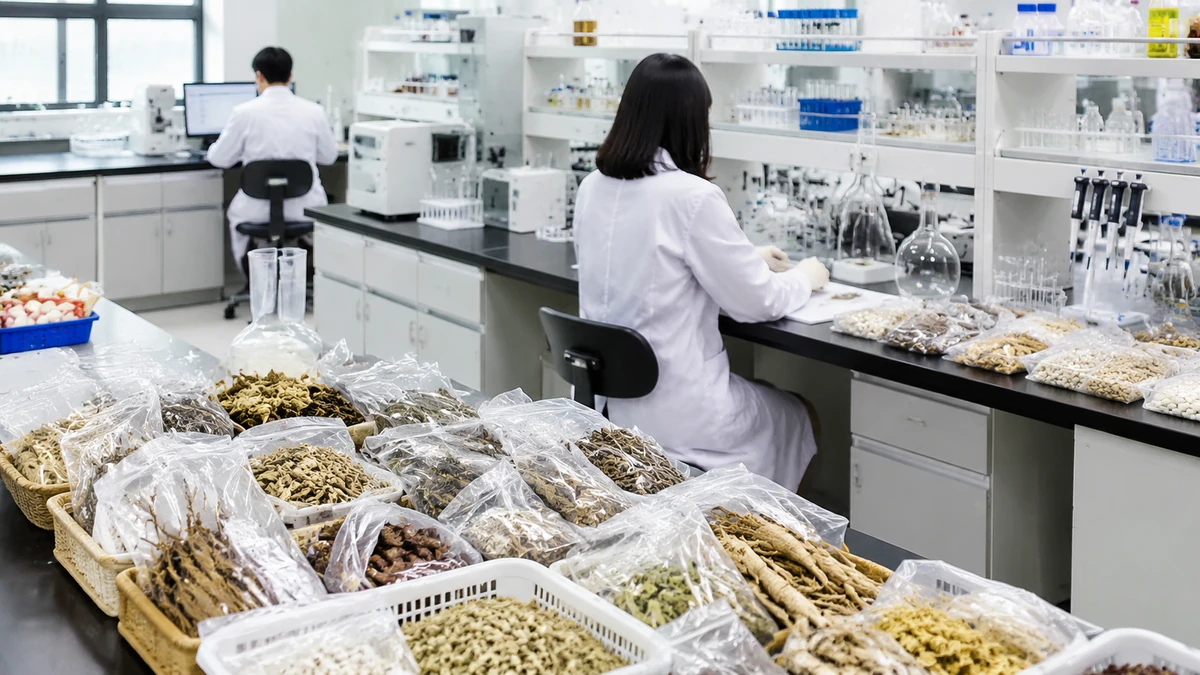
According to provincial authorities, every product examined in a recent safety inspection of what Korea calls “food-and-medicine-use” agricultural and forest products met regulatory standards. The Jeonnam Institute of Health and Environment, based in the county of Muan, said May 19 that it tested 21 items across 11 product categories being sold in the region and found them all compliant. The screening covered 417 safety indicators in total, including 412 types of pesticide residue, four heavy metals such as lead and cadmium, and sulfur dioxide.
In the United States, that might be compared loosely to a state lab testing a range of herbal teas, dried berries, roots and medicinal pantry ingredients sold in groceries and health shops, then publicly reporting that every sampled product passed. The headline here is not scandal or contamination. It is the opposite: a government agency saying the system worked, the products were clean, and the enforcement machinery is already in place if something goes wrong next time.
That matters because the products in question are not just ordinary produce. They include ingredients many Koreans use in soups, teas, broths, tonics and herbal preparations, sometimes as food, sometimes as part of a broader health regimen. For American readers, this category may be unfamiliar, but it reflects a longstanding pattern in East Asia, where the line between food and wellness ingredients can be far less rigid than it is in the United States.
South Korea’s announcement is, on one level, regional administrative news. On another, it is a window into a culture of food oversight that is more granular than many outsiders might expect. In a country where consumers routinely buy ingredients with both culinary and health-related uses, a clean bill of health from a public lab is more than a bureaucratic footnote. It is part of how trust is maintained in the marketplace.
What exactly was tested — and why these products matter
The products screened in Jeonnam included ingredients such as ogapi, goji berries, omija, licorice root, angelica and astragalus. Some of those names may be unfamiliar to Americans, even though a few have become more visible in wellness culture in recent years. Goji berries, for example, are now common enough to show up in U.S. health food stores and smoothie marketing. Licorice root is also recognizable to some American consumers, though usually as an herbal ingredient rather than a staple pantry item.
Others are more specific to Korean and broader East Asian food and herbal traditions. Omija, often translated as magnolia berry or “five-flavor berry,” is used in teas and punches and is prized for its complex taste profile. Angelica and astragalus are common in herbal broths and traditional preparations. Ogapi, a thorny shrub sometimes associated with tonic use, is another example of an ingredient that can move between food and medicinal contexts.
That flexibility is the key to understanding why this inspection drew attention. These are not products consumed only by people seeking out alternative remedies. They can also be part of everyday domestic cooking or seasonal routines, especially in households that still rely on traditional ingredients for soups, infusions or restorative dishes. In Korea, as in many parts of Asia, food is often understood not just in terms of calories or taste, but also in terms of balance, stamina and seasonal well-being.
For an American audience, one way to think about this is to imagine if ginger, ginseng, elderberry, chamomile and turmeric were all regulated together as ingredients that could be consumed both as food and as part of a wellness habit. In the U.S., those items are spread across several categories: grocery staples, dietary supplements, herbal products and traditional remedies. In Korea, the cultural overlap is often more explicit.
That overlap creates a special burden for regulators. When people buy an ingredient partly because they believe it may support their health, the public expectation around safety becomes even higher. Consumers are not simply asking whether the product is edible. They are also asking whether it is clean enough to trust in a context linked, however loosely, to health maintenance. That is why a passing result across a group of these products carries more weight than a routine produce check alone might suggest.
The Jeonnam lab’s sample size — 21 cases across 11 item categories — is not massive in national terms. But the point of the exercise was not to claim that every unit sold in Korea had been tested. It was to monitor what was actively circulating in one of the country’s key agricultural regions and to verify that a broad set of commonly used food-medicine products met established standards. In that sense, the inspection reflects everyday regulatory maintenance, not one-off crisis management.
The significance of 417 separate safety checks
The most striking figure in the announcement may be the number of items screened: 417. Of those, 412 were pesticide residue categories. The rest covered heavy metals — including lead and cadmium — and sulfur dioxide.
To the average consumer, that kind of list can sound abstract. But it points to something concrete: modern food safety enforcement is increasingly built around layered testing rather than a single pass-fail metric. A dried berry or medicinal root may have traveled through cultivation, harvesting, processing, storage and distribution before reaching a market shelf. At each stage, there are opportunities for contamination, mismanagement or environmental exposure.
Residue testing is especially important for plant-based products because they can be grown under varied conditions and sourced through long supply chains. The fact that the Jeonnam agency screened for hundreds of possible pesticide residues suggests not merely caution, but a regulatory system designed to anticipate a wide range of risks rather than only the most common ones.
The heavy metal checks are equally significant. Lead and cadmium are not the kinds of hazards consumers can detect by taste, smell or appearance. That is true whether someone is buying kale in California, dried mushrooms in New York or herbal roots in South Korea. The value of public testing is precisely that it addresses invisible risks the individual buyer cannot assess alone.
Sulfur dioxide, meanwhile, is often monitored because of its use in preserving or processing certain products. Its inclusion in the inspection makes clear that the authorities were not looking narrowly at pesticide exposure alone. They were evaluating a broader safety profile for products that may be dried, stored and sold in forms that differ from fresh produce.
For American readers accustomed to debates over labels, supplements and food regulation, Jeonnam’s report highlights a recurring global issue: consumers often encounter products marketed with a hint of healthfulness, but the real basis for trust is not the marketing language. It is the testing, the standards and the enforcement capacity behind the scenes.
That is one reason this kind of story, while low on drama, matters. News coverage often focuses on food safety only when there is a recall, an outbreak or a scandal. But a functioning regulatory system is also visible in quieter moments, when agencies publish results showing that the products in circulation passed scrutiny. Those moments rarely go viral. They are, however, central to public health.
How South Korea’s food culture shapes the importance of these inspections
To understand why this announcement resonates in South Korea, it helps to understand the place of health-oriented ingredients in Korean daily life. Korean cuisine is deeply tied to ideas of nourishment, recovery and seasonal resilience. Broths, roots, berries and dried botanicals often carry meaning beyond flavor. Some are associated with warming the body in winter, helping with fatigue or supporting recovery after illness or childbirth. Others are simply part of culinary tradition, even when their use carries a wellness association.
That does not mean Korean consumers treat every traditional ingredient as medicine in a clinical sense. Rather, the culture often leaves more room for food to be discussed in relation to health. This is familiar across much of East Asia, where traditional medical systems historically developed alongside culinary practice, not in complete isolation from it.
In practical terms, that means a consumer in Jeonnam might buy one of these ingredients for a stew, a tea, a homemade tonic or a gift for an older family member. In the American marketplace, those same uses might be divided among a supermarket, an herbal supplement aisle and a specialty ethnic grocery. In South Korea, the categories are often more porous.
That porosity raises the stakes for oversight. When an ingredient can be used in multiple ways and purchased by consumers with different expectations, the state has stronger incentives to define safety in broad terms. A contaminated product would not affect only one narrow consumer niche. It could undermine trust across households, markets and distribution networks.
Jeonnam is also not just any province. It is one of South Korea’s major agricultural regions, with a large base of farm and forest products. Results from this area can therefore carry significance beyond local residents. Products distributed through regional and national channels may end up on tables far from where they were grown or first sold. That makes the province’s inspection regime relevant to a wider public.
In that sense, this announcement says something larger about Korean governance. It shows how public trust is often built not just through sweeping national policy, but through repetitive, local, often unglamorous administrative work: sampling, lab analysis, public disclosure and, if necessary, follow-up action. For a society that has faced high-profile food safety controversies in past decades, that kind of steady vigilance is part of how confidence is restored and maintained.
The message behind “all products passed”
At first glance, “all products passed” can seem like a simple enough message. But in regulatory terms, it does several things at once.
First, it reassures consumers. That is the most obvious function. People buying ingredients with both culinary and health associations want to know that public standards are being met. A clean result lowers anxiety, even if only temporarily, and reinforces the idea that authorities are watching the market.
Second, it sends a signal to producers and sellers. Compliance is not merely a matter of avoiding fines. It is part of preserving market credibility. When a public lab reports that regionally distributed products passed an extensive set of checks, that result becomes a form of institutional validation for the supply chain.
Third, it reminds the public that food safety is not only reactive. In many countries, consumers notice regulators most when something fails: tainted lettuce, mislabeled seafood, unsafe supplements or a recall tied to contamination. But preventive governance depends on inspections that may never become front-page news precisely because no crisis emerged. In that way, a quiet success can be evidence that the system is doing what it is supposed to do.
The Jeonnam institute also made a point of emphasizing what would happen if a product failed. Under food safety management guidelines, it said, information would be shared with relevant agencies and follow-up steps such as recall and disposal would be carried out. That part of the announcement is nearly as important as the passing results themselves.
Consumers do not need to understand all 417 testing criteria to appreciate the value of a response plan. What they need to know is that the inspection does not exist in a vacuum. If something unsafe is found, there is a chain of action already defined. Information sharing, removal from circulation and disposal are not ad hoc ideas improvised after the fact. They are built into the administrative process.
For American readers, that may sound similar to the logic behind U.S. recalls issued in coordination with state agencies, the Food and Drug Administration or the Department of Agriculture. The institutional details differ, but the principle is familiar: surveillance matters most when it is linked to enforcement.
Why this kind of regional news deserves broader attention
Not every meaningful story arrives wrapped in conflict. This one does not involve political crisis, celebrity controversy or a public panic. Yet it reveals something important about contemporary South Korea and, more broadly, about how modern societies manage risk in everyday life.
Food safety is one of the most intimate areas of public administration because it reaches directly into private routines. It affects what families cook, what older adults consume for health, what children are served and what shoppers trust when they browse a market shelf. In that sense, a regional inspection report is never purely technical. It is part of the social contract between the public and the institutions that regulate basic consumption.
The Jeonnam findings are especially notable because they involve products that carry a dual identity. These are not simply commodities. They are culturally loaded ingredients tied to tradition, care and, in some cases, the hope of better health. That makes oversight more than a legal exercise. It becomes a way of protecting confidence in longstanding habits and shared assumptions about what belongs in the kitchen and the home.
There is also a broader international lesson here. As Korean food, beauty and wellness products continue to spread globally, overseas consumers are becoming more familiar with ingredients once considered niche outside Asia. Goji berries are now mainstream in many parts of the U.S. Ginseng has long had an American market. Other ingredients may follow as Korean culinary and wellness trends continue to travel. The more these products circulate internationally, the more relevant it becomes to understand how they are regulated at home.
For readers interested in the Korean Wave, or Hallyu, that usually means K-pop, television dramas, film, beauty products and fashion. But the Korean cultural footprint also includes foodways and attitudes toward health, aging, recovery and self-care. Stories like this one illuminate the infrastructure behind those softer cultural exports. They show the bureaucratic backbone supporting the ingredients and traditions that increasingly attract foreign curiosity.
Just as importantly, this report complicates simplistic assumptions about Asian traditional products as lightly regulated or governed mainly by custom. The Jeonnam inspection suggests a more modern reality: traditional-use ingredients are being monitored through highly technical testing regimes, with quantified benchmarks and formal response procedures. Tradition, in other words, does not stand outside the laboratory. It is being administered through it.
A quiet example of preventive government at work
The Jeonnam Institute of Health and Environment also quoted the head of its agricultural products inspection unit, Park Hye-young, as stressing that rigorous safety management is especially important because these products are used not only as foods but also as materials consumed for health purposes. Park said the institute would continue regular inspections and strengthen preemptive management efforts to protect residents’ health.
That language matters. “Regular inspections” implies continuity rather than a one-time campaign. “Preemptive management” suggests a philosophy of prevention rather than cleanup. Taken together, those terms describe a model of public health administration that aims to reduce risk before consumers ever know there was a threat.
Preventive government is not always easy to dramatize, and that may be why stories like this tend to stay local. There is no villain, no conflict-filled hearing, no startling recall notice. But from a public-interest standpoint, preventive systems are often more important than post-crisis responses because they lower the odds that a crisis will occur in the first place.
That is especially true in markets involving products with a health halo. Around the world, consumers often project extra trust onto ingredients framed as natural, traditional or restorative. Yet nature and tradition do not guarantee safety. If anything, they can create a false sense of reassurance unless strong oversight is present. A public lab report showing all tested items were compliant is one way institutions counter that gap between perception and verifiable safety.
There is also a democratic dimension to publishing such results. Transparency about testing helps citizens evaluate not only the products they buy but the competence of the agencies that monitor them. When local governments disclose what was tested, how many indicators were screened and what actions would follow in the event of failure, they provide a measurable basis for public trust.
In a media environment that rewards spectacle, the bigger meaning of Jeonnam’s report is easy to miss. But for consumers in South Korea — and for observers abroad trying to understand how the country governs ordinary life — the message is clear. A basket of berries, roots and botanicals sold for both food and wellness purposes did not just happen to be safe this week. It was sampled, measured, documented and backed by a system prepared to intervene if needed.
That may not make for sensational news. It does, however, make for a revealing portrait of how trust is built: one test, one market and one quietly published inspection report at a time.
Comments
Post a Comment