A Brain Scan Before Treatment? Korean Study Suggests MRI May Help Predict Which Teens Respond to Depression Medication
A new clue in one of psychiatry’s hardest questions
For parents, doctors and teenagers facing a new diagnosis of depression, one of the most difficult parts of treatment is often the waiting. A medication is prescribed, weeks pass, side effects may come and go, and everyone hopes the symptoms begin to ease. But in adolescent mental health care, there is still no simple way to know at the start which patient is likely to respond well to a given antidepressant.
Researchers in South Korea say they may have found an important clue. Seou l National University Hospital said this week that a study of 70 adolescents with depression found that brain scans taken before treatment could help predict how well a teen might respond to antidepressant medication. The patients, ages 12 to 17, had not previously received drug treatment for depression, making the group especially useful for studying what the brain looks like before medication changes the picture.
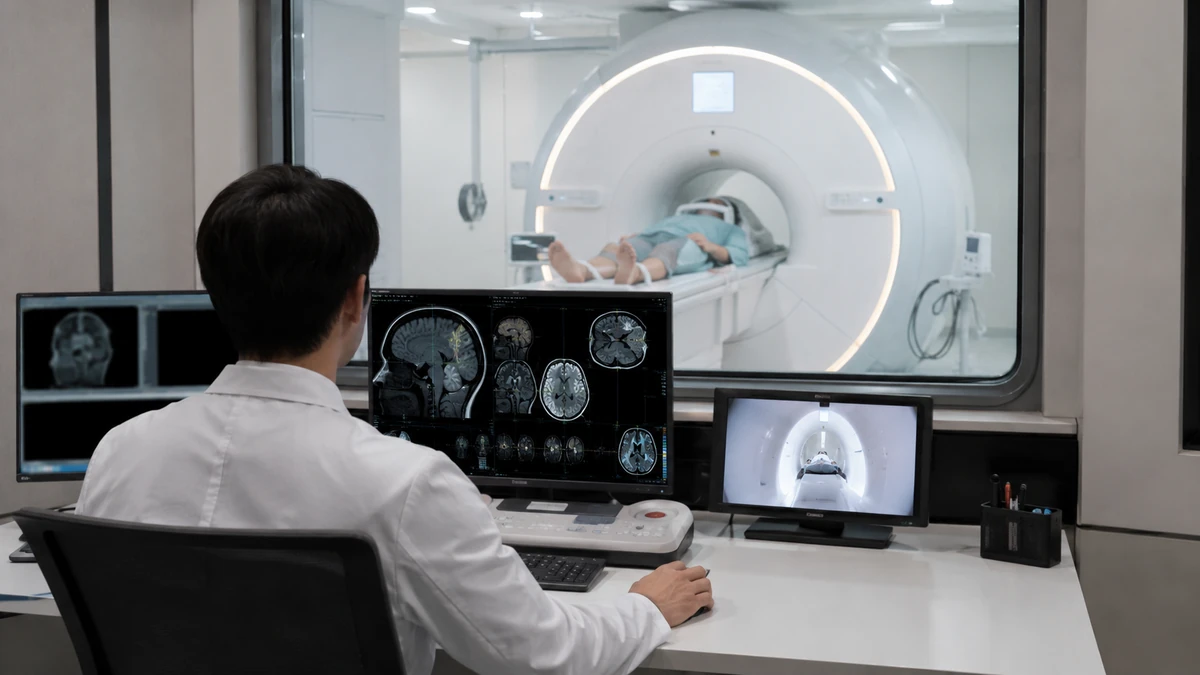
The study focused on a type of brain imaging known as resting-state functional MRI, often shortened to rs-fMRI. Unlike a conventional MRI, which primarily shows the brain’s physical structure, this method looks at how different brain regions appear to communicate with one another while a person is not doing a specific task. Researchers analyzed what is known as functional connectivity, a measure of how strongly different networks in the brain seem to be linked in their activity.
The core finding was not about a single “depression spot” in the brain. Instead, the researchers reported that teens whose brain regions associated with depressive thinking were more actively connected to areas involved in sensation and cognition before treatment tended to show greater improvement after taking antidepressants. In plain English, the study suggests that how well the brain’s networks are coordinating with each other may offer a preview of whether medication is likely to help.
That is a notable idea in psychiatry, where treatment is still often guided by symptoms, family history, patient interviews and careful follow-up rather than by a biological test that can forecast response. The Korean team is not claiming to have invented a crystal ball. But for a field that has long searched for more precise tools, the findings point toward a future in which a brain scan could help doctors make more informed decisions earlier in treatment.
Why adolescent depression can be especially difficult to recognize
The study lands at a time when many countries, including the United States, are grappling with rising concern over youth mental health. American parents and schools have become increasingly alert to depression, anxiety, self-harm and the emotional toll of academic pressure, social media stress and isolation. Yet even with greater awareness, depression in teenagers can still be hard to identify.
Part of the challenge is that adolescent depression does not always look the way adults expect it to look. A teen may not say, “I feel depressed.” Instead, the distress may show up as exhaustion, headaches, stomach pain, irritability, withdrawal from friends, declining grades, sleep disruption or a vague sense that something is wrong. In many cases, families first notice changes in behavior or physical complaints rather than sadness itself.
That point matters in the Korean study because the researchers emphasized that depression in adolescents can be closely tied to bodily sensations and everyday functioning, not just mood. Their findings suggest that networks involved in sensing the body and processing outside stimuli may play an important role in how well treatment works. That could help explain a familiar clinical reality: many teens experience depression not only as emotional pain but as a whole-body disruption that affects concentration, appetite, energy and the ability to move through ordinary life.
For American readers, there is a useful comparison here to how pediatricians and child psychiatrists increasingly talk about mental health in the United States. A teenager who keeps visiting the school nurse with headaches, seems chronically worn down or snaps in anger at home may not fit a stereotype of quiet sadness. But clinicians know those symptoms can be part of depression. The Korean research adds biological support to the idea that adolescent depression is not just a matter of “feeling bad.” It may involve broad differences in how the brain manages thought, sensation and incoming information.
That broader understanding is important because stigma still shapes how families respond. In both South Korea and the U.S., mental illness can be misunderstood as weakness, laziness, immaturity or a disciplinary problem. Research that frames depression as a medical condition involving measurable brain patterns does not erase the complexity of lived experience, but it can help move the conversation away from blame and toward care.
What the brain scans actually measured
To understand why the study has attracted attention, it helps to unpack the science. Functional MRI is sometimes discussed in headlines as if it can read thoughts or locate a single cause of a disorder. In reality, the technology is subtler and more limited. It tracks changes related to blood flow in the brain, which researchers use as an indirect sign of neural activity. Resting-state scans, in particular, examine patterns that emerge when the brain is at rest rather than engaged in a task.
From those scans, scientists can estimate how synchronized different regions are with one another. That synchronization is often described as functional connectivity. Think of it less like a snapshot of the brain and more like a map of traffic between neighborhoods. The question is not simply whether a region is “on” or “off,” but whether multiple regions appear to be coordinating in a meaningful way.
In this study, the Korean team found that stronger connections between regions linked to depressive rumination and regions involved in sensation and cognition were associated with better response to antidepressant treatment. Rumination is a term American psychologists often use to describe repetitive, negative thinking, the mental loop in which a person keeps returning to distressing thoughts or self-criticism. It is a major feature of many depressive disorders.
The researchers’ interpretation appears to be that treatment may work better when the brain already has a stronger capacity to regulate negative thought and remain in communication with systems that process the body and the outside world. If that interpretation holds up in future studies, it would suggest that successful treatment depends not only on reducing sadness but also on restoring or supporting the brain’s ability to shift attention, integrate sensory input and avoid getting trapped in a cycle of negative thinking.
That idea resonates with what many therapists and psychiatrists already observe clinically. Teens who can gradually reengage with daily routines, sleep more regularly, reconnect socially and tolerate the physical experience of stress often improve in ways that go beyond mood alone. The scan findings do not replace those observations, but they may offer a biological explanation for why some patients make that shift more readily than others.
Why this matters to families and clinicians
For families, the most immediate value of this kind of research is not that it promises an instant diagnosis or a guaranteed treatment plan. Its value lies in reducing uncertainty. Starting antidepressants can be an emotionally charged decision for parents and teenagers alike. Some worry about side effects. Others fear the social stigma of taking psychiatric medication. Many simply want to know: Is this likely to work, and how long before we know?
Right now, doctors generally answer those questions with caution. Antidepressants can help many adolescents, but response varies, and improvement may take several weeks. During that period, clinicians rely on follow-up visits, symptom scales, family reports and observation. If a patient is not improving, medication may be adjusted, changed or combined with psychotherapy. It is a careful process, but often an imperfect one.
A tool that helps estimate likely response before treatment begins could make those early conversations more concrete. It might help doctors explain why one patient may need especially close follow-up, why another might be a stronger candidate for a medication trial, or why combining medication with therapy from the outset could be advisable. In health care communication, that shift matters. The more specific the explanation, the easier it may be for families to understand what to expect and stay engaged with care.
There is also an emotional dimension. Parents of depressed teenagers often feel a mix of fear, guilt and helplessness. Adolescents themselves may feel confused by symptoms they cannot name or ashamed of not being able to simply “snap out of it.” Research that links symptoms to patterns in brain function offers another language for describing what is happening. It reinforces a message mental health advocates in the U.S. have spent years trying to deliver: depression is a health condition, not a personal failure.
That does not mean every family should expect a brain scan to become part of routine care next year. Functional MRI is expensive, specialized and not widely used in day-to-day psychiatric practice. But if findings like these are replicated, the long-term impact could be substantial. Precision medicine, a buzzword in cancer care and other fields, is increasingly making its way into psychiatry. The hope is that treatment for depression might one day become less trial-and-error and more tailored to the individual patient.
What the study does and does not prove
As promising as the results may sound, the limits are just as important as the headline. This was a relatively small study of 70 adolescents, all of whom were treated within a South Korean medical context. That is enough to generate meaningful findings, but not enough to settle the question for all patients everywhere. Replication in larger and more diverse groups will be essential.
There is also a difference between showing an association and establishing a tool ready for widespread clinical use. The study found that certain connectivity patterns were linked to better antidepressant response. That does not mean the scan can perfectly predict an individual outcome, nor does it mean clinicians should immediately use rs-fMRI as a screening standard for teenagers with depression.
American readers have seen this pattern before in health coverage: an early but intriguing study gets translated into breathless promises about a new test or cure. That would be the wrong takeaway here. A more accurate interpretation is that the research identifies a potentially useful biomarker, meaning a measurable biological sign that might help guide care in the future. Biomarkers can be powerful, but they must be validated carefully before they are ready for routine use.
There are practical questions, too. How reproducible are these scans across hospitals and scanners? How expensive would such testing be? Would it meaningfully improve outcomes compared with standard psychiatric evaluation? Could insurers in the U.S. ever be persuaded to cover it? And how would doctors explain probabilistic brain-based findings to families without making them feel boxed in by a prediction?
There is an ethical layer as well. Adolescents are still developing neurologically and emotionally. Any attempt to use brain imaging to forecast treatment response must be handled with sensitivity and humility. A scan should never become a label that limits a young person’s access to care or leads families to think improvement is impossible. At best, such tools should expand options and sharpen decision-making, not narrow hope.
A broader shift in mental health research
The Korean study also reflects a larger trend in psychiatry worldwide: the effort to connect subjective symptoms with measurable features of biology. For decades, mental health treatment has relied heavily on interviews, symptom checklists and clinical judgment. Those tools remain indispensable, especially because depression is shaped by environment, trauma, relationships, family dynamics and social context as much as biology.
Still, researchers have long searched for objective markers that could complement what patients report. The reason is straightforward. Two teenagers can both meet the criteria for depression while having very different underlying patterns of stress, cognition, sleep disruption, trauma exposure and brain function. Yet they may initially receive similar treatments. Better biological clues could eventually help divide that broad diagnosis into more precise subtypes.
That pursuit is especially compelling in adolescents because early treatment can alter the trajectory of a life. Depression during the teen years is associated with academic trouble, social isolation, family conflict, substance use and increased risk of self-harm. A more personalized approach could, in theory, help clinicians intervene more effectively before those problems deepen.
South Korea offers a particularly interesting setting for this research. The country is globally known for exporting pop culture, from K-pop to Korean dramas, but it is also a high-pressure society where young people often face intense academic expectations. Conversations about youth mental health have become more visible there in recent years, much as they have in the U.S. That context makes Korean hospital-based research on adolescent depression relevant far beyond the country’s borders.
The collaboration behind the study also matters. Researchers from Seoul National University Hospital, Korea University Guro Hospital and the biomedical research institute affiliated with Seoul National University Hospital worked together on the project. Multi-institutional work does not automatically guarantee stronger results, but it can signal an effort to move beyond a single clinic’s observations and toward a more robust scientific approach.
What American readers should take away
The clearest takeaway is not that depression can now be “seen” on a scan in any simple sense. It is that researchers are getting better at identifying patterns in brain communication that may help explain why one teenager responds to medication and another does not. That is an important distinction. The study is about prediction, not diagnosis, and about probabilities, not certainties.
For families navigating adolescent depression, the most important practical message remains familiar: early evaluation matters. If a teenager shows persistent sadness, irritability, isolation, physical complaints without a clear cause, falling school performance, sleep changes or talk of hopelessness, those signs deserve professional attention. Depression is treatable, but delay can make the road harder.
The Korean findings underscore another point that can be easy to forget in everyday life: mental illness is not just an abstract emotional state. It is connected to how the brain processes thought, sensation and stress. That does not reduce a young person to biology, and it does not erase the roles of therapy, family support, school accommodations, exercise, sleep or community. But it does reinforce that depression is real, medically significant and worthy of serious care.
In the United States, where debates about youth mental health often become tangled in politics, social media anxieties and culture-war talking points, that reminder has value. The science is still evolving, and the Korean study is one step rather than a final answer. But it points toward a future in which psychiatric treatment may become more individualized, more evidence-based and less dependent on guesswork.
For now, that future remains in development. The study does not replace a psychiatrist, a therapist, a pediatrician or a trusted adult who notices that a teenager is struggling. What it does offer is a glimpse of a more precise mental health system, one that may someday help families move from uncertainty toward treatment plans guided by clearer biological evidence.
In a field where patients and parents often feel they are forced to wait in the dark, even a modest new source of light can matter.
Comments
Post a Comment