A South Korean Beauty Company Is Buying a California Manufacturer as K-beauty Shifts From Export Craze to U.S. Production
K-beauty’s American expansion is entering a new phase
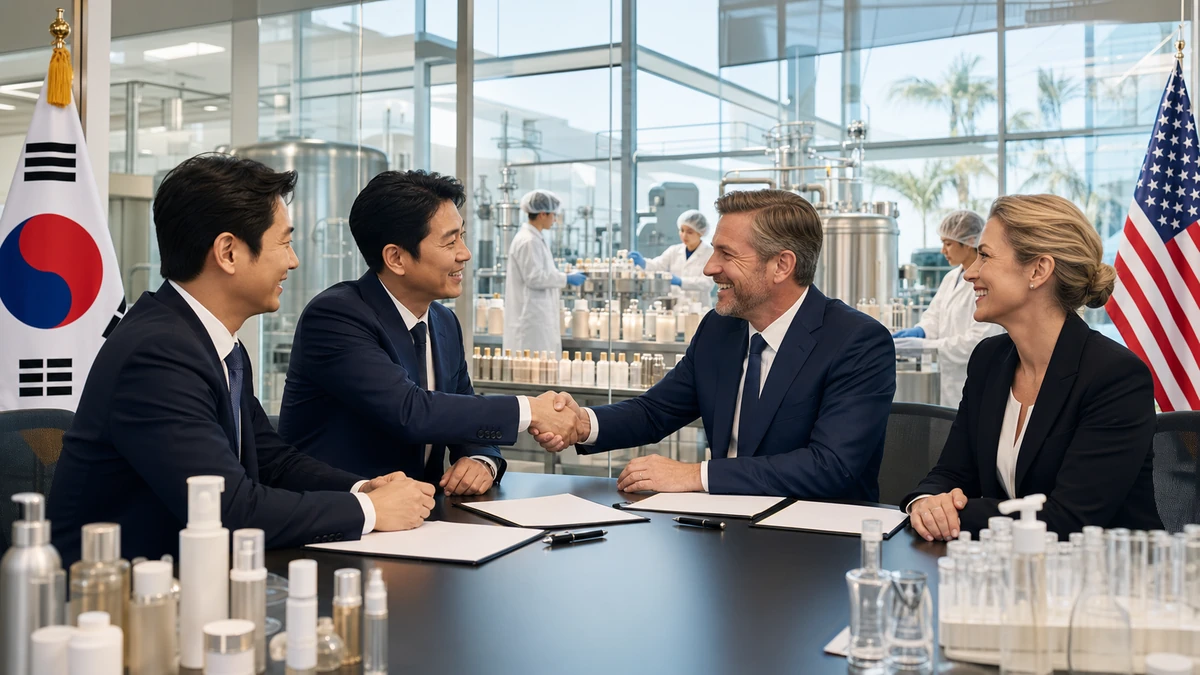
A South Korean beauty and medical aesthetics company, PharmaResearch, has signed a deal to acquire California-based cosmetics manufacturer CG USA, a move that underscores how the K-beauty boom in the United States is maturing from a trend built on imported products into a business increasingly rooted in local production.
The company said the agreement was signed May 30 local time in the United States and announced publicly the next day, according to the South Korean news agency Yonhap. PharmaResearch said the acquisition is designed to help it respond more steadily to U.S. demand for its Rejuran Cosmetic brand, which until now has been produced in South Korea and shipped to the American market.
That may sound like a routine corporate acquisition. But in the beauty industry, where product launches move at TikTok speed and consumer loyalty can hinge on texture, packaging and restock timing, owning a factory in the market you want to dominate can matter as much as the formula inside the bottle.
The deal also offers a revealing snapshot of where Korean beauty stands in the United States in 2025. For years, K-beauty was treated by many American shoppers as a niche import category: sheet masks at Sephora, snail mucin serums on Amazon, sunscreen recommendations passed around Reddit forums and beauty influencers. Now it is becoming something broader and more permanent. Korean brands are no longer simply shipping products across the Pacific and hoping U.S. consumers will keep buying them. They are building the infrastructure to operate here faster, more directly and with more control.
That is the larger significance of PharmaResearch’s move. The company is not just betting that Americans will continue buying Korean skincare. It is betting that the U.S. market is important enough to justify producing closer to the customer, adapting faster to demand and potentially using North America as a base for further growth.
For American consumers, this kind of deal may not be as flashy as a celebrity brand launch or a viral “glass skin” video. But it can shape something shoppers notice quickly: whether products stay in stock, how fast companies can respond to trends and how easily a foreign brand can start behaving like a local one.
What PharmaResearch and Rejuran mean in the Korean beauty landscape
PharmaResearch is not a household name in the U.S. the way Laneige, COSRX or Innisfree may be to regular K-beauty shoppers. In South Korea, however, it is known as a company working across cosmetics and medical aesthetics, a category that sits at the intersection of skincare, dermatology and clinic-based beauty treatments.
Its Rejuran name carries particular weight in Korea and other parts of Asia, where the brand is associated not only with skincare products but with the broader “Rejuran” identity that many consumers connect to skin-repair and rejuvenation. In the American market, where consumers may be less familiar with the brand’s Korean context, the company appears to be trying to do something that many overseas beauty firms eventually must do: translate a strong domestic reputation into a sustainable, localized business model abroad.
That process is about more than language translation or marketing. It involves adapting to how Americans discover beauty products, how retailers manage inventory, how shipping timelines affect repeat purchases and how a brand preserves its image while moving from “special import” status to everyday availability.
K-beauty, shorthand for Korean beauty products and routines, has long appealed to American shoppers partly because it offered something distinct from the traditional U.S. prestige-beauty playbook. Instead of emphasizing harsh actives, dramatic makeovers or heavy cosmetics alone, K-beauty often built its reputation on layering hydration, achieving a healthy glow and caring for the skin barrier. American fans embraced terms like “glass skin,” a phrase used to describe skin that appears smooth, luminous and almost reflective, like polished glass.
That approach resonated at a time when U.S. consumers were already moving toward skincare-first routines, especially younger shoppers influenced by social media, dermatologist content and wellness culture. Korean brands were often quick to package that philosophy into approachable products: essences, ampoules, overnight masks, lightweight gels and sunscreens with elegant textures that many American consumers felt outperformed domestic options.
But as K-beauty’s popularity grew, so did the challenges of serving a market thousands of miles away. Viral products can spike in demand overnight. U.S. retailers expect dependable lead times. Consumers accustomed to two-day shipping are less patient about out-of-stock notices. A brand that becomes popular on TikTok can gain a million views in a weekend and face a credibility problem by Monday if shelves are empty.
That is the environment PharmaResearch is stepping into more aggressively. Rejuran Cosmetic’s U.S. demand, the company said, was the direct reason behind the acquisition. The implication is clear: demand is no longer hypothetical, and servicing the market from South Korea alone may no longer be the most efficient model.
Why buying a California factory matters
CG USA’s value lies not simply in owning industrial real estate in California. According to the announcement, the company has production capabilities that span product planning, formula development, manufacturing, packaging and quality control. In other words, it offers the kind of end-to-end infrastructure that lets a beauty brand move from concept to finished product without relying on a fragmented chain of outside vendors.
In beauty, that matters enormously. If a company can adjust packaging, tweak formulations, manage production schedules and oversee quality under a more integrated system, it gains speed. Speed is not just a corporate buzzword here. It can determine whether a product catches a trend, whether a restock arrives before consumer interest fades and whether a brand can fine-tune products for local preferences.
California, in particular, is a meaningful location. The state sits at the heart of major beauty, wellness and consumer-brand ecosystems in the U.S., with access to ports, packaging suppliers, marketing talent and retailers. It is also a state where trends in skincare and aesthetics often spread quickly, whether through Los Angeles celebrity culture, Orange County wellness communities or social media creators clustered around Southern California’s consumer industries.
For a Korean company seeking a U.S. foothold, California is not just a map point. It is a strategic base close to consumers, logistics networks and the broader lifestyle economy that shapes beauty purchasing.
The company also noted that CG USA has manufacturing infrastructure capable of producing over-the-counter products. That is a notable detail, though it should be interpreted carefully. PharmaResearch did not announce a specific new OTC product or lay out a confirmed plan to launch a new drug-adjacent business in the U.S. Still, the existence of that capability suggests a broader manufacturing platform than a basic cosmetics filler line. It gives the Korean company optionality, which is often one of the most valuable assets an acquisition can provide.
Just as importantly, local manufacturing can help a company manage supply-chain risk. Over the past several years, American businesses and consumers have become much more aware of how fragile global supply chains can be. The pandemic, port backlogs, container shortages and rising freight costs all exposed the vulnerability of business models that depend on long shipping timelines and international bottlenecks. Beauty companies were not immune. Products delayed in transit can miss crucial launch windows, while slow replenishment can push consumers toward competing brands.
Producing in the U.S. does not eliminate those risks entirely, but it can shorten response times and make inventory planning more flexible. For a brand riding demand in a crowded skincare market, that can be the difference between building lasting market share and enjoying a short-lived moment.
This is bigger than one acquisition: It reflects how K-beauty is evolving
The deeper story is not just that PharmaResearch bought manufacturing capacity. It is that K-beauty’s competitive edge is increasingly about operations, not only image.
For much of the past decade, Korean beauty’s global appeal was explained in cultural terms. Consumers were drawn to Korean skincare routines, ingredient innovation, sleek packaging and the broader influence of Korean popular culture. As Korean dramas, K-pop and Korean fashion gained traction overseas, beauty benefited from the same halo effect. If viewers admired the polished skin of actors in a hit Korean series or the beauty looks of K-pop stars, they often became curious about the products behind that image.
American audiences need some context here. In South Korea, skincare is not merely a side category in the beauty business; it is deeply woven into consumer culture. Multi-step routines, clinic-based treatments and an intense focus on skin appearance have long helped create a market where companies compete fiercely on both innovation and presentation. The result is a beauty industry that is often fast-moving, highly responsive to trends and unusually sophisticated in product segmentation.
That sophistication helped Korean brands stand out in the U.S. But popularity creates a second challenge: scaling. Once a niche import becomes a mainstream product class, the brand can no longer rely solely on novelty. It must compete on reliability, distribution, pricing, compliance and replenishment. In other words, it must do the unglamorous work of becoming an operationally strong company in the foreign market.
That is what makes this acquisition notable. It suggests that at least some Korean beauty companies now see manufacturing structure itself as part of brand strategy. The customer may fall in love with the finish of a cream or the feel of a serum, but the company knows the customer’s experience also depends on whether the product arrives on time, whether quality remains consistent and whether the brand can keep up with local retail expectations.
In that sense, K-beauty may be entering a stage similar to what happened with other foreign consumer categories in the United States. Japanese automakers, European fashion houses and global food brands all reached points where exporting alone was not enough. To compete at scale in America, they eventually needed local factories, local logistics and local decision-making. Korean beauty may now be moving along a comparable path.
That shift also signals confidence. A company does not typically acquire a U.S. manufacturer if it believes demand is fleeting. It makes that kind of investment when it sees a market worth serving over the long term.
Why American consumers may notice the effects, even if they never hear the company’s name
Many U.S. shoppers will never read PharmaResearch’s corporate announcement. They may never know what CG USA is. But they could feel the effects of a deal like this in practical ways.
First, local manufacturing can lead to steadier supply. One of the frustrations of shopping fast-growing beauty categories online is that breakout products often disappear just as quickly as they appear. If a Korean brand can produce closer to the customer, it may be better positioned to avoid chronic stock shortages or at least respond more quickly when demand spikes.
Second, it can allow brands to adapt products or packaging to American retail realities. That does not necessarily mean altering a product’s Korean identity. In fact, part of K-beauty’s value in the U.S. is that it feels distinct. But local production can make it easier to align sizing, labeling, packaging runs or launch timing with U.S. store shelves, e-commerce channels and seasonal promotions.
Third, it may strengthen consumer trust. Shoppers do not typically obsess over where every beauty product is manufactured, but they do care about consistency, availability and quality control. If a brand becomes easier to find and more dependable in performance, that can reinforce loyalty.
There is also a broader market implication. Beauty in America has become crowded with celebrity lines, influencer-backed startups and science-heavy skincare brands. In that environment, operational excellence can be as important as marketing. A well-formulated serum that is constantly sold out or inconsistently distributed may lose out to a slightly less exciting competitor that is easier to buy. For K-beauty brands hoping to graduate from cult-favorite status to stable mainstream presence, local manufacturing may be one of the clearest ways to close that gap.
And then there is the cultural side. K-beauty in the U.S. has often been consumed as part of a wider fascination with Korean culture, from skincare routines to K-dramas to Korean food. When a Korean brand begins manufacturing in America, it is not necessarily becoming less Korean. Rather, it may be doing what many successful global brands do: keeping the cultural identity that made it appealing while building a local operating system that makes it easier for consumers to access.
That can help move K-beauty from trend to institution. Americans are already familiar with foreign categories that once seemed niche and now feel fully integrated into everyday life — think sushi from grocery stores, Scandinavian furniture in suburban homes or European-style coffee culture in almost every city. Korean skincare may be undergoing a similar normalization, and deals like this one are part of that process.
North America appears to be the target, not just the U.S.
PharmaResearch said it is also planning to enter the Canadian market in the second half of this year, framing the acquisition as part of a larger localization strategy across the Americas, including North and South America.
That matters because it shows the company is not viewing the U.S. in isolation. Instead, it appears to be treating America as a regional production and logistics anchor. That is a common playbook for consumer companies: establish a base in the largest market, then use it to support expansion into neighboring ones.
For Canadians, who often encounter many of the same global beauty trends as Americans but through a slightly different retail landscape, that could mean broader access to Korean skincare distributed more efficiently from within the region. For the company, it means scale. A California production footprint may be useful not only for selling in Los Angeles, New York or Dallas, but for supporting a wider North American business with shorter timelines and more coordinated supply.
The mention of South America is also worth noting, though more as a directional signal than a near-term forecast. The company did not announce specific country-by-country plans, product launches or detailed sales strategies beyond the broader intention to push ahead with localization across the Americas. It would be premature to read more into the statement than the company itself provided.
Still, the regional framing fits a wider pattern in global beauty. Brands often enter overseas markets through exports, then partner locally, then acquire or build production if demand proves durable. PharmaResearch’s move suggests it believes the Americas now warrant that deeper investment.
What this says about the future of Korean brands abroad
There is a temptation, especially in lifestyle coverage, to talk about K-beauty mainly in terms of trends: dewy skin, fermented ingredients, cushion compacts, essence toners or sunscreen innovations. Those elements are real, and they helped Korean skincare break through internationally. But the next chapter may be shaped less by what consumers see on Instagram and more by what companies do in factories, warehouses and distribution systems.
That does not make the story less interesting. In some ways, it makes it more important. Manufacturing strategy reveals which brands believe they can endure. Exporting can test a market. Buying production capacity in that market suggests a company is preparing to stay.
For American readers, the key takeaway is this: K-beauty is no longer just a stylish import category riding the wave of Korean pop culture. It is increasingly becoming a structurally embedded part of the U.S. beauty economy. That means more competition, more local adaptation and, likely, more Korean brands making decisions as if American consumers are not a distant audience but a core customer base.
PharmaResearch’s acquisition of CG USA does not, by itself, remake the market. The company has not announced a sweeping new product slate, and there is no reason to assume immediate visible changes beyond the strategic rationale it described. But the move is a telling one. It reflects a business logic that has become impossible to ignore: if K-beauty wants to keep growing in the United States, it cannot rely only on the romance of being imported. It must also master the practical mechanics of serving customers here.
That is what local manufacturing offers: not glamour, but closeness. Closeness to demand. Closeness to distribution. Closeness to the consumer who wants the product this week, not after the next overseas shipment clears.
In that sense, the acquisition is about more than a Korean company buying an American factory. It is about the globalization of Korean beauty reaching a more durable, grounded stage — one where the promise of “glass skin” is backed not only by branding and formulas, but by supply chains built for the markets where that promise is sold.
Comments
Post a Comment