JYP Entertainment Donates to Venezuela Earthquake Relief, Showing How K-pop’s Global Reach Extends Beyond the Stage
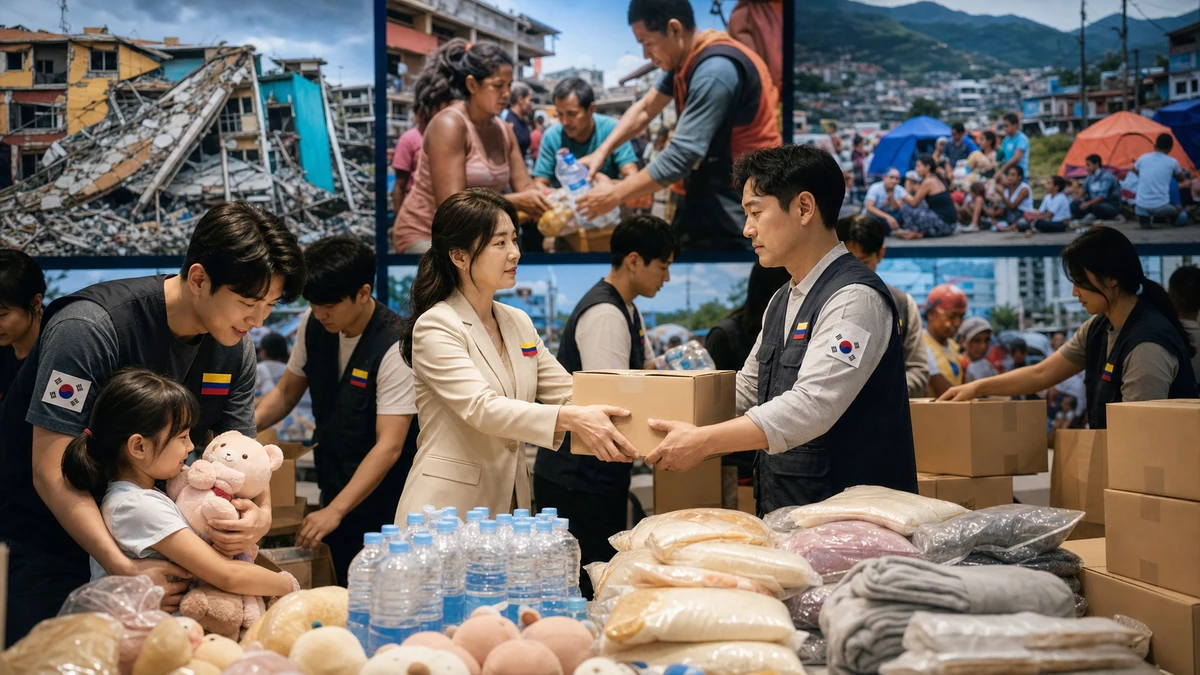
A K-pop powerhouse steps into disaster relief
JYP Entertainment, one of South Korea’s best-known music companies, has donated 300 million won — about $215,000 at recent exchange rates — to support people displaced by a major earthquake in Venezuela, according to the international aid organization World Vision Korea. The money is earmarked for emergency essentials such as food, drinking water, daily necessities and hygiene supplies, along with psychological and emotional support for children affected by the disaster.
For American readers who know JYP primarily as the company behind globally recognized K-pop acts, the news may seem like a sharp turn from the usual entertainment headlines about album releases, stadium tours and fan events. But in South Korea, where entertainment agencies have grown into major global brands, these companies increasingly operate as corporate citizens with an international profile — and that means their public role can extend well beyond music.
On its face, this is a straightforward relief donation: a major company sends money through an established nonprofit to help earthquake survivors overseas. Yet the story carries broader significance because it reflects how the Korean Wave, or Hallyu — the global spread of South Korean popular culture — now intersects with humanitarian causes. K-pop companies are no longer simply talent managers or record labels in the American sense. They are sprawling cultural businesses with worldwide fandoms, extensive merchandising operations, digital media platforms and, increasingly, a public expectation that they will respond when crises erupt.
JYP said it hoped to offer “a small source of strength” to children and residents who lost their homes and routines in an unexpected disaster, adding that it sincerely wishes for the affected communities to regain stability and return safely to everyday life as soon as possible. The language is corporate, but the target is concrete: people whose immediate survival needs must be met, and children whose sense of normalcy has been deeply shaken.
That emphasis matters. In disaster coverage, the focus often stays on collapsed buildings, casualty counts and emergency logistics. What can be overlooked is the long tail of recovery, especially for children. By directing part of the donation toward emotional recovery, JYP and World Vision are framing relief not only as the delivery of supplies, but also as the rebuilding of stability after trauma.
Why this matters beyond a celebrity news cycle
In the United States, entertainment philanthropy is familiar terrain. Americans have long seen large donations from movie stars, athletes, media conglomerates and music labels in response to hurricanes, wildfires, school shootings and international disasters. Benefit concerts like Live Aid or more recent celebrity telethons have helped define the idea that the entertainment world can mobilize attention — and money — quickly. South Korea’s entertainment industry now occupies a similar kind of cultural space, though through a distinctly Korean model built on agency-led artist development and tightly organized global fan communities.
That is one reason this donation resonates beyond the amount itself. The 300 million won contribution is meaningful, but the larger story is what it signals: South Korea’s pop-culture industry is increasingly behaving like a global stakeholder. In practical terms, that means an entertainment company based in Seoul sees a devastating earthquake in Venezuela not as distant foreign news, but as an event that warrants a direct response.
For readers less familiar with K-pop’s business structure, JYP is not just a record label. It is one of the cornerstone firms of the modern K-pop system, known for producing and managing artists whose audiences span North America, Latin America, Europe and Southeast Asia. In that environment, every major corporate action — whether a world tour, a partnership deal or a charitable donation — is seen by a global public. Fans who discover Korean music on YouTube, TikTok or Spotify also follow the companies behind that music with an intensity that would be unusual in much of the American pop industry.
That helps explain why a relief donation becomes more than a brief corporate update. For many fans, the values of the company behind their favorite artists are part of the broader relationship they have with K-pop itself. If a music agency is seen responding consistently to human suffering, that can shape how its brand is perceived around the world. It can also reinforce the idea that K-pop’s global rise carries not only commercial power, but social responsibility.
At the same time, it is worth avoiding overstatement. The confirmed facts here are limited and clear: JYP donated 300 million won through World Vision Korea for relief tied to the Venezuela earthquake, and the funds are intended for basic aid and children’s emotional recovery. There is no public evidence in the summary provided of a wider campaign, artist-specific involvement or additional commitments beyond this donation. Responsible reporting means keeping the significance in proportion to what is actually known.
From food and water to children’s emotional recovery
One of the most notable aspects of the donation is how specifically the intended uses were outlined. According to World Vision Korea, the funds will support food, drinking water, daily necessities and hygiene items — the first layer of any emergency response. Those are the essentials that become scarce almost immediately after a major earthquake disrupts homes, transportation and local infrastructure.
That kind of specificity is important because it signals that the donation is tied to practical, on-the-ground needs rather than a vague appeal to help. After a disaster, survivors often need not only shelter but also safe water, sanitation supplies, basic household goods and reliable access to food. These are unglamorous forms of aid, but they are the backbone of emergency survival.
The inclusion of psychological and emotional support for children gives the donation an additional dimension. In many parts of the world, including the United States, disaster response planning has become more attentive to mental health, especially for children who may experience intense fear, sleep disruption, grief and long-term anxiety after a traumatic event. Earthquakes are especially destabilizing because they arrive suddenly, without the advance notice that can sometimes accompany storms or flooding. For children, that abrupt rupture can leave a lingering sense that nowhere is safe and everyday routines can vanish without warning.
In that respect, the donation reflects a broader understanding of what recovery means. It is not only about keeping people alive in the immediate aftermath, though that remains the most urgent task. It is also about helping restore the emotional framework that lets communities function again: children returning to some sense of safety, parents regaining the ability to care for families and survivors moving from shock toward stability.
For American audiences, the comparison may be familiar from responses to school shootings, hurricanes or devastating wildfires, where mental health services increasingly accompany emergency aid. The difference here is that the support is being mobilized not by a local government or domestic charity drive, but by a South Korean entertainment company working through an international relief network. That global chain of response is part of what makes the story notable.
The role of World Vision Korea and why the partnership matters
Just as important as the donation itself is the route it is taking. JYP is not attempting to deliver aid directly to earthquake survivors in Venezuela. Instead, it is working through World Vision Korea, a branch of the international Christian humanitarian organization World Vision, which has experience in relief and development work. For global audiences, that detail matters because it suggests the company is relying on a professional aid partner rather than treating philanthropy as a branding exercise detached from operational reality.
That distinction can sound technical, but it is central to how relief works. Large companies, including entertainment firms, may have the money and public visibility to help, but they usually do not have the field infrastructure to assess needs, procure materials, coordinate with local partners and distribute aid in a disaster zone. An experienced NGO is typically much better positioned to turn a corporate donation into actual assistance.
According to the summary, JYP and World Vision Korea have maintained a cooperative system that links corporate donations to field-level emergency relief when disasters occur. In plain terms, that means this was not necessarily an improvised one-off response. It appears to be part of an ongoing framework in which the entertainment company provides funding and the relief organization channels it to urgent needs on the ground.
For Americans accustomed to corporate social responsibility programs, that arrangement may sound standard. But in the K-pop context, it also signals how institutionalized philanthropy has become within some sectors of South Korea’s cultural economy. The industry’s global expansion has made reputational management more important, but it has also created opportunities for structured international giving. In a media environment where fans monitor company behavior closely, repeated partnerships with established nonprofits can build credibility over time.
There is another reason the World Vision connection matters: it underscores the international scope of South Korean civil society. South Korea is often discussed abroad through its export successes — semiconductors, cars, beauty products, film, television and pop music. Less visible to many outside observers is the country’s role in global humanitarian work. When a Korean entertainment company coordinates with a Korean relief NGO to support survivors in Latin America, it highlights a form of transnational engagement that goes beyond culture and commerce.
Part of a longer pattern of emergency giving
This is not the first time JYP has responded to a crisis with a sizable donation. The company has previously supported relief efforts tied to the COVID-19 pandemic, wildfires in parts of South Korea, the major earthquakes in Turkey and Syria, earthquake relief in Myanmar and fire-related damage in Hong Kong, according to the summary provided. The pattern is striking not only because of the amounts involved, but because the crises span very different types of emergencies and geographic settings.
That range matters. A single disaster donation can be dismissed as a public relations gesture if it appears isolated or opportunistic. Repeated contributions across pandemics, wildfires, earthquakes and fires suggest something closer to an institutional policy — or at least a standing willingness to respond when severe crises hit. Over time, those actions create what might be called a track record of corporate behavior.
In the American context, major companies often seek to establish that same kind of consistency. A corporation is more likely to be seen as credible when its giving appears habitual rather than reactive. The same principle applies here. JYP’s prior relief history helps explain why this Venezuela donation is being read in South Korea not simply as a charity headline, but as another installment in a broader corporate identity shaped by recurring emergency support.
That does not mean the company should be romanticized. Entertainment firms are businesses first, and their philanthropy inevitably intersects with reputation, branding and consumer trust. But acknowledging those incentives does not erase the practical value of the aid. In disaster response, motives are often mixed; what matters most in the immediate term is whether money reaches capable organizations and helps people survive and recover.
For global K-pop fans, repeated giving can also deepen identification with the industry they support. Fandom in K-pop is unusually participatory. Fans do not just stream songs and buy tickets; they organize online campaigns, track chart performance, raise money for causes in artists’ names and treat cultural participation as a kind of collective project. In that ecosystem, the charitable behavior of a company can become part of the emotional contract between fans and the brand.
What this says about K-pop’s place in global public life
For years, the most common American frame for K-pop was novelty: polished choreography, highly trained idols, passionate fan bases and flashy visuals. That picture was never entirely wrong, but it was incomplete. K-pop is now better understood as a mature global industry with cultural, economic and increasingly civic influence. Its leading companies shape not only entertainment trends, but also public conversations about labor, technology, youth culture, philanthropy and international image-making.
That is why a disaster relief story from an entertainment company deserves attention. It shows how the institutions behind Korean pop culture are participating in the same broader questions that face major companies anywhere: What obligations come with global visibility? How should private brands respond to human suffering far from home? And what does it mean when fan-driven cultural power begins to intersect with humanitarian action?
The Venezuela donation offers one answer. It suggests that in the K-pop era, a company’s international presence creates an expectation of moral presence as well. If your music, artists and brand travel globally, then your sphere of concern may be expected to travel globally too. For South Korean entertainment firms, especially those with large international audiences, remaining silent during major crises can carry reputational consequences. Responding, by contrast, can reinforce the image of a company as a participant in a connected world rather than a mere seller of cultural products.
There is also a softer but important effect: these acts can influence fan culture itself. K-pop fandoms have often organized charity drives, blood donation campaigns and relief fundraising in support of causes connected to their favorite artists. When companies participate in disaster response, they validate the idea that pop culture communities can be linked to public good. That does not solve structural inequality or replace government responsibility, but it can create a culture in which visibility is used, at least in part, for social response.
In that sense, this is not really a story about corporate generosity alone. It is a story about the changing role of Korean entertainment in the world. A headline that begins with a K-pop company ends with survivors in Venezuela needing clean water, hygiene supplies and support for traumatized children. That is a long way from a concert stage in Seoul, but it reflects the reality of a globalized cultural industry: the names people associate with music and fandom are also becoming names that appear in the language of relief, recovery and international solidarity.
A small donation in global terms, but a revealing signal
No single corporate gift can resolve the suffering caused by a major earthquake. In the world of disaster finance, $215,000 is meaningful but limited. It will help, but it will not rebuild entire communities. Keeping that scale in perspective is important, especially in an era when companies can receive outsized praise for gestures that are relatively modest compared with their overall resources.
Still, the significance of this donation lies not only in the amount, but in what it represents. It shows a Korean entertainment company using an established aid partner to address immediate survival needs and children’s longer-term emotional recovery in a country far from its home market. It reinforces a pattern of repeated emergency giving. And it highlights how the public identity of K-pop businesses now extends into areas that once seemed far removed from entertainment news.
For American readers, the clearest parallel may be the way large U.S. cultural brands sometimes step into national or international crises, whether through foundation grants, celebrity-led fundraising or corporate charitable programs. What is distinctive here is the Korean context: an entertainment agency system that has grown alongside the Korean Wave and now carries a transnational visibility few could have imagined two decades ago.
As K-pop continues to expand, stories like this may become more common. That does not make them less worth covering. If anything, it makes them more important. They show that the global influence of Korean popular culture is no longer measured only in streams, chart rankings or sold-out arenas. It is also visible in how the industry responds when disaster strikes elsewhere in the world.
In that sense, the news from Seoul is not simply that JYP Entertainment donated money. It is that one of the most recognizable institutions in K-pop is again being cast not just as a maker of hits, but as a participant in the wider responsibilities of global public life. For survivors in Venezuela, what matters most will be whether aid arrives where it is needed. For everyone watching the evolution of K-pop, the message is broader: the reach of this industry now extends well beyond the stage lights.
Comments
Post a Comment