Singer Jang Kiha and actress Yoon Gai confirm relationship, offering a glimpse into how Korea’s entertainment world works
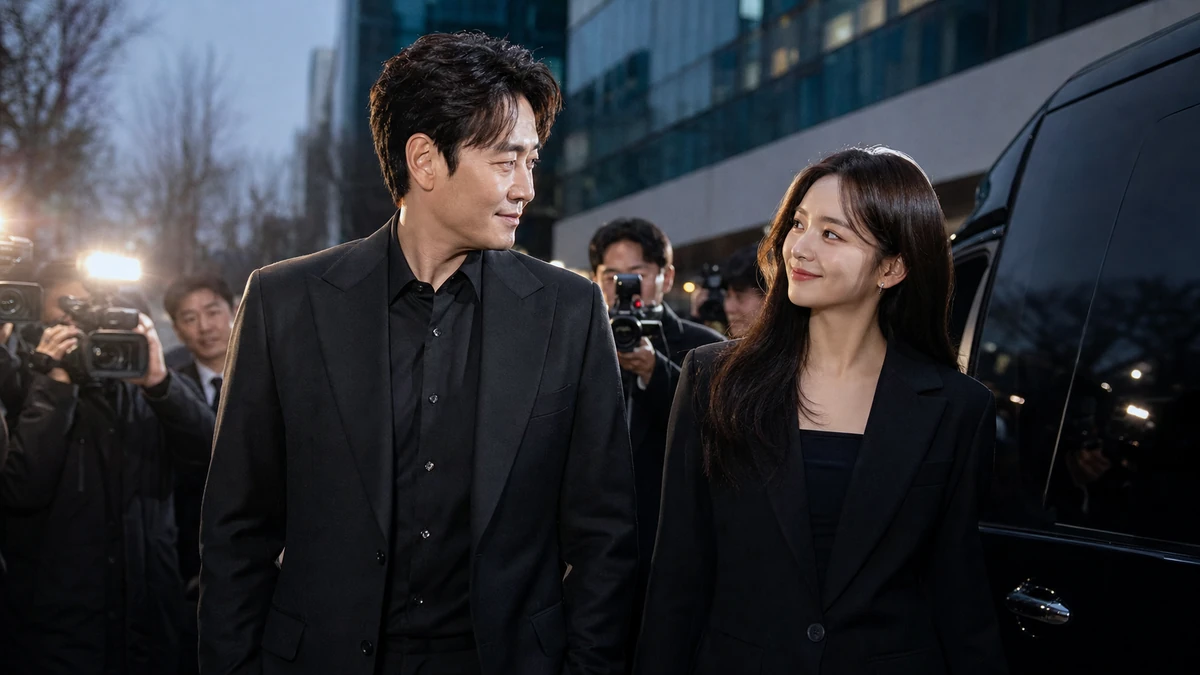
A celebrity dating confirmation that resonates beyond gossip
South Korean singer-songwriter Jang Kiha and actress Yoon Gai have confirmed they are in a relationship, according to statements released Tuesday through their agencies, a development that has quickly drawn attention in Korea’s tightly watched entertainment industry. Jang’s agency, DoorooDooRoo Artist Company, said the two are “meeting with good feelings,” while Yoon’s agency, W Entertainment, said plainly that they are dating.
On its face, this is celebrity relationship news, the kind of item that would land in entertainment pages anywhere from Seoul to Los Angeles. But for English-speaking readers who may be less familiar with how Korean celebrity culture operates, the story also offers a useful window into a very particular media ecosystem — one in which stars’ personal lives are often managed with a level of care, restraint and formal confirmation that differs from the more freewheeling style common in the United States.
That is especially true in South Korea, where entertainment agencies play a central gatekeeping role and where fan culture can be both intensely loyal and highly organized. In that context, a short statement from both sides is not just a routine public relations move. It is often the difference between a story remaining a straightforward factual update and it spiraling into days of speculation, online rumor and invasive commentary.
The announcement has also attracted notice because the two figures come from different corners of Korean entertainment. Jang, 44, is best known as a musician with a distinctive deadpan style and an indie sensibility that helped him become one of the more recognizable names in Korea’s modern music scene. Yoon, 26, is a rising actress who has built visibility through screen work and her appearances in comedy-driven television content. The age gap between them, 18 years, has been widely noted in Korean coverage, though the more significant part of the story may be that both agencies chose to confirm the relationship directly on the same day.
That kind of synchronized acknowledgment matters in a country where celebrity dating news can quickly become a national conversation. By issuing concise and consistent statements, the agencies established the basic facts and, at least for now, set limits on how far the public narrative should go.
Who Jang Kiha is, and why his name carries weight in Korea
For many Americans, Jang may not be a household name in the way BTS or Blackpink are. But within South Korea, he occupies a distinct cultural lane, one that says a lot about the breadth of the Korean Wave beyond idol pop. Jang emerged as a musician whose appeal rested not on polished idol choreography or carefully engineered fandom branding, but on sharp songwriting, conversational delivery and an offbeat public persona that often made him stand out in a crowded field.
In a U.S. comparison, he is less like a chart-topping pop idol and more like an alternative artist with mainstream name recognition — someone whose artistic identity is built on voice, wit and sensibility rather than spectacle. Over the years, Jang has been associated with a kind of cool detachment and observational intelligence that appealed to audiences looking for something a little less conventional than the standard pop formula. That broader recognition has allowed him to move comfortably across music, interviews and television appearances, making him a familiar public figure even to Koreans who do not follow indie or alternative music closely.
That cross-platform familiarity is important to understanding why this relationship news is drawing attention. In the United States, musicians and actors date each other all the time, and such pairings are often treated as an extension of celebrity life. In South Korea, those pairings also happen, but the public discussion often carries a different tone. The industries are interconnected, but the public image of stars is frequently more tightly managed, and a confirmed relationship can become a notable event precisely because agencies do not always move quickly to validate private matters.
Jang’s age and professional standing add another layer. He is not a newcomer, and he is not emerging from the idol trainee system that shapes many younger Korean stars. He is an established artist with a long public career, which gives this story a different texture than a dating rumor involving two rookie entertainers. For many Korean readers, the news is not simply about romance. It is also about two recognizable figures from different generations and different professional lanes publicly acknowledging a relationship without the usual theatrics.
Who Yoon Gai is, and why “SNL Korea” matters
Yoon may be less familiar to international audiences than some of Korea’s drama leads, but she belongs to a newer generation of performers building careers in an entertainment environment that rewards versatility. In South Korea, actors are rarely confined to one format. They may appear in dramas, films, sketch comedy, variety programs, online clips and platform-exclusive productions, all while shaping a public image that can be as important as any single role.
That is where “SNL Korea” enters the story. According to Korean reports, Jang and Yoon first met through Season 4 of “SNL Korea” in 2023, when he appeared as a host and she was part of the show’s cast, or “crew.” For American readers, the easiest reference point is “Saturday Night Live,” but the Korean version exists in a different media setting. It shares the sketch-comedy DNA and the topical, high-pressure performance environment of the U.S. original, yet it is also distinctly Korean in tone, pacing and celebrity function.
On “SNL Korea,” a guest host is not simply dropping by for a cameo. The host is often expected to play with persona, timing and self-parody in a compressed production setting that can reveal a different side of a celebrity. Cast members, meanwhile, are not just reciting lines. They are helping shape the chemistry of scenes that depend on fast adaptation, comic instinct and a willingness to move across character types. In other words, it is the sort of environment where performers from different disciplines — music, acting, comedy — can find a shared creative language very quickly.
That may help explain why reports about the relationship emphasize their professional overlap in music and film, as well as their evolution from industry senior and junior colleagues into a couple. The Korean phrase often used in such contexts, “sunbae-hoobae,” refers to a senior-junior relationship that exists not only in schools but across workplaces and industries. In entertainment, it can describe a structured but familiar bond between someone more established and someone newer to the field. The phrase does not necessarily imply romance, of course. But when Korean outlets say two people became close after first meeting in that kind of professional hierarchy, it signals a socially legible path from acquaintance to friendship to something more personal.
For readers used to Hollywood coverage, that may sound formal. But in Korea, those relational frameworks still matter, especially in public narratives about how celebrities came to know each other.
Why the agencies’ brief statements are such a big part of the story
One reason this story has spread quickly is that both agencies responded clearly and without much embellishment. That may seem minor to American readers accustomed to celebrity reps issuing carefully crafted but often expansive statements, or in some cases refusing to comment altogether while tabloids do the rest. In South Korea, however, brevity itself can be a strategy.
The wording used in Korean entertainment coverage is often highly calibrated. Jang’s agency said the pair are meeting with “good feelings,” a phrase common in Korean celebrity confirmations. It is softer than a dramatic declaration and more respectful than a defensive denial. The point is not to romanticize the relationship for public consumption. It is to acknowledge the reality of it while keeping the details private.
That formula matters because Korean celebrity culture sits at the intersection of aggressive media interest, strong fan attachment and a social norm that still places value on modesty and restraint in public statements. If an agency says too little, rumors can swell. If it says too much, the company risks opening the door to scrutiny of a star’s private life that can become difficult to control. The short confirmation, then, serves as a kind of pressure valve: enough information to establish the facts, but not enough to turn a personal relationship into serialized content.
It also reflects how agencies function in Korea. Entertainment companies are often much more than booking firms or publicity managers. They can shape an artist’s schedule, media exposure, commercial partnerships and public messaging in ways that feel more centralized than what Americans may associate with a typical talent agency. So when both companies confirm a relationship in near-identical fashion, the statements are not throwaway comments. They are the official line around which subsequent coverage is expected to organize itself.
That does not mean speculation disappears. Korean celebrity news culture, like its counterparts elsewhere, is not immune to fixation, especially when a relationship involves two public figures with visible fan bases. But the agencies’ quick confirmation narrows the space for rumor by placing verified information at the center of the story from the start.
The age-gap conversation, and what Korean coverage is really emphasizing
The 18-year age difference between Jang and Yoon has naturally become one of the headline details. In any celebrity culture, a substantial age gap will generate discussion, and South Korea is no exception. Still, Korean reporting in this case appears to be framing the age difference as a notable fact rather than the defining point of the relationship.
That distinction is important. In U.S. entertainment media, age-gap relationships can become the entire story, with coverage often gravitating toward judgment, memes or performative outrage. Korean outlets certainly recognize the attention-grabbing nature of an 18-year difference, but they are also operating within a media culture that tends to foreground the mechanics of confirmation: who said what, through which agency, and how much of the private matter has actually been established on the record.
In that sense, the most significant part of this news is not that two celebrities with a large age difference are dating. It is that both sides confirmed the relationship promptly, reducing the need for a prolonged guessing game. That may sound procedural, but in Korea, procedure often shapes the tone of celebrity stories more than outsiders might expect.
It is also worth noting that Korean fans do not respond as a monolith. Some will focus on the age gap. Others will be more interested in the origin story through “SNL Korea,” or in how the pair’s shared interest in music and film may have brought them together. Still others will take the agencies’ statements at face value and move on. The healthiest strand of fan culture, in Korea as elsewhere, tends to be the one that recognizes the public interest in celebrities without treating every private decision as communal property.
For international readers following Korean pop culture, that may be one of the most useful takeaways from this story: the public fascination is real, but so is the effort — at least in the official statements — to maintain a boundary between what is confirmed and what remains personal.
What this says about the modern Korean entertainment ecosystem
If there is a broader cultural lesson here, it is that South Korea’s entertainment world is deeply interconnected. The old categories of singer, actor, comedian and TV personality still exist, but in practice the borders between them are increasingly porous. A musician may appear on a comedy show, an actor may develop a strong variety-show presence, and both may expand their image through streaming-platform content that does not fit neatly into one traditional category.
That is part of what has made Korean popular culture so effective globally. The system is not simply producing songs, dramas or movies in isolation. It is creating a dense web of formats that reinforce one another: music releases, television appearances, digital clips, streaming exclusives, fan interactions and cross-genre collaborations. When two entertainers from different fields meet and form a relationship through that ecosystem, the story reflects how fluid that environment has become.
For Americans who mostly encounter the Korean Wave through K-pop charts or Netflix dramas, this may be a reminder that the industry’s creative center is much wider than those export categories. “SNL Korea,” for example, may not be as globally visible as a hit K-drama, but it is a meaningful node inside the domestic entertainment scene. It creates moments, tests personas and builds relationships in ways that can affect careers and public narratives long after an episode airs.
The mention that Jang and Yoon grew closer through common interests in music and movies also fits this broader pattern. Korean entertainment professionals often move through overlapping cultural circles rather than isolated verticals. That does not mean every collaboration leads to friendship or romance, of course. But it does mean that stars often meet in hybrid spaces — sketch comedy, variety shows, web content, soundtrack work, film promotion — where artistic disciplines overlap more naturally than outsiders might assume.
That connectedness is part of the industry’s appeal. It creates the sense that Korean popular culture is not just a collection of products but a living ecosystem, one in which creative people from different specialties are constantly crossing paths, reshaping their public identities and building new stories both on and off screen.
A reminder about privacy, fandom and the limits of what is known
For now, the confirmed facts are relatively simple. Jang Kiha and Yoon Gai are dating, according to both agencies. They reportedly first connected through “SNL Korea” in 2023, later remained in touch as entertainment-industry colleagues, and became closer through shared interests in music and film. Beyond that, little has been officially disclosed.
That restraint is worth preserving. In an era when celebrity coverage often rewards overinterpretation, there is something notable about a story whose most responsible version is also its shortest: two adults in the public eye have acknowledged a relationship, and their representatives have asked the world, implicitly, to understand that fact without demanding a full dossier.
For fans in the United States and elsewhere who follow Korean culture closely, this is also an opportunity to practice the kind of media literacy that transnational fandom increasingly requires. Korean entertainment coverage can be highly formal in some ways and highly speculative in others. Agency statements carry real weight, but so do cultural norms that can be easy to misread from afar. Understanding what has been confirmed — and what has not — matters, especially when language differences and online rumor can distort a story almost instantly.
In the end, this is a modest but revealing celebrity news item. It is about romance, yes, but also about the machinery of modern Korean fame: the role of agencies, the etiquette of public acknowledgment, the connective tissue linking music, acting and comedy, and the disciplined way private lives are sometimes addressed in public. To American readers, that may make the story feel both familiar and distinct. Celebrity relationships are universal. The rules around how they are disclosed are not.
And that, perhaps, is why this announcement has landed as more than a passing tabloid note. It is one more small case study in how South Korea’s entertainment industry continues to operate on its own terms — globally visible, intensely networked and still governed by local conventions that shape everything from a sketch-comedy meeting to a two-sentence confirmation of love.
Comments
Post a Comment