Korea’s wellness industry looks overseas
South Korea has spent the past decade turning pop culture into global commerce. K-pop fills arenas in Los Angeles, Korean dramas dominate streaming charts and Korean beauty brands line shelves at American retailers from Sephora to Costco. Now another corner of the country’s consumer economy is trying to make the same leap abroad: health supplements.
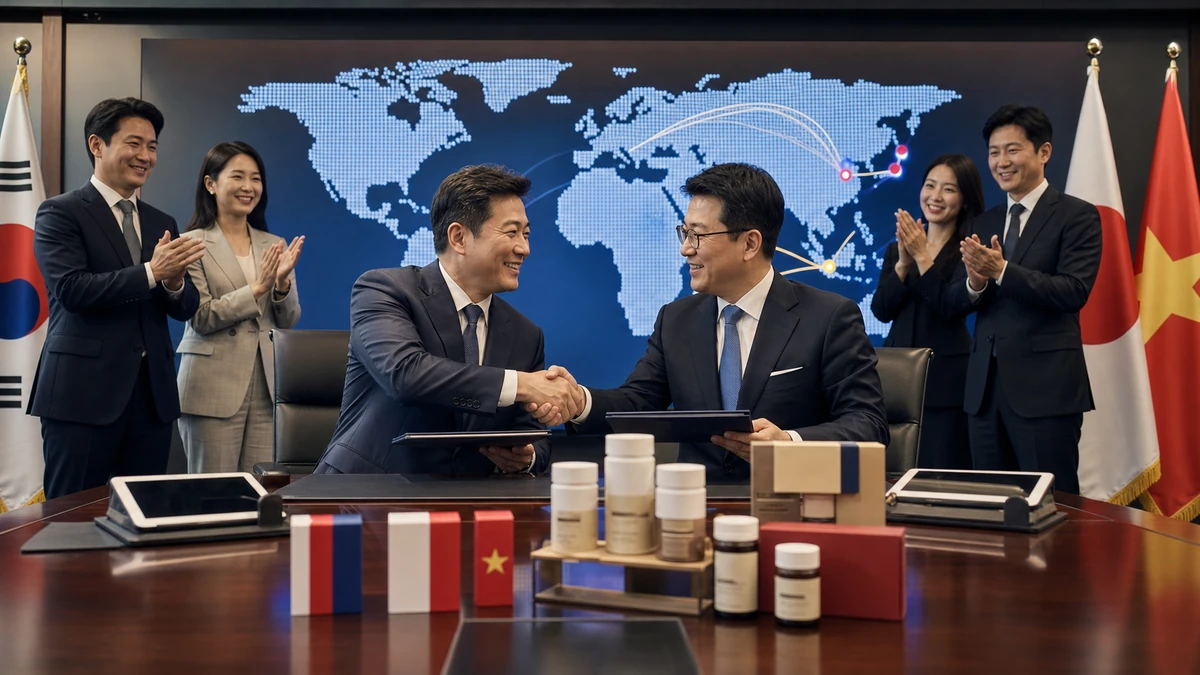
Lotte Home Shopping, one of South Korea’s major retail broadcasters and e-commerce distributors, said it has signed a distribution cooperation agreement with AceBiome, the company behind the health supplement brand BNRThin, to support the brand’s overseas business. According to the company, the arrangement is aimed at establishing official distribution channels in markets including Japan and Vietnam, with Lotte taking responsibility for local distribution, market development and marketing support.
On its face, that sounds like straightforward corporate expansion. A Korean brand wants to sell to more consumers abroad. A large retailer with international connections will help make that happen. But in the health products business, distribution is not just a logistics detail. It is a trust issue. And that is why this agreement matters beyond one brand or one company.
In categories such as fashion, snacks or cosmetics, brand buzz can sometimes outrun explanation. Consumers may be willing to try a lipstick, a face mask or a bag of chips because they saw it online or heard a celebrity mention it. Health supplements work differently. Once a product touches weight management, gut health, immunity, fatigue or daily nutrition, the questions become more serious: What exactly is it? Who is selling it? What claims are being made? Are those claims clearly translated and legally compliant? Is the product being marketed responsibly in a different language and regulatory system?
Those questions are becoming more urgent as Korean consumer brands move deeper into global markets. Automatic translation, cross-border online shopping and social media recommendations have made it easier than ever for a product from Seoul to reach a consumer in Tokyo, Ho Chi Minh City or, for that matter, Houston. But fast circulation of information does not guarantee accurate information. In the supplement business, that gap can mean the difference between curiosity and confusion.
This is why the Lotte-AceBiome deal deserves attention. It reflects a broader test now facing Korean wellness brands: Can they export not just products, but credibility?
Why “official distribution” matters more than it sounds
The key phrase in the announcement is “official distribution.” In ordinary retail language, that might sound like boilerplate. In the supplement industry, it is one of the most important signals a consumer can get.
Official distribution generally means that a product is being sold through channels recognized by the brand and managed by designated business partners, rather than through gray-market imports, unauthorized resellers or loosely monitored online listings. For a category tied to personal health, that difference matters. Consumers want to know that product labeling is accurate, storage conditions are appropriate, import rules are being followed and the seller can be identified if something goes wrong.
That concern is hardly unique to Korea. American consumers have seen the same issue play out for years on massive online marketplaces, where the same supplement or beauty item may appear through multiple vendors with slightly different packaging, pricing and product descriptions. Even when a listing looks polished, buyers often have limited visibility into who is actually supplying the product. Official channels can reduce some of that uncertainty, though they do not eliminate the need for careful scrutiny.
In the case announced by Lotte, the company said it will oversee official distribution in markets including Japan and Vietnam and will support the broader overseas business, including building local sales networks and marketing. What has not been made public are the details consumers and industry watchers would need to evaluate a rollout fully: launch dates, sales platforms, product pricing, packaging details, local approvals and the precise way the brand will be presented in each market.
That means the news should be read carefully. It does not indicate that the product has suddenly become widely available overseas or that a full commercial launch is already underway across multiple countries. Rather, it shows that the companies have created a formal framework for overseas distribution and brand-building.
Still, even at this early stage, the agreement says something important about where the market is heading. Korean supplement makers appear to recognize that international growth requires more than exporting inventory. It requires building visible, accountable retail structures in the destination market.
The bigger challenge: explaining supplements across borders
If there is one lesson that journalists and regulators alike have learned from the global wellness boom, it is this: supplement marketing often moves faster than supplement literacy.
BNRThin is identified in the Korean report as a health functional food brand, the regulatory category South Korea uses for supplements and other products marketed for specific health-related functions. But the summary provided with the report does not include the information that would allow a responsible news outlet to describe the product’s effects in detail. There is no ingredient breakdown, no clinical data, no target consumer profile, no dosage guidance and no cautionary labeling information included in the source material.
That absence is not a problem to be glossed over. It is part of the story.
In the United States, news coverage of supplements has become more careful over time because audiences have learned, sometimes the hard way, that there is a major distinction between a dietary supplement and a prescription drug. Supplements can be widely used, sometimes beneficial and perfectly legal, but they do not occupy the same regulatory or evidentiary category as medicines. The same logic applies in other markets, even though the legal frameworks differ.
That is especially relevant when a brand crosses languages and cultures. A phrase that sounds modest in Korean can become overstated in English or Japanese if translated carelessly. A term tied to “daily health management” can be read by consumers as a promise to solve a specific medical condition. Marketing shorthand that seems ordinary in one country may raise regulatory red flags in another.
And because weight management and digestive health are deeply personal topics, the risk of misunderstanding is high. Consumers often arrive at these products already influenced by social media before-and-after stories, celebrity endorsements or algorithm-driven wellness trends. If translated product information strips away nuance or ignores usage precautions, that can create unrealistic expectations.
For Korean companies looking abroad, this is where real market maturity will be tested. It is not enough to build a supply chain. They also need a communication chain: accurate labeling, culturally competent explanation, legally appropriate claims and customer guidance that works in the local language.
That may sound technical, but it gets to the center of whether the next wave of Korean consumer exports can sustain long-term trust. K-beauty succeeded in part because it translated routines and ingredients into a story international consumers could understand. Supplements are a harder sell. The stakes are higher, and the room for ambiguity is smaller.
Why Japan and Vietnam make sense as early targets
Lotte identified Japan and Vietnam among the overseas markets involved, and those choices are telling.
Japan is both a natural and demanding destination for Korean health-related products. It is geographically close, commercially sophisticated and already familiar with Korean brands thanks to years of cross-border tourism, cultural exchange and media influence. Japanese consumers are also accustomed to a robust market for functional foods, wellness products and premium daily-use items. In that sense, Japan offers an audience that may already understand the broader category into which a Korean supplement fits.
But familiarity can cut both ways. Japanese consumers are also known for being exacting about labeling, quality and brand credibility. That makes Japan less a casual export market than a stress test. If a Korean supplement brand can establish itself through transparent distribution and clear communication there, it may gain credibility for wider expansion.
Vietnam represents a different kind of opportunity. Its consumer market has been growing rapidly, its middle class is expanding and Korean brands have built strong visibility in categories ranging from food and cosmetics to entertainment and retail. Korean dramas and pop culture have helped make South Korean products feel modern and aspirational to many younger consumers across Southeast Asia. In business terms, that can create a valuable head start.
At the same time, Southeast Asia’s e-commerce growth has also brought familiar risks: fragmented seller networks, uneven information quality and aggressive digital marketing. In that environment, official distribution can be especially important. A brand that enters with clear channels, reliable product information and a recognizable local sales structure may stand apart from copycats, parallel imports or poorly described listings.
For American readers, there is a useful comparison here. Think of how Japanese and European skin care brands first gained traction in the United States: not just by becoming available, but by becoming legible. Retailers and distributors helped explain how the products fit into everyday life, who they were for and why consumers should trust them. Supplements demand even more careful framing because their claims touch health behavior, not just personal style.
What home shopping brings to the equation
Lotte Home Shopping’s role is also worth examining. For many Americans, the phrase “home shopping” might evoke QVC or late-night television pitches, but in South Korea the category has evolved into a broader retail ecosystem that includes broadcast sales, digital commerce, mobile apps and highly organized direct-to-consumer marketing.
That background matters because supplement sales often depend on explanation, not just placement. A distributor experienced in home shopping is used to presenting products in a persuasive but structured format. It knows how to answer the everyday questions buyers tend to ask before clicking “purchase”: What is this for? How do I use it? How often? What should I watch out for? Why is this different from other products?
Those are not minor details in the wellness space. They are central to responsible selling.
The Korean report says Lotte plans to support BNRThin’s settlement in overseas markets using its global distribution network and international business capabilities. But the available material stops short of explaining how that marketing will be executed. Will the product be sold through local online marketplaces, dedicated brand channels, TV retail, influencers, pharmacy-style outlets or department-store e-commerce platforms? Will the messaging focus on general wellness, lifestyle management or another angle? Which consumer group is the brand trying to reach first?
Those unanswered questions matter because distribution strategy shapes consumer interpretation. A supplement sold through a premium curated channel may be perceived differently from the same product pushed through aggressive social commerce. A careful educational campaign sends a different signal than a hype-driven launch. In health categories, tone is part of trust.
What Lotte appears to be betting on is that its retail know-how can help bridge the gap between product origin and consumer understanding. That could prove valuable if done carefully. But the real measure will not be how quickly the brand appears overseas. It will be how clearly it is presented once it gets there.
K-wellness is not K-beauty, and that distinction matters
There is a temptation, when looking at South Korea’s consumer economy, to treat every export category as the next K-beauty. Investors do it. Retailers do it. Sometimes journalists do it too. But wellness supplements are not sheet masks, and they are not instant noodles.
Korean health functional foods have grown as part of a larger domestic shift toward everyday self-management. Like Americans stocking up on probiotics, multivitamins and protein powders, many South Korean consumers increasingly view certain wellness products as part of routine life rather than occasional treatment. Products tied to nutrition, digestion and daily maintenance fit neatly into a broader preventive-health mindset that is now global.
Yet international expansion in this sector comes with constraints that culture-driven exports do not always face. Taste can be subjective. Beauty standards can be flexible. But health-related claims live in a more sensitive space governed by local law, medical caution and individual vulnerability.
That means Korean wellness brands cannot rely on national brand glow alone. A sleek package, a celebrity-friendly image or the general prestige of “made in Korea” may open doors, but those factors will not sustain consumer confidence if information is vague or exaggerated. In fact, the more hyped the wellness category becomes globally, the more important sober, transparent communication becomes.
This is one reason the story is not just about business strategy. It is also a consumer story. The Korean report repeatedly emphasizes that when buyers encounter supplements abroad, they should look beyond marketing slogans and check whether the distribution route is official, whether the seller is identifiable, whether local-language labeling is clear and whether usage instructions are understandable. That is practical advice in any country.
For U.S. readers, the same principle applies every time a trending wellness product pops up on TikTok or through a marketplace ad. Novelty and credibility are not the same thing. Imported products may be excellent, but the burden remains on both companies and consumers to make sure the path from claim to purchase is transparent.
What consumers should watch for next
As Korean supplement brands push into overseas markets, three consumer standards are likely to become increasingly important.
The first is channel clarity. If a product is being sold internationally, consumers should be able to tell whether the seller is authorized and whether the brand stands behind that sales route. This matters for authenticity, customer service and product accountability.
The second is claims discipline. The Korean source material does not provide sufficient detail to make specific assertions about BNRThin’s ingredients or benefits, and that is precisely why consumers should treat promotional language carefully. A supplement should not be assumed to replace balanced meals, exercise, sleep or medical treatment. Nor should broad wellness messaging be mistaken for proof of individualized health outcomes.
The third is personal suitability. Supplements may be easy to buy, but they are not one-size-fits-all products. People who are pregnant, nursing, managing chronic conditions or taking medication should pay particular attention to labeling and seek professional advice when needed. That is true whether the product originates in South Korea, the United States or anywhere else.
For now, the Lotte-AceBiome agreement is best understood as infrastructure, not arrival. It lays the groundwork for overseas distribution rather than proving market success. But infrastructure matters. In the next phase of Korean exports, the companies that thrive may not simply be the ones with the most viral branding. They may be the ones that understand that wellness products do not just need shelf space or screen time. They need context.
That is the larger significance of this deal. South Korea is trying to expand another high-potential consumer category beyond its borders, but this time the challenge is not just cultural translation. It is informational trust. In a world where health claims can cross oceans with a tap and a swipe, the companies that win will be the ones that make consumers feel less dazzled and more informed.
That may not sound glamorous. It is, however, how lasting global brands are built.
Comments
Post a Comment