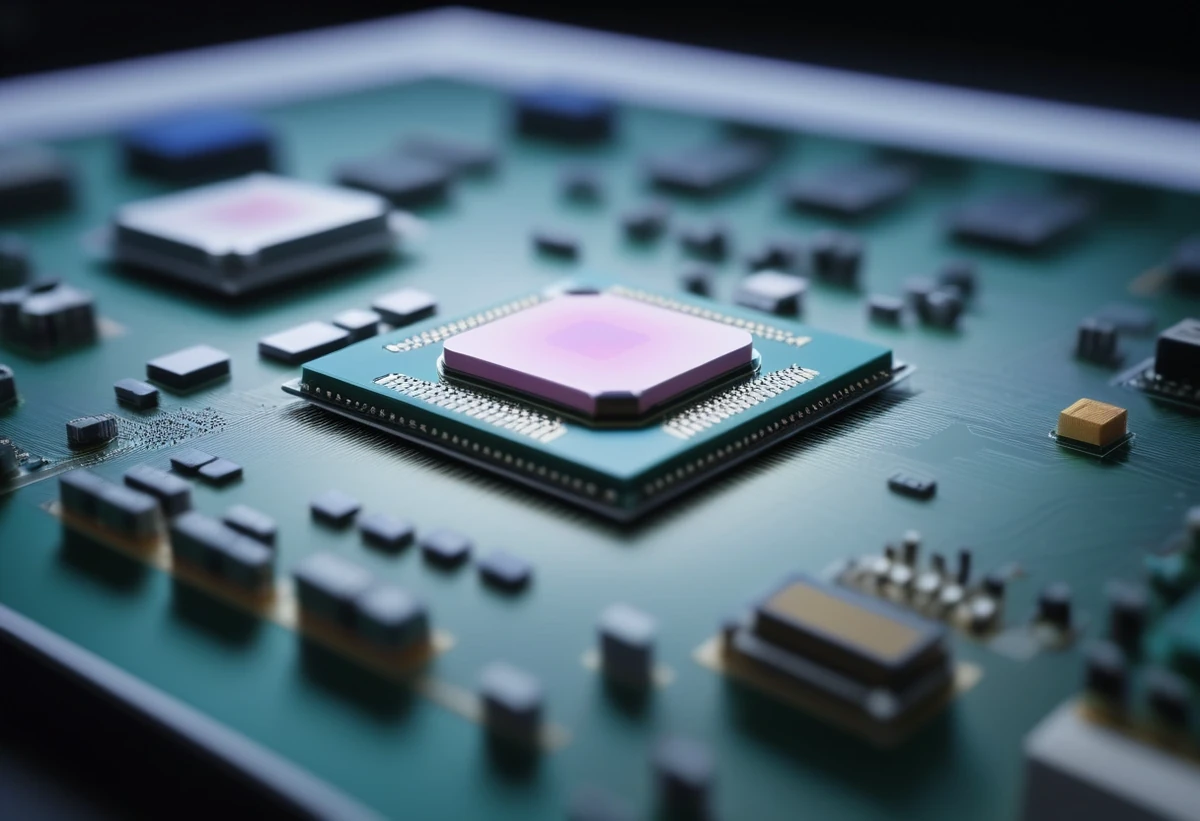
Artificial Intelligence’s Infrastructure Challenge Moves Beyond Semiconductors
For much of the artificial intelligence boom, the global technology race has been defined by a familiar set of winners: advanced processors, high-bandwidth memory chips and the companies capable of producing them. In South Korea, investors have closely watched Samsung Electronics and SK hynix, two semiconductor giants that have become central players in supplying the hardware needed for the AI revolution.
But a new debate emerging in South Korea suggests the next major constraint on artificial intelligence growth may come from somewhere less visible: electricity. As AI models become larger and data centers expand around the world, the ability to secure reliable power is increasingly being viewed as a critical factor in determining how quickly the industry can grow.
A recent analysis highlighted by South Korea’s JoongAng Ilbo Money Lab argued that the AI industry’s bottleneck is shifting from memory chips to energy infrastructure. The basic argument is straightforward: even the most advanced processors cannot deliver value if the massive data centers that operate them cannot receive enough stable electricity.
This shift represents a broader change in how investors and policymakers are viewing the AI economy. The conversation is no longer only about who can manufacture the fastest chips. It is also about who can build and operate the physical infrastructure required to power those chips around the clock.
The Meaning Behind South Korea’s “Samsung-SKhynix” Investment Story
South Korean investors often use the term “Samjeonix,” a combination of Samsung Electronics and SK hynix, to describe the country’s two leading semiconductor companies. The nickname reflects how closely these companies are associated with South Korea’s technology sector and the country’s position as one of the world’s most important semiconductor manufacturing hubs.
During the early stages of the AI boom, much of the investment excitement centered on companies producing key components. Graphics processing units, or GPUs, became essential because they allow AI systems to process enormous amounts of data. High-bandwidth memory, known as HBM, emerged as another crucial technology because advanced AI chips require faster access to large volumes of information.
However, analysts cited in the South Korean report argue that investment opportunities often move toward whichever part of the supply chain becomes the limiting factor. The AI industry has already moved through several bottlenecks, beginning with GPUs and expanding into HBM memory, central processing units, optical communications and general-purpose memory products.
The next constraint, according to this view, may be electricity. This does not mean semiconductor companies are becoming less important. Instead, it means their success creates new challenges elsewhere. The more AI chips companies produce, the greater the demand becomes for the data centers, electrical systems and energy networks needed to use them.
Why Data Centers Are Becoming Power-Hungry Industrial Facilities
To many consumers, artificial intelligence appears to exist mainly as software. People interact with AI through chatbots, image generators, translation tools and business automation platforms. But behind every AI service is a network of physical facilities filled with thousands of servers that require enormous amounts of electricity.
Modern AI data centers are unlike traditional server facilities. Training and operating large AI models require specialized accelerators that consume significant power. As companies introduce more advanced AI systems, each generation of hardware often increases computing capability while also raising energy demands.
South Korean analysts have pointed to growing pressure on existing data center electrical systems. Traditional power distribution approaches designed for earlier generations of servers are facing new challenges as AI server racks demand much higher levels of electricity.
The issue has global implications. Major technology companies in the United States, Europe and Asia are investing billions of dollars in AI infrastructure, but building more computing capacity requires more than purchasing chips. Companies must also secure land, cooling systems, electricity connections and long-term energy supplies.
For American readers, the situation is comparable to previous infrastructure races. The expansion of cloud computing required new data centers and fiber networks. The growth of electric vehicles has increased attention on charging infrastructure and grid capacity. AI is creating a similar infrastructure challenge, but on an even larger scale.
The Rise of Power Infrastructure as an AI Investment Theme
South Korean investment experts are increasingly examining companies involved in electrical equipment and power systems as potential beneficiaries of the AI expansion. The companies highlighted include major Korean industrial firms such as Hyosung Heavy Industries, HD Hyundai Electric and LS Electric, which are involved in transformers, electrical equipment and power management technologies.
These businesses may not have the same public recognition as semiconductor manufacturers or global AI companies, especially among international investors. However, they represent a different layer of the AI supply chain: the infrastructure required to make advanced computing possible.
The trend is not limited to South Korea. International companies such as GE Vernova and Vertiv have also attracted attention because of their roles in energy systems, electrical equipment and data center infrastructure.
The global nature of the AI economy means no single country can provide every piece of the puzzle. Chips may be designed in one country, manufactured in another, installed in data centers elsewhere and supported by electrical equipment from multiple suppliers around the world.
This has also influenced investment products. South Korea’s financial market has seen growing interest in exchange-traded funds, or ETFs, focused on AI power infrastructure. These funds allow individual investors to gain exposure to a broader group of companies rather than attempting to select a single winner in a rapidly changing industry.
Where Semiconductor Contracts Meet Energy Contracts
One of the most important points in the discussion is the connection between semiconductor supply agreements and long-term electricity planning. AI companies and major technology firms are not only securing chips; they are also securing the energy needed to operate their computing facilities.
Industry analysts have noted that major technology companies have already begun signing long-term power purchase agreements, some extending for decades. These contracts allow companies to secure stable electricity supplies while supporting investments in new energy projects.
This creates a new relationship between the semiconductor industry and the energy sector. A company may have access to the latest AI processors, but those processors cannot generate revenue if data centers lack sufficient power capacity. Likewise, abundant electricity alone is not enough if companies cannot obtain advanced computing hardware.
The AI economy is therefore becoming a combined race involving chips, energy, real estate, construction, networking and industrial equipment. The winners may be companies that understand how these systems connect rather than those focused on only one part of the chain.
What South Korea’s Shift Reveals About the Future of AI Competition
South Korea has long been recognized globally for its manufacturing strength, particularly in semiconductors, displays and consumer electronics. The country’s latest discussion about AI infrastructure shows how that reputation is evolving.
The future of technology competition may not be determined only by companies that create powerful algorithms or manufacture advanced chips. It may also depend on countries and companies that can build the physical foundation supporting those innovations.
This is especially significant for South Korea because the country’s technology ecosystem has traditionally been closely tied to manufacturing. The emergence of power infrastructure as an AI investment theme expands the definition of what it means to compete in the technology industry.
For global observers, South Korea’s debate offers an early look at a challenge that many countries will soon face. The AI revolution requires enormous computing power, and computing power requires enormous amounts of electricity. The question facing the industry is no longer simply who can build smarter machines, but who can provide the infrastructure that allows those machines to operate.
The Next Phase of the Artificial Intelligence Race
The rise of power infrastructure as a major AI theme does not replace the importance of semiconductor innovation. Companies such as Samsung Electronics and SK hynix remain central to the global technology supply chain, and demand for advanced memory products is expected to remain closely connected to AI growth.
Instead, the emerging focus on electricity highlights a deeper transformation. Artificial intelligence is moving from a software-centered revolution into a full industrial expansion requiring factories, energy networks, specialized equipment and long-term planning.
For investors, businesses and governments, the next stage of the AI race may depend on recognizing these hidden constraints before they become major obstacles. South Korea’s growing interest in power infrastructure reflects a broader global reality: the future of artificial intelligence will be built not only in laboratories and semiconductor factories, but also in the electrical systems that keep the digital world running.
Comments
Post a Comment