
A business event with a larger economic message
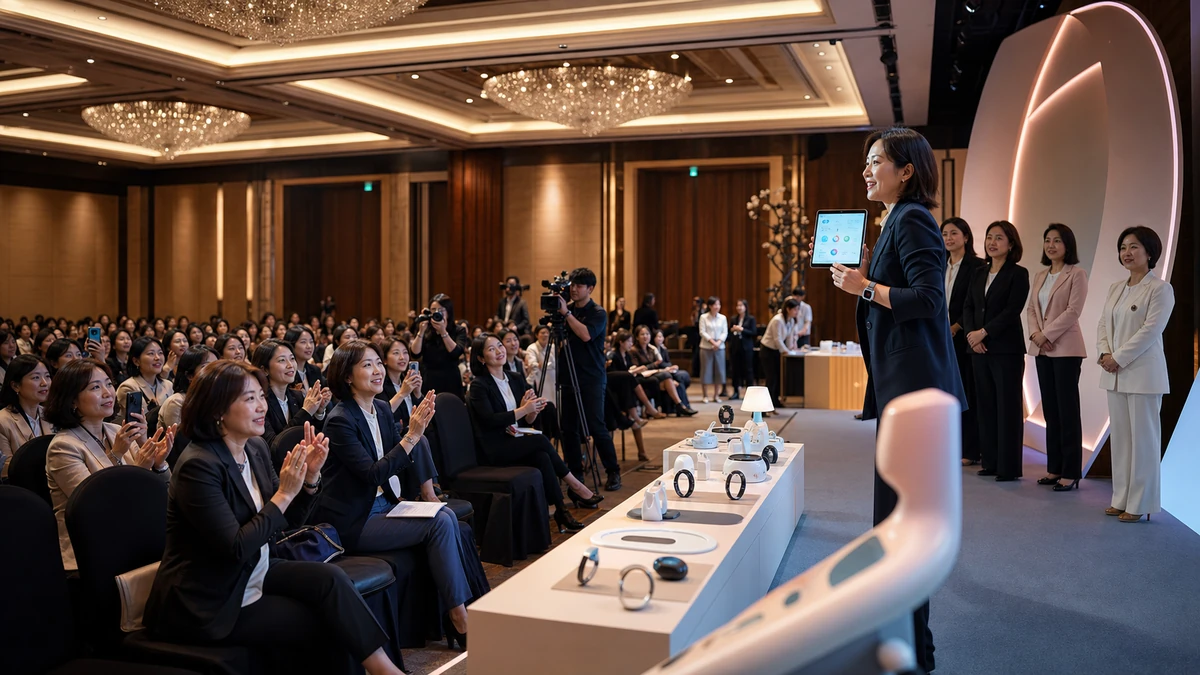
At first glance, the opening ceremony for South Korea’s fifth annual Women’s Enterprise Week might sound like the kind of government-backed industry event that produces more slogans than substance. Held July 1 at the Shilla Hotel in central Seoul, the gathering brought together officials from the Ministry of SMEs and Startups, leaders from five women’s business organizations and entrepreneurs from around the country. But the message coming out of the ballroom was more pointed than ceremonial: South Korea’s women-led companies want to be seen not as a special-interest category asking for support, but as serious builders of new technology markets.
That distinction matters in South Korea, where the national economic story has long been told through exports, heavy industry and the giant family-controlled conglomerates known as chaebol, such as Samsung, Hyundai and LG. In that older narrative, entrepreneurship led by women has often received less attention, and business sectors tied to daily life, caregiving and consumer well-being have sometimes been treated as secondary to hardware, autos and shipbuilding. The Women’s Enterprise Week event suggested a broader shift. Organizers framed women-owned businesses as market-makers in areas where technology meets everyday needs, especially in products and services designed around women’s health and quality of life.
The official slogan for this year’s event, roughly translated as “Women’s enterprises grow through technology and connect through empathy,” captured that ambition. It presented an image of business that combines technical capability with close attention to consumer experience. In practical terms, that means companies trying to solve intimate, often overlooked problems through better design, data and service models rather than treating those concerns as marginal.
For American readers, the comparison might be a U.S. conference where founders, policymakers and advocacy groups gather to argue that sectors once dismissed as niche, such as digital women’s health, are actually mainstream growth industries hiding in plain sight. Think of the way mental health apps, fertility services or direct-to-consumer wellness platforms gradually moved from the margins into the venture capital mainstream in the United States. South Korea appears to be having a related conversation, but in its own way: not simply about consumer trends, but about industrial policy, startup ecosystems and who gets to define the next wave of innovation.
That is why the setting was symbolic. The Shilla Hotel, one of Seoul’s best-known business venues, is not a place associated with small-scale community outreach. It is a space where politics, industry and prestige intersect. By placing women-owned businesses in that environment, organizers were making a visual and institutional statement that this is no longer a side conversation. It is part of how South Korea is thinking about future growth.
To be clear, the event did not produce splashy investment figures, export agreements or product launch timelines. The significance lies elsewhere. It offered a policy and market signal about where South Korean women-led companies believe opportunity may be heading next, and one of the clearest sectors named from the stage was femtech.
What femtech means, and why it matters beyond buzzwords
At a featured “W-Insight Speech” held alongside the opening ceremony, Kim Hyoi, chief executive of the company Innersia, said she believes South Korean companies can become key players in the rapidly growing femtech market, which she described as a market for “half the world” — women. Her language was aspirational, but it also reflected a real change in how business communities are talking about women’s health.
Femtech, short for female technology, is a broad term covering products, services and digital tools aimed at women’s health and quality of life. Depending on the market, that can include menstrual health tracking, fertility support, pregnancy and postpartum care, pelvic health, menopause solutions, sexual wellness, hormone monitoring, personalized health platforms and related consumer products. In the United States, the category has grown from a startup buzzword into a recognizable segment, though it remains unevenly funded compared with other health sectors. Companies such as Flo Health, Maven Clinic and Elvie helped familiarize English-speaking audiences with the idea that women’s health can be its own technology category rather than a subset of general wellness.
That broader framing is important because for generations many issues affecting women’s bodies were either under-researched, stigmatized or relegated to private coping strategies. Turning those problems into a category for research, product development and investment changes the conversation. It says that pain, inconvenience, reproductive health and long-neglected quality-of-life issues are not merely personal matters. They are also design problems, medical questions and market opportunities.
In the South Korean context, this shift carries additional meaning. South Korea is a highly digitized society with strong consumer adoption of mobile services, beauty and health products, personalized retail and platform-based lifestyles. It is also a country where social expectations around gender can remain traditional even as women have become highly educated and increasingly influential as consumers and professionals. That tension helps explain why femtech can appear both commercially promising and culturally significant. It speaks to a modern market need while pushing against older assumptions about what counts as a legitimate business focus.
For an American audience, one way to understand the appeal is to imagine the intersection of telehealth, wearable tech, direct-to-consumer branding and the “there has to be a better way” impulse that has fueled startup culture in everything from banking to grocery delivery. Femtech operates in that same space of frustration meeting innovation. The premise is that a large share of women’s daily health needs have historically been underserved, poorly designed for or treated as afterthoughts. Companies that address those needs intelligently can build trust and loyal customer bases.
Kim’s remark about women representing half the world did more than market the size of the demographic. It reframed women not as a narrowly defined target segment but as a vast and durable consumer base whose needs have not always been properly recognized by technology industries. Even without attaching a dramatic market valuation to the concept, the point is easy to grasp: if millions of everyday needs remain unmet, the business potential is substantial.
Why South Korea sees an opening
South Korea’s interest in femtech does not come out of nowhere. The country has already built global competitiveness by pairing technological speed with acute attention to consumer behavior. Korean companies excel at shortening the distance between trend detection, product design and market launch. That playbook is visible not only in electronics, but in cosmetics, skin care, e-commerce, gaming and digital platforms. Femtech, at least in theory, fits naturally into that model.
There are several reasons South Korean firms may believe they have an edge. First is product sensitivity. Korean consumer industries are known for close attention to detail, packaging, user experience and iterative improvement. In categories dealing with health and personal care, that sensitivity can matter as much as the core technology. A product that works but feels clinical, awkward or insensitive may fail. One that combines function with discretion, aesthetics and ease of use may stand a better chance.
Second is the country’s digital infrastructure. South Korea has long ranked among the world’s most connected societies, with fast broadband, high smartphone penetration and consumers accustomed to app-centered services. That makes it fertile ground for digital health ecosystems, subscription models, remote consultations, personalized tracking and integrated retail-health experiences.
Third is South Korea’s proven ability to globalize lifestyle categories. K-beauty offers the clearest example. What began as a domestic consumer sector evolved into a global export story built on product innovation, savvy branding and a reputation for understanding skin care routines in a highly detailed way. Femtech is obviously more complex, regulated and medically sensitive than sheet masks or serums. Still, the underlying lesson remains relevant: South Korean companies know how to identify a specific consumer experience, refine it and package it for international audiences.
There is also a demographic and social backdrop that gives the issue urgency. South Korea has one of the world’s lowest birth rates, an aging society and intense public debate over gender inequality, work-life balance and the burdens placed on women in professional and family life. Those pressures do not automatically create good companies, but they do make women’s health, reproductive support and quality-of-life technologies more economically visible. In a society grappling with labor shortages, caregiving stress and shifting family patterns, innovations tied to women’s well-being are easier to frame as national economic concerns rather than purely personal ones.
That does not mean South Korea has solved the structural issues facing women in business. Far from it. The gender wage gap remains among the widest in the developed world, according to international comparisons, and women continue to face barriers in promotion, leadership and entrepreneurship. But the Women’s Enterprise Week event suggested that at least some policymakers and business leaders are trying to recast the conversation. Instead of speaking only in terms of fairness or inclusion, they are speaking in the language of competitiveness, technology and future industries.
The politics of empathy and innovation
The slogan unveiled at the event — growth through technology, connection through empathy — may sound like the sort of polished conference language that could appear on any trade show backdrop. Yet it captures a real business challenge in sectors like femtech. In markets involving women’s health, technical performance alone is rarely enough. Trust, comfort and whether users feel understood can be just as important as engineering.
That is what organizers appeared to mean by linking technology with emotional understanding. In many consumer categories, especially those involving intimate health matters, people are not simply buying a device or subscribing to a service. They are deciding whether a company understands an experience that may be difficult, stigmatized or historically dismissed. A menstrual pain app, a fertility service or a postpartum support product is not just a transaction. It asks consumers to trust a brand with information and concerns they may not even discuss openly with colleagues, friends or family.
American companies have encountered the same reality. Some of the most successful consumer health brands in the U.S. have not merely sold products; they have built communities, educational content and language that helps users feel seen. South Korea’s women-led businesses appear to be making a similar calculation: that competitive advantage can come from translating lived experience into product design without losing the human element.
That focus on empathy may also reflect a broader Korean business style in certain consumer sectors, where emotional resonance and careful branding are often treated as strategic assets rather than soft add-ons. Anyone familiar with the global spread of Korean beauty, fashion or pop culture knows that Korean companies can be highly skilled at creating ecosystems of feeling around a product — aspiration, care, self-improvement, belonging. Applied thoughtfully, that instinct could help companies in femtech build stronger relationships with users.
Still, there is a line between strong market insight and overstatement. Based on the information made public from the event, organizers presented a direction, not a proven boom. There were no announced blockbuster investments or export breakthroughs attached to the ceremony itself. That distinction matters. Too many global innovation trends are inflated before infrastructure, regulation or consumer trust have fully caught up. A sector can be promising without yet being dominant.
What the Seoul event offered was not proof of victory but a declaration of intent. Women-led companies in South Korea want to shape industries built around women’s everyday realities, and they want those industries taken seriously by investors, policymakers and international markets.
Government support, industry networks and the making of a platform
One of the more significant aspects of the event was not any single speech, but the structure behind it. The opening ceremony was hosted by the Ministry of SMEs and Startups and organized with five women’s economic organizations. That type of public-private arrangement is common in South Korea, where governments often play an active role in convening industries, signaling strategic priorities and supporting startup ecosystems.
For American readers used to a more fragmented system, it may help to think of this as part trade association event, part policy forum and part public message from the state about what kinds of businesses deserve attention. In South Korea, when a ministry appears alongside organized industry groups at a high-profile event, it sends a message to investors, regional business networks and the press that the subject has moved beyond advocacy into strategy.
The fact that this was the fifth Women’s Enterprise Week also matters. A one-time event can be dismissed as branding. A recurring annual platform suggests institutional staying power. It shows that women-owned businesses are increasingly being treated not as isolated success stories but as part of a larger economic ecosystem that government and business groups want to cultivate.
That ecosystem language is crucial. Individual startups can generate excitement, but industries gain credibility when they have visible networks, regular forums, policy access and organized representation. Events like this one help create that infrastructure. They provide a public stage where entrepreneurs, associations and officials can talk about market opportunities using a shared vocabulary. They also help frame women-led enterprise as a category with coherence, not just a collection of separate companies.
This kind of platform-building can be especially important in a field like femtech, where products may span multiple sectors at once, including health care, software, consumer goods, data services and wellness. Because the category cuts across old business boundaries, entrepreneurs often need more than good products. They need narrative support, policy visibility and channels that connect them to investors, regulators and potential international partners.
South Korea’s government has often been willing to help create those channels in priority areas, whether for semiconductors, batteries, biotech or content exports. Women-led enterprise does not sit at the same scale as those headline sectors, but the Women’s Enterprise Week event suggests officials see value in elevating it within the national conversation about innovation and small business growth.
What global audiences should watch next
For readers outside South Korea, the most interesting part of this story is not the ceremony itself. It is what the event reveals about how Korean entrepreneurs are trying to position themselves in global markets. South Korea’s women-led companies are signaling that they do not want to compete only on low costs or generic manufacturing. They want to compete in categories where user insight, trust and specialized design create defensible value.
That has clear international implications. Women’s health is not a uniquely Korean issue. The unmet needs that drive femtech — access, comfort, better information, more personalized care and less stigma around intimate health concerns — are shared across borders. If Korean companies can translate those needs into practical products and services, they may find receptive markets well beyond East Asia.
Of course, going global in women’s health is not as simple as exporting beauty products or lifestyle brands. Regulations vary by country. Health claims require evidence. Cultural attitudes differ. What feels empowering in one market may feel intrusive or overly commercial in another. Any Korean company hoping to expand internationally will have to navigate medical standards, privacy rules and local expectations with care.
But South Korea has repeatedly shown an ability to adapt domestic strengths for global audiences. K-pop, K-dramas, Korean cosmetics and Korean food all benefited from a combination of strong local identity and smart international packaging. If a similar process takes shape in women’s health technology, the result could be a distinctly Korean model: one that combines digital fluency, design sophistication and a close reading of consumer needs.
There is also a larger lesson here about where innovation stories come from. For years, global tech coverage focused heavily on Silicon Valley, with occasional detours to Shenzhen, Berlin or Bangalore. Yet some of the next consequential growth categories may emerge not from a grand new platform technology, but from long-neglected everyday problems that certain societies are especially well positioned to solve. South Korea, with its fast-moving consumer culture and advanced digital infrastructure, may be one of those places.
As of July 2, the day after the event, what can be said with confidence is limited but meaningful. The ceremony took place. The government and women’s business groups used it to spotlight women-led enterprises as technology-driven market participants. A featured speaker argued that South Korean companies could become leading players in femtech. And organizers used a slogan that tied innovation to empathy, suggesting that women’s daily experiences are being recast as a source of industrial strategy.
Whether that vision becomes a durable export story remains to be seen. But the underlying question raised in Seoul is one that resonates far beyond South Korea: Who gets to define the next big consumer technology market, and what happens when industries begin taking women’s health seriously not as an afterthought, but as a central area of innovation? That is the question hanging over South Korea’s Women’s Enterprise Week — and it is one that businesses in the United States and elsewhere would be wise to watch.
More than a niche story
It would be easy to file this development under a narrow heading like women’s entrepreneurship or health-tech trends and move on. That would miss the bigger point. The Seoul event points to an ongoing redefinition of what economic seriousness looks like in one of Asia’s most advanced economies. When women’s health, quality-of-life services and highly personalized technology are discussed in a major business venue with government backing, the implication is broader than any single sector.
It suggests that future growth may come as much from identifying neglected human needs as from building ever-larger industrial hardware. That is a lesson American audiences can recognize. Some of the most important business opportunities of the past decade have come from companies that noticed where traditional institutions were underserving real people and then built products around convenience, dignity and direct access.
South Korea’s women-led businesses are now arguing that women’s health belongs in that category. Their pitch is straightforward: a market serving half the population is not marginal, and technology designed around women’s lived realities is not a soft or secondary idea. It is an economic frontier.
For now, that remains a proposition rather than a settled outcome. But in an era when many countries are searching for new growth engines beyond old industrial formulas, propositions like this matter. They shape where investors look, where founders build and how governments talk about the future. The opening of Women’s Enterprise Week in Seoul was, in that sense, less a celebration than a marker. It showed where one part of South Korea’s business community believes the next chapter could begin.



0 Comments