Doosan’s 8-3 win over Lotte shows why winning the series matters as much as winning the night in Korean baseball
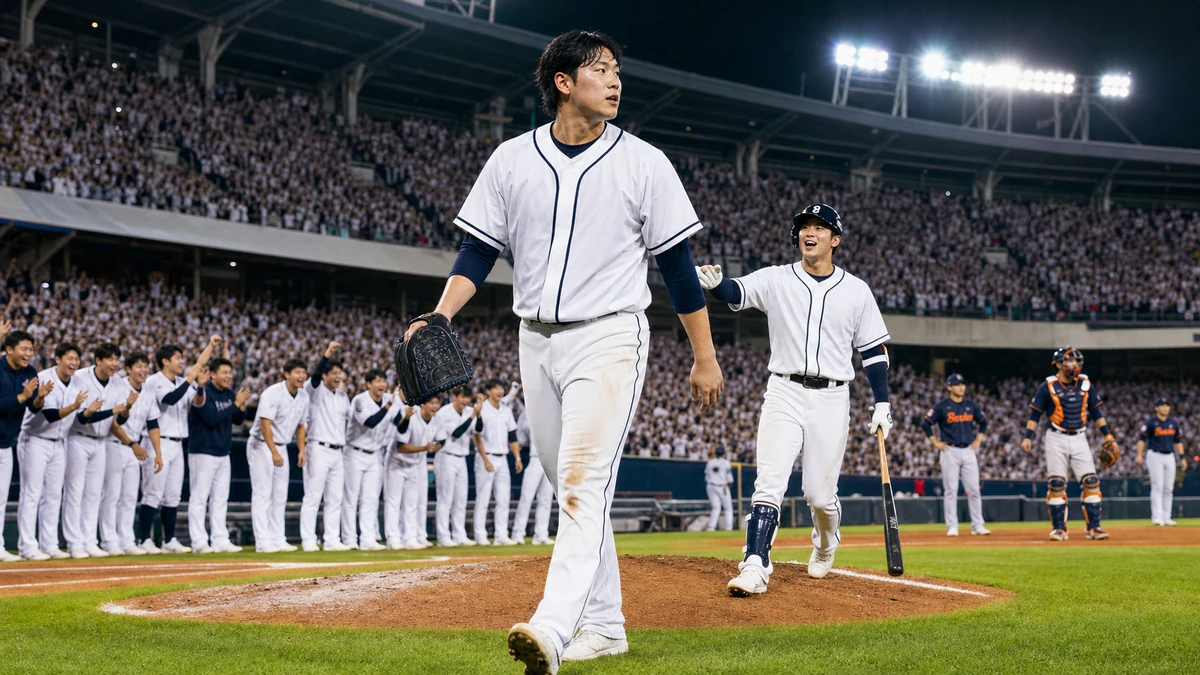
A strong night at Jamsil carries bigger meaning in the KBO race
SEOUL — On paper, it was a straightforward baseball result: the Doosan Bears beat the Lotte Giants 8-3 on Wednesday night at Jamsil Baseball Stadium, one of South Korea’s most recognizable sports venues. But in the context of the Korean Baseball Organization season, the victory meant much more than one tally in the standings.
With the win, Doosan secured its third consecutive winning series, a benchmark that carries real weight in Korean baseball’s long regular season. In KBO terms, a “winning series” means taking at least two of three games in a standard set. To American fans, the closest equivalent is the way Major League Baseball teams talk about “winning the weekend” or “taking the series” as a sign of steady, sustainable form. A team that consistently wins series, even without dominating every single game, is usually doing a lot right.
That was the larger takeaway at Jamsil. Doosan did not just outscore Lotte for one evening. It leaned on the kind of formula that travels well over six months: a starting pitcher who controls the game early, timely hitting that keeps pressure on the opponent, and enough balance to turn a close contest into something more comfortable by the late innings.
The central figures were right-hander Kwak Bin, who worked six scoreless innings, and hitter Kim Min-seok, who collected three hits and helped keep the offense moving. Together, they gave Doosan the kind of clean, composed win that can reset a clubhouse mood, energize a home crowd and, perhaps most important, reinforce the idea that a team is building something sturdier than a hot streak.
For Lotte, the loss carried its own significance. The Giants came into the series riding four straight winning series dating back to mid-June, and this defeat ended that run. So while the scoreboard showed a five-run margin, the emotional swing may have been even larger: Doosan strengthened its momentum while Lotte saw its own slow-burn surge interrupted.
That dual meaning — one team rising, another forced to regroup — is part of what makes KBO baseball compelling. In a league where team identity, fan culture and weekly rhythm matter deeply, a game like this can resonate well beyond its final inning.
Kwak Bin gave Doosan the kind of start every team wants
The foundation of Doosan’s win was laid by its starting pitcher. Kwak held Lotte scoreless over six innings, a line that does not require much embellishment to sound impressive in any professional league. In baseball, six shutout innings from a starter usually means three things happened at once: the pitcher avoided big mistakes, the defense played from a position of relative calm, and the bullpen was spared from early stress.
That dynamic matters in Korea just as it does in the United States. Managers can be more deliberate with reliever usage when a starter carries the game deep without allowing runs. Hitters can take their at-bats without feeling every plate appearance must rescue a deficit. Fielders can play cleaner, looser baseball. A quality start has a way of lowering the temperature for everyone wearing the same uniform.
In this case, Kwak’s outing changed the tone of the game from the outset. Lotte never found the early opening it needed, and once that window closed, Doosan was free to play from in front rather than from anxiety. That may sound intangible, but over the course of a season it is one of the clearest dividing lines between clubs that merely flash talent and clubs that know how to convert it into wins.
American baseball fans often talk about a starter “setting the tone,” and that phrase applies neatly here. Kwak did not just record outs. He dictated the tempo. By keeping Lotte off the board through six innings, he forced the Giants into a reactive posture. They were no longer shaping the evening; they were chasing it.
That kind of start also carries symbolic importance for a home crowd. Jamsil, the large stadium in southeastern Seoul shared by Doosan and the LG Twins, can feel imposing and electric at once. When the home starter settles in and the opposing lineup begins to stall, fans sense it quickly. The rhythm of the game turns. Every clean inning deepens the belief that the night belongs to the home side.
For Doosan, that stability on the mound has been a key part of why this recent stretch feels meaningful rather than random. The Bears did not need a miracle comeback or an unsustainably loud offensive explosion to beat Lotte. They got the more reliable thing: control from the first pitch onward.
Kim Min-seok’s three-hit game kept the lineup in sync
If Kwak gave Doosan control, Kim Min-seok gave it momentum. His three-hit performance helped power an offense that scored eight runs, and in baseball terms, a three-hit game often means more than a strong personal stat line. It means one hitter repeatedly disrupted the opponent’s plan.
Every time a batter reaches base multiple times, the pitching staff on the other side is forced to reconsider its attack. Sequencing changes. Pitch selection changes. Pressure rises for the catcher and pitcher to find a new path through the order. And once a lineup starts stringing together productive at-bats around a hitter who is seeing the ball well, the game can quickly shift from manageable to uncomfortable for the defense.
That is what Kim’s night appears to have done for Doosan. He served as a connective piece in the offense, the kind of player whose production keeps innings alive and creates opportunities for teammates to do damage. Not every star turn comes in the form of a towering home run. Sometimes the most important offensive player is the one who keeps the line moving, reaches base again, and quietly wears down the opponent over the course of several innings.
For readers more familiar with MLB, think of the difference between a highlight-driven slugger and a hitter who consistently nudges an offense forward. Both matter, but on many nights the second type can be just as decisive, especially when paired with dominant starting pitching. Doosan got that combination Wednesday: run prevention sturdy enough to keep the game under control and offense persistent enough to make Lotte pay.
Kim’s three-hit showing also underscored something broader about how winning teams function. Baseball is often described through individual heroics, but sustained success usually comes from a lineup finding rhythm rather than from one isolated swing. A hitter who sparks multiple innings contributes to that rhythm in a way fans immediately recognize, even if it does not always produce the loudest highlight clip.
That helps explain why victories like this tend to feel especially satisfying to supporters. They reflect completeness. The starter does his part. The offense responds. A hitter like Kim creates repeated pressure. By the time the final score settles at 8-3, the result feels earned at every level rather than borrowed from a few lucky breaks.
Why a winning series matters so much in Korean baseball
To casual American readers, the phrase “third consecutive winning series” may sound like a nice but secondary detail. In the KBO, it is not secondary at all. It is one of the cleanest ways to measure whether a club is building durable momentum.
The KBO schedule, like the MLB calendar, is built to test consistency more than perfection. Teams play frequently, fatigue accumulates, pitching staffs are stretched and slumps arrive without warning. In that environment, sweeping every opponent is unrealistic. But winning two out of three on a regular basis is how contenders separate themselves from the middle of the pack.
That is why Doosan’s three straight winning series stand out. This is not just a team enjoying a single explosive game or catching an opponent on a bad night. It is a team repeatedly doing enough things well to come out ahead over multiple sets. In baseball’s marathon logic, that matters more than one dramatic evening.
There is also a psychological component. Series results shape how clubhouses feel. A team that wins a series walks into the next one with a clearer sense of identity and confidence. Players trust the process a little more. Managers can point to patterns that are working. Fans, who in Korea are deeply engaged with the week-to-week flow of the season, feel the momentum too.
That fan perspective is worth explaining for Americans less familiar with Korean sports culture. KBO fandom is intensely organized and participatory. Crowds chant for individual players, sing fight songs, wave team colors and treat regular-season games with a degree of ritual and energy that can resemble college sports atmospheres in the United States. A winning series does not just improve the record. It reinforces the emotional contract between a team and its supporters, who track these stretches closely.
Doosan’s latest series result carried extra significance because it came against Lotte, one of the KBO’s best-supported franchises. The Giants have a large national fan base and an especially passionate following in the southeastern port city of Busan, which is often described as one of Korea’s great baseball strongholds. Beating Lotte once is notable. Repeatedly taking series from Lotte begins to say something more substantial about team quality.
That is the territory Doosan is entering now. According to the game summary, the Bears have gone 8-4 against the Giants this season and have emerged with a winning series in all four of their three-game sets against Lotte. Across a long season, that kind of repeated edge over the same opponent stops looking accidental.
Doosan’s season edge over Lotte is becoming a real trend
Baseball invites caution about small sample sizes, but there comes a point when repeated outcomes deserve to be treated as a pattern. Doosan appears to be reaching that point against Lotte.
Winning four separate series against the same opponent suggests more than favorable timing. It can point to stronger game planning, cleaner execution and an ability to adjust from matchup to matchup. In modern baseball terms, it hints that one club may better understand how to deploy its pitching, sequence its lineup and exploit the other team’s weak spots over time.
That does not mean Lotte is outclassed across the board. The Giants are too established and too talented for a conclusion that simple. But it does mean Doosan has earned the right to feel confident in this matchup. Confidence in baseball is a delicate thing — too much can turn into carelessness — yet the right amount can sharpen decisions rather than dull them. A club that knows it has handled a rival well tends to play with a little more conviction in key moments.
For Lotte, that recurring problem against Doosan becomes the kind of issue teams must address carefully. A single loss can be filed away. A single lost series can be explained by timing or injuries or a cold stretch from the bats. But four winning series for the opponent begins to raise harder questions. Are the at-bats disciplined enough? Is the pitching plan predictable? Are the in-game adjustments coming quickly enough?
Those are the kinds of questions coaches and front offices ask internally, even if the public conversation remains more restrained. Korean baseball, like American baseball, lives on detail. A recurring edge often starts with something small — how hitters are attacked in certain counts, how one lineup handles velocity, how a bullpen is forced into unfavorable matchups. Over time, those small things stack into records like 8-4.
From Doosan’s perspective, this is exactly what progress is supposed to look like. Not flashy invincibility, but repeated competence against a quality and popular opponent. If the Bears are trying to establish themselves as a team worth taking seriously over the long haul, this is persuasive evidence.
Lotte’s streak ends, and momentum changes hands
The other half of this story belongs to Lotte, whose run of four straight winning series came to an end. In baseball, momentum can be hard to define statistically and impossible to ignore emotionally. Teams do not simply carry records; they carry moods. A club that has been winning series enters the park with a sense that it knows how to navigate trouble. Players expect the game to tilt their way eventually. Fans arrive anticipating another satisfying chapter.
When that run stops, the standings do not collapse overnight, but the emotional weather changes. A team has to reset. It has to prove that the interrupted run was not the peak but simply one stretch in a larger body of good baseball. That is the challenge now facing Lotte.
There is no shame in losing to a club that got six scoreless innings from its starter and a three-hit night from one of its key bats. But timing matters. Because Lotte had been building momentum, this defeat lands with more force than an ordinary midseason loss. It cuts off a positive storyline and hands the emotional spotlight to the opponent.
American sports fans know the feeling well. In a baseball season, teams can seem to spend weeks constructing a sense of direction only to watch one tough series scramble the narrative. That does not necessarily predict collapse, but it does demand a response. Good teams answer by avoiding a skid. Great teams answer by identifying the precise areas that failed and correcting them quickly.
Lotte still has every chance to steady itself. The KBO calendar allows little time for dwelling, and that is part of what makes it so unforgiving. But for now, the Giants leave Seoul with their recent roll interrupted, while Doosan gets to frame the same series as proof that its rise has substance.
Why KBO baseball keeps drawing global attention
For readers outside Korea, games like this help explain why the KBO has become easier to appreciate from afar. During the pandemic-shortened early 2020 season, when American sports fans were searching for live competition, many first discovered Korean baseball on overnight broadcasts. Some came for novelty. Many stayed because the product was genuinely entertaining: crisp competition, deeply invested fan bases, visible team identities and a regular season that encourages drama to build in layers.
Jamsil Stadium itself is part of that story. It is not just a ballpark but a landmark in Seoul sports life, a place where large crowds, coordinated cheering and city-scale familiarity give games a sense of occasion. In U.S. terms, imagine a venue that combines the everyday importance of a longstanding baseball park with the ritual of a college rivalry atmosphere. Even on an ordinary weeknight, the environment can make a regular-season game feel bigger than the calendar suggests.
The Doosan-Lotte matchup also offers an appealing entry point for international viewers because both teams have clear brands. Doosan, based in Seoul, carries the identity of a club playing under the pressure and visibility that come with the capital. Lotte, backed by one of Korea’s major conglomerates and associated most strongly with Busan, represents another powerful baseball region with a fiercely loyal following. When they meet, there is usually enough history and fan energy to give the result texture beyond the box score.
This particular game had all the ingredients that translate well across borders: dominant starting pitching, a productive bat near the center of the story, a meaningful series result and a visible swing in momentum between two recognizable clubs. You did not need to know every detail of KBO standings to grasp the drama. One side controlled the game from the mound and supported it with consistent offense. The other saw a good run halted.
That clarity is part of sports’ universal appeal, and Korean baseball packages it especially well. The KBO often turns regular-season baseball into something that feels close to serialized drama — one part tactics, one part form, one part fan culture. Wednesday’s 8-3 Doosan win was a strong example. It was not merely a home victory in Seoul. It was a statement about rhythm, confidence and the kind of repeatable success that teams spend entire seasons trying to build.
What this win says about where Doosan may be headed
It is always wise to be careful with midseason declarations. Baseball punishes overreaction. But some wins reveal more than others, and this one offered a convincing snapshot of why Doosan’s recent stretch deserves attention.
The Bears won behind a formula that tends to hold up: strong starting pitching, productive contact, offensive balance and series-level consistency. They did it against a high-profile opponent that had been playing well. They did it at home in front of a crowd that understood the stakes. And they did it in a way that suggested planning and execution rather than luck.
In that sense, the most important number from Wednesday may not have been eight runs or even six scoreless innings. It may have been three — as in three straight winning series. For a baseball team trying to establish credibility over the grind of a season, that is the number that says the clearest thing.
Doosan is not just collecting wins. It is collecting evidence. Evidence that the rotation can anchor games. Evidence that the lineup can generate sustained pressure. Evidence that when the schedule brings a familiar opponent back around, the Bears know how to respond. Those qualities do not guarantee anything in July, much less at the end of the season. But they are precisely the qualities that give a club a chance to matter when the games grow more important.
For now, that is enough to make this result stand out in Korean sports conversation. The Bears beat the Giants 8-3 at Jamsil, yes. More importantly, they looked like a team with a coherent, repeatable path to winning. In a sport where daily results can blur together, that is what makes one night worth remembering.
Comments
Post a Comment