Korean obstetrics specialists push back on pregnancy misinformation, urging patients to trust doctors over viral claims
Why this guidance matters now
A leading South Korean medical society is trying to answer a question that has become familiar far beyond Korea: When a pregnant patient opens TikTok, Instagram, YouTube or a parenting forum and sees alarming health claims, what should she believe?
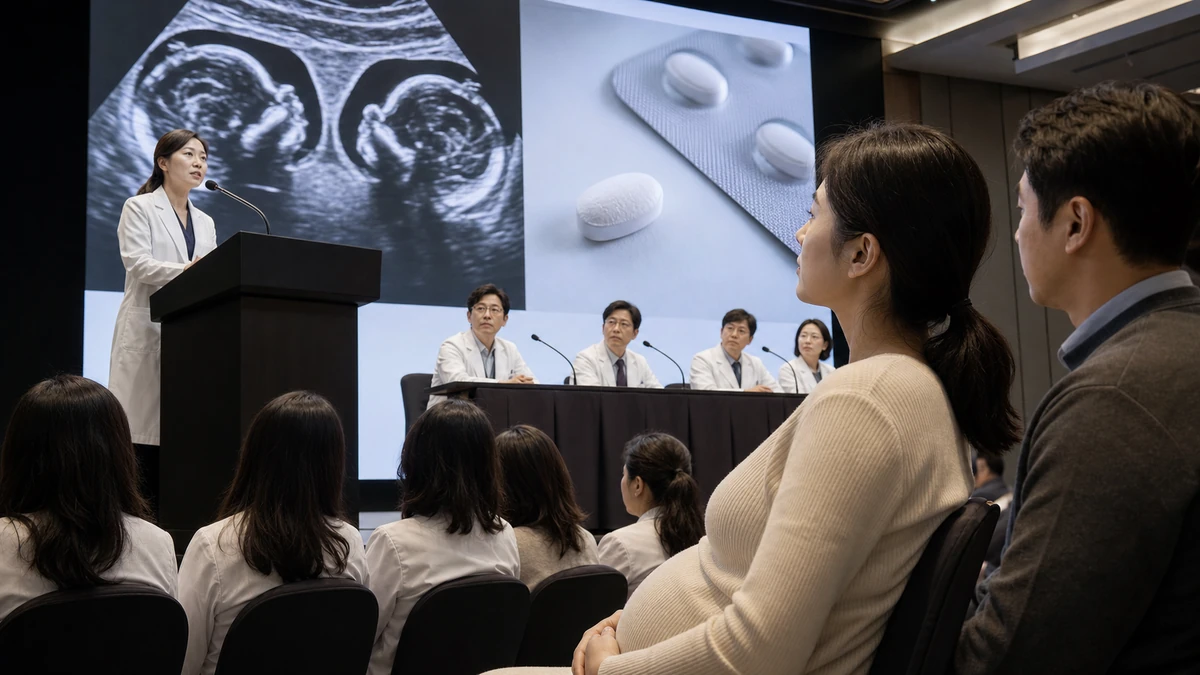
At its 32nd academic conference in the southeastern city of Gyeongju, the Korean Society of Maternal-Fetal Medicine said it was issuing official positions and fact sheets on several questions pregnant women ask most often, according to South Korea’s Yonhap News Agency. The group’s central message was straightforward and strikingly universal: In matters involving pregnancy, internet snippets and social media posts should not outrank established medical evidence or a consultation with a trained obstetric specialist.
That may sound obvious, but in practice it speaks to a very modern kind of anxiety. Pregnant women and people planning pregnancies are often flooded with emotionally charged, highly shareable claims about fertility, medication, fetal development and delivery risks. Those claims tend to spread because they are short, certain and frightening. A sentence like “this drug causes autism” or “twins are a better outcome” is easier to circulate online than a nuanced explanation about risk, probabilities, individual medical history and the limits of research.
The Korean society’s intervention is significant because it does not dismiss those fears as overreactions. Instead, it recognizes that the fears are real, common and influential enough to warrant a formal response from specialists. In the American context, that is similar to what happens when groups such as the American College of Obstetricians and Gynecologists issue patient guidance to counter viral myths. The underlying concern is the same in Seoul as it is in Chicago, Los Angeles or Atlanta: bad medical information can shape real-life decisions before a patient ever reaches the exam room.
As of July 11, 2026, two of the most closely watched topics in the Korean society’s statement were whether carrying twins or other multiples should be viewed as automatically desirable, and whether taking Tylenol during pregnancy should be believed to cause autism based on claims circulating online. Both subjects tap into powerful hopes and fears surrounding modern pregnancy: the wish to maximize a fertility treatment outcome, and the fear that a routine decision made during pregnancy could harm a child years later.
The society’s answer to both concerns was not to offer a catchy slogan of its own. Instead, it emphasized a principle that can be hard to maintain in the social media era: complicated medical decisions should be based on vetted evidence and individualized advice, not on the most emotionally compelling post in a search result.
Why “more babies” is not the same as a better outcome
One of the clearest parts of the Korean guidance addresses a belief that exists in many countries, not just Korea: that a twin pregnancy is inherently a happier or more successful result because one pregnancy could lead to two babies.
That idea can carry special emotional weight in the context of infertility treatment. Anyone who has spent time in fertility communities in the United States will recognize the logic. Treatments can be physically draining, financially punishing and emotionally exhausting. Patients may feel pressure to make each cycle count. In that environment, the prospect of twins can take on a positive glow, as if it represents efficiency, abundance or a hard-won victory after repeated setbacks.
But the Korean Society of Maternal-Fetal Medicine is urging patients and clinicians to separate emotional appeal from medical judgment. The number of fetuses, the group suggests, should not be used as a shorthand for the quality of a pregnancy outcome. The goal is not simply to achieve pregnancy at any cost. The goal is a safe pregnancy and a safe delivery.
That distinction matters because multiple gestation pregnancies, including twins, are generally associated with higher medical risks than singleton pregnancies. Those risks can include preterm birth, low birth weight, complications for the mother and a greater likelihood of intensive medical monitoring. The Korean society’s position, as summarized in local reporting, is not that twins are undesirable in some moral or emotional sense. Rather, it is that no one should treat “more fetuses” as automatically “better medicine.”
For American readers, the debate may sound familiar from longstanding conversations around in vitro fertilization. In the United States, fertility care has often involved tensions between cost, success rates and safety. When treatment is expensive and often not fully covered by insurance, patients can feel tempted to prioritize the chance of pregnancy per cycle, sometimes at the expense of lower-risk approaches. Medical societies, however, have increasingly emphasized the benefits of single embryo transfer in appropriate cases because reducing the odds of a multiple pregnancy can improve safety for both the pregnant patient and the babies.
The Korean society appears to be making a similar point. It recommends that in infertility treatment, efforts to reduce multiple pregnancy through single embryo transfer can help support safer pregnancy and childbirth. That guidance places the focus where maternal-fetal specialists tend to want it: not on a dramatic outcome image, but on the entire arc of pregnancy, from conception planning to delivery.
Fertility treatment, expectations and the pressure to maximize results
The Korean statement also highlights a broader issue in reproductive medicine: the way treatment decisions can become entangled with hope, fear and internet storytelling.
In fertility treatment, patients are often navigating uncertainty from the start. They may arrive after years of trying to conceive, after miscarriages, after failed cycles or after hearing success stories from friends and online communities that do not reflect their own medical circumstances. In that atmosphere, a strategy that seems to promise “more” can feel intuitively attractive. If one embryo offers a chance, two may feel like greater insurance. If a twin pregnancy can result in two children, some patients may see it as a welcome shortcut through a painful process.
The Korean society is effectively warning against using that emotional calculus as a substitute for physician-guided decision-making. The choice of how to pursue pregnancy is itself part of health care, not a separate consumer decision that happens before “real medicine” begins. In other words, risk management in pregnancy does not start only after a positive test. It starts at the stage where patients and doctors decide how pregnancy will be attempted.
That is an important message in Korea, where delayed marriage, low birth rates and the growing visibility of fertility treatment have made pregnancy planning an especially sensitive public topic. It also resonates in the United States, where infertility care is often discussed in personal, commercial and political terms all at once. Patients are encouraged to advocate for themselves, but they are also targeted by clinics’ success statistics, influencer testimonials and online communities that can blur the line between support and anecdotal medical advice.
The Korean fact sheet’s practical implication is not that every patient should receive the same recommendation regardless of age, diagnosis or treatment history. Rather, the society is saying that a safety-first framework should guide the conversation, and that patients should understand why reducing the chance of multiples is often considered medically preferable. That is not an attack on families who have twins, nor is it a criticism of people who feel joy at the idea. It is an attempt to re-center the discussion on evidence-based risk rather than wishful simplification.
That kind of reframing can be hard to achieve online. Social media rewards vivid narratives, and fertility content is full of them. One patient’s triumphant story can become another patient’s silent pressure. Specialist societies enter that environment at a disadvantage because their language tends to be measured and conditional. But when the issue is maternal and fetal safety, measured and conditional is often exactly what responsible medicine requires.
The Tylenol question and the power of a viral health scare
The second issue addressed by the Korean society may be even more recognizable to American readers: claims that taking Tylenol during pregnancy could cause autism in children.
In South Korea, as in the United States, acetaminophen is a common household medication and Tylenol is a widely recognized brand name. It is also the kind of drug many people assume is routine or relatively benign compared with stronger prescription medicines. That combination of familiarity and pregnancy-related vulnerability makes it a perfect target for online panic. If a common pain reliever suddenly becomes framed as a hidden developmental threat, the claim spreads quickly.
According to the Korean news summary, specialists said pregnant women should trust validated medical evidence over fragmentary information circulating online and on social media. That response is carefully calibrated. It does not say patients should casually medicate themselves without discussion. It also does not say that every alarming post is medically sound just because it triggers fear. Instead, it draws a line between emotional impact and scientific reliability.
That distinction is crucial in the United States as well, where debates over acetaminophen use during pregnancy have surfaced repeatedly in news coverage, lawsuits, social media content and patient forums. Research on pregnancy exposures and later childhood outcomes is inherently difficult to interpret. Studies can show associations that do not prove causation. Confounding factors can be hard to eliminate. People often want yes-or-no answers, but the science around developmental outcomes rarely works that way.
The Korean society’s message, as described in the reporting, is essentially that a pregnant patient should not use a decontextualized post, a clipped video or a boldfaced search result as the final word on whether to start, continue or stop a medication. That is particularly important in pregnancy, where untreated symptoms can also carry consequences. A patient may need relief from pain or fever, and abruptly refusing all medication out of fear can create its own risks depending on the circumstances.
For a U.S. audience, the broader lesson is familiar from other health controversies. Social platforms tend to flatten scientific nuance into moral urgency. Instead of “here is what some studies suggest, here are the limitations, here is what major medical bodies say, and here is how individual clinical judgment fits in,” users get “do this and you harm your baby” or “doctors are hiding the truth.” Those formulations are powerful precisely because they feel protective. But protection built on incomplete information can still do harm.
What expert fact sheets can do that a viral post cannot
The Korean society’s decision to release official positions and fact sheets at a professional conference is noteworthy because fact sheets serve a specific purpose in a chaotic information landscape. They are not designed to go viral. They are designed to create a reference point.
That may sound modest, but it matters. In the online world, pregnant patients and their families often confront a pile of claims with no easy way to judge credibility. A social media creator may sound confident. A parenting forum may have hundreds of comments. A translated article may circulate in fragments across multiple languages, stripped of caveats and context each time it is reposted. By the time a claim reaches a patient’s phone, it may bear little resemblance to the original research or medical guidance it supposedly cites.
A fact sheet from a specialist organization can help slow that process down. It tells patients and clinicians what questions are actually being asked, what evidence is considered reliable, and what kind of decision-making framework experts believe should be used. Just as importantly, it reminds patients that the right answer may depend on individual circumstances, including medical history, stage of pregnancy, treatment goals and other risks that a viral post cannot possibly know.
In that sense, the Korean society’s action is not only about twin pregnancies or Tylenol. It is about how authority is established in the digital age. Medical organizations no longer communicate in a world where professional expertise automatically dominates. They compete with influencers, algorithmic amplification and communities built around personal testimony. Personal testimony can be valuable and comforting, but it cannot replace clinical evidence when the stakes include maternal health and fetal development.
American audiences can understand that tension easily. During the pandemic, many people saw firsthand how public health recommendations could be drowned out or distorted online. Pregnancy information now circulates through the same channels, often with even more emotional charge because it touches on family, parenthood and children’s futures. The Korean specialists’ move reads as part of a larger global effort by physicians to reclaim some ground from misinformation without belittling the people who are frightened by it.
There is also a cross-border lesson here. In multilingual digital environments, health claims often travel through translation, summarization and reposting. A study conducted in one country can become a headline in another, then a meme somewhere else. Details disappear. Conditions vanish. Limitations are omitted. By the end, what remains is a stark warning that feels universal but may be anything but. The Korean society’s emphasis on source-based, evidence-based consultation is, in part, a defense against that distortion.
What pregnant patients can take from this
The Korean society’s guidance offers several practical principles that travel well beyond Korea.
First, pregnant patients should be wary of making major medical decisions based on a single online claim, no matter how often it appears in their feed. Repetition is not proof. Social media algorithms tend to show users more of what holds their attention, and fear is a powerful attention magnet. That can create the illusion that a claim is broadly settled when, in fact, it is merely broadly circulated.
Second, questions that arise online can still be useful if they are brought into a clinical conversation rather than treated as a clinical conclusion. A patient who sees a claim about acetaminophen and autism, for example, can write down exactly what she saw, what worries her and what medication she has taken, then ask her obstetrician or maternal-fetal medicine specialist to walk through the evidence. The same goes for fertility treatment decisions involving embryo transfer. The internet can generate the question; it should not automatically decide the answer.
Third, “success” in pregnancy should be defined broadly enough to include safety. That may be one of the most important points in the Korean society’s statement. Whether the issue is multiple gestation after infertility treatment or a medication choice during pregnancy, the safest course is not always the one that looks most efficient or emotionally satisfying in the short term. Medicine often asks patients to think beyond the immediate milestone and toward the overall health of both the pregnant person and the child.
Finally, expert guidance is most useful when it supports a relationship, not just a rule. The Korean specialists did not present pregnancy care as something that can be outsourced to a PDF any more than it can be outsourced to a social media reel. The fact sheet is a tool, not a substitute for care. Its function is to anchor discussion in verified evidence and to help patients distinguish between understandable fear and medically supported concern.
That is likely why this announcement has broader significance. It shows a major Korean medical society responding not only to medical questions but to the way those questions are now formed in daily life. Pregnancy is no longer shaped solely by family advice, clinic visits and printed pamphlets. It is shaped by search engines, short-form video, translated headlines and online communities that can be both supportive and destabilizing. In stepping into that arena, the society is acknowledging a new reality of prenatal care: reassurance now has to compete with virality.
Its answer, however, is decidedly old-fashioned in the best sense. Ask questions. Seek evidence. Talk to a specialist who knows your case. And when a post on the internet demands an instant, frightening conclusion about your pregnancy, treat that demand itself as a warning sign.
A Korean debate with global resonance
At first glance, a statement from a Korean maternal-fetal medicine society might seem like a local professional development from a country with its own health system, fertility culture and demographic pressures. But the issues it addresses are deeply global. The struggle to balance patient autonomy with evidence-based care, the emotional burden of infertility treatment, the viral spread of medication fears and the challenge of preserving nuance in the age of algorithms are not uniquely Korean stories. They are modern stories.
For American readers, the most revealing part of this development may be the tone of the intervention. The specialists are not scolding patients for being worried. They are not dismissing online information outright. They are acknowledging that these anxieties are real enough to shape behavior and serious enough to merit official clarification. At the same time, they are insisting that fear should not be allowed to outrank science.
That balance is hard to achieve, especially in reproductive health, where patients often feel they must bear total responsibility for every possible outcome. It is easy to understand why a pregnant woman would cling to a simple rule if she believes it might protect her child. But simple rules built from incomplete evidence can create a different kind of danger: panic, guilt, delayed care or treatment choices made without proper medical guidance.
The Korean society’s message, then, is not merely about what to think regarding twins or Tylenol. It is about how to think when pregnancy information collides with internet culture. For readers in the United States and elsewhere, that may be the most useful takeaway of all.
Comments
Post a Comment