South Korea and Mongolia Refresh a 15-Year-Old Health Pact, Expanding Ties From Cancer Care to Medical Training
A diplomatic agreement with everyday consequences
South Korea and Mongolia have updated a bilateral health cooperation agreement for the first time in 15 years, a move that may sound procedural on paper but carries broader implications for how patients, doctors, hospitals and health-related industries move across borders in Northeast Asia.
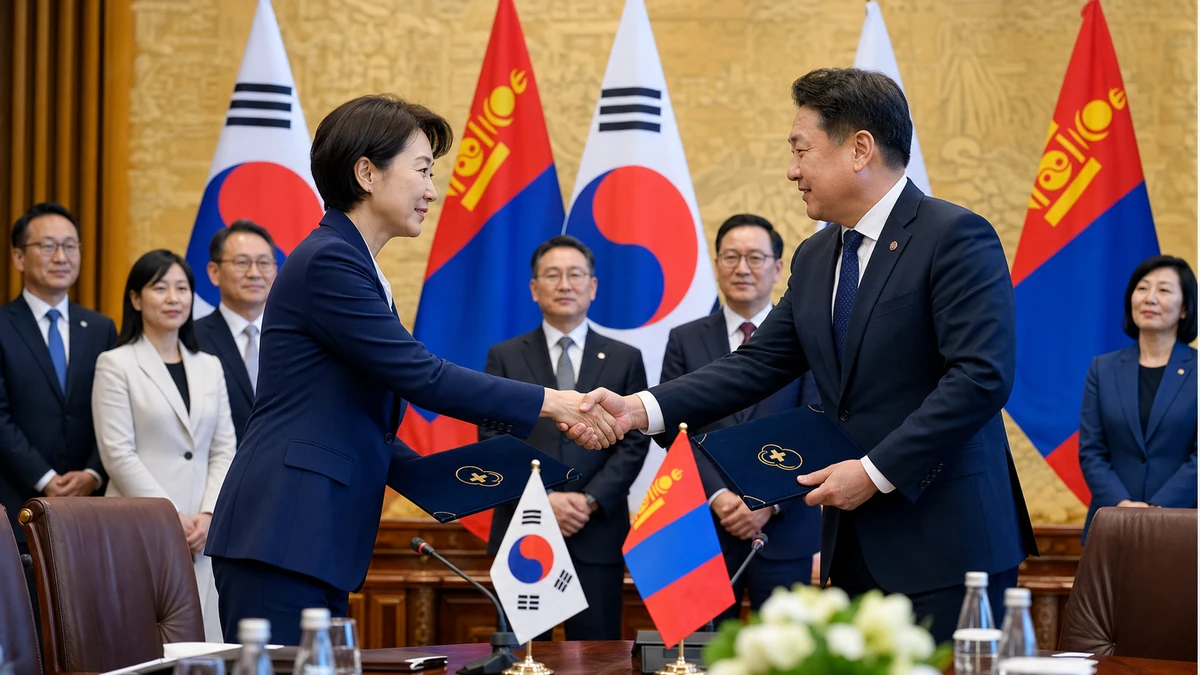
South Korea’s Health and Welfare Ministry said Health Minister Chung Eun-kyung visited Ulaanbaatar from July 8 to July 10 and met with Mongolian Health Minister Enkhbayar Batshugar, where the two sides revised a memorandum of understanding on cooperation in health care and medicine. The exchange ceremony took place in the presence of South Korean President Lee Jae Myung and Mongolian President Ukhnaa Khurelsukh, a sign that the subject was elevated beyond a routine ministry-to-ministry meeting and folded into leader-level diplomacy.
For American readers, the easiest comparison may be to a health cooperation framework that blends parts of medical diplomacy, workforce development and trade policy. This was not the announcement of a breakthrough cancer drug or a major hospital merger. Instead, it was a rules-and-priorities update: a decision by two governments to redefine what kinds of medical cooperation matter most now, and how they want to support them.
That distinction matters. In many countries, health agreements can sound abstract until their effects become visible in practical ways — a patient referred overseas for specialized treatment, a doctor trained in a foreign hospital, or a domestic clinic using imported equipment backed by new regulatory cooperation. The South Korea-Mongolia agreement touches on all of those areas.
The revised document identifies several priority areas: state-funded patient referrals from Mongolia, cooperation in cancer care, training for medical professionals, and expanded connections in pharmaceuticals and medical devices. While officials did not release detailed implementation plans, the agreement signals that both governments want to update older arrangements to match current medical needs and economic realities.
That makes this story more than a diplomatic footnote. It is also a window into how South Korea, better known abroad for K-pop, Korean dramas and beauty brands, is increasingly presenting another side of its global influence: hospitals, public health systems, medical education and the broader health care infrastructure that supports them.
Why a 15-year update matters now
Fifteen years is a long time in health care. In that span, medical technology has changed, cancer treatment has advanced, patient mobility has increased and the global health system has been reshaped by shocks including the COVID-19 pandemic. Even when the core relationship between two countries remains friendly, the terms of cooperation can grow outdated if they are not periodically rewritten.
That appears to be part of the significance here. The revised memorandum is not just a ceremonial refresh. It is an institutional update that reflects the fact that modern health cooperation is more complex than occasional goodwill exchanges between ministries. It now involves referral systems, training pipelines, treatment protocols, clinical knowledge transfer and industrial supply chains.
In the U.S., Americans are used to thinking about health care mostly through a domestic lens — insurance networks, hospital systems, prescription prices and medical staffing shortages. But globally, health care increasingly functions as a cross-border ecosystem. Patients travel for treatment. Doctors train abroad. Hospitals share expertise. Governments try to attract biotech investment while also strengthening public health resilience. South Korea and Mongolia are formalizing more of that interconnected model.
The timing also reflects South Korea’s broader effort to deepen practical ties with neighboring and partner countries in ways that go beyond security or traditional trade. Health cooperation falls into what diplomats sometimes call “livelihood diplomacy” — policy areas that directly affect daily life, from medicine and education to food systems and infrastructure. Those are less headline-grabbing than military summits or tariff disputes, but they often produce the kinds of outcomes ordinary people feel most directly.
For Mongolia, a vast country with a relatively small population spread across enormous distances, overseas treatment partnerships and physician training ties can be especially meaningful. Serious illnesses such as cancer place pressure on any national health system, but the burden can be more acute when specialized care, advanced equipment and subspecialty expertise are unevenly distributed. Partnerships with foreign hospitals and ministries can help fill some of those gaps, even if they do not replace the long-term need for domestic investment.
For South Korea, the updated agreement reinforces an area where it has growing confidence. The country has spent decades building a health system known for high hospital access, advanced specialty care and a strong manufacturing base in sectors like pharmaceuticals, diagnostics and medical devices. That does not mean the system is without strain or political controversy. Like the United States and many other nations, South Korea faces debates over doctor supply, regional disparities and health policy reform. Still, it has accumulated expertise that other countries increasingly view as useful.
From patient referrals to cancer care
Among the most notable items in the revised agreement is support for Mongolian state-funded patients to receive treatment overseas. In this context, the phrase refers to patients whose care abroad may be backed by government finances rather than entirely paid out of pocket. For readers unfamiliar with the term, it does not mean universal medical tourism. It more likely points to cases in which a government helps connect patients with treatment options that may not be readily available at home.
That kind of arrangement can be life-changing for patients and families, particularly in highly specialized fields. Cancer care, which was specifically named in the revised memorandum, is one of the clearest examples. Effective cancer treatment usually depends on more than a single procedure or doctor’s appointment. It requires diagnostics, pathology, surgery, medical oncology, radiation therapy, nursing coordination, follow-up monitoring and often long-term patient management.
South Korea and Mongolia did not announce a new cure, a joint cancer center or a detailed disease-specific roadmap. That is important to note. The significance of the agreement lies not in a sudden scientific breakthrough but in the fact that cancer cooperation has been clearly reaffirmed as a formal priority area. In diplomacy, that kind of designation can shape future funding, staffing, pilot programs and institutional partnerships.
Americans may recognize a similar dynamic in how U.S. hospitals build international relationships. A memorandum rarely changes patient outcomes overnight. But it can create the bureaucratic architecture needed for those outcomes later — referral channels, fellowship exchanges, data-sharing frameworks, procurement arrangements and regular official contact.
More broadly, patient referrals across borders underscore a basic reality of modern medicine: treatment is no longer always contained within one national system. Some countries send patients abroad for highly specialized procedures. Others receive them. In between are ministries, hospitals, visa offices, insurers, regulators and family caregivers navigating the process. Agreements like this help define how those moving parts can work together.
That does not mean every ambition will automatically translate into smooth implementation. The available summary does not identify which cancers will be prioritized, which institutions will participate, how many patients may be referred, or what financial terms will govern the arrangement. Those details matter, and they remain to be seen. Still, placing cancer cooperation front and center suggests both governments view it as an area where structured partnership can have visible public value.
The Seoul Project and the human side of medical cooperation
One of the clearest reminders in this story is that health systems are not built by documents alone. During the trip, Chung also met with medical personnel who took part in what is known as the Korea-Mongolia Seoul Project, a training cooperation initiative for health professionals from the two countries.
The name may sound technical, but the underlying idea is simple and familiar: health care depends on people as much as buildings or machines. A hospital can purchase modern equipment, but technology only goes so far without trained clinicians, nurses, technicians and administrators who know how to use it effectively and integrate it into patient care.
That is why medical training exchanges often have an outsized impact. They do not just teach isolated skills. They expose health workers to workflow, teamwork, communication and decision-making inside functioning institutions. A physician may observe how specialists coordinate across departments. A nurse may learn new approaches to patient education and safety protocols. A technician may bring back better practices in imaging, lab management or quality control.
Those lessons can be hard to capture in a policy memo, but they are often what determines whether cooperation becomes real. In that sense, the Seoul Project appears to serve as the people-to-people core of a larger government framework. The ministries can revise an agreement, but frontline medical workers are the ones who test whether those goals can be translated into care on the ground.
For an American audience, there is an obvious parallel in teaching hospitals and residency networks that shape standards far beyond a single campus. The value is not only in lectures or formal certification. It is in repeated exposure to how a medical system actually functions under pressure — how cases are discussed, how handoffs are managed, how multidisciplinary teams work and how institutions reduce errors.
That is one reason this meeting with project participants matters. It suggests that the South Korean side wanted the visit to emphasize not only state ceremony but practical results. Documents establish the frame. Medical workers show whether the frame holds.
It also highlights a broader theme in South Korea’s international outreach. Much global conversation about the Korean Wave, or hallyu, focuses on entertainment and lifestyle exports — BTS, Oscar-winning films, hit dramas, skin care and food. But there is another, less glamorous channel of influence: policy know-how and service systems. Training programs, hospital management practices and public health administration may never trend on social media, but they can leave a lasting mark on partner countries.
Health care as diplomacy, and as business
Chung was also scheduled to meet with representatives of South Korean medical institutions and pharmaceutical and biotech companies operating in Mongolia. That detail points to another dimension of the agreement: health cooperation today often sits at the intersection of public service and industry.
In plain terms, when a country exports medical expertise, it may also expand opportunities for its hospitals, device makers, pharmaceutical firms and consulting services. That does not automatically make such cooperation cynical or purely commercial. In many cases, public need and private-sector participation are intertwined. Hospitals need equipment. Patients need drugs. Clinics need software, diagnostics and training. Businesses can play a role in supplying those needs.
South Korea has increasingly tried to position its health sector as part of its broader international economic footprint. Its hospitals are known in parts of Asia and the Middle East. Its pharmaceutical and biotech sectors are seeking a larger global profile. Its medical device companies benefit from the country’s manufacturing base and technology ecosystem.
Mongolia, for its part, can be an important partner not because of market size alone but because it represents a space where government-to-government trust, public health demand and institutional cooperation can reinforce one another. If health ministries support closer ties, that can create favorable conditions for hospital partnerships, training programs and eventually commercial activity tied to care delivery.
Still, caution is warranted. The available information does not identify specific hospitals, company names, contract values or new investment commitments. So while the trip clearly included an industrial component, it would be premature to describe it as a major business expansion without additional evidence.
What can be said with confidence is that the revised memorandum treats health care as more than a narrow clinical matter. It recognizes the field as an ecosystem that includes personnel, treatment systems, supply chains and innovation. That aligns with the way many governments now approach health policy: not just as social spending, but as a strategic national capability.
Americans have seen similar debates at home, especially after the pandemic exposed vulnerabilities in supply chains for everything from protective equipment to critical medicines. South Korea’s outreach reflects a parallel global lesson: health security and health industry are often discussed together because the resilience of one can affect the strength of the other.
What this says about South Korea’s evolving global image
For years, South Korea’s international image has been shaped heavily by cultural exports. That remains true. For many Americans, their first point of contact with Korea may be through Netflix dramas, K-pop concerts, Korean barbecue or beauty products sold at U.S. retailers. Those are powerful forms of soft power, and Seoul has benefited from them.
But stories like this one show how the country is also trying to be known for something less visible and potentially more durable: the ability to export systems, not just culture. Hospitals, clinical training, public health administration and biomedical production do not create the same immediate emotional connection as music or film. Yet they can strengthen bilateral relationships in ways that are deeply practical.
That may be especially relevant in Asia, where geographic proximity, uneven health capacity and growing demand for advanced treatment create openings for middle powers like South Korea to play a larger role. In that sense, the Mongolia agreement is not only about one bilateral relationship. It is also an example of how South Korea sees itself — as a country whose domestic development experience can be translated into regional cooperation.
The choice to place the memorandum exchange in a setting attended by both presidents reinforces that message. When leaders elevate health care within a summit schedule, they are signaling that these are not minor technical matters left to bureaucrats. They are issues tied to national development, public trust and cross-border influence.
For Mongolia, such agreements can serve multiple goals at once: better access to specialized care, stronger training opportunities, and a broader set of options as it manages relations with larger neighbors and regional partners. For South Korea, they deepen a reputation for competence in a field that touches both human welfare and economic growth.
There is also a subtler point here that resonates beyond Asia. In an era when international cooperation is often framed through competition, sanctions or military alignment, health agreements offer a reminder that diplomacy can still be built around ordinary needs. People get sick. Doctors need training. Hospitals need support. Families need treatment options. Those facts tend to cut through ideology.
What to watch next
The revised memorandum is best understood as a framework rather than a finished outcome. Its long-term significance will depend on what follows: Which institutions are selected? How many health workers participate in exchanges? Will patient referrals increase? What kind of cancer collaboration emerges? Will pharmaceutical and medical device partnerships produce measurable improvements in care?
Those are the questions that will determine whether this becomes a meaningful case study in regional health diplomacy or remains a politely worded agreement with limited follow-through.
Even so, the update is notable on its own terms. Rewriting a 15-year-old health pact suggests both governments see enough value in the relationship to modernize it. It also signals that health care is becoming a more important part of how South Korea engages the world. That engagement is not limited to emergency aid or prestige medicine. It includes the slower, less visible work of building channels between ministries, hospitals, professionals and industries.
For American readers accustomed to seeing Korea largely through the lens of technology, entertainment or tensions with North Korea, that is worth paying attention to. This is another version of Korean influence — one rooted in clinics instead of concert arenas, and in training programs instead of television scripts.
If the agreement leads to stronger cancer partnerships, more effective professional training and better treatment access for Mongolian patients, it may come to represent the kind of international cooperation that rarely dominates headlines but matters intensely in everyday life. In that sense, the story out of Ulaanbaatar is not just about diplomacy. It is about how a country’s health system can become part of its foreign policy, and how that policy can shape what care looks like for real people across borders.
That is a different kind of Korean Wave — quieter than pop culture, less photogenic than state visits, but potentially just as consequential.
Comments
Post a Comment