South Korea Lets 19-Point Lead Slip Away in Overtime Loss to Taiwan, Raising New Questions in World Cup Qualifying
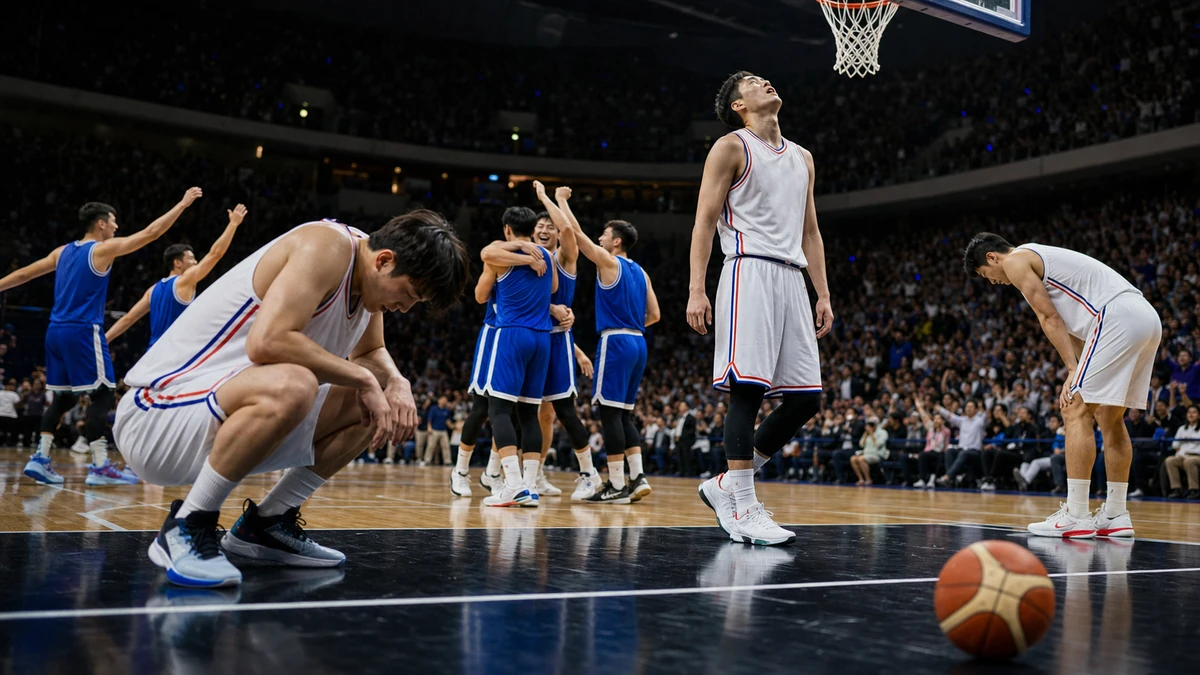
A painful home defeat in Goyang
South Korea’s men’s national basketball team suffered the kind of loss that tends to linger long after the final buzzer. Playing at home in Goyang, just northwest of Seoul, South Korea fell to Taiwan 82-80 in overtime in a first-round Asian qualifier for the 2027 FIBA World Cup, squandering what had once been a 19-point lead and wasting a chance to steady a wobbling campaign.
On paper, this might look like a single qualifying defeat in the middle of a long international schedule. In reality, it carries more weight than that. South Korea entered the game with a higher FIBA ranking than Taiwan, and it was playing the return leg at home after already losing to Taiwan on the road earlier this year. Even more damaging, the Koreans controlled long stretches of the game, had the crowd behind them, and still could not finish. By the end of the night, the mood inside Sono Arena had shifted from celebration to disbelief.
For American fans used to seeing national-team basketball through the prism of Team USA’s overwhelming depth, the stakes in Asia can be easy to overlook. But for countries like South Korea, Taiwan, Japan and China, World Cup qualifiers are high-pressure, high-meaning games. They are not exhibitions. They are the path to relevance on the global stage, the gateway to bigger tournaments, and often a referendum on the health of a national program.
That is why this loss hit so hard. South Korea did not simply get outplayed from start to finish. It built a winning script and then let it unravel in the fourth quarter, where its offense stalled and its defensive composure faded. Overtime only sharpened the sense of what had been lost. Taiwan made the key plays late. South Korea did not.
As of July 4, 2026, the result stands as one of the more troubling moments in South Korea’s recent men’s basketball run: not because it ended qualification hopes on the spot, but because it exposed the fragility of a team still trying to define itself under a new coach, in a new system, under very familiar pressure.
A new coach, still waiting for a breakthrough
The defeat also deepens scrutiny on coach Nikolajs Mazurs, the Latvian hired to lead South Korea’s men’s national team. His appointment was historic. He became the first foreign head coach in the history of the senior men’s national team, a notable step in a country where national sports teams have traditionally been led by domestic coaches and where questions of identity, style and institutional trust often shape major appointments.
To American readers, the significance is somewhat comparable to a storied college basketball program deciding it needs an outsider to modernize the culture and tactics. It is not just a personnel move; it is a statement that the old way may no longer be enough. South Korean basketball, once a steady presence in Asian competition, has spent years trying to keep up with the size, speed and tactical complexity of the modern international game. Bringing in a European coach signaled a willingness to import new ideas and perhaps a tougher, more system-driven approach.
So far, though, the results have not followed. Since taking charge, Mazurs has yet to win a game with the national team. His debut came in a road loss to Taiwan on Feb. 26, followed by a loss to Japan on March 1, and now this home defeat in Goyang. That makes three straight losses under his leadership, a rough opening for a coach brought in to help South Korea better navigate the demands of international basketball.
That three-game skid is especially jarring because South Korea had shown promise earlier in qualifying by beating China twice in games played late last year. Those victories suggested momentum and hinted that the team might be in position to advance with confidence. Instead, the narrative has changed quickly. Losses to Taiwan, Japan and Taiwan again have prompted fresh questions about whether the team is improving in the ways that matter most: late-game execution, adaptability, defensive focus and emotional steadiness.
Still, the situation is more complicated than a simple thumbs-up or thumbs-down judgment on the new coach. Coaching changes at the international level often come with structural challenges. National teams do not have the daily practice time or roster continuity that professional clubs enjoy. Systems must be installed quickly. Roles need to be clarified fast. And in Asia, where teams increasingly blend different styles and physical profiles, the margin for error is narrow. Mazurs is being asked to accelerate a transition while also winning immediately. Saturday’s collapse made that balancing act look more difficult, not less.
The fourth quarter changed everything
For three quarters, South Korea looked like the better team. It pushed the tempo effectively, generated enough offense to energize the home crowd, and at one point led by 19 points. In any basketball setting, that kind of advantage should create a path to victory. In a home World Cup qualifier, it should be even more valuable. The crowd senses control. The players settle into rhythm. The opponent begins chasing the game instead of dictating it.
Then came the fourth quarter, when South Korea managed just 10 points. That number tells the story as clearly as any postgame quote. Offenses can go cold for a few possessions, but a 10-point fourth quarter in a game of this importance is not just bad luck. It usually reflects a broader breakdown: stagnant ball movement, poor shot quality, hesitancy under pressure, or an inability to create clean looks once the defense tightens.
And when the offense dries up, the defense often feels the consequences. Missed shots can become transition chances the other way. Frustration can erode communication. Players begin pressing, trying to make the decisive play instead of the right play. That dynamic seemed to take hold as Taiwan chipped away at the lead and South Korea’s earlier control slipped into anxiety.
In American sports language, this was a classic blown lead, but the international context adds another layer. FIBA basketball has different rhythms from the NBA, and teams that succeed in qualifying often do so by mastering game management as much as raw talent. Closing out games requires discipline with possession value, foul awareness, help defense and late-clock decision-making. South Korea built the hard part of the win, then failed the finishing exam.
Mazurs said afterward that it was “a really disappointing game” and acknowledged that his team had control through three quarters but could not protect it in the fourth. That assessment was blunt and accurate. The problem was not that South Korea never looked capable. It was that it looked capable for most of the night and still walked away defeated.
Overtime only intensified the frustration. Once Taiwan completed the comeback, the extra period became a seesaw battle, the sort of sequence where one rebound, one defensive stop or one composed possession can decide everything. Taiwan made enough of those plays to survive. South Korea, despite having had the game in its hands much earlier, could not recover the initiative when it mattered most.
The naturalized-player factor and the modern FIBA game
After the game, Mazurs pointed to one issue that has become increasingly important in international basketball: South Korea’s inability to contain Taiwan’s naturalized player. That comment speaks to a broader reality in FIBA competition, one that may be less familiar to casual American fans who only tune in during the Olympics or World Cup.
Under FIBA rules, national teams can include a naturalized player in certain circumstances, and across Asia this has become a significant competitive tool. Countries have used naturalized big men, scorers or defensive anchors to address roster weaknesses, add physicality or reshape matchups. It is not unique to Asia, but in this region it can be especially consequential because a single player with size, experience and offensive versatility can dramatically alter how a game unfolds.
For South Korea, long known for emphasizing speed, perimeter play and disciplined team concepts over brute size, the challenge is familiar. Korean basketball has often had to compensate for physical disadvantages against bigger opponents. When that balance is disrupted by a naturalized player who can score inside, stretch the floor or draw defensive attention, the burden on Korea’s rotations and help defense increases quickly.
What makes this result especially frustrating for South Korea is that it appeared to have answers for much of the game. If the Koreans could lead by 19, then at least some parts of the defensive plan were working early. But as the game tightened, Taiwan’s strengths became more pronounced. South Korea could not fully neutralize the matchup problem, and once its offense faltered, the margin for absorbing those defensive lapses disappeared.
This is one reason the loss should not be reduced to a single bad possession or a single missed shot. It was cumulative. South Korea struggled to maintain offensive flow, lost some of its defensive sharpness, and failed to solve a personnel issue that became more damaging as the pressure rose. Modern international basketball is often decided by precisely those layers of adjustment: not only who starts better, but who solves the puzzle best over 40 minutes, and then in overtime if necessary.
For Korean basketball officials and fans, this raises an uncomfortable but necessary question. If the national team wants to reestablish itself as a consistent force in Asia, how does it build a style resilient enough to withstand size mismatches, physical half-court games and the specialized roster construction now common in FIBA play? The answer is unlikely to come from emotion alone. It will require more lineup flexibility, cleaner late-game offense and a defensive structure that can hold up when momentum turns.
Why this loss matters beyond one night
South Korea is not eliminated from World Cup contention. The structure of the 2027 FIBA World Cup Asian qualifying tournament still leaves room to advance. Sixteen teams are divided into four groups in the first round, and the top three teams from each group move on to the second round. In that sense, the loss to Taiwan was damaging, but not fatal.
That distinction matters. In tournament qualification, especially across the international calendar, a setback is not always a death sentence. Coaches often emphasize the bigger picture for a reason. Mazurs did so after this game, noting that South Korea still has a path to the World Cup. He is right. The team remains alive.
But saying the door remains open is not the same as saying concerns are overblown. The pressure has increased, and the standard of proof has changed. South Korea can no longer lean heavily on those earlier wins over China as evidence that things are fundamentally on track. Those results still matter, but they have been diluted by the current three-game slide. Momentum in qualification is as much psychological as mathematical. Teams that lose winnable games often carry the effects into the next window.
There is also a broader issue of basketball identity at play. South Korea has long been more visible internationally in sports such as soccer, baseball, golf and, in recent years, global entertainment-driven athletic storytelling around stars and leagues. Basketball occupies a different place. It has a dedicated domestic following, but it has not consistently translated that passion into high-level international success. That does not mean the ceiling is low. It means every promising stretch tends to be followed by renewed debate over whether the program can sustain progress.
For American readers, one way to understand the emotional weight is to think of a U.S. soccer team dropping a key home qualifier after leading comfortably, while also trying to adjust to a new coach and a tactical reboot. The issue would not be only the points lost in the standings. It would be the uncertainty created by how the loss happened. Can the team manage pressure? Has the new coaching message taken hold? Are the players capable of closing at the international level? Those are exactly the kinds of questions now confronting South Korea.
And because this came at home, the symbolism is sharper. Home games in Asian qualifying are not just dates on the schedule. They are chances to assert control, reward supporters and bank results that can ease the burden later. South Korea had that opportunity in Goyang and let it slip away.
What South Korea still showed, and what comes next
Even in defeat, there were signs that help explain why South Korean fans have not entirely given up hope. This was not a night when the team looked hopelessly outclassed. It played well enough for long stretches to suggest that the building blocks of a competitive team are still there. The pace, the earlier shot-making, the ability to create a sizable lead and the energy from the home crowd all pointed to a team that can compete effectively in this field.
That matters because losses can reveal potential as well as flaws. South Korea did not fail to generate chances. It failed to sustain them under the heaviest pressure. In many sports, that is a more fixable problem than an outright talent deficit, though fixing it is hardly simple. It requires trust in roles, sharper execution, and the kind of mental steadiness that often comes only through repetition in close games.
The challenge for Mazurs now is to turn this loss into a useful diagnostic rather than a defining scar. A foreign coach in South Korea will inevitably be judged not just on results but on whether his ideas appear transferable to the players at hand. If the team continues to break down late, critics will ask whether the system is too demanding, not yet internalized, or simply mismatched to the roster. If it responds with better balance and smarter late-game play, this defeat may eventually be remembered as a painful turning point rather than a verdict.
The players, too, have a chance to reshape the narrative. One of the clearest lessons from Goyang is that South Korea can build advantages against teams like Taiwan. The next step is proving it can protect them. That means better offensive organization in the fourth quarter, more dependable defensive communication when the opponent makes a run, and more poise in the final possessions that often decide FIBA qualifiers.
For now, the story is straightforward but significant. South Korea’s men’s national team lost 82-80 to Taiwan in overtime at home after leading by as many as 19 points. The defeat delayed Mazurs’ first win as head coach and extended his opening skid to three games. It also intensified the pressure on a program trying to modernize while staying in the race for the 2027 FIBA World Cup.
What happens next will determine whether this game becomes merely a bad night or something more consequential. South Korea still has a route forward. But after the collapse in Goyang, the team no longer just needs results. It needs proof that it can handle the final, unforgiving minutes of international basketball when the margin between progress and regret is only a possession or two.
A wider sports story with regional meaning
This game also deserves attention beyond the Korean sports pages because it reflects larger trends in Asian basketball. The region’s competitive order is no longer simple or static. Japan has climbed with a modern, internationally connected program. China remains a major force despite inconsistencies. Smaller or less globally visible programs are finding ways to close gaps through player development, coaching imports and strategic roster construction. Taiwan’s win in Goyang fits that broader pattern.
In that sense, South Korea’s loss was not just about one blown lead. It was a snapshot of how unforgiving the regional landscape has become. Programs cannot rely on reputation, and home-court advantage does not guarantee composure. Every tactical weakness can be exposed. Every late-game hesitation can be punished.
That should make the next phase of South Korea’s campaign compelling for international basketball followers, including those in the United States who may be more accustomed to tracking the NBA than FIBA Asia. Korea is a country with a deep sports culture, a passionate fan base and a long record of using competition as a stage for national pride. When one of its teams stumbles in a moment like this, the response is rarely indifference. It is analysis, expectation and the insistence that the next showing must be better.
For South Korea’s men’s basketball team, that next showing cannot come soon enough. The memory of Goyang will not fade quickly. A 19-point lead, a fourth-quarter collapse, an overtime defeat and a coach still searching for his first win make for a tough combination. But qualifiers are not won by dwelling on what should have been. They are won by learning fast, adjusting faster and finding a way to finish the next game that falls within reach.
South Korea had this one within reach. Then it let go. That is why the loss matters, and why the rest of its World Cup journey now feels more urgent than ever.
Comments
Post a Comment