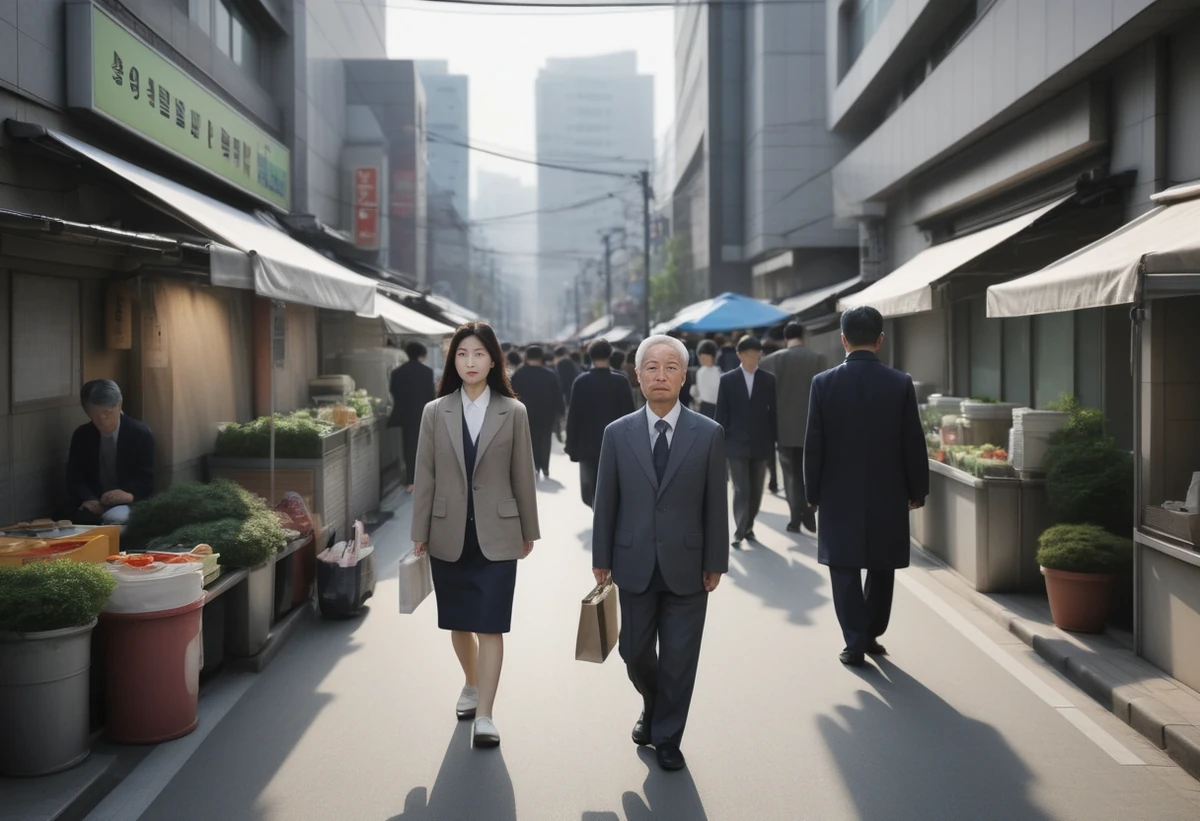
South Korea Begins a New Policy Conversation About Children of Immigrant Families
South Korea is taking a closer look at a demographic shift that has quietly reshaped classrooms, neighborhoods and communities across the country: the growing number of children and teenagers from immigrant backgrounds. The Ministry of Justice recently convened a working-level committee focused on supporting what South Korea calls its “second generation of immigrants,” marking a move to treat the experiences of these young people as a distinct policy issue.
The meeting, held at the government complex in Gwacheon, south of Seoul, brought together officials to discuss two major areas: creating more tailored support systems for children and teenagers with immigrant backgrounds and improving government statistics about this population. The discussion reflects a broader change in South Korea’s approach to immigration. Rather than focusing only on the settlement of foreign-born adults, policymakers are increasingly examining how their children grow up, study and build futures in Korean society.
For American readers, the issue may resemble debates in the United States and other immigrant nations about the experiences of second-generation communities. The term “second generation” does not simply describe ancestry. It often refers to people who grow up navigating multiple cultural environments — such as a Korean school system and a family life influenced by another country’s language or traditions.
A Shift From Immigration Management to Social Integration
For decades, South Korea’s immigration policies largely centered on issues such as foreign workers, visas and the adjustment of newcomers. The country, historically known for a relatively homogeneous population, has experienced a rapid increase in international marriages, foreign workers and long-term residents over recent decades.
As these families have become part of everyday Korean life, a new set of questions has emerged. How do children from immigrant households experience school? Are government services reaching families that need them? Do existing education and social support programs reflect the realities of young people growing up between cultures?
The creation of the immigrant second-generation support committee under the Foreigners Policy Committee framework signals that these questions are moving into the center of government planning. The goal is not only to help families adapt to Korea, but also to recognize these children as members of the next generation of Korean society.
The phrase “immigrant background children and teenagers” is especially important in the Korean context. It is broader than simply referring to foreign nationals. Many of these young people were born in South Korea or arrived at a very young age. They may speak Korean as their main language, attend Korean schools and consider Korea their home, while also maintaining connections to their parents’ countries of origin.
Why Personalized Support Has Become a Policy Priority
Officials emphasized the importance of a customized support system rather than a one-size-fits-all approach. This reflects recognition that children from immigrant families have very different experiences depending on their family circumstances, language environment, region and access to community resources.
For example, a child born in Korea to parents from another country may face different challenges from a teenager who arrived during middle school. Some families may need language assistance, while others may need support navigating education systems, career planning or social relationships.
This distinction is important because immigrant-background youth are not a single group with identical needs. Effective policies require understanding individual situations rather than assuming that cultural background alone determines a person’s challenges or opportunities.
In the United States, similar discussions have taken place around English-language learners, immigrant student programs and multicultural education. South Korea’s challenge is developing approaches that fit its own social structure, where rapid demographic change is occurring alongside a strong emphasis on academic achievement and social cohesion.
Better Data Could Shape Future Immigration Policy
One of the central topics discussed during the committee meeting was improving statistics on immigrant-background children and teenagers. While data collection may sound like a technical government task, experts often view accurate information as the foundation for effective public policy.
Without detailed statistics, governments may struggle to understand where support is needed most. Officials need reliable information to answer basic questions: How many young people come from immigrant families? What age groups are growing fastest? Which regions require additional educational or social resources? What types of programs are producing results?
Better data can help government agencies coordinate policies that are currently divided among different areas, including education, welfare and immigration administration. It can also help local governments and schools develop programs based on actual community conditions rather than assumptions.
However, statistics alone cannot solve social challenges. Numbers can identify trends, but they cannot fully capture personal experiences such as questions of identity, belonging or relationships with classmates and neighbors. Policymakers will need to combine data with information from schools, families and local communities.
Korea’s Changing Classrooms Reflect a More Diverse Society
The discussion surrounding immigrant-background youth is closely connected to changes taking place in Korean daily life. Across the country, schools and communities are becoming more diverse. Children with different family histories are studying together, participating in local activities and growing up as part of the same generation.
This transformation may be surprising to some international observers who associate South Korea primarily with a shared language and a historically unified cultural identity. While those elements remain important, modern Korea is increasingly shaped by global migration, international families and cross-cultural experiences.
The issue also provides a different perspective on the global popularity of Korean culture. Around the world, audiences know South Korea through K-pop, Korean films, television dramas, food and technology. But inside the country itself, Korean society is also undergoing internal changes as new communities become part of everyday life.
The growth of immigrant-background communities represents a deeper social transition. It raises questions familiar to many countries: How can a society preserve cultural traditions while creating opportunities for people with diverse backgrounds? How can institutions ensure that young people feel included rather than separated?
Beyond Assimilation: Supporting Growth and Opportunity
The language used by South Korean officials is also significant. The committee focuses on “growth support,” suggesting an emphasis on helping young people develop their abilities and opportunities rather than simply expecting them to adapt to a single cultural model.
This reflects a broader global debate about immigration policy. Many countries have moved away from viewing immigrant communities only through the lens of adjustment or assimilation. Instead, policymakers increasingly discuss participation, equal opportunity and creating environments where different backgrounds can contribute to society.
For immigrant-background children in South Korea, support may involve many areas of life: educational opportunities, career guidance, social relationships and access to public services. The challenge is designing programs that provide assistance without creating a sense of exclusion or labeling.
South Korea’s approach remains in an early stage. The committee meeting was focused on establishing direction and improving understanding rather than announcing a completed set of programs. Future success will depend on whether discussions lead to practical measures that schools, communities and families can experience directly.
A Small Government Meeting With Broader Social Meaning
The Ministry of Justice meeting was not a major public event, but it represents a significant moment in South Korea’s evolving conversation about identity and belonging. Behind the administrative language of committees and statistics is a larger question: how will a rapidly changing society define membership in the future?
For global audiences, South Korea’s experience offers an example of how countries with relatively recent immigration histories respond to demographic change. Unlike nations that have managed immigration for generations, South Korea is building many of its systems while the transformation is actively unfolding.
The children at the center of this discussion are not simply future citizens or future workers. They are already participating in Korean society — attending schools, forming friendships and contributing to communities. The policies created today will influence how successfully Korea supports this generation.
The establishment of a dedicated working group and the effort to improve data collection do not represent a final solution. Instead, they mark the beginning of a more detailed national conversation. As South Korea becomes more diverse, the way it supports immigrant-background youth will be an important measure of how the country adapts to its own changing reality.
For international observers familiar with Korea through its cultural exports, this development offers another view of the country: not only a producer of globally popular entertainment and technology, but also a society negotiating how to build a more inclusive future at home.
Comments
Post a Comment