South Korean e-commerce giant Coupang wants to turn its in-house checkout tool into a nationwide payments network
Coupang moves beyond its own app ecosystem
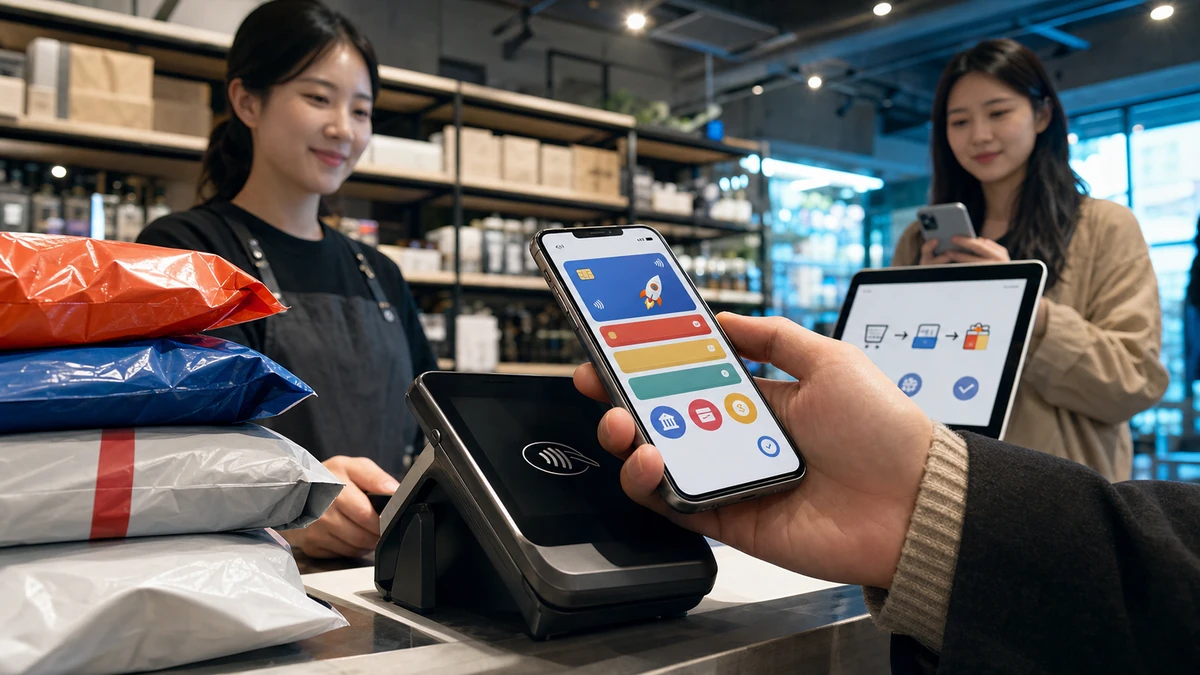
South Korean e-commerce giant Coupang says it plans to launch a new easy-pay service called Rocket Pay in the second half of this year, a move that would push the company’s payment system far beyond its own shopping, streaming and food delivery apps and into everyday transactions across South Korea.
The announcement, first reported by South Korea’s Yonhap News Agency, marks an important moment in the country’s fast-evolving digital commerce market. Until now, Coupang Pay has functioned mostly as an internal convenience tool, used inside Coupang’s retail marketplace, the streaming service Coupang Play and the food delivery platform Coupang Eats. The new service, Rocket Pay, is designed to work not only within those services but also at outside online and offline merchants nationwide.
For American readers, the easiest comparison is to imagine Amazon taking the payment credentials consumers already use on Amazon.com and turning them into a broadly accepted wallet that could also be used at neighborhood stores, third-party websites and restaurants. The United States has seen pieces of that idea before through products such as PayPal, Apple Pay, Google Pay and Shop Pay. But in South Korea, where digital platforms are deeply woven into daily life and super-app-like ecosystems are common, the stakes look somewhat different. A large platform extending an in-house payments function into a countrywide merchant network is not just a product update. It is a bid to become financial infrastructure.
Coupang has not yet disclosed a precise launch date, nor has it named specific merchant partners or said how many businesses will accept Rocket Pay at rollout. But the company has laid out the broad shape of its plan: users will be able to link bank accounts, credit cards, debit cards and stored balance funds, then use Rocket Pay both online and in brick-and-mortar locations across the country.
That matters because payments are one of the stickiest parts of a digital platform business. Once a company becomes the default way consumers complete transactions, it gains more than fee revenue. It gets more frequent engagement, more consumer data about spending behavior and more leverage to tie together shopping, entertainment, delivery and potentially financial services. In a market as mobile-first and digitally mature as South Korea, that can be a powerful competitive advantage.
Why this matters in South Korea’s platform economy
To understand why Coupang’s move is drawing attention, it helps to understand the company’s role in South Korea. Often described as the country’s answer to Amazon, Coupang built its reputation on speed and convenience, especially through its “Rocket Delivery” branding, which promises fast shipping and a streamlined customer experience. Over time, it expanded into video streaming and food delivery, creating an ecosystem that keeps users inside the Coupang universe for multiple parts of their daily routine.
That type of ecosystem play is especially significant in South Korea, where a small number of powerful digital platforms already occupy central positions in commerce, communications and finance. Companies such as Naver and Kakao have spent years expanding from their core businesses into adjacent services, including payments, banking, shopping and advertising. In that context, payments are not just a back-end utility. They are a gateway to the rest of the platform economy.
For readers in the United States, South Korea can feel like a glimpse into a more tightly integrated digital future. The country has high smartphone penetration, dense urban infrastructure, widespread broadband access and consumers who are generally comfortable with app-based services. It is not unusual for Korean users to order groceries, stream entertainment, chat with friends, hail rides and pay bills all through a small number of digital interfaces. That makes the competition to own the payment layer particularly fierce.
Until now, Coupang’s payment function has mainly helped smooth transactions within services the company directly operates. That is useful, but limited. Expanding beyond the company’s own walls changes the nature of the business. Instead of merely supporting retail orders or food delivery checkouts, Rocket Pay would become a standalone payment option competing for a place in daily commerce wherever consumers shop.
In practical terms, that means Coupang is trying to convert operational know-how gained from handling vast e-commerce transactions into a broader financial service. The company is betting that the checkout experience it refined for its own customers can travel outside the app and work just as reliably at independent online stores and physical merchants. If it can, Coupang would no longer be just a retailer with a payment button. It would be a payment network in its own right.
From internal checkout tool to everyday wallet
The central shift in Coupang’s announcement is simple but consequential: payments that once ended inside the company’s own platform are being repositioned for use in ordinary commercial settings across the country. That is why this launch should not be mistaken for a simple rebrand of Coupang Pay or a minor feature upgrade.
Coupang said Rocket Pay will allow users to connect multiple funding sources, including bank accounts, credit cards, debit cards and prepaid or stored-value balances. That kind of flexibility is a basic requirement if the company wants consumers to use the service regularly outside the Coupang ecosystem. People do not all pay the same way, and merchant environments vary widely. A commuter buying coffee at a train station, a family ordering dinner delivery, and a shopper checking out on a fashion site may all expect different payment options, even if the front-end wallet is the same.
The company also emphasized that Rocket Pay is being built for both online and offline use. That distinction is important. Online payments can often be standardized within a controlled digital environment. Offline payments have to work with point-of-sale systems, store staff, customer traffic and the messier realities of physical retail. A payment service that aims to operate in both spaces has to do more than process transactions; it has to fit into how merchants actually run their businesses.
For consumers, the pitch is familiarity. The company is effectively saying: If you are already used to checking out inside Coupang’s apps, you will be able to carry that same payment experience into the rest of your life. That may sound incremental, but it is one of the most effective strategies in digital commerce. Consumers tend to adopt payment methods that reduce friction, save time and feel trustworthy because they are already embedded in habits formed elsewhere.
For merchants, the calculus is different. A new payment option has to be worth the operational effort. Stores and websites will want to know whether Rocket Pay brings incremental customers, speeds checkout, lowers abandonment, reduces fraud risk or improves settlement and customer support. Coupang has not yet answered those questions publicly in detail, and that is likely where the next phase of scrutiny will focus.
Even so, the broad direction is clear. Coupang wants the payment relationship it built through product sales, entertainment subscriptions and meal orders to become portable. In business terms, it is trying to convert a supporting function into a platform-level service with life beyond its original ecosystem.
Coupang is selling reliability as much as convenience
One of the most striking parts of Coupang’s message is how heavily it leans on scale and operations. The company says Rocket Pay draws on its experience handling payment traffic worth tens of trillions of won annually, and it says the new service includes round-the-clock, real-time monitoring for suspicious or abnormal transactions along with the capacity for immediate response if problems arise.
That language is not accidental. In payments, convenience may attract users, but reliability keeps them. A flashy wallet means little if it freezes during peak shopping hours, triggers false declines or creates confusion at the register. Consumers may forgive a late package once or twice. They are much less forgiving when they cannot complete a transaction.
American consumers are already familiar with this principle, even if they do not think about it every day. Credit card networks such as Visa and Mastercard built trust not simply through acceptance, but through the expectation that the payment would go through quickly and safely almost anywhere. Apple Pay’s rise, likewise, has depended not only on a sleek interface but on the perception that it is stable, secure and easy to use. Coupang appears to understand that if it wants Rocket Pay to be taken seriously outside its own apps, it must present itself as an operator of infrastructure, not just a seller of convenience.
That helps explain why the company highlighted 24/7 monitoring and real-time anomaly detection at the announcement stage. Those details signal to merchants and consumers that Rocket Pay is meant to be judged on resilience as much as on ease of use. When a payment service expands from a closed ecosystem to a wide merchant environment, the complexity rises sharply. Different transaction volumes, store setups, business hours and customer expectations all create new points of failure.
There is also a trust issue. Inside Coupang’s own apps, users are already in the company’s environment and have some baseline familiarity with how it works. Outside that environment, Rocket Pay must persuade people that it deserves a place alongside entrenched payment methods. Stressing technical operations is one way to do that.
Whether that pitch succeeds will depend less on the press release and more on execution after launch. Consumers are unlikely to care how many monitoring dashboards sit in a network operations center unless the service feels seamless. But in the payments business, seamlessness is often the product of those invisible systems. Coupang is clearly trying to reassure the market that it has that back-end muscle.
The competitive landscape: more than a checkout war
Rocket Pay is arriving in a market where payments are already a strategic battleground. South Korea is home to some of the world’s most sophisticated digital consumers, and platform companies have long recognized that the company controlling payments can shape much of the surrounding ecosystem.
That means Coupang is not entering a blank space. Rather, it is trying to expand its role in a field where consumers already have choices and where rival platforms have spent years building habits around their own services. In South Korea, digital payment tools are tied not just to commerce but also to messaging apps, search portals, banking products, loyalty programs and other pieces of daily life. Any newcomer seeking scale, even one as large as Coupang, must persuade both merchants and users that adding yet another option is worthwhile.
Still, Coupang has some obvious strengths. First is its enormous existing customer base. Millions of users already trust the company with retail purchases and, increasingly, with adjacent services such as streaming and food delivery. Second is frequency. People do not interact with Coupang only once in a while; for many households, it can be part of a regular routine. Third is operational depth. Running one of South Korea’s largest e-commerce platforms requires handling intense transaction peaks, customer service challenges and fraud prevention at scale.
Those strengths could give Rocket Pay a meaningful springboard. If consumers can sign up with little friction and use credentials they already maintain, adoption may come more easily than it would for an unknown player. If merchants believe Coupang can send them traffic or improve conversion, acceptance could expand faster as well.
But there are reasons to be cautious. Payments businesses often look easy from the outside because the user-facing action is so simple: tap, scan, click, done. Underneath that simplicity lies a difficult two-sided market. Consumers want broad acceptance. Merchants want enough users to justify integration. The chicken-and-egg problem is real, and even giant platforms can struggle if they cannot quickly build both sides at once.
Coupang’s announcement left several key questions unanswered. Which merchant categories will come first? Will Rocket Pay rely on QR codes, near-field communication, barcode systems or multiple methods? What incentives, if any, will consumers receive to try it? Will merchants face new fees, lower fees or some other value proposition? Those details will help determine whether Rocket Pay becomes a niche extension of Coupang’s existing ecosystem or a genuinely important new player in Korean payments.
What American readers should know about the Korean context
South Korea often serves as a useful case study for how digital platforms evolve when convenience becomes a cultural expectation. In the United States, consumers are used to a relatively fragmented landscape. One app may dominate ride-hailing, another food delivery, another messaging, another mobile payments. South Korea, by contrast, has often favored dense platform integration, where companies try to keep users moving fluidly from one service to the next.
That does not mean Korean consumers passively accept whatever big platforms offer. Regulators, lawmakers and the public have often scrutinized the power of major tech firms, especially as they expand into finance and other sensitive sectors. But it does mean that when a platform introduces a new payment feature, users may be more prepared to incorporate it into everyday routines than consumers in markets where habits are already split across many providers.
There is also a practical side to Korean consumer culture that helps explain Coupang’s bet. Convenience and speed are not mere marketing slogans in South Korea; they are deeply embedded expectations in urban life. Same-day or next-day delivery is common. Mobile interfaces are central to routine tasks. Dense cities and long work hours have encouraged demand for services that reduce friction wherever possible. A payment method that promises a familiar, streamlined experience across different settings fits naturally into that environment.
Another point that may be unfamiliar to American readers is the role of “simple pay” systems in East Asian markets. In Korea, as in other parts of Asia, app-based payment services often become important bridge technologies between traditional banking instruments and modern digital commerce. They can sit atop bank accounts and cards while making the act of payment faster, more standardized and more integrated with loyalty or platform services. Rocket Pay appears to be aiming for that kind of role.
That broader context is why Coupang’s move deserves attention even outside Korea. It reflects a pattern seen across global tech markets: the most successful digital platforms eventually try to own not just the shopping destination, but the transaction itself. That shift can create new convenience for users, but it can also deepen the influence of companies that are already central to how people buy goods, watch content and order meals.
What comes next for Rocket Pay
For now, Rocket Pay remains more of a strategic statement than a fully visible consumer product. Coupang has announced the launch window for the second half of the year and outlined the service’s broad structure, but many of the details that will determine success remain undisclosed. That means the real test lies ahead.
The first question is merchant adoption. A payment service can only become habitual if consumers encounter it often enough in the real world. That requires partnerships, integration and a value proposition strong enough to persuade businesses to add it. The second question is user experience. If setup is cumbersome or checkout is inconsistent between online and offline settings, consumers may default to existing methods. The third question is trust. As with any financial tool, users need confidence that the system is secure, responsive and available when they need it.
Coupang is trying to answer those concerns in advance by pointing to its experience managing enormous payment volumes and by stressing 24-hour monitoring and rapid incident response. That is a sensible argument, but it is still only an argument until the service is live at scale.
The company’s broader ambition, however, is not hard to read. This is a move to extend e-commerce capability into payments as a business in its own right. Coupang has spent years building a relationship with consumers around speed, convenience and reliability. Rocket Pay is an attempt to turn that relationship into something more durable and more widely used than a checkout button inside its own apps.
If the rollout goes well, Rocket Pay could become an example of how Korean platform companies convert operational strengths from one sector into another, using digital infrastructure developed for commerce to compete in finance-adjacent services. If it stumbles, the episode will be a reminder that even in a highly connected market, expanding from platform utility to nationwide payment habit is a difficult leap.
Either way, the launch will be worth watching. In Korea, where digital life often moves faster than it does in the United States, the future of platform power frequently reveals itself not in splashy consumer gadgets but in quieter systems that sit underneath everyday routines. Payments are one of those systems. And Coupang is signaling that it wants to be part of that foundation, not just the place where shoppers happen to click “buy.”
Comments
Post a Comment