
September 2025 marks a new historical moment for Korean sports. Son Heung-min recorded his 136th appearance in a friendly match against Mexico, tying the all-time Korean national team appearance record alongside former coach Hong Myung-bo. Simultaneously, the second half of the KBO League features intense competition among teams, with the final sprint for postseason advancement heating up.
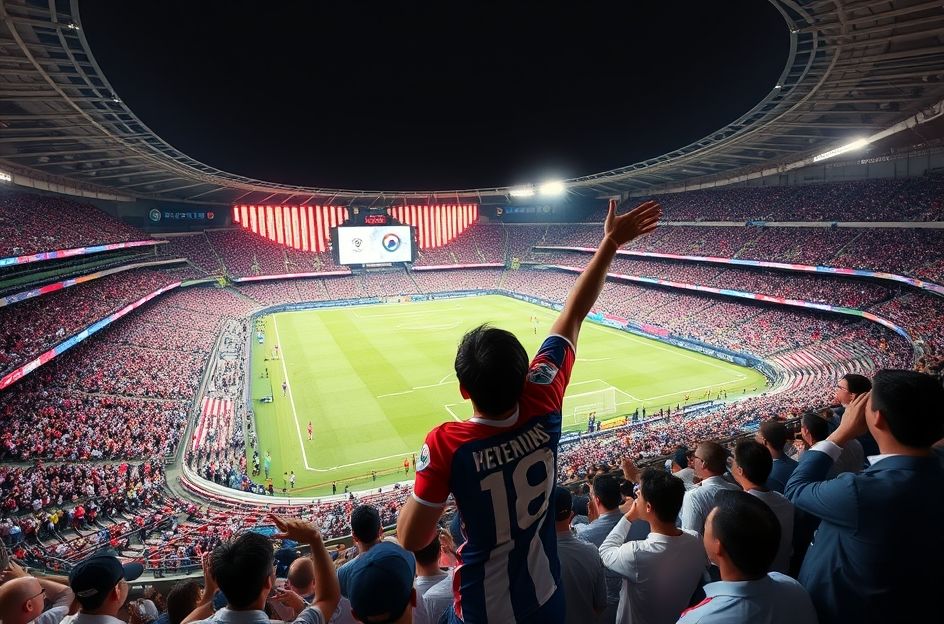
For American readers, Son Heung-mins achievement is comparable to milestone appearances in Major League Soccer or international soccer, though the Korean national teams smaller player pool makes this record even more remarkable. At 136 appearances, Son has played nearly three times more international matches than typical MLS players accumulate in their entire careers, demonstrating extraordinary longevity and consistency at the highest level.
Son Heung-min Ties All-Time Appearance Record with 136th Cap
Tottenham captain and symbol of Korean football Son Heung-min recorded his 136th A-match appearance in the September 10th friendly against Mexico, tying the Korean football all-time appearance record alongside former national team coach Hong Myung-bo. This unprecedented record in Korean footballs 92-year history represents a symbolic moment showing Son Heung-mins continuous maintenance of top-level performance and dedication to the national team.
Son Heung-min currently has 52 goals in A-matches, trailing Cha Bum-kuns all-time scoring record (58 goals) by just 6 goals. Considering his current form and condition, surpassing Cha Bum-kuns record within 2025 appears highly feasible. This would further solidify Son Heung-mins status as the greatest player in Korean football history.
Particularly noteworthy is that Son Heung-min continues to maintain top-level performance despite being 32 years old. While serving as Tottenham captain, he also demonstrates absolute leadership in the national team, contributing to team performance improvement through harmony with younger players. A Korea Football Association official evaluated that Son Heung-mins 136-match appearance record is a symbol showing love and dedication to Korean football beyond simple numbers.
For American soccer fans, Sons achievement is even more impressive when considering the smaller scale of international soccer compared to American sports. While NFL players might play 16-17 games per season for their teams, international soccer players typically appear in only 8-12 matches per year for their national teams, making Sons 136 appearances over his career truly exceptional.
KBO League Second Half: Fierce Competition for Postseason Advancement
As the 2025 KBO League enters its final sprint in September, competition among teams for postseason advancement is unfolding more fiercely than ever. Top-tier teams are fighting to secure regular season advantages, while mid-tier teams battle for wild card spots, making every game a crucial turning point.
Currently, the KBO League has very narrow gaps from 1st to 5th place, making it difficult to predict which team will secure advantageous positions in the postseason. Foreign players performances combined with domestic players growth has led to improved competitiveness across all teams, making game situations increasingly exciting.
For American baseball fans familiar with MLB playoff races, the KBO situation is similar to a tight AL or NL Wild Card race, but compressed into a smaller league format. With only 10 teams in the KBO compared to MLBs 30, the competition intensity resembles the old American League or National League formats where every game carried significantly more weight.
Team-wise, starting pitcher conditions and offensive scoring power are acting as key factors determining the outcome of remaining games. Additionally, managing player injuries and rotation operations due to September frequent game schedules has become an important challenge for each team management. One club official emphasized that the remaining months games will determine the entire season, noting that player condition management and strategic approaches are more important than ever.
Korean Sports New Milestone: Strengthening Global Stage Status
Son Heung-mins historical record and the KBO Leagues fierce competition represent symbolic events showing the overall status enhancement of Korean sports. Particularly for Son Heung-min, maintaining top-level performance for over 10 years in the Premier League and becoming the first Korean player to serve as Tottenham captain represents a prime example of Korean footballs global status.
The KBO League has also shown consistent growth in attendance and broadcast ratings alongside performance improvements in recent years. The emergence of young star players combined with veteran players expertise has elevated the entire leagues competitiveness. This indicates Korean baseball is developing to world-class levels beyond Asia.
Sports marketing experts analyze that the continuous performance of global stars like Son Heung-min and KBO League growth are having positive impacts on the entire Korean sports industry. This particularly serves as an opportunity to increase young peoples interest and participation in sports. Indeed, the Son Heung-min effect has heightened young footballers aspirations for overseas advancement, while baseball amateur league participation rates continue to increase.
For American sports industry observers, Korean sports development offers interesting parallels to how American leagues have globalized. Just as MLB has expanded internationally and MLS has attracted global talent, Korean sports are following a similar trajectory of domestic excellence leading to international recognition and influence.
These September 2025 sports developments present future visions for Korean sports beyond simple game results. Son Heung-mins record updates and the KBO Leagues fierce competition both demonstrate cases where Korean sports are achieving qualitative leaps beyond quantitative growth. Expectations are gathering for whether these positive trends will continue, allowing Korean sports to exert even greater influence on the global stage.
Source: Original Korean article


0 Comments