A Korean Skin-Care Ingredient Best Known for Beauty Treatments Is Drawing Interest as a Possible Option for Hard-to-Treat Facial Eczema
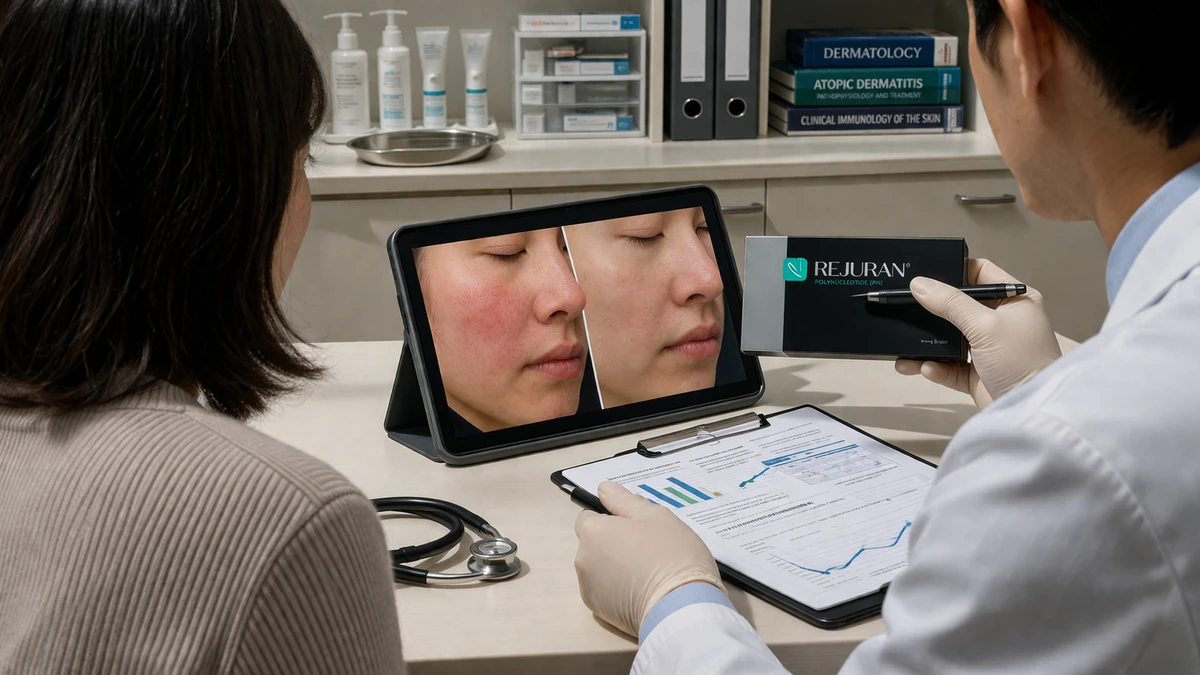
A cosmetic mainstay enters a medical conversation
A South Korean company says an ingredient long associated with cosmetic skin treatments may have potential to help patients with a stubborn and emotionally taxing form of eczema: persistent facial redness tied to atopic dermatitis, often called eczema in the United States. The announcement, made by PharmaResearch on March 30, 2026, centers on the main component used in Rejuran, a product that has built strong name recognition in South Korea’s aesthetics market. But the significance of the company’s statement is not really about beauty. It is about whether a substance familiar to dermatology clinics and cosmetic practices could someday play a broader role in treating a chronic inflammatory skin condition that remains difficult to manage, especially on the face.
For American readers, the easiest comparison may be this: imagine a product known primarily through med spas, celebrity skin routines and anti-aging procedures suddenly becoming part of a serious discussion about eczema care. That does not mean the science is settled, and it definitely does not mean doctors are ready to rewrite treatment guidelines. But it does explain why the announcement has drawn attention in South Korea, where the beauty industry, dermatology market and biotech sector often overlap more visibly than they do in the U.S.
At issue is a particularly frustrating problem for patients with atopic dermatitis: chronic redness on the cheeks, around the eyes and near the mouth that can linger even when other symptoms improve. People who do not live with eczema may think of redness as a cosmetic concern, the sort of thing that can be covered with makeup or dismissed as irritation. Patients and dermatologists know better. Facial eczema can burn, itch, flare unpredictably and leave people feeling self-conscious at work, in school and in social settings. Because the face is highly visible and the skin is especially delicate, it is one of the hardest areas to treat over the long term.
That is why even an early corporate signal of possible benefit gets noticed. In recent years, treatment for moderate to severe atopic dermatitis has advanced quickly, including biologic medicines and JAK inhibitors that target the immune system more precisely than older drugs. Yet facial redness remains one of those stubborn symptoms that often demands a more nuanced approach. If a product could help reduce inflammation while also supporting the skin barrier, dermatologists would likely want to know more. The promise, at least in theory, is not just calmer skin but better day-to-day functioning for patients whose condition affects sleep, confidence and routine human interaction.
Still, the key word here is possibility. South Korea’s medical community is paying attention, but cautiously. A company announcement is not the same thing as peer-reviewed evidence, regulatory approval, insurance coverage or widespread medical adoption. Those distinctions matter, and they matter even more when a product has an existing commercial identity in the beauty market.
Why facial atopic dermatitis is so hard to treat
Atopic dermatitis is a chronic inflammatory skin disease that often begins in childhood but can persist or emerge in adulthood. It is driven by a complicated mix of immune dysfunction, skin-barrier weakness, genetics and environmental triggers. For many patients, flare-ups come and go with weather, stress, allergens, friction, sweating, infections or irritants in soaps and cosmetics. On the face, all of those problems can be amplified.
The skin around the eyes and mouth is thinner and more reactive than skin on other parts of the body. It is exposed constantly to sunlight, wind, temperature swings, masks, shaving, cleansers and personal-care products. Even basic grooming habits can aggravate symptoms. In a condition where the protective outer barrier of the skin is already compromised, that means the face can become the site of a recurring cycle: inflammation leads to irritation, irritation leads to scratching or rubbing, and that leads to more inflammation.
That cycle is not merely physical. Dermatologists in both Korea and the United States have long noted that visible skin disease can take a psychological toll far beyond what outsiders may assume. Facial redness is difficult to hide. Patients may avoid photographs, meetings, dates or public-facing work. Teenagers and young adults, who are already under pressure from appearance-focused social media culture, can be especially vulnerable. In South Korea, where beauty norms are intensely commercialized and highly visible in advertising, television and online culture, facial skin conditions can carry an added social burden. But the dynamic is familiar in the U.S. as well, where eczema support groups often describe embarrassment and anxiety as part of the disease burden.
Treatment options exist, but each comes with trade-offs. Topical corticosteroids can be highly effective in the short term, yet long-term use on the face raises understandable concerns because of the skin’s sensitivity and the risk of side effects. Nonsteroidal topical treatments may help some patients, but they can sting or irritate, especially during the first phase of use. Systemic drugs, including newer advanced therapies, can be game-changing for certain patients, but they are not always necessary or appropriate for someone whose main unresolved problem is localized facial redness. Cost, access, side effects and insurance hurdles also shape real-world use.
That leaves a gap in care that dermatologists know well: patients whose disease is not controlled satisfactorily by moisturizers and standard topicals, but whose symptoms may not fit neatly into the decision to escalate to whole-body therapy. This is one reason that physicians keep looking for additional tools, especially for sensitive areas. A treatment that could ease inflammation, support skin recovery and be tolerated on the face would fill an unmet need. The challenge is proving it actually does those things safely and consistently.
What Rejuran is, and why this announcement stands out
Rejuran is widely recognized in South Korea as part of the country’s booming aesthetics industry. It is commonly associated with procedures marketed around skin repair, texture improvement and rejuvenation. For Americans, that may sound similar to the way certain injectables, laser treatments or regenerative-sounding procedures circulate through U.S. dermatology and cosmetic medicine, sometimes crossing over from niche specialty use into mainstream consumer awareness through social media, influencers and word of mouth.
The new interest comes from a different angle. PharmaResearch says the main ingredient in Rejuran showed meaningful potential in improving refractory facial erythema associated with atopic dermatitis. In plain English, the company is suggesting that a substance with a strong cosmetic reputation may have a medically relevant use in a tough subset of eczema symptoms. That is a notable shift in framing. Instead of promising brighter or firmer-looking skin, the focus is on a chronic disease that can impair quality of life.
This kind of crossover is not unusual in medicine. Drugs and medical materials often find second lives in new specialties. Botox, for example, became famous in American culture for wrinkle reduction, but it also has major medical uses ranging from migraine treatment to muscle spasticity. The important difference is that those medical uses were established through research, regulation and professional consensus over time. The same standard will apply here if the ingredient behind Rejuran is to be taken seriously as a therapeutic option for eczema-related facial redness.
What makes the Korean case especially interesting is the country’s broader medical-commercial landscape. South Korea is a global powerhouse in both cosmetics and skin-focused biotechnology. Dermatology clinics are common, patients are often highly informed about skin procedures, and companies can move quickly to explore new indications for known compounds. That environment can accelerate innovation, but it can also blur the line, at least in public perception, between a product that is trendy and a product that is clinically proven.
That is why the wording matters. “Potential for improvement” is not the same as established efficacy. It does not tell us whether the data come from laboratory findings, a handful of case reports, an uncontrolled observational study or a randomized clinical trial. It does not tell us how long patients were followed, whether they were also using other medications, how improvement was measured or whether the benefit was consistent across patients. Those unanswered questions are exactly what doctors and researchers will want to see addressed before treating the announcement as more than an intriguing signal.
The questions dermatologists will ask first
Whenever a company publicizes a possible new use for a product, the first issue is the level of evidence. That is especially true in dermatology, where skin conditions can fluctuate for many reasons that have nothing to do with a given treatment. Eczema on the face can improve or worsen with season changes, humidity, stress, skincare routines, infection risk, cosmetic use, diet changes, sleep quality and concurrent medications. Without careful study design, it can be difficult to separate a true treatment effect from the natural ups and downs of the disease.
Doctors will want to know whether the Korean data involve preclinical work, a pilot study or a controlled clinical trial. They will want to know what kind of patients were included. Were these people with long-standing facial redness that had failed standard treatment? Were they adults, children or both? Did they have active eczema elsewhere on the body? Was redness measured with validated scoring systems, clinical photography or patient-reported outcomes? These are not technicalities. They determine whether a finding is promising, persuasive or practice-changing.
Safety is the next major question. The face is one of the most sensitive treatment zones in dermatology. Any therapy used there must be evaluated not only for effectiveness but also for irritation, swelling, pigment changes, infection risk and whether repeated use is practical. Patients with atopic dermatitis can be more reactive than the average cosmetic patient because their skin barrier is already impaired. A product tolerated well in general skin-rejuvenation settings cannot automatically be assumed safe or comfortable in eczema-prone facial skin.
Then comes the issue of clinical role. Even if further studies are positive, where would such a treatment fit? Would it be an add-on after conventional topical therapies fail? A bridge before advanced systemic treatment? An option for patients who cannot tolerate certain facial medications? Or a niche tool reserved for select patients under specialist care? A therapy does not become influential merely because it works in some cases. It becomes useful when physicians understand which patients benefit, under what circumstances and at what cost.
Regulatory questions would also loom large. South Korea, like the United States, does not simply allow a company to promote a substance for broad medical use without appropriate evidence and approval pathways. If a beauty-adjacent ingredient is to move into disease treatment, regulators and professional societies will expect clear data, carefully defined indications and a responsible marketing framework. That is especially important in a field where patient vulnerability can make people eager to try almost anything that promises relief.
What this could mean for patients, if the data hold up
For patients with persistent facial eczema, the appeal of any new option is easy to understand. The greatest burden is often not just the symptoms themselves, but the unpredictability. A person may feel better for a week, then flare after a stressful stretch at work, a change in weather, friction from a mask, a new cleanser or even repeated face washing. That stop-and-start pattern can lead patients to abandon treatments, restart them haphazardly or layer products in ways that make the skin even more unstable.
If a new therapy truly offered better control of facial redness, it could have outsized impact on daily life. The benefit would not be limited to appearance. Patients might sleep better, scratch less, feel less anxious about meetings and social gatherings, and spend less time managing a condition that dictates what they can put on their face. In that sense, a successful treatment for facial erythema would not be a vanity story. It would be a quality-of-life story.
That distinction matters because public discussion of skin treatments often gets flattened into a beauty narrative, especially when a product is already associated with aesthetics. But many conditions that show up on the skin are medical problems first. Anyone who has seen a child kept awake by eczema itching, or an adult avoiding eye contact because of a flare, understands the difference. Chronic skin disease can shape identity, mood and social participation in ways that are difficult to quantify but impossible to ignore.
At the same time, patient advocates and physicians would almost certainly caution against jumping ahead of the science. When a product generates buzz before strong evidence is available, people may seek it out based on hope, social pressure or commercial messaging rather than clear clinical guidance. That can be risky in any country, and perhaps even more so in a highly active skin-care marketplace. Consumers may assume that “widely used” means “well proven,” when those are very different ideas.
Cost is another practical concern. Even if further studies support a therapeutic role, access may become a separate hurdle. In the U.S., many advanced dermatology treatments face insurance restrictions, prior authorization requirements or high out-of-pocket costs. South Korea has its own distinctions between covered and noncovered care. A treatment may be scientifically promising yet financially unrealistic for many patients, particularly if repeated sessions are needed. That gap between clinical possibility and broad accessibility is one of the most persistent themes in modern medicine.
A larger story about Korea’s biotech and beauty industries
This episode also says something broader about South Korea’s medical economy. The country has become one of the world’s most influential exporters of skin-care ideas, cosmetic procedures and beauty-adjacent health products. To American audiences, South Korea may be best known through K-beauty sheet masks, glass-skin trends and skincare routines that have spread from Seoul to Sephora shelves and TikTok feeds. But behind those consumer trends is a far more serious ecosystem that includes pharmaceutical companies, device makers, dermatology clinics and a robust appetite for skin-focused innovation.
In that environment, the line between cosmetic and therapeutic development can appear more fluid than outsiders expect. A compound may gain visibility through aesthetic use before researchers test its relevance in wound healing, inflammation control or tissue recovery. Sometimes that leads nowhere. Sometimes it opens an entirely new lane of medicine. What matters is whether the transition is driven by evidence rather than branding.
That is where this story deserves careful attention rather than hype. PharmaResearch’s announcement may reflect a meaningful new direction, particularly if the ingredient proves able to help with inflammation and skin-barrier recovery in a condition where both processes are central. But it may also be an early signal that ultimately turns out to have limited or highly specialized use. Both outcomes are possible. The responsible response from the medical community is curiosity paired with skepticism.
For journalists, there is also a cautionary note. Stories that touch both health care and beauty can be easy to sensationalize. “Miracle cure” framing is especially tempting when a treatment is connected to a recognizable product or consumer trend. But real progress in dermatology rarely arrives that cleanly. It tends to come in increments: one better tool for one subset of patients, one more option after standard care falls short, one carefully defined role within a broader treatment algorithm. That may be less glamorous than a breakthrough headline, but it is how medicine actually moves forward.
For now, the most important developments to watch are straightforward. Will more clinical data be released? Will the findings be published in a form experts can scrutinize? Will independent researchers reproduce the results? And will regulators and professional societies begin discussing where, if anywhere, this approach belongs in eczema care? Until those questions are answered, the story is not that South Korea has found a new standard treatment for facial atopic dermatitis. The story is that an ingredient known for aesthetics has entered a serious medical conversation about an unmet need.
Why verification matters more than excitement
The final takeaway is less about one company than about how modern health innovation should be judged. Patients with eczema are justified in wanting better options, especially for symptoms that affect the face and resist conventional treatment. Dermatologists are justified in paying attention when a new possibility emerges. Investors and industry observers are justified in noticing when a product with commercial momentum seeks a medical role. But none of that can substitute for verification.
In chronic diseases, even modest improvements can matter enormously. A treatment that does not cure atopic dermatitis but reliably reduces facial redness, improves comfort and lowers relapse frequency could make a meaningful difference in people’s lives. In that sense, the bar for importance is not perfection. It is reproducible benefit, acceptable safety and a clear understanding of who should receive the treatment and why.
The danger comes when excitement outruns data. That can lead to aggressive marketing, premature patient demand and disappointment when real-world outcomes fail to match the promise. It can also create inequities, where only those able to pay for out-of-pocket experimental or quasi-medical procedures get access to an unproven intervention. In a field as emotionally charged as visible skin disease, those risks are not hypothetical.
So the Korean announcement deserves neither dismissal nor celebration at this stage. It deserves scrutiny. For English-speaking readers watching developments out of Seoul, the bigger lesson may be that some of the most interesting medical stories now emerge from the intersection of biotech, consumer health and aesthetic medicine. South Korea often sits at the center of that intersection. Sometimes the result is a trend. Sometimes it is science. The job now is to determine which one this will become.
Until stronger evidence emerges, patients with persistent facial eczema should view the news as a sign of scientific interest, not a reason to self-diagnose or chase treatment claims online. The next chapter belongs to the data. If they are solid, this may become an important example of how a familiar skin-care ingredient found a new role in managing a chronic inflammatory disease. If they are not, it will serve as a reminder that in medicine, possibility is only the beginning of the story.
Comments
Post a Comment