Teen F1 sensation Antonelli’s Japan Grand Prix win signals more than a breakthrough. It may be a power shift.
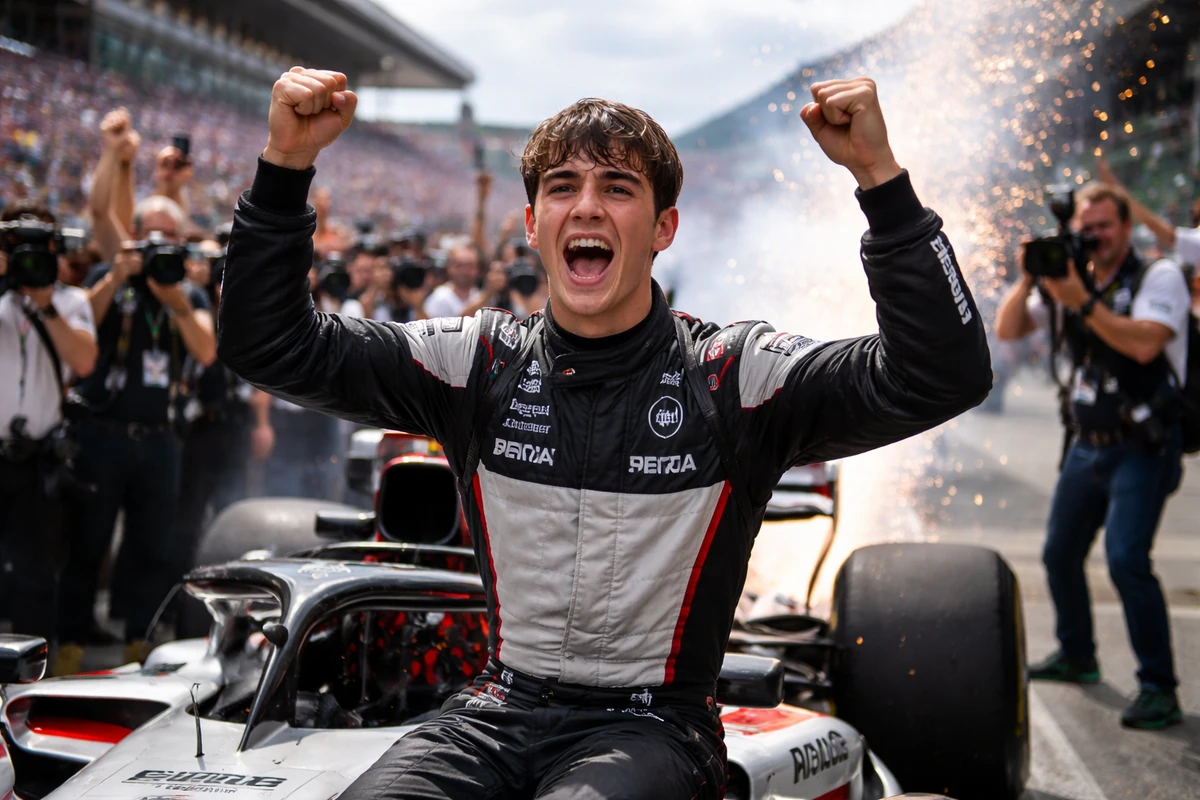
A 19-year-old just changed the conversation in Formula One
Formula One has spent years searching for its next defining young star, the kind of driver who does more than flash raw speed for a weekend and instead forces the entire paddock to recalibrate. On Sunday at the Japanese Grand Prix, 19-year-old Andrea Kimi Antonelli delivered the kind of performance that can do exactly that. Starting from pole position and converting it into victory — what racing insiders call a “pole-to-win” result — Antonelli notched his second straight Grand Prix victory and, in the process, turned what might have been dismissed as an exciting breakout into something much more consequential.
For American sports fans, the simplest comparison may be a rookie quarterback walking into a hostile playoff environment, calling the right audibles all game, never looking rattled and then doing it again the next week. In other words, this was not merely about talent. It was about command. In Formula One, where races are won not only with speed but with strategy, tire preservation, split-second decision-making and constant radio communication with engineers, a teenager winning once is news. A teenager winning back-to-back races, including a clean pole-to-win at Suzuka, is something closer to a warning shot.
The Japanese Grand Prix has long carried outsized importance on the F1 calendar. Suzuka is one of the sport’s classic circuits, respected by drivers and fans alike for its technical difficulty and its history. It is not the kind of place where a driver can fake control for 90 minutes. It rewards precision, rhythm and nerve. If Monaco is the glamorous street-party stop and Silverstone is a cathedral of British racing tradition, Suzuka is often treated as a driver’s track — a place where the best can prove it in full view of the sport’s most knowledgeable observers.
That is what made Antonelli’s result feel larger than a single Sunday headline. The numbers alone stand out: 19 years old, pole position, race winner, two straight victories. But the deeper significance lies in what those numbers imply. Formula One has traditionally been one of the least forgiving arenas in global sports for youth. Experience matters here in ways casual viewers do not always see. Veterans know how to manage a race pace without burning up the tires, how to respond to safety-car chaos, how to interpret a changing track surface, and how to stay composed when a fraction of a second can destroy a weekend. Antonelli did not look like a young driver borrowing time at the front. He looked like someone already capable of living there.
Why a pole-to-win matters so much in F1
To people who follow Formula One only casually, starting first and finishing first might sound straightforward. In reality, a pole-to-win result is one of the clearest signs of a complete race weekend. Pole position means a driver produced the single fastest lap in qualifying, when the margins are microscopic and the pressure is enormous. But race day is a different discipline entirely. It requires a fast launch off the line, smart defense into the opening corners, clean tire management over multiple stints, and the awareness to respond to rivals trying to undercut or overcut through pit strategy.
That is what makes Antonelli’s performance in Japan so revealing. This was not just a case of putting together one spectacular lap on low fuel and fresh tires. He had to control the race from the front, which can be psychologically more demanding than chasing. A driver leading a Grand Prix is constantly balancing the gap behind, the condition of the tires beneath him, instructions from the pit wall, weather variables and the possibility that a safety car could erase his advantage in an instant. One mistake can turn control into panic.
American audiences may understand this through another analogy: Think of a young pitcher taking a no-hitter into the late innings. The pressure is not only physical. It is mental and cumulative. Every pitch carries more weight because there is more to protect. In Formula One, leading from pole creates a similar tension. The driver in front is not free from pressure — he often absorbs the most of it.
Antonelli’s Japan victory suggested he can handle that burden already. That should concern his rivals even more than his outright pace. Formula One teams can study a quick lap and try to replicate it with setup changes. It is much harder to neutralize a driver who appears able to manage an entire race with maturity beyond his years. The significance of Sunday’s result, then, is not simply that Antonelli is fast. It is that he seems increasingly repeatable. In motorsports, repeatability is the line between prospect and contender.
That line matters because one brilliant weekend can always be explained away. Maybe a certain track favored a specific car. Maybe conditions happened to suit a young driver’s style. Maybe rivals made strategic mistakes. But two consecutive wins complicate those easy explanations. A streak, even a short one, begins to suggest underlying stability. It tells the paddock that whatever has clicked is not a fluke. Antonelli’s second straight win did exactly that.
How two straight wins can reshape a season
Formula One seasons are not decided by isolated highlights; they are shaped by momentum, resources and belief. A single victory can create excitement. Two straight victories begin to change behavior. They alter the points table, of course, but they also influence how teams allocate development, how strategists approach race weekends and how drivers are perceived internally.
This is where Antonelli’s run becomes especially important. In F1, teams often begin a season with hierarchy that is partly explicit and partly understood. One driver may be treated as the established championship bet, while another gets more room to develop. Consecutive wins can scramble that order quickly. The driver collecting trophies becomes the center of planning. Engineers start leaning into his feedback. Strategy departments become more willing to take aggressive calls on his behalf. Confidence grows, and confidence in Formula One can be self-reinforcing.
The effect on rival teams can be just as dramatic. A surprise winner can be treated like a temporary storyline. A two-race winner becomes a problem to solve. That changes pre-race planning. It affects qualifying priorities, start procedures, pit windows and overtaking assumptions. Once other teams begin building their Sundays around preventing one specific driver from controlling the race, that driver has become more than a feel-good story. He has become a central variable in the championship fight.
There is a lesson here familiar to fans of long American sports seasons. In the NFL, one upset can be noise. In baseball, one hot week can be randomness. But once a young player strings together elite performances against top competition, scouting reports change and opponents start game-planning around him. Formula One works the same way, even if the mechanisms are more technical. Antonelli’s two-race streak means competitors can no longer frame him primarily as tomorrow’s talent. He is affecting today’s calculations.
That does not mean the championship picture is settled. F1 remains a sport of relentless updates and changing circuit characteristics. A dominant car on one weekend can look more vulnerable at another track. Weather, tire behavior and reliability still matter enormously. But the Japanese Grand Prix appears to mark a hinge point in the season narrative. Before this stretch, Antonelli was a gifted young name with a bright future. After Japan, he looks like a driver who may shape the title race right now.
A challenge to Formula One’s old assumptions about age and experience
For decades, Formula One has been one of the clearest examples of a sport where age and experience usually pay off. That is not because younger drivers are slower in a straight line. It is because the job itself is so layered. Elite F1 drivers are part athlete, part engineer, part strategist and part risk manager. They must interpret feedback from the car at 200 mph, communicate it clearly to the team and adapt in real time to variables most viewers never notice. It is one thing for a teenager to show fearless speed. It is another to process all of those demands while racing the world’s best drivers.
Antonelli’s recent results raise a larger question the sport has been inching toward for years: Has the timeline for driver maturity moved forward? There is reason to think the answer may be yes. Modern driver development is far more sophisticated than it was a generation ago. Young prospects now come through advanced simulator programs, structured data coaching, media training and highly specialized physical preparation. By the time they reach Formula One, many have already spent years learning race craft through digital tools and development systems that did not exist in the same form for earlier eras.
That does not mean simulation is equal to racing wheel-to-wheel at Suzuka, or that youth has suddenly made experience irrelevant. Veteran drivers still understand race rhythm, pressure and long-season adaptation in ways younger rivals often must learn the hard way. But Antonelli’s Japan win is a vivid example of how modern preparation may be shrinking the traditional experience gap. The old model said a teenager might produce flashes but would need time before managing races at the front consistently. Antonelli is forcing a revision of that script.
This matters well beyond one driver. If teams come to believe that elite performance can arrive earlier, their approach to talent development could shift. More seats may open sooner for younger prospects. Teams may be more willing to accelerate promotions instead of asking prospects to wait behind established veterans. In any professional sport, once one young star proves the model can work, the system begins testing for the next one.
There is, however, a cautionary side to the generational-change narrative. Sports media — in the United States, Europe and Asia alike — often loves the idea of a prodigy because prodigies make easy stories. But sustaining excellence is much harder than announcing it. The moment a teenage driver wins big, the expectations multiply. Rivals study weaknesses more closely. Every error gets amplified. Every ordinary weekend starts to feel like a disappointment. The challenge for Antonelli now is not just to thrill people. It is to normalize excellence.
Why the Japanese Grand Prix carries special weight in Asia and beyond
The setting matters here. The Japanese Grand Prix is not simply another stop on the calendar. Japan occupies a special place in global motorsports culture, and Suzuka is one of the few tracks that still feels universally respected by drivers across generations. For fans in Asia, the race also carries regional significance because it sits at the intersection of racing history, manufacturing prestige and a deeply knowledgeable fan base.
For American readers less familiar with that context, it may help to think of Japan’s place in motorsports the way one might think of Indianapolis in U.S. racing culture, though the histories are different. Japan has long been central to car culture, engineering identity and motorsports fandom. Major Japanese manufacturers have shaped global racing in profound ways, and the country’s audiences have built a reputation for deep technical knowledge and disciplined enthusiasm. Winning there means something because the stage itself demands respect.
That is one reason Antonelli’s pole-to-win resonated beyond the result. A teenager dominating at Suzuka is not just winning in Asia. He is succeeding in one of the sport’s most exacting environments, before one of its most invested fan communities. In a broader commercial sense, the race also underscores Formula One’s continuing effort to deepen and diversify its global footprint. The sport’s growth in the United States through events in Miami, Austin and Las Vegas has been one of the biggest business stories in recent years. But Asia remains crucial to F1’s long-term future, both as a market and as a cultural pillar of the sport.
A breakout young star can be especially valuable in that context. Global sports properties thrive on recognizable faces and emerging narratives. Formula One’s modern expansion, boosted in part by streaming-era storytelling and increased crossover appeal, has made personality and generational drama even more important. Antonelli’s rise offers exactly the kind of storyline global sports executives and broadcasters love: a teenage talent winning on a classic circuit in a major Asian market while threatening the established order.
There is also something symbolically potent about the fact that this happened in Japan rather than at a newer, made-for-spectacle venue. It grounds the hype in tradition. This was not a social-media moment detached from the sport’s roots. It happened at a place where racing credentials still matter profoundly. That lends the result a seriousness that even a flashy win elsewhere might not have carried in the same way.
What American audiences should understand about the pressure on young stars
There is a temptation, especially in the age of viral highlights and fast-moving storylines, to interpret Antonelli’s rise as the inevitable arrival of the next superstar. Maybe it is. But if American sports history teaches anything, it is that early greatness can be both real and fragile. Young stars can be genuine without being guaranteed. In Formula One, perhaps more than in most sports, the ecosystem around the athlete matters enormously. The car, the strategy team, the reliability package and the development race all shape what even the most gifted driver can achieve.
That is why it would be premature to turn a two-race surge into a coronation. At the same time, it would be equally misguided to treat this as a novelty. Antonelli has now crossed an important threshold in the way serious observers will judge him. The central question is no longer whether he belongs in Formula One or whether he can occasionally challenge the front-runners. The question is whether he is already part of the sport’s elite competitive tier — and after Japan, that is no longer a speculative question.
There is also a cultural dimension to how these moments are received. In South Korean sports coverage, as in much of Asia, a teenage breakout is often framed with terms that emphasize a “new star” or “prodigy,” language that highlights both youth and destiny. American readers understand the idea, but they may better recognize the pattern through comparisons to phenoms in basketball, tennis or baseball — athletes who seem to arrive ahead of schedule and force older stars to answer uncomfortable questions. The appeal is not only what the young athlete does. It is what the performance suggests about the era that may be ending.
In Formula One, that is especially powerful because the sport has long leaned on veteran authority. Drivers build status over years, sometimes decades. They cultivate reputations as strategic masters, tire whisperers and pressure specialists. When a 19-year-old begins beating them with poise rather than recklessness, it unsettles one of the sport’s foundational assumptions. It says the next era may not be waiting politely in line.
The bigger meaning of Antonelli’s breakthrough
Antonelli’s victory at the Japanese Grand Prix should be understood on two levels at once. On the surface, it was a superb individual sporting performance: pole position, race control, composure under pressure and a second consecutive win. That alone would make it one of the early highlights of the Formula One season. But beneath that is the more important story. This race may have served as an early indicator that the balance of power in the championship — and perhaps the sport’s broader generational hierarchy — is beginning to move.
That does not mean the old order is finished. Formula One punishes overreaction. A few tenths in car development, a strategic mistake or one reliability issue can quickly change the mood. Veteran drivers and elite teams are not going away because one teenager has put together a brilliant run. Still, seasons often have moments that look obvious only in hindsight — the race or stretch of races that marked the point when a promising narrative became a genuine shift.
The Japanese Grand Prix may prove to be one of those moments. If Antonelli continues to deliver, Japan will be remembered not just as another win, but as the weekend when the paddock had to stop talking about potential and start dealing with reality. A teenage driver did not simply win a famous race. He executed it from the front, repeated success from the previous round and forced rivals to reconsider what kind of season they are in.
In a sport built on tiny margins and massive consequences, that is how power shifts begin — not always with chaos, but with clarity. Antonelli provided plenty of that in Japan. At 19, he looks less like the future of Formula One than one of its defining facts in the present.
Comments
Post a Comment