A Massive Data Leak Scare at Coupang Is Shaking South Korea — and Exposing the Risks of Life on One Big Platform
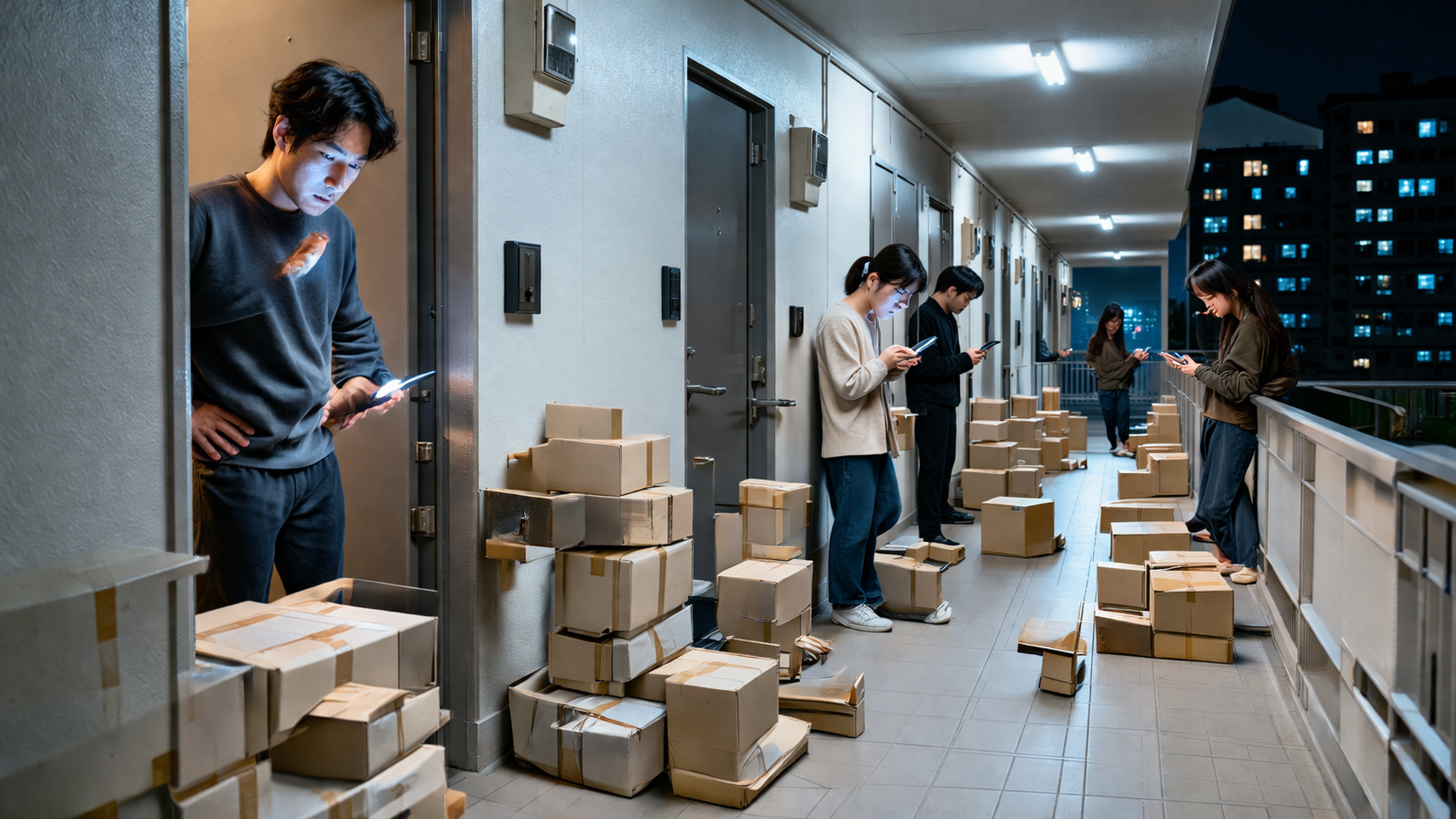
A security scare bigger than one company
A reported personal data leak affecting as many as 33.7 million users has become one of South Korea’s most closely watched social issues, not simply because of the staggering number involved, but because of what it says about how modern life works in one of the world’s most wired societies. The controversy centers on Coupang, the dominant South Korean e-commerce company often described to American readers as a hybrid of Amazon, Instacart and a same-day delivery service wrapped into one. In South Korea, where digital commerce is deeply embedded in daily life, even the possibility that customer information tied to such a platform may have been exposed has triggered anxiety that stretches far beyond online shopping.
For Americans, the closest comparison may be the public reaction if a platform with the reach of Amazon Prime, DoorDash, Walmart.com and Apple Pay were suddenly linked to a possible breach involving not just purchase data, but names, phone numbers, addresses, delivery details and payment-related identifiers. In South Korea, where mobile payment, ultra-fast delivery and app-based services have advanced with remarkable speed, the consequences feel even more intimate. A breach is not seen only as a technology problem. It is experienced as a disruption to ordinary life: the food order, the package delivery, the family gift, the one-click payment, the saved address, the subscription renewal.
That is why this issue has quickly become more than a business story. It has landed squarely in the social affairs conversation in South Korea, where public concern is increasingly focused on whether the conveniences of platform-driven life have quietly created a system in which too much personal information is concentrated in too few places. The core fear is not merely that records may have been exposed. It is that the routines of millions of people have been mapped in extraordinary detail, and that such a map can be exploited.
The scale matters. South Korea has a population of roughly 52 million. A leak linked to 33.7 million people, if confirmed at that magnitude, would suggest exposure touching a substantial share of the country. Even allowing for inactive users, duplicate accounts or imprecise reporting in early stages, the sheer figure has its own symbolic force. It signals a national vulnerability. It tells people that in a society built around digital efficiency, the systems they rely on every day may also be the systems that know them best — and can therefore hurt them most when things go wrong.
The episode is also forcing a broader question into the open: In an economy organized around giant platforms, who is responsible for protecting the public when private convenience becomes something close to civic infrastructure? That question is not uniquely Korean. But in South Korea, where platform adoption is especially dense and fast-moving, the stakes may be easier to see.
Why a shopping platform matters so much in South Korea
To understand why this story has resonated so strongly, it helps to understand what online retail means in South Korea. Coupang is not simply an app people use to buy nonessential goods. For many households, it is woven into the logistics of everyday life. Consumers use it to order groceries, diapers, toiletries, electronics, pet food, school supplies and gifts. They save addresses, keep payment methods on file, subscribe to membership programs and expect packages to arrive with extraordinary speed, sometimes by dawn. In a country known for dense urban living, high smartphone penetration and world-class broadband infrastructure, this kind of service has become less like a luxury and more like an operating system for domestic life.
That matters because the information tied to such convenience is revealing in ways people do not always think about. A name and phone number can be misused on their own. Add a home address, ordering history, delivery timing and payment-linked identifiers, and what emerges is not just a customer profile but a rough portrait of a person’s life. What neighborhood they live in. Whether they likely live alone or with children. What products they buy regularly. When they are home. How they pay. What their consumption patterns may suggest about income, age or family structure.
In South Korea, those concerns are amplified by the country’s broader digital ecosystem. Koreans have embraced mobile-first services at a pace that often outstrips the United States. It is common to handle shopping, messaging, banking, transportation, food delivery and identity verification through interconnected digital systems. The convenience is real, and in many ways impressive. But so is the concentration of data. The more seamless daily life becomes, the more vulnerable it can be when one major node fails.
American readers may think of this through the lens of data breaches that have hit U.S. insurers, retailers, credit bureaus and social media companies. What feels distinct in the Korean context is the degree to which a single retail platform can sit at the intersection of commerce, payment, home logistics and household routine. This is a society where “last-mile” delivery has become astonishingly sophisticated, and where consumers have come to expect not just speed, but personalization and automation. A leak in that context carries emotional weight because people sense that what may have been exposed is not random data, but the record of everyday living.
There is also a trust issue. The platform economy works only when users stop thinking about the mechanics. They save the card, store the address, click the membership renewal and trust that everything behind the screen is functioning securely. When that trust is shaken, the effect spreads quickly. Consumers begin second-guessing text alerts, delivery notifications and payment confirmations. Routine signals become suspicious. In a hyperconnected marketplace, the loss of trust can spread faster than the technical facts themselves.
The real fear is what happens after the headlines
Data leak stories often focus on the initial exposure: how many people may have been affected, what categories of information may have been involved and whether a company detected the problem quickly enough. But security experts have long warned that the most damaging phase often begins after the news cycle moves on. Once criminals know that users of a widely recognized platform are nervous, they have an opening.
That is especially true in a case involving an e-commerce company whose name is already familiar to millions. Fraudsters do not need to invent a believable pretext from scratch. They can send messages that appear to come from a platform consumers already use. A fake text claiming there is a delivery problem, a refund issue, a membership billing confirmation or an address verification request can sound plausible precisely because it fits seamlessly into normal life. The more realistic the message, the lower the target’s guard tends to be.
South Korea has a particular vocabulary for these scams. “Smishing” refers to phishing conducted through text messages, often designed to lure users into clicking malicious links. “Voice phishing” typically refers to phone scams in which callers impersonate banks, prosecutors, police or company staff to pressure victims into revealing credentials or transferring money. These are not fringe concerns. They are familiar threats in Korean society, and a major leak controversy can function as an accelerant, even before the exact scope of exposed data is fully established.
What makes such follow-on harm so dangerous is that it is rarely limited to direct financial theft. Once attackers have enough information — or can convincingly pretend that they do — they may attempt account resets, mobile verification hijacking, unauthorized payment linkages or identity fraud. They may infer family relationships, workplace information or living arrangements. If names, phone numbers and addresses are part of the mix, the risk moves beyond cyberspace and into physical safety. For women living alone, elderly residents and other groups already vulnerable to crime or harassment, the psychological toll can be severe even without a confirmed downstream attack.
And in today’s data economy, one source of information is rarely used alone. A leaked phone number can be cross-referenced with public social media profiles. An address can be paired with delivery patterns. A purchase trail can help scammers guess what kind of message will sound credible. Criminals no longer need complete dossiers to be effective. They need enough detail to sound real. That is why experts repeatedly warn that the full social cost of a leak cannot be measured on the day it becomes public. Spam, phishing, account takeover attempts and identity misuse can continue for months or years, long after corporate statements have faded from public attention.
This helps explain why the controversy is being treated as a public safety issue in South Korea, not merely a compliance matter. The concern is not just whether information left a secure system. It is whether millions of people will now have to navigate a more dangerous environment of fraudulent calls, fake package alerts and manipulated trust. The breach, in that sense, is not the end of the story. It is the starting point for a long tail of risk.
A warning about platform dependence in a digital superpower
The deeper lesson of this episode is about concentration. South Korea is one of the world’s most technologically advanced consumer markets. Its broadband infrastructure is fast, its smartphone usage is high and its digital services are widely integrated into everyday behavior. That environment has produced enormous gains in convenience. It has also created dependence on a relatively small number of major platforms that mediate shopping, communication, payment and lifestyle management.
When consumers use one account to handle purchasing, billing, reviews, delivery tracking, subscriptions and customer service, they save time. Companies gain efficiency, insight and loyalty. But that same concentration means a failure at one point can generate anxiety across a much wider sphere. The more centralized the data, the more efficient the service may be — and the more devastating the fallout can be if something breaks.
In South Korea, this tension is especially stark because digital convenience has advanced so far, so fast. Same-day and dawn delivery are not niche perks for a wealthy few. They are normalized expectations. Membership-driven consumption is entrenched. Mobile payment systems are mainstream. The country often appears, from an American vantage point, to be living a few years ahead in terms of how tightly commerce and digital identity can be fused. But that lead comes with a warning: a highly optimized digital society can also be highly brittle if the safeguards do not evolve at the same pace as the services.
That brittleness is social as much as technical. If consumers begin to distrust package notifications, billing texts or account alerts, friction returns to the system. People hesitate. They second-guess legitimate messages. Customer service loads increase. Rumors spread. Anxiety broadens from the potentially affected users to society as a whole. In other words, the damage is not limited to whoever may have had data exposed. It can spill into the public’s confidence in digital infrastructure itself.
There is a paradox here that resonates beyond South Korea. The better a platform becomes at anticipating needs and reducing inconvenience, the more deeply it enters the architecture of daily life. Over time, users may no longer feel they are merely using a service. They may feel the service is organizing their routines. That can be convenient right up until a disruption makes visible how much trust has been delegated to an invisible system.
For American readers, this should sound familiar even if the specifics differ. In the United States, many people depend on Amazon, Apple, Google, Meta, major banks and wireless carriers in overlapping ways. But the Korean case offers an unusually concentrated view of the problem: when platform services start functioning like public utilities, should they be held to a standard closer to infrastructure than ordinary consumer business? That debate is likely to intensify as more economies move in the same direction.
Corporate responsibility and the limits of regulation
Whenever a major leak or breach comes to light, the first public demand is usually basic: tell people exactly what happened, quickly and clearly. What data was affected? Over what period? How was the exposure discovered? What should users do right now? Too often, companies respond with vague language, delayed notices, dense legal explanations or generic apologies that sound built for liability management rather than public understanding. That pattern has generated frustration in many countries, and South Korea is no exception.
When users suspect that a company is speaking cautiously to protect itself instead of speaking plainly to protect the public, distrust grows. In a fast-moving fraud environment, time matters. If consumers do not know what risks they face, they lose the chance to take defensive action early — changing passwords, scrutinizing payment activity, locking down verification settings or ignoring suspicious outreach that seems connected to the platform. Delayed clarity can magnify harm.
The controversy is also exposing a larger policy gap. Even in a highly digitized society like South Korea, there remains public debate over what the standard response should be after a major data exposure. What kinds of protective measures should companies be required to offer automatically? Should there be a single, clearly identifiable reporting and counseling channel for affected users? At what point should regulators step in, and with what powers? These are not abstract questions. They determine whether ordinary people can respond effectively or are left to navigate technical threats on their own.
Experts often argue that an overreliance on after-the-fact punishment misses the bigger issue. Fines and administrative penalties may be necessary, but they do little to stop harm already in motion. The more important test is whether companies invested sufficiently in prevention: minimizing the amount of data collected, reducing how long it is retained, separating access privileges internally, monitoring outside vendors, stress-testing systems and preparing realistic incident response plans. In a market where data collection drives personalization, sales and corporate value, the incentive to gather more information is powerful. That makes regulation essential not only to punish failure, but to shape corporate behavior before failure occurs.
There is also a growing argument that the frame itself needs to change. A leak should not be treated simply as bad luck or a regrettable mistake. It should be understood as a failure of governance over public trust. That is especially true for large platforms that function, in practice, as essential intermediaries in everyday life. If consumers cannot reasonably opt out without giving up meaningful convenience or access, then a platform’s obligations may need to exceed mere technical compliance. The standard becomes not only whether a company followed the law on paper, but whether it fulfilled a duty of care proportionate to the role it plays in people’s daily lives.
This debate is familiar in the United States, where lawmakers and regulators have spent years grappling with how to oversee large technology firms whose services are privately owned but socially indispensable. South Korea’s current controversy underscores the urgency of that same question in a society where digital integration is even more advanced.
The people likely to bear the heaviest burden
One reason the issue has become so politically and socially resonant is that the harm is unlikely to fall evenly. As with many digital threats, the people most vulnerable to secondary damage are often those least equipped to defend themselves. In South Korea, that includes many older adults, one-person households and individuals with lower digital literacy. These users may be more susceptible to convincing scam texts, fake calls or fraudulent requests that appear to be linked to legitimate services they already use.
That matters because the platform economy is often sold as democratizing convenience. Fast delivery, saved payment information and app-based shopping are marketed as tools that simplify life for everyone. And in many ways they do. But when something goes wrong, the burden of vigilance shifts back to individuals. Suddenly, the consumer must become a cybersecurity analyst: checking sender IDs, avoiding suspicious links, watching for fake billing notices, monitoring payment activity and trying to distinguish a real company outreach from a criminal imitation. For digitally confident users, that is frustrating. For more vulnerable populations, it can be overwhelming.
There is also a gendered and physical safety dimension that is easy to underestimate. If address and contact data are implicated, the emotional impact may be especially severe for women living alone — a population that is often discussed in South Korea in the context of safety concerns, stalking fears and urban vulnerability. Even absent confirmed misuse, the idea that strangers might obtain personal location-linked information can produce real distress. Elderly households may face similar fear, especially if scammers use urgency and impersonation tactics.
In that sense, the fallout from a large personal data leak is not only economic. It is psychological and civic. It erodes the sense that daily systems are trustworthy. It forces people to move through ordinary routines with suspicion. The delivery text is no longer merely a delivery text. The refund notice is no longer merely administrative. Digital life becomes a field of possible deception.
That is one reason many experts insist that personal data protection should be discussed less as an abstract privacy right and more as a component of public safety. For years, privacy debates in many countries have been framed around targeted advertising, consumer consent and corporate transparency. Those issues matter. But large-scale exposure events remind the public that privacy is also about protection from fraud, coercion, harassment and fear. It is about the ability to participate in modern life without constantly wondering who else is watching, imitating or exploiting the systems around you.
What South Korea’s debate may mean beyond South Korea
The current uproar in South Korea offers a sharp case study for other highly digital societies, including the United States. It reveals how quickly a personal data controversy can move from the business pages to the center of national conversation when the company involved is not simply a retailer, but a platform embedded in domestic routine. It also highlights the tension at the heart of the modern internet economy: consumers are rewarded for handing over more information, while companies are rewarded for storing and leveraging it. When the protective systems fail, everyone discovers at once how much was entrusted.
South Korea has often been viewed abroad as a model of digital modernity — faster infrastructure, faster delivery, deeper mobile integration, stronger everyday adoption. But this controversy points to a less flattering truth. A country can be technologically advanced and still struggle to build equally advanced protections, notification systems and remedies for users. In fact, the more technologically advanced a society becomes, the more important those protections are.
For policymakers, the lesson is that personal data can no longer be treated as a narrow compliance category. If platform services function as quasi-infrastructure, then personal data security becomes part of infrastructure resilience. For companies, the lesson is that trust is not a branding asset; it is an operational obligation. Once lost, it is difficult to restore with press statements alone. For consumers, the episode is a reminder that convenience has a shadow cost, even when the tradeoff is invisible most of the time.
The final significance of this story may lie in what it reveals about the next phase of the digital economy. The question is no longer whether people will live through platforms. They already do. The question is whether governments, regulators and companies will begin treating those platforms with the seriousness reserved for systems that shape public life. In South Korea, the alarm sparked by the reported scale of the Coupang leak is forcing that reckoning into the open.
Whether the company’s final disclosures, regulatory findings and any future legal consequences ultimately confirm the full reported scale or narrow it, the social meaning of the incident is already clear. Millions of people have been reminded that the conveniences they depend on are built on reservoirs of intensely personal information. Once that realization takes hold, this is no longer just a corporate security problem. It is a democratic one, a consumer protection one and, increasingly, a public safety one.
Comments
Post a Comment