As NASA Nears Artemis II, a Moon Mission Becomes a Test of American Power, Allied Strategy and South Korea’s Space Ambitions
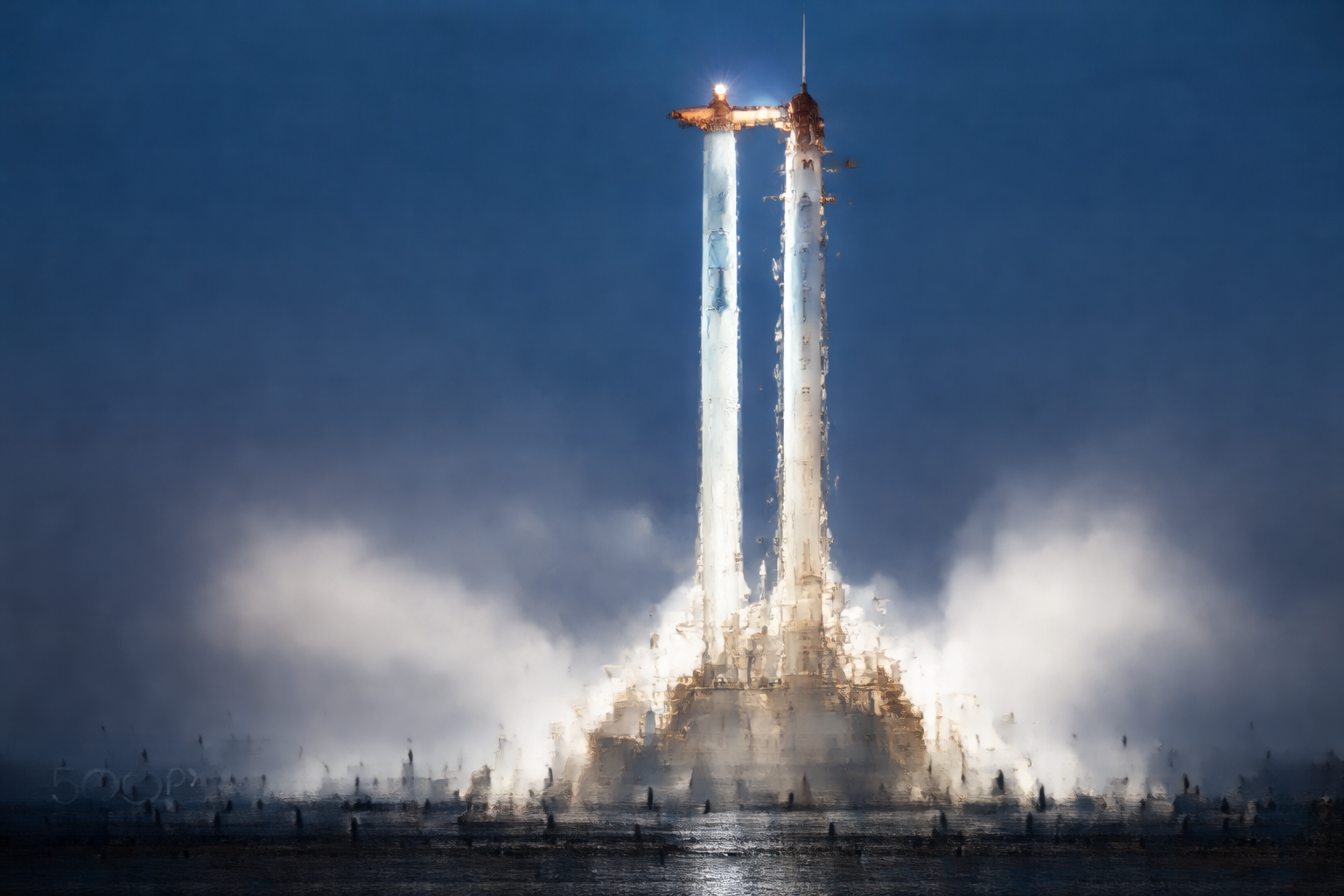
A return to crewed lunar flight, with far more at stake than nostalgia
With five days to go before NASA’s planned launch of Artemis II, the mission is being watched not simply as the next big moment in spaceflight, but as a measure of whether the United States can turn its long-promised return to deep space into a durable reality. If the schedule holds, Artemis II will lift off from Kennedy Space Center in Florida aboard NASA’s Space Launch System, or SLS, carrying four astronauts in an Orion spacecraft on a mission that will loop around the moon and return to Earth. The crew includes Americans Reid Wiseman, Victor Glover and Christina Koch, along with Canadian astronaut Jeremy Hansen.
That matters for reasons that go well beyond the dramatic visuals Americans will see on launch day. Artemis II is not a moon landing. It is a crewed lunar flyby, designed to test the systems, procedures and safety margins needed before NASA attempts to put astronauts on the lunar surface again. In that sense, this is less a replay of Apollo than a bridge between an earlier uncrewed test mission and a much riskier phase still to come.
For American readers, the easiest comparison may be the gap between a successful prototype and a fully operational system. Artemis II is the prototype phase for a new era of human exploration beyond low-Earth orbit. NASA needs to show that the rocket, spacecraft, communications systems, life-support equipment and emergency procedures can work together under real mission conditions with people on board. That is a much higher bar than launching cargo or flying astronauts to the International Space Station.
The symbolic dimension is unavoidable. It has been more than half a century since humans last traveled to the moon during the Apollo era. Since then, crewed spaceflight has largely been about operations in Earth orbit, from the space shuttle to the ISS. Artemis II would mark the resumption of human deep-space travel, a milestone that carries emotional weight in the United States, where the moon remains tied to national memory, Cold War prestige and the idea of technological daring.
But the mission’s real significance lies in whether the U.S. can demonstrate follow-through. For years, America’s largest space projects have been vulnerable to changing administrations, shifting budget priorities and technical delays. Simply reaching the final days before a planned Artemis II launch suggests that the U.S. government, Congress, NASA, private industry and allied partners have managed, at least so far, to keep a complex long-term strategy intact. In a political system often criticized for short attention spans, that alone is no small achievement.
What the world is really watching in the final countdown
Because the launch has not yet happened, the most important question is not whether Artemis II is already a success. It is whether NASA can show that the mission remains on a credible path. There are at least three major checkpoints the international community will be watching.
First is the countdown itself. Space missions always carry uncertainty, but at this stage the question is whether NASA can keep the launch sequence on track without major last-minute disruptions. For a program that has faced scrutiny over timing and cost, schedule credibility matters almost as much as liftoff. Investors, allied governments, contractors and rival space powers all take note of whether the U.S. can meet the deadlines it sets for itself.
Second is the integration of SLS and Orion. Americans sometimes hear these names separately, as if the rocket and the spacecraft are distinct stories. In practice, the mission depends on the entire stack working as one system. SLS must deliver the power and precision needed to send Orion toward the moon, and Orion must then support the crew in deep space, maintain communications, navigate accurately and return safely through Earth’s atmosphere. A lunar mission is unforgiving; the farther astronauts travel from Earth, the less room there is for improvisation.
Third is the issue that matters most in any crewed mission: safety. NASA must persuade not only engineers and lawmakers, but the public, that the standards for human deep-space flight are rigorous and realistic. That includes life support, shielding, emergency return options, mission operations and the ability to manage anomalies far from home. The challenge here is not just technical. It is institutional. NASA has to show that it has learned from the past, including tragedies such as Challenger and Columbia, and that it is not allowing schedule pressure or symbolic expectations to outrun engineering judgment.
That is why specialists tend to speak less about spectacle than about data. A dramatic launch will dominate television coverage, but inside the space community, the deeper question is what Artemis II reveals about the maturity of the larger program. If the mission gathers the right data and validates key systems, it can reduce risk for later lunar landing attempts. If it exposes structural weaknesses, the consequences will ripple far beyond one launch window.
Not another Apollo rerun, but a new model of American space strategy
It is tempting to see Artemis through the lens of nostalgia. NASA knows how powerful those images are: the moon, the rocket, the crew, the promise of history returning. But Artemis is not just a sentimental national project. It is part of a broader attempt to rebuild the infrastructure for long-term activity in deep space, including missions around the moon, eventual lunar surface operations and, farther out, ambitions connected to Mars.
In practical terms, that means Artemis II occupies the awkward but essential middle ground between testing hardware without humans and committing astronauts to a landing mission. That middle ground is where programs either gain credibility or lose it. Space agencies can survive symbolic disappointment more easily than they can survive broken confidence in their systems. For that reason, Artemis II may be one of the most consequential “in-between” missions NASA has flown in decades.
The mission also reflects a major change in how large space efforts are organized. During Apollo, the U.S. government dominated nearly every aspect of development and execution. Today’s model is more distributed. NASA sets long-range goals and safety requirements, while a web of contractors, allied agencies and commercial companies supplies pieces of the architecture. Some of that is about efficiency, some about politics, and some about the reality that no single institution easily carries the cost and technical breadth of modern deep-space exploration alone.
This approach is messier than the cleaner top-down image many Americans associate with the 1960s. It can produce delays, blurred lines of responsibility and fierce arguments over cost. Artemis has already faced many of those criticisms. But if it works, it could create a more resilient ecosystem, one in which government, private industry and partner nations all have a stake in sustaining the effort over time. That matters because lunar exploration is increasingly being treated not as a one-off stunt, but as the foundation of a strategic domain with scientific, commercial and geopolitical value.
Put differently, this is not just about planting another flag. The moon has become part of a wider conversation about communications networks, navigation systems, robotics, advanced materials, energy technologies and the future supply chains that may support off-world operations. Some of those ideas remain speculative, but the competition to shape the rules and standards of that future is already very real.
Where Artemis meets the U.S.-China rivalry in space
That broader competition is one reason this mission is major international news. Artemis II arrives at a moment when the United States and China are increasingly vying to define the next phase of space activity. The rivalry is not a perfect replay of the Cold War space race, and it should not be reduced to simplistic flag-waving. Still, there is no avoiding the strategic dimension.
The U.S. has been building support for the Artemis Accords, a framework meant to guide cooperation and norms in lunar and deep-space exploration. Washington presents that model as open, rules-based and alliance-centered. Countries including Canada, Japan and many European partners are tied into that vision in different ways. The fact that a Canadian astronaut is on Artemis II is not a symbolic afterthought; it is evidence that the U.S. wants allied participation to be visible and operational, not just diplomatic.
China, for its part, has made major gains through its own independent space station, lunar exploration program and steadily expanding technological reach. Beijing is not simply trying to imitate NASA. It is pursuing an alternative center of gravity in space, one that could attract partners, define technical standards and shape future patterns of access and influence.
For Washington, then, Artemis II is not only a NASA mission. It is also a demonstration that the United States can still lead in a field where prestige, technology and power overlap. If the U.S. can resume crewed lunar flight reliably, it strengthens the perception that America remains the pace-setter in deep-space operations. If it stumbles badly, that perception could shift.
Still, the competition is more layered than a simple U.S.-China scoreboard. In the real world, supply chains for launch systems, sensors, software, communications equipment and advanced manufacturing are distributed across multiple industries and countries. States compete, but companies also compete. Governments talk about sovereignty and strategy, while engineers talk about reliability, cost and integration. Artemis II sits at the center of all of those overlapping contests.
For American audiences, one useful comparison is the semiconductor industry. Chips are commercial products, national-security assets and geopolitical leverage all at once. Space is increasingly similar. A mission like Artemis II involves science and exploration, but it also touches defense-adjacent technologies, industrial competitiveness and alliance politics. That is why the launch matters even to people who do not follow space news closely.
An international mission in everything but name
Although Artemis II is often described as a NASA project, that label is only partly true. The mission is better understood as a multinational, multi-institutional operation with NASA at the center. Orion includes contributions from the European Space Agency, especially through its service module. Canada is represented directly on the crew. Private contractors and public agencies play essential roles across launch operations, training, recovery, navigation and mission support.
That collaborative design tells us something important about the future of space policy. No country, not even the United States, can easily dominate every layer of a complex long-duration exploration architecture on its own. Cooperation spreads cost and risk, but it also creates political buy-in. When allied countries put astronauts, hardware or research into a program, they become stakeholders in its survival.
That has obvious advantages. It can speed innovation, diversify talent and broaden support. But it also comes with problems. The more actors involved, the harder it can be to keep schedules synchronized, allocate blame when something slips and prevent bureaucratic sprawl. Artemis has already been dogged by questions over cost growth and delays, and those concerns are not trivial in a period of intense budget pressures in Washington.
In that sense, Artemis II is also a stress test for the alliance model itself. Can large democracies and their industrial partners manage a technically demanding space mission with enough discipline to deliver results? Or does the complexity of collaboration slow programs to the point that more centralized systems gain an advantage? The answer will matter far beyond NASA.
Americans are familiar with this problem in other arenas, from defense procurement to international infrastructure planning. Big coalitions are politically powerful, but often operationally cumbersome. Artemis II offers a chance for the U.S. and its partners to argue that democratic, coalition-based systems can still execute at the frontier of technology.
Why engineers care about what happens after the rocket clears the tower
To most viewers, launch day is the event. The countdown, ignition and ascent are the moments that capture public imagination. But from an engineering standpoint, the real story begins after the rocket leaves the pad. Artemis II is fundamentally about performance in deep-space conditions.
Orion must prove that it can keep astronauts alive and functioning far beyond low-Earth orbit, where communications delays are longer and operational complexity increases sharply. Its heat shield, navigation systems, environmental controls and reentry profile all matter. So do the less glamorous details: redundancy, fault tolerance, power management and the ability to respond to contingencies under pressure.
SLS, meanwhile, must demonstrate the kind of reliability expected from a heavy-lift rocket tasked with human exploration. It is not enough for the vehicle to be powerful. It has to be predictable. Stage separation, propulsion performance and the mission profile as a whole must support the broader objective of reducing uncertainty for future missions.
That is why the standard for success is not binary. A mission can still be valuable even if not every planned objective is completed exactly as written, so long as astronauts remain safe and NASA collects the data needed to refine later missions. Conversely, a launch that looks outwardly successful but reveals deeper structural problems could complicate the entire timeline for future lunar operations.
For policymakers, that distinction matters. Artemis II will likely be judged not simply by whether the crew goes around the moon and comes home, but by whether the mission meaningfully lowers the risk of the next step. This is a program validation exercise dressed in the language of exploration. The pageantry is real, but the real deliverable is confidence.
What this means for South Korea, and why Seoul is paying close attention
That brings us to the Korean angle, which is especially important for understanding why this story is resonating in South Korea. Seoul is not yet a deep-space power on the scale of the United States, China or the leading European players. But it is no longer a marginal player either. South Korea has been steadily expanding its space capabilities, including domestic launch vehicle development, satellite technology and space policy planning. It is now at a stage where the strategic question is not whether to participate in the emerging space order, but how.
For readers in the U.S., South Korea’s position may be compared to its rise in other advanced industries. The country did not invent semiconductors, electric-vehicle batteries or consumer electronics, but it became indispensable in each by mastering manufacturing, supply chains and high-value components. Korean policymakers increasingly see space through a similar lens. Even if South Korea is not sending astronauts around the moon tomorrow, it could still become a critical supplier of technologies, materials and systems that support the broader lunar economy.
That is one reason Artemis matters in Seoul. South Korea is a U.S. treaty ally, and its industrial strengths line up with many of the sectors that could become central to future space supply chains: semiconductors, batteries, advanced materials, precision manufacturing, telecommunications and software. Those are not glamorous headline items in the way rockets and astronauts are, but they are often where long-term industrial advantage is built.
There is also a policy dimension. As the U.S. tries to organize an alliance-based framework for space cooperation, countries like South Korea face choices about where to invest political capital and technical resources. Joining conversations is one thing; carving out a meaningful niche is another. For Seoul, the challenge is to decide whether it wants to be mainly a participant in U.S.-led structures, a specialized supplier, a scientific collaborator, or over time a more autonomous player in selected areas of deep-space capability.
That debate is familiar in South Korea because it echoes broader national conversations about technology and security. The country has long balanced dependence on U.S.-led strategic frameworks with an ambition to build more of its own advanced industrial base. Space now fits naturally into that pattern. Artemis II, from this perspective, is not just about NASA’s timetable. It is a signal about what kind of international system is being built beyond Earth and where South Korea might fit inside it.
There is also an element of national aspiration. South Korea’s public has watched the country rise from war devastation to a global exporter of culture, technology and manufacturing. The same society that produced K-pop, Oscar-winning cinema and world-class chipmakers increasingly sees science and space as areas where Korea should not remain a junior player forever. A mission like Artemis II sharpens that question: if the new moon era is beginning, what role does South Korea want to claim while the rules are still being written?
A launch with consequences beyond the moon
In the coming days, much of the attention will understandably focus on weather forecasts, technical updates and the suspense of the countdown. But the larger stakes are already clear. Artemis II is a test of whether the United States can execute a sustained deep-space strategy, whether alliance-based space cooperation can produce real operational results, whether the balance of prestige in the U.S.-China space rivalry is shifting, and whether countries like South Korea can identify durable opportunities in the emerging lunar economy.
If the mission proceeds smoothly, it will strengthen the argument that the U.S. has moved beyond rhetorical promises of “returning to the moon” and is building a practical pathway back. If it falters, the effects will extend beyond NASA, feeding doubts about cost, management and the viability of coalition-led space architectures.
Either way, Artemis II is no mere space show. It is a high-visibility checkpoint in a much larger story about power, technology, rules and ambition in the 21st century. For Americans, it is a reminder that the moon remains not only a destination, but a stage on which national capability is measured. For South Korea, it is a sign that the next era of space exploration may reward not only those who launch, but also those who supply, design, connect and help govern the systems that make exploration possible.
That is why, five days before liftoff, the mission matters even before the rocket leaves the ground.
Comments
Post a Comment