China’s Claim About a Japanese Officer and an Embassy Intrusion Raises Stakes in a Fraught East Asia
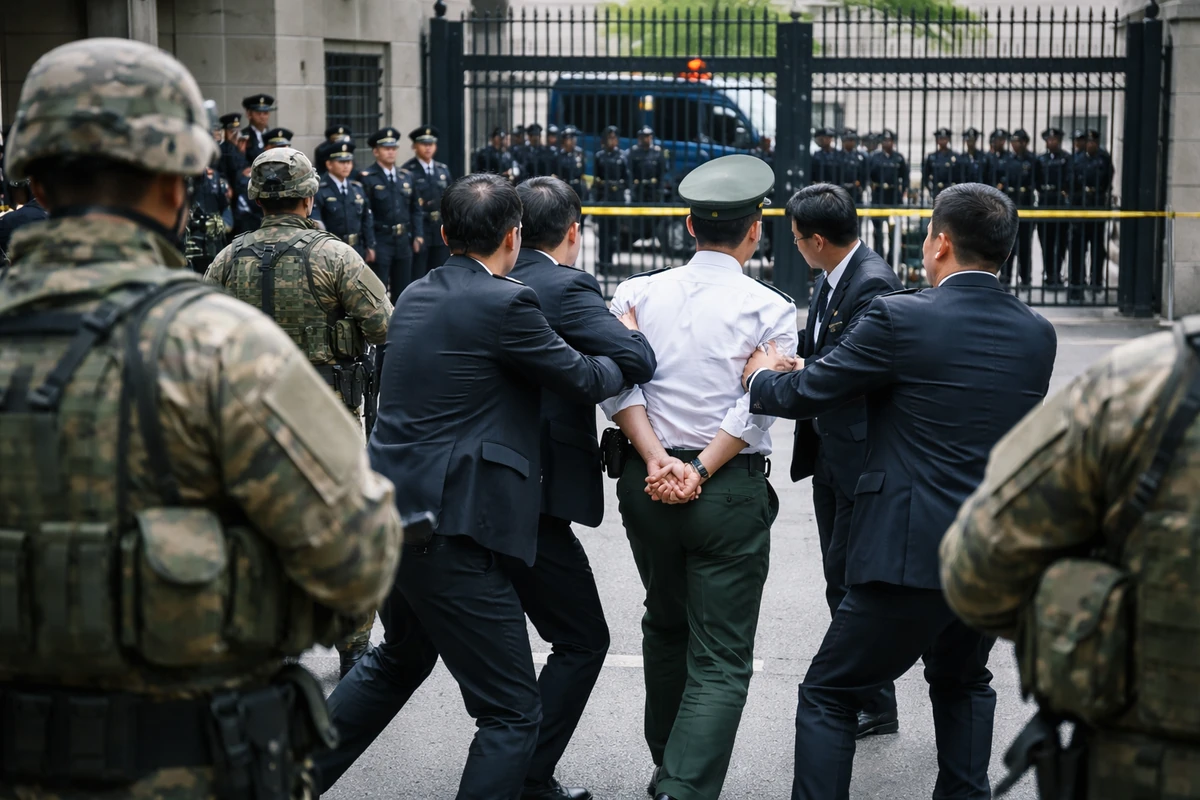
A dispute over one incident is turning into a bigger test of regional trust
What might otherwise have been treated as an isolated security breach is rapidly becoming something much larger in East Asia: a test of how China and Japan manage suspicion, military rivalry and the basic rules that allow diplomacy to function at all.
Chinese authorities say that a Japanese officer who allegedly entered the Chinese Embassy on March 31 was a person who had received training from Japan’s Self-Defense Forces, and they have publicly suggested that the individual’s ideological or political instruction should also be examined. That language matters. In diplomatic terms, China is signaling that it does not see this simply as the random misconduct of one person. Instead, it is widening the question to include the individual’s institutional background, possible chain of command and the worldview instilled in Japan’s security personnel.
That shift is what gives the story international weight. Embassies are not just office buildings in foreign capitals. Under the Vienna Convention on Diplomatic Relations, a 1961 treaty that serves as one of the cornerstones of modern diplomacy, diplomatic premises are supposed to be protected from intrusion. Americans may think of embassies as the front door of one government inside another country’s territory. When the security of that space is called into question, the issue quickly moves beyond ordinary law enforcement and into the realm of sovereignty, protocol and national prestige.
In this case, the accusation lands at a particularly tense moment in the relationship between Beijing and Tokyo. China and Japan are deeply intertwined economically, but they have spent years clashing over military activity, territorial disputes, wartime history, Taiwan, supply chains and competing visions of the region’s future. Against that backdrop, even a still-developing incident involving an embassy can take on outsized meaning before all the facts are known.
The core question now is not only what happened inside or around the Chinese diplomatic compound, but what each government chooses to make of it. China appears to be using the case to press a broader argument: that Japan’s increasingly assertive security posture deserves closer scrutiny. Japan, for its part, faces pressure to answer the allegation without giving ground in a way that could encourage further Chinese diplomatic attacks or inflame political opinion at home.
That combination of symbolism, law and existing mistrust is why this story is drawing attention well beyond Beijing and Tokyo. It touches the rawest nerves in Northeast Asia: military normalization in Japan, Chinese insecurity about containment, and the fragility of the region’s crisis-management mechanisms.
Why the embassy setting makes this more than a routine police matter
To American readers, one useful comparison is to imagine a foreign military-linked individual being accused of unlawfully entering the grounds of an embassy in Washington. Even before prosecutors sorted out motive, the event would trigger questions from the State Department, intelligence agencies and Congress. Was it a personal act? Was it negligence? Was it reconnaissance? Was it politically motivated? The location itself would guarantee national attention.
That is essentially the dynamic now at work in this case. Diplomatic compounds occupy a special place in international relations because they are supposed to provide a minimum level of safety and predictability even among rivals. Countries can be in the middle of a trade dispute, naval standoff or propaganda fight, but embassies are meant to remain protected spaces where communication can continue.
That is why allegations of intrusion into a diplomatic compound tend to carry a heavy symbolic charge. They suggest, at minimum, a breakdown in security. At worst, they can be interpreted as disrespect for sovereign protections or as an effort to intimidate a foreign mission. Even when the incident turns out to involve no official orders, the host government still faces pressure to show that it takes the sanctity of diplomatic premises seriously.
China’s public emphasis on the case suggests that it wants to establish early that the issue is not minor. By invoking the suspect’s alleged military training, Chinese officials are effectively warning against any attempt to dismiss the matter as the behavior of an ordinary civilian acting alone. Their mention of possible ideological education goes further still, implying concern not just about conduct but about mindset — what Chinese officials may believe Japan’s military culture is teaching about China itself.
That is unusually direct language in diplomatic signaling. Governments often begin with narrow procedural demands: investigate, clarify, prevent recurrence. Here, China is framing the incident as part of a larger security narrative. That can serve several purposes at once. It raises pressure on Japan. It signals resolve to domestic audiences in China. And it reinforces Beijing’s longstanding argument that Japan’s expanding defense profile should be viewed with caution by the region and the wider world.
The danger is that once a case is framed that way, it becomes harder to contain. A matter that might have been resolved through quiet channels can become a public test of national credibility. Each side then has less room to compromise without appearing weak.
Why references to Japan’s Self-Defense Forces are especially sensitive
For many Americans, the phrase “Self-Defense Forces” may sound blandly administrative, but in East Asia it carries historical and political weight. Japan’s military after World War II was reorganized under a pacifist constitution, and for decades the country’s postwar identity rested in part on limits to the use of force. The Self-Defense Forces, or SDF, were designed as a military for national defense rather than power projection in the traditional sense.
In recent years, however, Japan has taken major steps to expand its security role. Its government has revised strategic documents, boosted defense spending, deepened military coordination with the United States and discussed “counterstrike” capabilities — language that refers to the ability to hit enemy launch sites or related targets under certain conditions. Tokyo argues that these changes are necessary given North Korea’s missile advances, China’s growing military reach and the worsening security climate around Taiwan and the East China Sea.
From the Japanese perspective, that argument is straightforward: deterrence requires stronger capabilities and tighter alliances. From the Chinese perspective, the same moves can look like a gradual erosion of postwar restraints and a re-entry by Japan into a more muscular military role. Beijing has long portrayed Japanese defense expansion as destabilizing, and memories of Japan’s wartime aggression in China remain politically potent there.
That explains why China’s wording is so pointed. Referring not merely to a “Japanese national” but to a “Japanese officer” allegedly trained by the SDF changes the frame entirely. It invites the public to see the episode not as misconduct by an individual but as something linked to an organized security institution. Mentioning ideological education takes the accusation another step further by suggesting a possible culture or doctrine problem within that institution.
That allegation is difficult for Japan to ignore because it cuts close to a longstanding regional debate over what Japan’s military evolution means. If Tokyo responds too dismissively, it risks reinforcing Chinese claims that it is not taking the matter seriously. If it responds too defensively, it may appear to concede that the incident reveals something broader about Japanese military thinking. Either path carries political risks.
There is also an important domestic dimension in Japan. Conservative constituencies generally support a stronger national defense and may resent what they see as Chinese attempts to stigmatize legitimate Japanese security policy. At the same time, Japanese leaders know that any story connecting an embassy intrusion to a military-trained individual could raise uncomfortable questions internationally, especially in a region where historical memory is not an abstract issue but an active part of diplomacy.
A relationship built on trade but strained by history and security
One reason this incident could reverberate so widely is that China and Japan live in a state of strategic contradiction. They need each other economically, yet distrust each other politically. Trade, investment, tourism and advanced manufacturing have linked the two countries for decades. Japanese firms remain deeply tied to Chinese supply chains, while China has long been one of Japan’s biggest trading partners. In purely economic terms, neither side can easily replace the other overnight.
But economics has not erased deeper sources of friction. The countries remain divided over the Senkaku Islands, known in China as the Diaoyu Islands, in the East China Sea. They view Taiwan through sharply different security lenses. Japan is increasingly vocal that peace and stability in the Taiwan Strait matter directly to its own security, while China regards Taiwan as a core sovereignty issue and rejects outside involvement. The two governments also clash over maritime activity, air defense monitoring and the interpretation of wartime history.
Those disputes do not operate in isolation. They pile up. So when a new controversy emerges — especially one involving a Chinese embassy and an alleged Japanese officer — it can reactivate older grievances all at once. That is why symbolic incidents can be so dangerous in East Asia. They do not arrive on a blank slate. They land on top of accumulated suspicion.
Americans have seen versions of this in other contexts. During periods of already high tension, a single spy balloon, naval collision, detention or cyberattack allegation can quickly become a proxy fight over the entire relationship between two powers. The same logic applies here. This is not just about physical access to a diplomatic compound. It is about what each side already believes the other is capable of, and what its public is ready to believe.
For China, the case touches sovereignty and national dignity — concepts that carry extraordinary force in its diplomacy. For Japan, it raises questions about accountability and the international perception of its security establishment. Because both governments must manage domestic political audiences as well as foreign counterparts, their room to maneuver is narrower than it may look from outside.
That narrowing matters because China and Japan have spent recent years trying, at least intermittently, to prevent competition from spiraling out of control. If this dispute becomes prolonged, it could chill high-level engagement, complicate working-level security dialogues and feed a cycle in which every future encounter is interpreted through a more hostile lens.
The legal and diplomatic rules at stake reach beyond China and Japan
At one level, this is a bilateral dispute. At another, it is a test of international norms that all countries rely on. The inviolability of embassies is one of those baseline rules of the road in diplomacy. Without it, even adversarial states would struggle to keep channels open. That is why governments usually move quickly in such cases to investigate, provide explanations and offer assurances against recurrence.
If Chinese authorities are seen as exaggerating, they risk appearing to politicize a security incident for strategic gain. But if Japan is seen as minimizing the matter before the facts are fully established, it could deepen mistrust not only with China but with others watching how seriously Tokyo treats the protection of diplomatic premises.
That broader audience matters. In an era defined not only by conventional military competition but also by espionage fears, cyber threats and gray-zone tactics — actions that fall short of war but still create pressure — the security of embassies has taken on renewed significance. Diplomatic compounds are physical sites, but they are also nodes in larger networks of intelligence, communication and crisis management. Any breach or alleged breach can trigger reviews of access control, host-country policing, emergency protocols and internal security procedures.
Neighboring countries, including South Korea, are likely to watch this case closely for precisely that reason. Northeast Asia is a region where cooperation and confrontation coexist uneasily. Governments there routinely prepare for the possibility that a relatively small incident could become a diplomatic flashpoint. An embassy-related dispute is especially sensitive because it tests not just physical security but also the trust necessary for diplomacy to function in tense times.
The aftermath will therefore matter as much as the initial allegation. Was the incident documented clearly? Were the facts shared promptly? Did the host side and the affected mission coordinate effectively? Was there an expression of regret, if warranted? Was there a credible commitment to prevent repetition? These are the procedural questions that often determine whether such cases cool down or harden into lasting grievances.
China’s decision to elevate the issue publicly suggests it wants to set the terms of that conversation. By doing so, it increases the pressure on Japan to respond in a manner that looks both serious and transparent. But public pressure is a blunt instrument. It can produce faster accountability, or it can force the other side into a defensive crouch.
Why the United States and the broader region are paying attention
Any sustained deterioration in China-Japan ties has implications far beyond the two countries. Japan is the cornerstone of the U.S. alliance network in Asia, hosting tens of thousands of American troops and serving as a key partner in deterrence planning. China, meanwhile, is the central strategic challenge shaping Washington’s regional posture. When Beijing and Tokyo enter a sharper phase of confrontation, the effects ripple through U.S. strategy, alliance politics and regional risk calculations.
The most immediate concern is not that this single dispute will spark a major crisis on its own, but that it could further corrode trust at a time when Northeast Asia is already under strain. Tensions around Taiwan remain high. Encounters in the East China Sea continue to generate friction. North Korea’s weapons programs add another layer of instability. In that environment, governments need reliable communication channels and disciplined crisis-management habits. Public diplomatic fights make both harder.
From Washington’s perspective, a worsening China-Japan confrontation can create a familiar but difficult dynamic. The United States wants allies such as Japan to strengthen deterrence and deepen coordination. But the very moves Washington supports are often cited by Beijing as evidence of encirclement. That creates a feedback loop: China reacts more sharply, Japan argues that stronger defenses are therefore even more necessary, and the cycle intensifies.
This embassy dispute fits into that larger pattern because China is not merely objecting to an alleged act. It is objecting to what it says the act reveals about Japan’s security apparatus. If Beijing uses the incident to sharpen its criticism of Japanese military normalization, and if Tokyo responds by emphasizing the legitimacy of its defense reforms, the argument could quickly extend far beyond the original facts of the case.
Public opinion also plays a major role. In both China and Japan, foreign policy disputes can inflame popular sentiment faster than governments can contain it. Anti-Japanese sentiment in China has deep historical roots, while concern about China’s military rise and coercive behavior has grown in Japan. Once audiences become emotionally invested, leaders often find it more difficult to pursue quiet, face-saving compromise. Even solvable disputes can drag on because symbolic toughness becomes politically valuable.
That is one reason analysts across the region will be watching how official language evolves in the days ahead. Does China continue to emphasize ideology and institutional training? Does Japan launch or publicize a fuller investigation? Do both sides leave room for a technical resolution, or do they continue reframing the case as evidence of broader strategic hostility? The answer will shape not only bilateral diplomacy but also the psychological climate of regional security.
What happens next may matter more than the original allegation
At this stage, much depends on process. In disputes involving embassies, the legal conclusion is important, but so is the quality of the response. A prompt, transparent and narrowly factual investigation can sometimes keep a politically charged event from expanding into a lasting confrontation. A slow, defensive or ambiguous response can do the opposite.
For Japan, the challenge is to demonstrate seriousness without validating China’s broader accusation that this reflects something systemic about the Self-Defense Forces. That may require careful public messaging: acknowledge the gravity of any embassy intrusion claim, cooperate with fact-finding, and draw a distinction between individual conduct and institutional doctrine unless evidence proves otherwise. Tokyo will also need to think about how its response plays in Washington, Beijing and at home.
For China, the incentive is more complicated. It can use the incident to reinforce an existing narrative that Japan’s expanded defense role is a regional danger. But if it pushes too hard, it may look less interested in accountability than in political theater. That could limit international sympathy, especially among governments already wary of Beijing’s use of public pressure campaigns.
The most constructive path would be a relatively old-fashioned diplomatic one: establish the facts, communicate through official channels, protect legal principles and avoid rhetorical escalation. Yet old-fashioned diplomacy is harder to practice in a region where every incident is immediately folded into larger strategic competition and instantly amplified by domestic politics and media narratives.
Still, there are reasons to avoid assuming the worst. China and Japan have both weathered periods of severe tension before and have often found ways to keep economic ties and basic diplomatic communication intact. Neither side benefits from letting every provocation become a test of national will. And both understand that in a region crowded with military assets, historical grievances and unresolved flashpoints, misreading intentions can carry real costs.
That is ultimately why this episode matters. Not because one allegation involving one embassy automatically changes the balance of power, but because it reveals how thin the margin for trust has become in Northeast Asia. A single security incident, especially one tied to an embassy and a military-trained individual, can now be interpreted as evidence of deeper institutional intent. Once relations reach that stage, crisis prevention becomes much harder.
For American readers, the lesson is straightforward. East Asia’s security environment is not defined only by war games, aircraft carriers and summit meetings. It is also shaped by incidents that seem small at first glance but strike at the rituals and protections that keep rivals talking. When the sanctity of an embassy becomes part of a broader argument over military training, ideology and regional order, the stakes rise quickly. What Beijing and Tokyo do next will show whether this remains a sharp but manageable dispute — or becomes one more building block in a more dangerous era of mistrust.
Comments
Post a Comment