South Korea Bets on a State Builder to Tame Housing Costs, but a Faster Supply Pipeline May Not Mean Cheaper Homes Soon
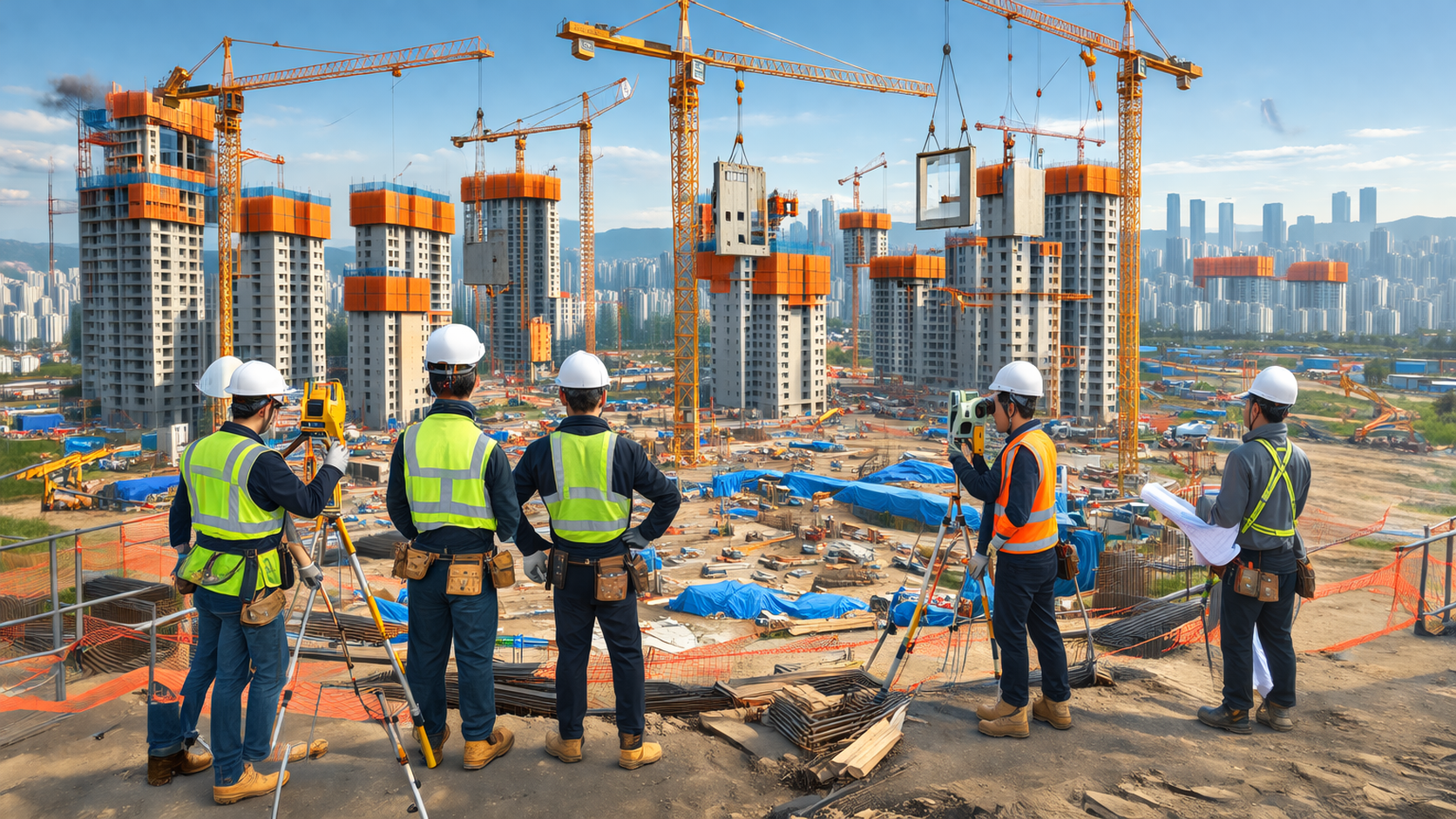
A new phase in South Korea’s housing debate
South Korea’s housing debate is entering a new phase, and it looks familiar in one sense and different in another. As in the United States, politicians have spent years promising more homes, more affordability and more stability in overheated metropolitan markets. But in South Korea, where anxiety over home prices can shape elections, family finances and even decisions about marriage and childbirth, the question is no longer just how many units the government can promise on paper. It is increasingly about who can actually get those homes built.
That is the central issue behind the South Korean government’s latest real estate push, often referred to as the Sept. 7 housing supply measures. By late March 2026, the conversation in Seoul and the surrounding capital region has shifted away from whether prices will cool in the next few months and toward a more practical, arguably more important, question: Can the government turn announced housing supply into real apartments that people can move into?
At the center of that effort is LH, short for Korea Land and Housing Corp., the powerful state-run developer that has long played a major role in building new towns, public housing and large-scale land development. The administration of President Lee Jae Myung is signaling that LH should take a much larger role in carrying out urban redevelopment and housing projects, particularly in and around Seoul, where private-sector projects have often bogged down in financing problems, local disputes and regulatory delays.
For American readers, one way to think about this is as a government deciding that the private market alone is moving too slowly to address a housing crunch and turning instead to a quasi-public developer with national reach, established financing and political backing. It is not a perfect comparison, because South Korea’s housing system, land-use rules and apartment culture differ significantly from those in the United States. But the underlying policy logic is recognizable: If the private sector cannot reliably deliver enough homes fast enough, the state steps in more aggressively.
Whether that strategy can actually stabilize home prices is another matter. In the short run, probably not much. In the longer run, maybe. But the answer depends less on headline numbers than on whether the government can restore confidence that supply plans in South Korea are more than just political announcements.
Why housing carries such political weight in South Korea
To understand why this matters so much, it helps to understand the place housing occupies in South Korean life. Apartments are not simply a dominant form of urban housing; they are also a primary store of wealth, a status marker and a source of generational tension. In the Seoul metropolitan area, where roughly half the country’s population lives, access to a home in a good school district or near a subway line can shape the trajectory of a family’s life in ways Americans might associate with buying into a top suburban district, only in a much denser and more expensive environment.
South Korea’s real estate market also operates with some uniquely Korean features. One is jeonse, a long-standing lease system in which tenants put down a huge lump-sum deposit instead of paying monthly rent, though the system has become more financially strained in recent years. Another is the huge importance of redevelopment and reconstruction projects. Because so much housing demand is concentrated in already built-up urban neighborhoods, a large share of new supply in Seoul does not come from endless greenfield expansion. It comes from tearing down older apartment blocks or redeveloping aging neighborhoods into higher-density housing.
That makes the process inherently political and often contentious. Residents, landowners, developers, contractors and government agencies all have financial stakes. A project can take years to move from proposal to approval to demolition to construction to occupancy. Costs rise. Interest rates shift. Contractors renegotiate. Residents split into factions over how much profit they should expect or how much public contribution they should be required to provide in exchange for development rights.
Americans in places like New York, San Francisco or Los Angeles will recognize parts of this dynamic. Everyone says they want more housing. But building it in desirable, already developed places means conflict over timing, density, profits, neighborhood character and who gets to benefit. In South Korea, though, the stakes are magnified by the speed and scale at which apartment prices have risen over the past decade and by the extent to which ordinary households treat housing as the cornerstone of wealth accumulation.
That helps explain why each new administration tends to announce some version of a housing plan and why the public has become skeptical of promises measured only in future unit counts. South Koreans have heard many pledges before. What they want now is proof that someone can execute.
Why the government is turning back to LH
This is where LH comes in. The government’s reasoning is fairly straightforward. Private redevelopment in Seoul and surrounding cities has repeatedly hit bottlenecks: conflicts among property owners, questions about profitability, burdensome project financing, rising construction costs and lengthy permitting processes. In a high-interest-rate environment, even if borrowing costs have eased from their peaks, private developers still face meaningful risk. So do homeowner associations that must vote on major redevelopment decisions and absorb rising costs.
LH offers something the private market cannot easily replicate: a public mandate, institutional experience and access to government-backed credibility. It has decades of experience in large-scale land assembly, compensation negotiations, infrastructure planning, public housing construction and coordination with regulators. From the government’s perspective, that makes LH the one player capable of moving large housing projects through Korea’s bureaucratic and political maze with more predictability than private firms acting alone.
In American terms, this is less like relying on a typical homebuilder and more like empowering a nationally backed public development authority to shepherd projects from land acquisition through approvals and construction. The government appears to believe that, in a market where expectations can move prices almost as much as current inventory, the most important thing it can offer is not a big theoretical number but a believable delivery mechanism.
That is a subtle but significant shift. In the past, housing policy announcements in South Korea often began and ended with total unit targets: tens of thousands here, hundreds of thousands there. But many of those plans ran into the same old obstacles before they produced meaningful completions. The current emphasis is different. The market is paying closer attention to who will carry out the projects, where, under what procedures and on what timeline.
Putting LH front and center therefore signals more than just administrative convenience. It suggests a change in policy philosophy. Instead of assuming the private market will respond once the government sets broad goals, the state is saying, in effect, that it may need to directly organize the supply response if it wants those goals to materialize.
Can public-led development break the redevelopment logjam?
The argument in favor of expanded public implementation is that it can unclog redevelopment where the private sector has stalled. In Seoul, much of the future housing supply that matters most will not come from vast new suburbs alone. It has to come from upgrading existing neighborhoods, replacing older low-rise districts or aging apartment complexes with denser, newer housing in areas where people actually want to live.
Those projects, however, are notoriously difficult. Resident associations can splinter over whether to move ahead. Construction companies may demand revised terms as material and labor costs rise. Governments may impose requirements for public contributions, such as infrastructure upgrades or affordable housing set-asides, that reduce projected profits. Disputes over floor-area ratios, relocation schedules and compensation can drag on for years.
Supporters of a larger LH role argue that a public entity can reduce those delays by taking on the administrative and financial burdens that local associations struggle to manage alone. In theory, LH can help structure projects earlier, coordinate resident consent, negotiate infrastructure plans and streamline permitting. It can also absorb some risk using public-sector creditworthiness, which matters when private financing is expensive or uncertain.
If that sounds technocratic, it is. But housing markets often turn on exactly these details. A supply policy can look bold in a press release and prove meaningless if it cannot get through approvals, financing and construction. The core case for LH is not that public development is inherently better. It is that public development may be better able, at least right now, to get to groundbreaking.
Still, there are clear trade-offs. Public-led projects may move faster, but they do not necessarily maximize returns for existing property owners. That is one reason not everyone welcomes them. Residents who hope a private redevelopment project will produce a bigger windfall may see public involvement as limiting upside. Developers may worry that public leadership constrains design flexibility or premium branding. And some critics fear that once the government takes a larger role, efficiency may not always match ambition.
That tension is central to the debate. The challenge for the government is to persuade people that the gains from speed and certainty outweigh the possible loss of private-sector upside. If it cannot strike that balance, even public-led projects could face resistance from the communities they are meant to transform.
Winners, losers and the uneven effects on ordinary households
Like most housing policy, this one looks different depending on where you sit. For would-be homebuyers, especially younger households who have been priced out of Seoul’s most desirable neighborhoods, a more credible supply pipeline could offer some relief. Even if the apartments are years away, the knowledge that new housing in strong locations is likely to come online can reduce the sense that buyers must rush in now or be permanently left behind.
That psychological effect matters in South Korea, where fear of missing out has repeatedly fueled speculative buying in hot districts. Real estate markets do not respond only to homes that already exist. They also respond to beliefs about what will exist in the future. If buyers begin to trust that meaningful supply is coming, some of the urgency behind chasing prices upward can fade.
But homeowners and members of redevelopment associations may view the same policy less favorably. Public leadership can mean more conservative assumptions about profitability, less freedom in project structure and potentially lower gains than a successful private redevelopment might produce. For some landowners, speed is valuable. For others, holding out for a better private deal may still look more attractive, even if it delays construction.
Renters, too, could experience mixed effects. Over the medium and long term, more completed homes should help ease pressure in both the sales and rental markets. But in the short term, redevelopment itself can displace residents and increase local demand for temporary housing. In South Korea, that could affect the jeonse market and conventional monthly rentals in neighborhoods where residents must move out before rebuilding begins.
That means one of the less discussed but important questions is sequencing. A redevelopment-driven supply push can eventually add housing, but before it does, it often creates temporary relocation demand. If too many projects advance at once in a tight local rental market, rents or jeonse deposits in nearby areas could rise before any new apartments are delivered. For policymakers, it is not enough to announce supply. They also have to manage the transition period between demolition and move-in.
This is part of why housing policy in South Korea is so politically fraught. There is no single public. There are aspiring buyers, longtime owners, speculative investors, redevelopment association members, tenants and people living outside Seoul who resent policies designed around the capital region. A measure that reassures one group can alarm another.
Will this actually lower home prices?
The question most readers are likely to ask is the most basic one: Will any of this bring down housing prices? The sober answer is that it probably will not do much in the immediate term. Housing supply policies operate on long timelines. The path from announcement to site selection to resident approval to financing to groundbreaking to pre-sales to completion can take years. No matter how determined the government may be, apartments cannot appear overnight.
That is why even supporters of the policy generally frame its short-term impact not as a direct reduction in sale prices but as a shift in expectations. If the market believes that significant supply in Seoul and the surrounding region is truly coming, speculative pressure may ease. Buyers who might otherwise stretch to purchase now may wait. Sellers may moderate their expectations if they no longer assume scarcity will keep intensifying. Transaction volume could slow as the market pauses to assess the new landscape.
But expectation management cuts both ways. If the government announces an ambitious role for LH and then stumbles on site selection, community buy-in, permitting or execution, the effect could reverse. Instead of reassuring the market, it could reinforce the belief that South Korea remains structurally unable to add enough housing where demand is strongest. In that case, buyers could interpret the failure as yet another sign that future supply will remain scarce, which could further support prices rather than cool them.
That makes credibility the real battleground. Analysts and policy experts in South Korea increasingly argue that the market does not need more political slogans about supply. It needs an administrative calendar: which neighborhoods, what legal steps, how quickly approvals will be processed and when construction will begin. In other words, execution is policy.
The answer will also depend on how supply measures interact with demand-side controls, including mortgage regulation. If the government maintains tight lending rules while pursuing more public-led supply, the near-term effect could be a quieter market with fewer transactions and more waiting. But demand suppression alone rarely solves affordability problems for long. Unless new homes are actually delivered, the fundamental imbalance can return as soon as credit conditions loosen or confidence rebounds.
The broader lesson for other housing-stressed countries
South Korea’s turn toward a more assertive public role in housing development carries a lesson that reaches beyond Seoul. Across advanced economies, governments are grappling with the same structural problem: Everyone says more housing is needed, but the institutions required to deliver it are weak, fragmented or politically constrained. The result is a cycle of ambitious promises and disappointing follow-through.
In that sense, South Korea is testing a question many other countries are also confronting. When the private market cannot or will not build enough homes quickly enough, should the state take on more of the development process itself? In the United States, that conversation often centers on zoning reform, tax credits, public housing modernization or transit-oriented development. South Korea’s version is shaped by different laws and institutions, but the underlying dilemma is similar.
The advantage of a public-led approach is clarity. A strong state-backed developer can coordinate land, financing and approvals in ways a fragmented private market cannot. The risk is that public intervention can become heavy-handed, politically influenced or unable to balance efficiency with local concerns. The success of the Korean strategy will depend on whether LH can move quickly without reproducing the bureaucracy and mistrust that have hampered past efforts.
For now, the significance of the policy lies less in the claim that public implementation will magically solve South Korea’s housing affordability crisis than in what it reveals about the government’s judgment. Officials appear to have concluded that the central housing problem is no longer a lack of ideas or a lack of target numbers. It is a lack of believable execution.
If they are right, then LH’s expanded role could become one of the most consequential tests of South Korean housing policy in years. If they are wrong, the country may simply add another chapter to a long history of plans that promised supply, changed market sentiment for a moment and then ran aground on the same practical obstacles as before.
Either way, the next phase of South Korea’s housing story will not be decided by headlines about how many units the government intends to build. It will be decided in the less glamorous but far more important details of administration: land assembly, resident consent, financing, approvals and cranes in the sky. For a country where housing anxiety is deeply tied to economic opportunity and social stability, that may be the only measure that really counts.
Comments
Post a Comment