South Korea’s April Apartment Surge Doubles Last Year’s Pace, but More Listings Alone Won’t Fix Housing Pressures
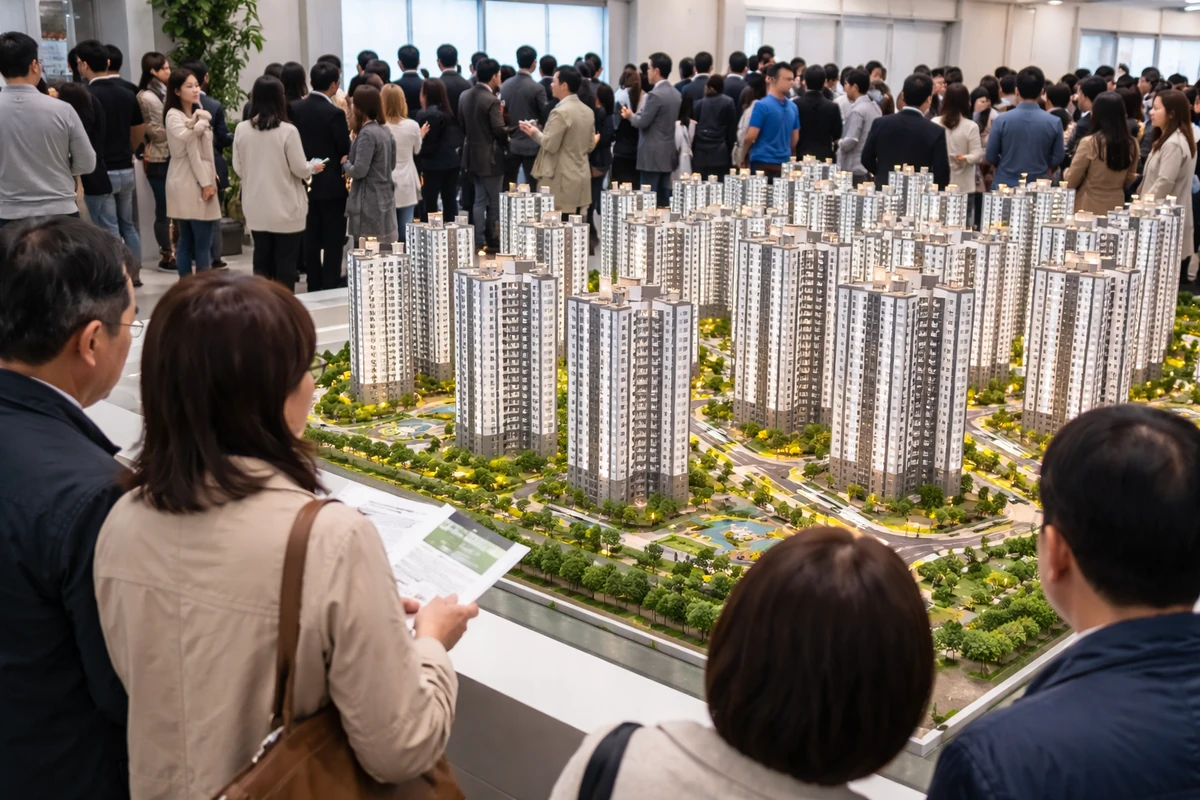
A spring surge in new apartments is testing South Korea’s housing market
South Korea is preparing for a sharp jump in new apartment sales this April, with developers expected to put 40,380 units on the market nationwide — roughly double the volume from the same period a year ago. On paper, that looks like an unmistakable sign of life in a housing sector that has spent much of the past few years weighed down by high interest rates, tighter lending rules, rising construction costs and uneven demand outside the Seoul area.
But in South Korea, as in the United States, a housing number rarely tells the whole story. The bigger question is not simply how many units are coming to market, but where they are, how they are priced, who can afford them and whether buyers will actually sign contracts. In a country where real estate occupies an outsized role in household wealth, politics and social mobility, the composition of supply often matters more than the headline total.
That is especially true in the South Korean apartment market, where “apartments” do not carry the same meaning they often do in the U.S. In Korea, the term usually refers to large condominium-style residential complexes, often built by major construction companies and marketed as a symbol of modern middle-class or upper-middle-class living. These projects can include hundreds or even thousands of units, with amenities, security, landscaping and school access that heavily influence demand. Buying into a new development is often seen not just as purchasing shelter, but as making a bet on future value, neighborhood status and family opportunity.
The April pipeline reflects a seasonal and strategic push. Spring is traditionally one of the busiest periods for home sales in South Korea, similar in some ways to the U.S. spring homebuying season, when warmer weather and family schedules bring more buyers into the market. But the stakes may be even higher in Korea because new-home sales are closely tied to a formal application process known as “cheongyak,” or subscription-based apartment applications, which can determine whether ordinary households even get a shot at a coveted new unit.
That means April’s increase could influence not only prices, but also buyer psychology: whether households keep chasing older existing homes, shift attention to newly built units, or sit on the sidelines waiting for better terms. It could be read as an early sign of recovery. It could also reveal something less reassuring — a market that is reopening only in its healthiest pockets while weaker regions continue to struggle.
Why so many projects are arriving at once
The most immediate reason for the April jump is timing. Many of these projects were not newly conceived this year; they were delayed. South Korean developers have spent months, and in some cases years, pushing back launch schedules because the economics became harder to manage. Construction costs rose sharply, financing became more expensive, local permitting processes took time, and builders worried that putting units on sale too soon could lead to weak results or unsold inventory.
In the U.S., developers also try to time the market, but in South Korea the pressure can feel more concentrated because the large apartment presale system plays such an important role in financing projects and shaping company cash flow. If a builder believes demand will be stronger in April than in January, there is a strong incentive to wait. That appears to be what happened here: projects postponed from earlier in the year are now bunching together as companies try to capture the more active spring market.
There is also a practical business motive. Developers want first-half sales on the books, and they want to secure cash flow in a financing environment that remains challenging. Launching in spring gives companies time to gauge demand, adjust pricing and, if sales are strong enough, reassure lenders and investors that projects are still viable. The move is less a sign that every market has turned the corner than a sign that developers are willing to test demand more aggressively.
Another factor is what could be called a selective recovery. South Korea’s housing market is not moving in lockstep. Some parts of Seoul and the broader Seoul Capital Area — which includes Incheon and Gyeonggi Province and is home to more than half the country’s population — still have deep buyer interest, especially in neighborhoods with strong transit links, school districts and job access. But some provincial cities and outlying areas continue to grapple with oversupply and unsold homes. In that environment, builders are more likely to relaunch projects where they believe demand is more dependable.
That creates a pattern Americans will recognize from post-pandemic real estate in their own country: headline figures can suggest broad recovery even when the rebound is really clustered in a handful of strong metro areas. A jump in supply does not mean every local market is healthy. It can instead mean that companies are concentrating their bets where buyers are most likely to show up.
Why more supply does not automatically mean lower home prices
At first glance, adding more than 40,000 units sounds like the kind of development that should cool prices. Economists generally agree that more housing supply helps stabilize markets over time. But short-term price relief is another matter. In South Korea, new apartment supply does not become real, livable housing overnight. There is a long chain between presale and move-in: application, winning a unit, contract signing, financing, construction, completion and occupancy. April sales volume, in other words, does not instantly become April housing inventory.
That lag matters. Existing home prices and rental prices are driven by what households can access now, not by units that may not be ready for years. So while the increase in April presales may improve long-term expectations, it is unlikely to immediately drag down prices in the resale market or ease rental pressure in the next month or two. That dynamic is not unique to Korea. In the U.S., a housing project announced today cannot reduce rents tomorrow. The difference is that Korea’s apartment presale market is so central to buyer behavior that expectations themselves can sway the market before a building is finished.
In some neighborhoods, new presale announcements can temporarily pull would-be buyers away from existing apartments. Households may decide to wait and apply for a new unit instead of buying an older one. That can cool transaction volume in the resale market. But the opposite can also happen. If buyers conclude that the odds of winning a sought-after presale are slim, or that new-unit prices are too high, they may turn back to older existing apartments, especially those in desirable school districts or near subway lines. The result is often not a simple marketwide cooling, but a split reaction depending on location, price and buyer profile.
Price is the key variable. Even if supply increases, it may not feel like relief if the apartments are expensive. Construction and financing costs remain elevated, and those costs often get passed on to buyers. So more supply does not necessarily mean better affordability. That is a familiar frustration in many wealthy economies: the market may produce more homes, but not necessarily the kind or price level that average households need.
In South Korea, where household debt levels are already high and mortgage rules can be strict, affordability depends not just on sticker price but also on access to loans, down-payment requirements and confidence about future interest rates. A family may see more listings and still conclude that none are financially realistic. The headline total can improve market sentiment without changing lived affordability.
Location may matter more than the national total
If there is one lesson that South Korean housing watchers repeatedly emphasize, it is that geography is everything. A national figure of 40,380 units can sound impressive, but its effect will vary dramatically depending on where those units are concentrated. Supply in or near Seoul, where demand remains strongest, could help moderate competition and ease some anxiety among buyers. A comparable number concentrated in weaker regional markets could instead deepen concerns about unsold inventory.
That divide reflects a broader structural imbalance in South Korea. Like many countries, it has a powerful economic and cultural gravitational pull toward its capital region. Seoul is not just the political center but also a hub for top universities, corporate headquarters, high-paying jobs, prestigious school districts and transit infrastructure. For many households, especially families with children, housing decisions are inseparable from education and career strategies. The result is intense demand for neighborhoods that offer access to those advantages.
Americans may think of the gap between superstar metro areas and struggling regions — say, the difference in housing demand between parts of coastal California and depopulating industrial towns. South Korea’s version is more compressed geographically but often even sharper in social and financial intensity. Because the country is smaller and more centralized, demand can pile up heavily in a relatively small number of preferred districts.
That is why analysts are cautious about reading too much into nationwide supply statistics. If April’s offerings are concentrated in the Seoul metropolitan area, especially in neighborhoods with proven demand, the market response could be strong and the psychological effect significant. Buyers may feel that at least some pressure is being released. If, however, many of the units are in less preferred outer suburbs or provincial areas where population growth is weak, the increase may do little for the households who feel most priced out.
This distinction also matters for policymakers. Governments often like to point to total planned supply as evidence that they are addressing housing shortages. But if the new homes are not in the places where people most want or need to live, frustration can persist. In Korea, as elsewhere, a mismatch between supply and demand can leave officials claiming success while households still feel shut out.
How South Korea’s apartment application system shapes buyer behavior
To understand why April matters so much, it helps to understand how South Korea sells many new apartments. Unlike the typical American new-home purchase, many Korean apartment projects are offered through a formal subscription and lottery-like application system. Prospective buyers apply for units, often subject to rules that can prioritize first-time buyers, households without homes, local residents or other categories. Competition can be intense for projects in desirable areas, with odds sometimes low enough to resemble selective college admissions more than a typical home purchase.
That system turns a spring wave of offerings into something like a series of high-stakes opportunities. For households that have been waiting on the sidelines — especially younger families or people trying to buy their first home — a month with many projects means more chances to compare floor plans, prices, transit access, school quality and expected move-in timelines. It can widen options and spread demand across several developments rather than funneling everyone into a handful of projects.
Still, more opportunities do not necessarily mean easier wins. Popular projects in high-demand areas are likely to remain fiercely contested, especially if they come from well-known builders or are tied to major redevelopment zones. In South Korea, brand matters in housing in ways that may surprise some American readers. Large construction firms market apartment complexes almost like consumer products, with distinct names, design reputations and perceptions of prestige. A well-known brand in the right district can drive extraordinary demand.
For buyers, then, April is both an opening and a test. The opportunity lies in having more projects to evaluate. The test lies in whether households can actually afford the units and sustain the financing over time. Winning a presale is only the beginning. Buyers must think about interim payments, mortgage eligibility, final payment at completion and what interest rates might look like by the time the unit is ready. Some households also factor in the possibility of using Korea’s unique rental system, known as jeonse — a large deposit-based lease arrangement — as part of their financial strategy, though that system has come under strain in recent years and carries its own risks.
Experts often warn that buyers should not focus only on the competition rate for a project. What matters just as much is the local supply picture at move-in. If many apartment complexes in the same area are completed around the same time, prices and rents can come under pressure. If the development is entering a market with little competing new supply, it may hold value better. In other words, savvy buyers have to look beyond the thrill of winning a unit and think about the neighborhood they will be entering years later.
What this means for developers and for the wider economy
For developers, April’s increase is not merely a scheduling event. It is a referendum on whether the market can absorb new supply under still-difficult financial conditions. South Korean builders have been juggling high materials costs, labor expenses, project-financing burdens and the risk that weak sales could leave them exposed. Launching more projects suggests that at least some companies believe the market can handle them — or that waiting longer carries even greater financial risk.
But that does not mean the industry is back to normal. If anything, the April pipeline may highlight how uneven the recovery remains. Projects are more likely to move forward in areas where demand has already been validated, while weaker districts may continue to see delays. That is not a full normalization of supply. It is a selective reopening of the sales window.
That distinction matters for the broader economy because real estate has an unusually deep footprint in South Korea. Housing is tied to household wealth, consumer confidence, local government finances and the health of construction firms and lenders. A stronger presale market can improve sentiment and help stabilize parts of the development pipeline. But if the rebound is narrow, it may also widen regional inequality and reinforce the concentration of wealth and opportunity in the capital region.
There is also a policy implication. If officials interpret April’s numbers as proof that supply has broadly recovered, they may underestimate the need for more targeted interventions. The challenge is not simply to produce a larger national total. It is to produce housing in the right locations, at attainable prices, with financing structures households can actually use. Otherwise, the market may remain trapped in a pattern familiar to many advanced economies: plenty of headlines about supply, not enough relief where it counts.
For now, April looks less like a clean turning point than a revealing stress test. If projects in high-demand areas attract strong applications and solid contract rates, developers will likely take that as encouragement to push ahead with more launches later in the year. If buyers balk at prices or financing burdens, some of the optimism could fade quickly and delayed projects may be postponed yet again.
The bottom line: a bigger market, but still a divided one
The April jump in planned apartment sales is real, and it is significant. After a period marked by delay and caution, South Korea’s housing market is showing more movement. For buyers, that means a wider menu of choices. For developers, it offers a chance to measure demand. For policymakers, it provides fresh evidence about where the market is recovering and where it remains fragile.
But the surge should not be mistaken for a simple fix. More units do not automatically mean cheaper homes, easier buying conditions or a broad-based cooling of the market. The outcome depends on the mix of location, pricing, financing and timing. In a country where access to housing is deeply intertwined with education, class mobility and long-term financial security, those details can matter more than the top-line count.
For American readers, the easiest comparison may be this: imagine a sudden wave of new housing announcements across the U.S., but with the biggest impact depending on whether the homes are in Manhattan-adjacent commuter corridors or in far-flung markets with weaker demand. Now add a competitive application system, tighter household leverage constraints and a social premium on a narrow set of neighborhoods and school zones. That gets closer to the Korean picture.
So the real story of April is not just that South Korea is bringing more apartments to market. It is that the country is confronting, in a particularly concentrated form, a housing challenge seen across much of the developed world: how to turn nominal supply into meaningful access. The coming weeks may show whether this spring selling season marks the start of a steadier recovery — or simply another reminder that in real estate, as always, location and affordability still rule everything else.
Comments
Post a Comment