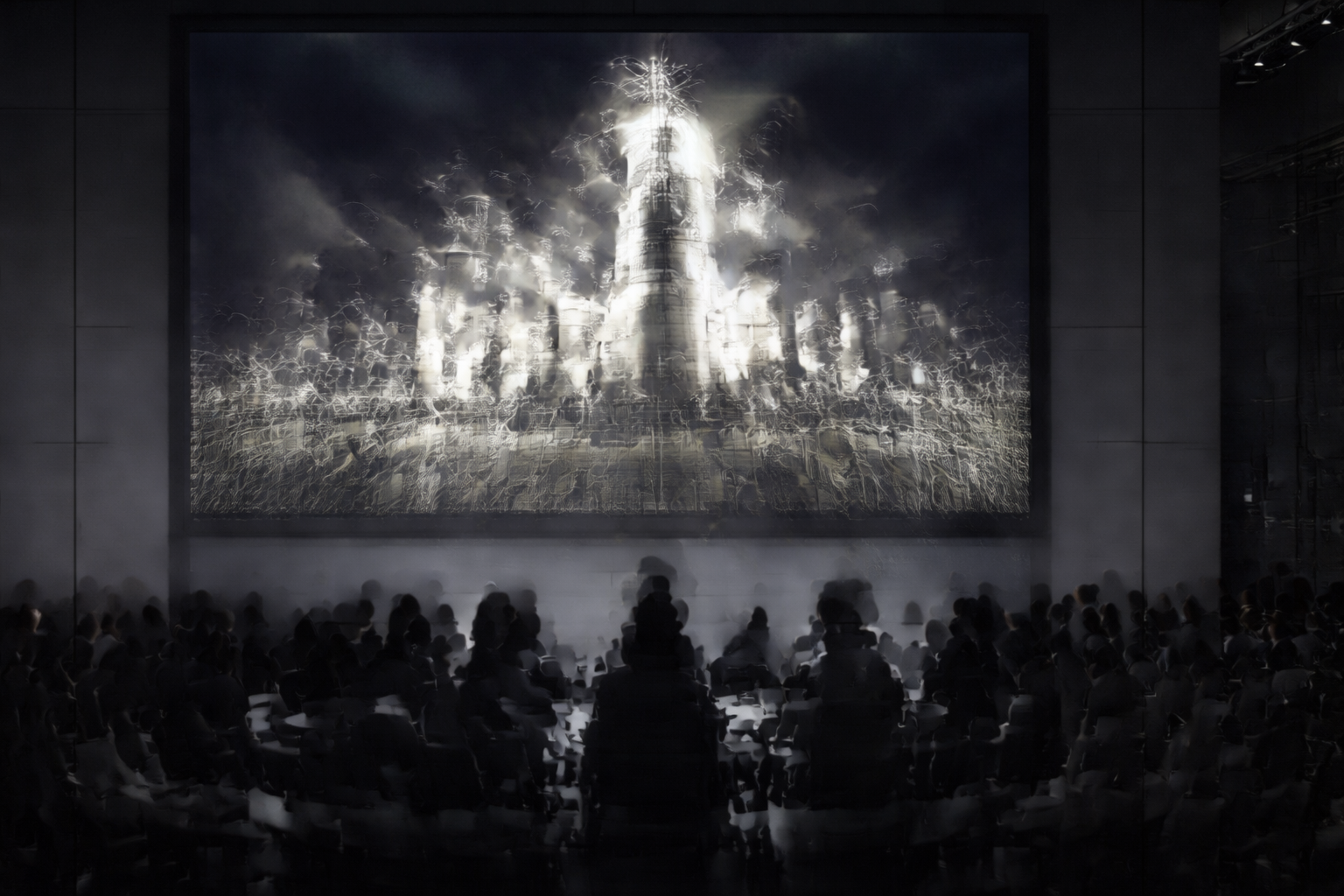
A crisis bigger than the battlefield
When Americans follow news from the Middle East, the focus usually lands on familiar fault lines: missile exchanges, proxy militias, oil prices, U.S. troop deployments and the possibility of a broader regional war. But a more consequential issue is now rising inside that wider conflict picture, one that could shape international security far beyond any single front line. The real concern is not only who is threatening whom, or which government is calling which foreign minister. It is whether the long-standing international taboo against attacking nuclear facilities is beginning to weaken.
That may sound abstract, but the stakes are concrete. Nuclear power plants, uranium enrichment sites, research reactors and radioactive storage facilities are not like other strategic targets. If they are struck directly, damaged indirectly or caught in a military miscalculation, the result may not stop at a military setback for one country. It can trigger cross-border contamination, long-term public health damage, mass displacement and a humanitarian crisis that outlives the war itself. In other words, this is not simply a military issue. It is a public safety issue, an environmental issue, an energy issue and a legal issue all at once.
For decades, the international community has treated nuclear infrastructure as something requiring special caution, even in war. That restraint was never perfect, and it has always depended less on trust than on fear of catastrophic consequences. But the norm mattered. It signaled that whatever else states were willing to do in conflict, they should avoid turning nuclear facilities into bargaining chips or battlefield objectives. Now, with regional tensions intensifying and diplomatic alarms growing louder, that norm appears to be under strain.
That is why this story deserves attention from readers far from the region. The issue is not just another episode in the Middle East’s long history of instability. It is a test of whether one of the world’s most important unwritten red lines still holds. If that line fails, the consequences would not remain confined to the Middle East. They would reverberate through global nuclear policy, energy planning, financial markets and security calculations from Europe to East Asia.
Put differently, the central question is no longer just whether a regional conflict will widen. It is whether a war zone can start eroding the rules meant to prevent a nuclear-related disaster. That is why the nuclear safety dimension, not just the military one, has become the story to watch.
Why the IAEA suddenly matters so much
In ordinary times, the International Atomic Energy Agency is not an institution that commands much public attention in the United States. It is better known inside policy circles than at dinner tables. But in moments of acute risk, the Vienna-based agency often becomes the closest thing the world has to a neutral nuclear referee.
The IAEA is best known for inspections, monitoring, safety standards and technical cooperation. It helps verify whether nuclear programs comply with international obligations, promotes nuclear safety practices and provides expertise to governments. In a crisis, however, its role changes. It becomes an emergency coordinator, a fact-finder and, in many ways, the only widely recognized international body with the technical credibility to assess nuclear-site danger in real time.
That matters because information during conflict is notoriously unreliable. Governments downplay damage, exaggerate enemy intent or release selective details that suit immediate military or political goals. Nuclear sites add another layer of opacity. What exactly was hit? Was safety equipment compromised? Did radiation escape? Was a strike intentional, accidental or merely threatened? These are not easy questions to answer from satellite images, government statements or social media footage.
The IAEA’s value lies in its ability, at least in principle, to provide an independent technical baseline. That does not mean it can magically stop a war. It cannot. The agency does not function like a military alliance or a police force. It can warn, inspect, verify, advise and rally international attention, but it cannot compel armed actors to stand down. That still depends on the political will of powerful states and, in the broadest sense, on the U.N. system.
Still, in a nuclear-related crisis, that technical voice matters enormously. When diplomats repeatedly emphasize contact with the IAEA director general, they are not just performing symbolism. They are acknowledging a practical reality: if the world needs a shared factual basis for how dangerous a situation has become, the agency is one of the few institutions capable of supplying it. And if there is to be any chance of restoring a red line around nuclear facilities, the IAEA will likely be central to that effort.
For Americans, a useful comparison may be the role played by specialized federal agencies in domestic disasters. During a hurricane, the public may hear from governors and presidents, but much of the real understanding comes from technical institutions that measure the storm, assess structural risk and guide emergency response. On a global scale, that is part of what the IAEA now represents in this crisis: not a political solution by itself, but an essential source of reality in a moment when facts can determine whether panic spreads or restraint holds.
The legal and strategic norm at risk
The danger here is not limited to one possible incident. It is the broader precedent that could follow. International humanitarian law, the body of rules intended to limit suffering in war, is built around principles such as distinction and proportionality — in plain English, the idea that civilians and civilian objects should not be targeted and that military actions should not cause excessive collateral harm. Nuclear facilities occupy a particularly sensitive place in that framework because the damage from a serious accident can be expansive, prolonged and transnational.
Even beyond formal treaty language, the world has operated with a political understanding that nuclear infrastructure deserves exceptional caution. Civilian nuclear programs, whatever debates surround them, are supposed to exist under international monitoring and safety systems that separate peaceful use from military suspicion. If that distinction begins to collapse in wartime, the shock will reach the global nonproliferation regime — the system of rules and institutions meant to keep nuclear weapons from spreading.
That system works partly because countries believe there is a meaningful difference between civilian nuclear activity under safeguards and military nuclear ambition. If nuclear installations increasingly become military pressure points, that confidence starts to erode. Governments may conclude that international monitoring offers less protection than they thought. Some could decide they need stronger unilateral defenses. Others might become more suspicious of neighboring programs. In the worst case, states could start justifying more pre-emptive thinking and less restraint.
That is why experts worry about precedent more than rhetoric. International norms are hard to build and easy to damage. Once exceptions become thinkable, they can spread. A strike or credible threat against one nuclear-linked site, even if justified by one government as uniquely necessary, can give future leaders elsewhere a ready-made argument: this was done before, under pressure, in the name of national security. Over time, what once felt extraordinary begins to feel arguable, and what feels arguable soon becomes part of the strategic playbook.
American readers have seen versions of this dynamic in other areas of international law and warfare. Tactics once defended as rare exceptions often become normalized after repeated use. The same risk applies here. If the taboo around nuclear facilities weakens, it may not fail all at once in a dramatic legal declaration. It may fray gradually through repetition, ambiguity and selective justification. By the time the world recognizes the damage, the old norm may exist mostly on paper.
That is the deeper significance of the current diplomatic urgency. The debate is not only about one state’s nuclear program or one regional adversary’s military calculations. It is about whether the international system can still enforce a special category of caution around infrastructure whose destruction could poison civilians, destabilize whole regions and undermine decades of nonproliferation policy.
Why energy markets and investors are watching closely
At first glance, nuclear-site safety sounds like a niche concern for arms-control specialists, not a story for business pages. In reality, the issue reaches straight into global energy economics. Markets are sensitive not only to actual damage, but also to perceived risk. Even if no reactor is hit and no radioactive leak occurs, rising military tension around nuclear infrastructure can push up insurance costs, increase shipping risk premiums, complicate fuel supply arrangements and inject new uncertainty into long-term energy planning.
The modern nuclear industry is deeply interconnected. Uranium supply, enrichment services, fuel fabrication, reactor components, engineering support and regulatory compliance often involve multiple countries and long lead times. That means a shock in one region can ripple through pricing, contracts and investor expectations elsewhere. Financial markets do not wait for worst-case scenarios to materialize; they react when the probability of disruption rises.
This is especially important at a moment when many governments are reconsidering nuclear power as part of climate policy. In the United States, Europe and parts of Asia, nuclear energy has re-entered policy discussions as a low-carbon power source that can complement renewables. But the more governments bet on nuclear in an era of geopolitical fragmentation, the more they have to confront a difficult question: How secure are these assets in a world where strategic infrastructure is increasingly exposed to missiles, drones, cyberattacks and regional conflict?
That question changes the economics. It may mean higher security spending, stricter emergency planning, more expensive financing for new projects and stronger demands from investors for evidence that a facility can withstand not just accidents and weather disasters, but deliberate attack or nearby warfare. Countries that rely heavily on nuclear power may need to revisit everything from physical hardening to fuel diversification. Nations planning to build new plants may face a tougher pitch to lenders and insurers.
In practical terms, this is why the story should not be filed away as just another foreign-policy flare-up. If the principle of protecting nuclear facilities becomes less certain, the cost of using and expanding nuclear energy can rise globally. Those costs eventually work their way into industrial policy, electricity planning and consumer prices. The chain reaction may begin with a diplomatic warning in the Middle East, but it can end in boardrooms, utility commissions and finance ministries far removed from the original crisis.
For U.S. readers, it may help to think of this as a blend of national security and infrastructure risk. Americans already understand how a disruption at a port, pipeline or semiconductor hub can scramble supply chains. Nuclear infrastructure carries the same kind of strategic importance, but with a far greater margin for catastrophe. That is why investors and policymakers are treating the current warnings not as technical noise, but as a signal of possible structural change.
Why this matters far beyond the Middle East
The implications extend well outside the region because many parts of the world sit at the intersection of nuclear infrastructure and geopolitical tension. Eastern Europe offers an obvious example after years of anxiety over the safety of nuclear sites in and around active conflict zones. Northeast Asia, home to dense industrial economies, missile competition and major civilian nuclear programs, is another. South Asia, with its history of military crises and nuclear rivalry, is yet another region where precedent matters.
If the international community fails to reaffirm a strong protective norm now, states in all of these regions will take note. Military planners study precedent. So do deterrence theorists, intelligence agencies and political leaders facing domestic pressure to appear tough. Once nuclear-related facilities are seen as coercive leverage rather than uniquely dangerous infrastructure, strategic calculations begin to shift in ways that are hard to reverse.
There is also a psychological dimension. Markets, publics and governments tend to treat nuclear risk differently from other forms of danger because of its invisibility and long-term effects. Radiation does not carry the immediacy of fire or flood on television screens, but it can create deeper and more enduring fear. A threat to a nuclear site can therefore amplify instability beyond the physical damage involved. It can unsettle neighboring countries, drive misinformation, overwhelm crisis communications and trigger sudden political pressure on leaders to act fast, sometimes before facts are fully known.
That makes clear communication and credible verification especially important. It also explains why the fight over narrative matters almost as much as the fight over territory. If one side accuses another of endangering a nuclear site, and no trusted institution can quickly establish the facts, the resulting ambiguity can itself become destabilizing. Governments may respond to worst-case assumptions. Publics may panic. Financial markets may seize on uncertainty. In that environment, even a near miss can have outsized consequences.
For the United States and its allies, the issue is not merely humanitarian or legal. It is strategic. Washington has long supported the global nonproliferation architecture and, at least in principle, the protection of civilian nuclear safety. If the current moment leads to a weaker norm, American policymakers may find themselves confronting more dangerous crises in the future, including in regions where U.S. treaty commitments are stronger and the risks of escalation more direct.
That is why this issue deserves a broader audience than the usual foreign-policy crowd. It is about the integrity of a rule set that helps keep modern conflict from crossing into a far more hazardous category. Once that barrier weakens, rebuilding it may take years, and future crises may unfold under more permissive assumptions.
What it means for South Korea — and why Americans should care
South Korea may seem geographically distant from the Middle East, but it is not insulated from the implications of this debate. The country is one of the world’s major nuclear-power operators and a growing exporter of reactor technology. Nuclear energy is not a side issue in South Korea’s economy; it is closely tied to industrial strategy, electricity supply, engineering competitiveness and national prestige. That gives Seoul a direct stake in any shift in the global rules governing nuclear safety and security.
If the norm protecting nuclear facilities comes under pressure, South Korea’s nuclear export strategy will likely have to evolve with it. Selling reactors in the future may not be only about efficiency, construction timelines and price. Buyers may increasingly ask harder questions about wartime resilience, cybersecurity, emergency response, remote monitoring and cooperation with international watchdogs. In other words, the competition may move from who can build a plant cheapest to who can convince the world that the plant will remain safe under geopolitical stress.
That has domestic implications, too. South Korea’s own energy debates — like those in many democracies — already involve disagreements over the role of nuclear power, renewable energy, fuel imports and industrial demand. A more fragile global nuclear-safety environment could intensify those debates. Even countries committed to nuclear energy may feel pressure to invest more in site protection, spent-fuel management and emergency preparedness. Countries skeptical of nuclear power may point to rising geopolitical risk as a reason for caution.
For American readers, South Korea matters not only as a U.S. ally but as a case study in how advanced economies are navigating the future of nuclear energy. If even highly capable nuclear states feel compelled to rethink how they present and protect their nuclear infrastructure, that signals a larger shift in the global policy environment. It suggests that the debate is no longer just about whether nuclear power is safe in engineering terms, but whether it is secure in a world of deepening geopolitical volatility.
That concern intersects with U.S. interests in several ways. The United States collaborates closely with allies on nonproliferation, advanced nuclear technology, export controls and regional security. Any weakening of international norms around nuclear facilities complicates those partnerships. It can also affect the broader debate in Washington over how to balance clean-energy goals, strategic competition and infrastructure protection.
So while the originating tensions may be in the Middle East, the lesson for countries like South Korea — and for the United States — is the same: the age of treating nuclear safety as a technical matter separate from geopolitics is over. Security planners, energy officials and diplomats are increasingly confronting the reality that nuclear infrastructure now sits at the intersection of all three.
The diplomatic choice ahead
The world is now facing a choice that is easy to describe and difficult to enforce. One path is to restore and strengthen the principle that nuclear facilities should remain outside the logic of ordinary military coercion. That would require more than vague appeals for restraint. It would mean rapid, visible diplomacy; clear support for independent technical verification; and an unmistakable message from major powers that threatening or endangering such sites crosses a line with global consequences.
The other path is drift: a slow acceptance that in high-stakes conflicts, nuclear-linked infrastructure can be folded into broader deterrence and pressure campaigns. That may happen without any formal declaration and without any government openly admitting it. But if it happens, the world will inherit a more unstable strategic environment — one in which every future crisis involving nuclear facilities carries higher risks, weaker norms and fewer assumptions of restraint.
The IAEA cannot resolve that dilemma on its own. Neither can any single regional power. But the agency’s prominence in the current moment reflects a crucial truth. This is no longer merely a conflict-management problem. It is a test of whether the international system can still defend one of its most necessary safeguards against catastrophic escalation.
For news consumers, that means the story should be read differently. The headline is not just that tensions remain high in the Middle East. The more important headline is that a foundational rule of the nuclear age may be under pressure. If that rule holds, diplomacy will have done more than prevent one disaster; it will have preserved a norm that protects civilians, stabilizes energy systems and reinforces the fragile architecture of nonproliferation. If it fails, the repercussions will echo far beyond the immediate crisis.
In that sense, the emerging struggle over nuclear-facility safety may become one of the defining international questions of 2026. Not because it is louder than war, but because it changes the terms on which future wars may be fought. And once that threshold shifts, the world may discover that a norm it long took for granted was one of the last barriers standing between conventional conflict and something much worse.
Comments
Post a Comment