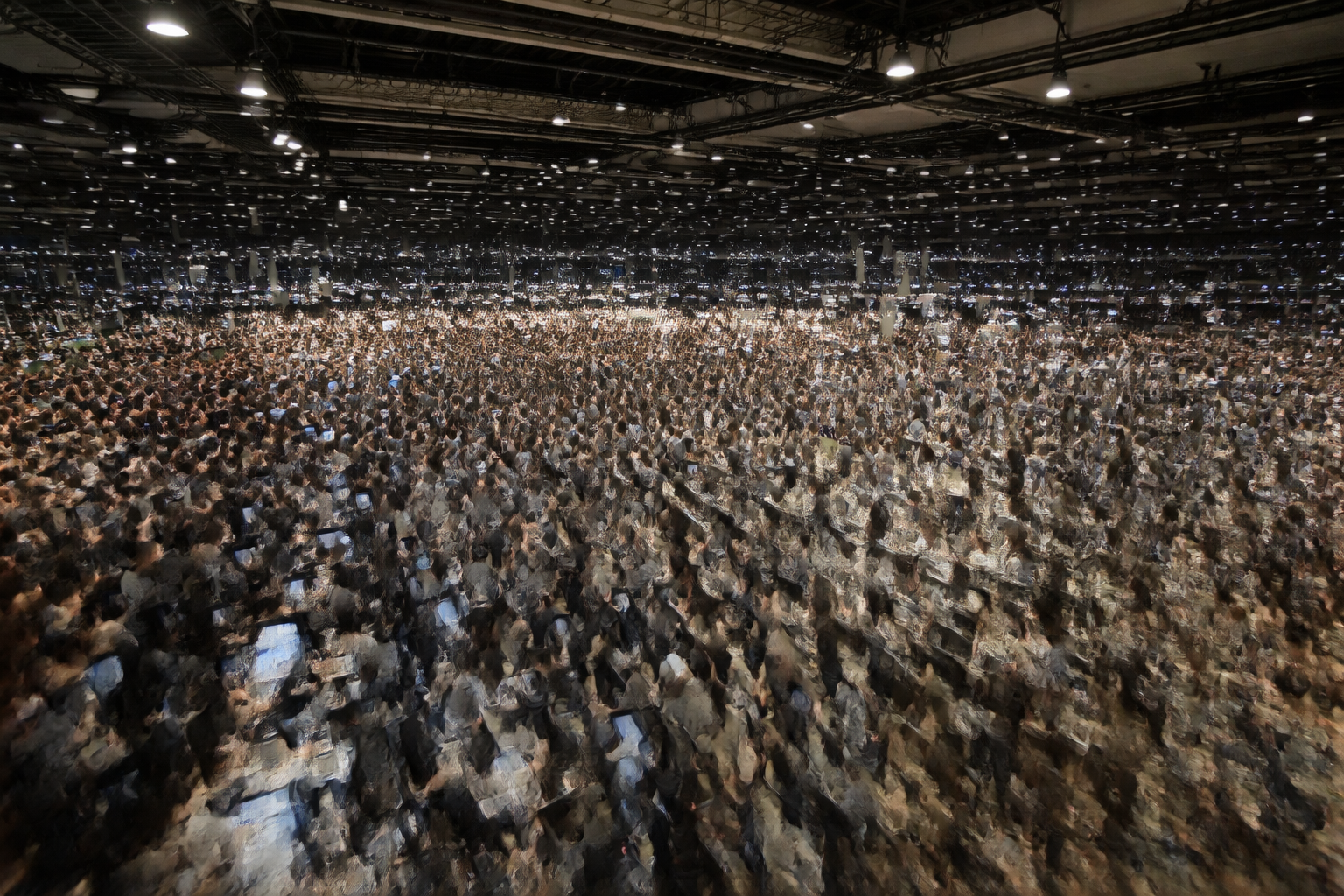
A new front in Korea’s sports boom
On a spring weekend in South Korea, the action is no longer confined to the field. The score still matters, of course. So do the pennant race in baseball and the early-season storylines in soccer. But increasingly, some of the biggest battles are unfolding beyond the foul lines and outside the penalty box, in concession corridors, pop-up shops, team stores, mobile apps and the commercial districts surrounding stadiums.
That is the real story emerging in Korean professional sports in 2026: Retailers, food companies, fashion brands and consumer-goods makers are moving aggressively into sports, treating stadiums not as static advertising venues but as high-value lifestyle platforms. In the United States, teams and leagues have long understood that live sports can be a powerful engine for concessions, sponsorships, premium seating and branded experiences. South Korea is now entering a similar phase, but with its own distinctive characteristics shaped by fandom culture, dense urban geography and a digitally connected consumer base.
At the center of this shift is what Korean commentators increasingly describe as the “in-person viewing economy” — a shorthand for all the money generated when fans choose to attend games live rather than watch at home. In Korea, the term carries more meaning than a simple ticket sale. It includes the train or bus trip to the stadium, the convenience-store stop before first pitch, the limited-edition team merchandise, the branded photo zone, the themed snack sold in team colors, the mobile discount coupon redeemed after the game and the dinner that follows in a neighborhood packed with other fans.
That broader commercial ecosystem is drawing attention because live attendance in Korean sports, especially professional baseball, has evolved from a niche hobby into a mainstream leisure activity. Going to a game in Korea is often closer to an outing than a purely athletic experience. Fans sing, chant, wave coordinated cheering tools, buy collaboration merchandise and document the day on social media. For brands facing a more crowded and less efficient digital advertising market, it offers something many online platforms cannot: a captive audience that is emotionally engaged, physically present and already primed to spend.
In that sense, the current retail push into Korean stadiums is not a passing trend. It is a structural response to the way consumers behave. If the last decade was about capturing attention on a smartphone screen, the next phase may be about monetizing shared experience in real-world spaces. South Korean sports, especially baseball and soccer, are becoming laboratories for that model.
From ticketed event to all-day experience
For years, the business of sports was defined by a relatively familiar formula: broadcast rights, ticket sales and sponsorships. Those pillars still matter in Korea, as they do in the United States. But the current evolution is about what happens before and after the final whistle, and what can be sold, tracked and repeated across that entire journey.
That shift helps explain why retailers are suddenly treating sports venues as something closer to shopping districts than simple event spaces. A fan who comes to a game is not just a viewer. That person is a recurring customer who may return multiple times over a season, bring friends or family, support the team on road trips and respond to a growing array of promotions tied to team identity. For convenience-store chains, restaurant groups, beverage makers and apparel labels, that repeat behavior is marketing gold.
In practical terms, the commercial opportunities are multiplying. Brands can sell themed food and drinks in the stadium. They can launch pop-up booths outside the gates. They can offer app-linked coupons tied to seat categories or game attendance. They can create co-branded merchandise, from jerseys and hats to household items and cosmetics. They can sponsor fan zones, mascot experiences and photo backdrops designed for Instagram and other social platforms. The goal is not just visibility. It is conversion — getting fans to buy something, download something, join something or return for something else.
This matters especially at a time when many consumer companies, in Korea and elsewhere, are reassessing the value of conventional digital advertising. Online campaigns can still reach enormous audiences, but they often struggle to deliver the same intensity of engagement. A live sporting event offers a rare combination of focus and emotion. Fans are already invested. They have chosen to spend several hours in one place, often wearing team colors and participating in rituals of belonging. That sense of community can make them more receptive to spending than an average shopper scrolling past an ad.
There is also an experiential dimension that changes the economics. People often pay more when the purchase feels tied to memory or identity. A drink in a team-branded cup, a snack sold only at the ballpark or a limited-edition collaboration with a favorite player can command a premium because it is not just a commodity. It becomes part of the day itself. American fans understand this instinctively; think of the pull of a special giveaway night at a Major League Baseball stadium or a city-edition jersey drop in the NBA. Korea’s sports marketers are increasingly building entire business strategies around that idea.
The result is that success is no longer measured only by whether a game sells out. More and more, the key metric is the value of each fan’s time on site: how long they stay, what they buy, which activations they visit, what they post online and whether they return. In other words, the important asset is not just the crowd size. It is the fan journey.
Why baseball sits at the center of the trend
No Korean sport illustrates the rise of this in-person viewing economy better than baseball. Korea’s professional baseball league, commonly known as the KBO, has become one of the country’s strongest engines of live-event consumption. Baseball already lends itself naturally to long stays and repeated purchases. Games are relatively leisurely, with pauses between pitches, innings and pitching changes creating windows for food runs, fan participation and sponsored entertainment.
That rhythm is one reason baseball venues are especially attractive to retailers. They function well as places where consumers linger. Families can treat the game as a day out. Young adults can turn it into a social event. Office workers can come after work, eat dinner in the stands and continue the evening in nearby commercial districts. The structure of the sport makes consumption feel almost built into the experience.
But the appeal of Korean baseball goes beyond pacing. KBO games are known for organized cheering culture that can surprise first-time foreign visitors. Fans often follow songs and chants for specific players, led by cheer captains and synchronized sections. Even people with only a casual understanding of the sport can quickly become absorbed in the atmosphere. For companies, that matters because it broadens the audience. A person may attend for the ambiance, the group outing or the novelty as much as for the box score. That creates a larger pool of potential customers than a marketing strategy aimed solely at hardcore sports devotees.
Baseball stadiums in Korea are therefore becoming hybrid spaces: part arena, part food hall, part merchandise marketplace and part entertainment venue. Nearby convenience stores and restaurants benefit from traffic spikes before and after games. Inside the venues, brand collaboration booths and limited-edition goods turn team loyalty into immediate sales. Fans who are already emotionally open — excited, celebratory and eager to signal belonging — are more likely to open their wallets.
The logic is straightforward. A traditional billboard ad can generate recognition. A well-designed game-day experience can generate recognition, purchase, loyalty and data all at once. If a retailer can connect stadium purchases with its app, loyalty program or payment partnership, it gains a recurring relationship that extends long after the game ends. That is why the retail industry’s interest in baseball is not simply about exposure. It is about building repeatable consumer habits around one of the most reliable forms of communal leisure in Korea.
There is an American parallel here, though not a perfect one. In the United States, baseball has long been tied to hot dogs, beer, mascot races and family entertainment. In South Korea, the same broad principle applies, but the integration with everyday retail culture can be more intense because of the country’s dense urban environment, advanced mobile commerce and the prominence of convenience stores as part of daily life. The ballpark is not isolated from urban consumption. It is woven directly into it.
Soccer plays by different rules
If baseball is the clearest engine of Korea’s stadium economy, soccer is becoming its most interesting test case. The country’s professional soccer league, the K League, shares the broader trend toward live-event commercialization, but the fan dynamics are different enough that brands cannot simply copy the baseball playbook and expect the same results.
Soccer in Korea tends to draw strength from local identity, supporter culture and player-centered fandom. While baseball spectators may be especially motivated by cheering culture, socializing and food, soccer fans are often more deeply attached to club identity, regional pride and the emotional narratives surrounding specific players. In a country where many clubs are tied closely to particular cities, home matches can carry a civic flavor that resembles how some Americans relate to college football towns or deeply rooted Major League Soccer supporter bases.
That difference changes the marketing equation. Soccer is a more continuous sport, with fewer natural breaks in the action. There is less opportunity for fans to leave their seats repeatedly during play, and less room to insert commercial experiences without disrupting the match. As a result, much of the business opportunity shifts to the periods before kickoff, at halftime and after the final whistle.
For brands, that means success often depends less on selling products inside the match and more on aligning with team identity and local community. A sponsorship tied to regional specialty foods, neighborhood merchants, youth programs or community outreach may resonate more than a generic sales push. Likewise, player branding can be especially powerful. Fans who follow a star’s personal story, fashion style or charitable work may be more responsive to content, membership programs and branded collaborations anchored in authenticity.
This is why experts increasingly argue that Korea’s sports marketing industry is moving toward more precise, sport-specific strategies. The old model of slapping a big corporate logo onto a venue and calling it a day is giving way to something more targeted. Baseball may be best for food-and-beverage sales, themed merchandise and long-dwell social experiences. Soccer may be stronger for loyalty membership, regional tie-ins and storytelling around clubs and players.
That does not mean one sport is better than the other commercially. It means the points of contact differ. In a more mature market, the key question is no longer simply which sport is most popular. It is which kind of consumer interaction each sport can produce.
The promise and price of fandom commercialization
For fans, some of these changes will feel exciting, even overdue. Better food options, more creative merchandise, richer pregame events, improved mobile integration and family-friendly experiences can make attending a match more convenient and more fun. In many cases, that is exactly what clubs and brands are hoping to deliver: a smoother and more immersive outing that feels worth the time and money required to show up in person.
But there is another side to the story, one that Americans will recognize from their own sports landscape. As live sports become more sophisticated commercial platforms, they can also become more expensive. Premium experiences tend to create premium pricing. A limited-edition team collaboration or carefully staged fan activation may be memorable, but it is also part of a broader push to increase per-person spending.
This is where the commercialization of fandom becomes more complicated. Sports loyalty is powerful because it is emotional and communal. Fans do not consume the way ordinary shoppers do. They buy things to signal belonging, preserve memories and express identity. That makes them unusually valuable customers, but it also makes them vulnerable to constant monetization. Every moment of enthusiasm can become a sales opportunity.
Korean sports are not unique in facing this tension. American leagues have spent years balancing fan access with revenue growth, from dynamic ticket pricing and jersey patches to premium clubs and cashless stadiums. South Korea is now moving deeper into similar territory, though often at a faster pace because brands can tie stadium experiences directly to sophisticated mobile ecosystems and loyalty platforms.
The concern is not that commercialization is inherently bad. Teams need revenue. Better finances can support player development, improved facilities and stronger fan services. The issue is whether clubs and sponsors can expand the business without hollowing out the organic culture that made fans care in the first place. If every chant, photo, concession purchase and walk through the concourse feels engineered for monetization, some of the spontaneity that gives live sports their magic may erode.
There is also the question of who gets left behind. As the in-person economy grows, clubs may focus disproportionately on higher-spending segments: younger consumers drawn to social media activations, families willing to pay for mascots and experiences, or devoted supporters likely to collect exclusive products. Fans with tighter budgets may find the day increasingly costly even if the ticket itself remains relatively affordable. Over time, that could shape who feels welcome in the stadium and how accessible the culture remains.
A major opportunity for clubs — and a serious test
For Korean professional teams, the influx of retail and consumer brands presents a major opportunity. Many clubs have long relied heavily on parent companies, modest gate revenue or a relatively narrow sponsorship base. That dependence can make teams financially fragile. Poor on-field performance, economic downturns or changes in corporate strategy can quickly affect the bottom line.
If clubs can successfully develop broader stadium-centered business models, they may gain more diversified income streams. That could include better merchandise sales, stronger licensing partnerships, more valuable fan data, improved membership programs and enhanced control over game-day consumption. In the best-case scenario, that produces a virtuous cycle: more revenue leads to better facilities, stronger fan experiences and greater investment in the team itself.
Yet not all clubs are equally positioned to benefit. Popular teams in the Seoul metropolitan area and other major markets enjoy obvious advantages. They tend to have larger and more active fan bases, easier access to transportation, denser nearby commercial districts and greater attractiveness to national sponsors. For smaller-market teams or clubs with weaker attendance, the same partnership model may be far harder to turn into meaningful sales.
That raises the possibility that the new era of sports marketing could widen revenue gaps across leagues. The most commercially attractive teams may build increasingly sophisticated ecosystems around their supporters, while others struggle to keep pace. In American sports, such disparities are often managed by revenue sharing, collective bargaining and league-level commercial arrangements. Korea’s leagues will face their own version of that challenge if the stadium economy accelerates unevenly.
Another obstacle is structural rather than financial: control over stadium operations and data. Many Korean sports venues are publicly owned or governed through layered operational arrangements. That can limit what clubs can do on site. Something as simple as changing foot traffic patterns, installing pop-up retail booths, adjusting food offerings or integrating digital fan data across a venue may require coordination with municipal authorities or facility operators.
That means the next stage of business growth may depend as much on governance as on demand. If clubs do not have sufficient flexibility to experiment commercially, they may struggle to capture the full value of the fan experience. In this context, operational freedom becomes almost as important as attendance itself.
The deeper lesson for clubs is that sponsorship revenue alone is no longer enough. Teams that treat current brand interest as a quick cash infusion may miss the larger opportunity. The more durable strategy is to use partnerships to build long-term assets: proprietary customer data, repeatable in-stadium experiences, trusted club branding and a clearer understanding of what fans actually value. Selling a collaboration product is useful. Learning why it sold, to whom and under what circumstances is even more important.
What Korea’s sports economy says about consumer behavior
The retail rush into Korean stadiums says something broader about the country’s economy and its consumers. South Korea is one of the world’s most connected societies, with a highly urbanized population, sophisticated mobile payment habits and a culture that often blends entertainment, commerce and digital identity in seamless ways. In that environment, live sports become more than sports. They become social platforms where consumption, affiliation and self-presentation all reinforce one another.
That is particularly visible among younger fans, who may be motivated not only by teams and athletes but by aesthetics, limited-edition goods and “proof” of attendance shared online. A stadium photo zone, player collaboration product or app-exclusive event is not a side attraction. It is part of the core value proposition. The game is the anchor, but the surrounding ecosystem increasingly shapes whether people feel the outing was worth it.
Families represent another key constituency. Not everyone who attends a baseball game, for example, needs to understand every tactical detail. Children may respond most to mascots, songs and interactive experiences. Parents may value the outing because it combines entertainment, food and a manageable group activity. For retailers, that multi-generational appeal matters because it broadens spending patterns beyond the traditional sports fan demographic.
All of this helps explain why marketers view sports as one of the few places where strong emotional immersion and repeat physical attendance still overlap. In an era of fragmented media habits, that is increasingly rare. It also suggests that the future of sports business in Korea will be shaped not only by wins and losses but by the ability to design complete experiences around fandom.
The trend may look hypermodern, but in another sense it is deeply familiar. Sports have always been about belonging — to a team, a city, a routine, a shared memory. What is changing in South Korea is the precision with which that belonging is being mapped, segmented and monetized. Companies are no longer content to sponsor the spectacle from afar. They want to occupy the entire path a fan takes through the day.
That shift is likely to intensify as teams gather more behavioral data and brands become more sophisticated about tailoring offers by sport, by venue, by demographic and even by game situation. If the current moment marks the opening phase of Korea’s stadium economy, the next few years could determine whether clubs can turn that enthusiasm into sustainable business models — and whether fans decide the richer experience is worth the growing commercial pressure.
For now, one thing is clear: In South Korea’s booming sports scene, the hottest competition may not be only between teams. It may be between companies racing to claim the fan before, during and long after the game is over.
Comments
Post a Comment