A Korean Court’s Rejection of a YouTuber’s Arrest Request Raises Bigger Questions About Politics, Speech and State Power
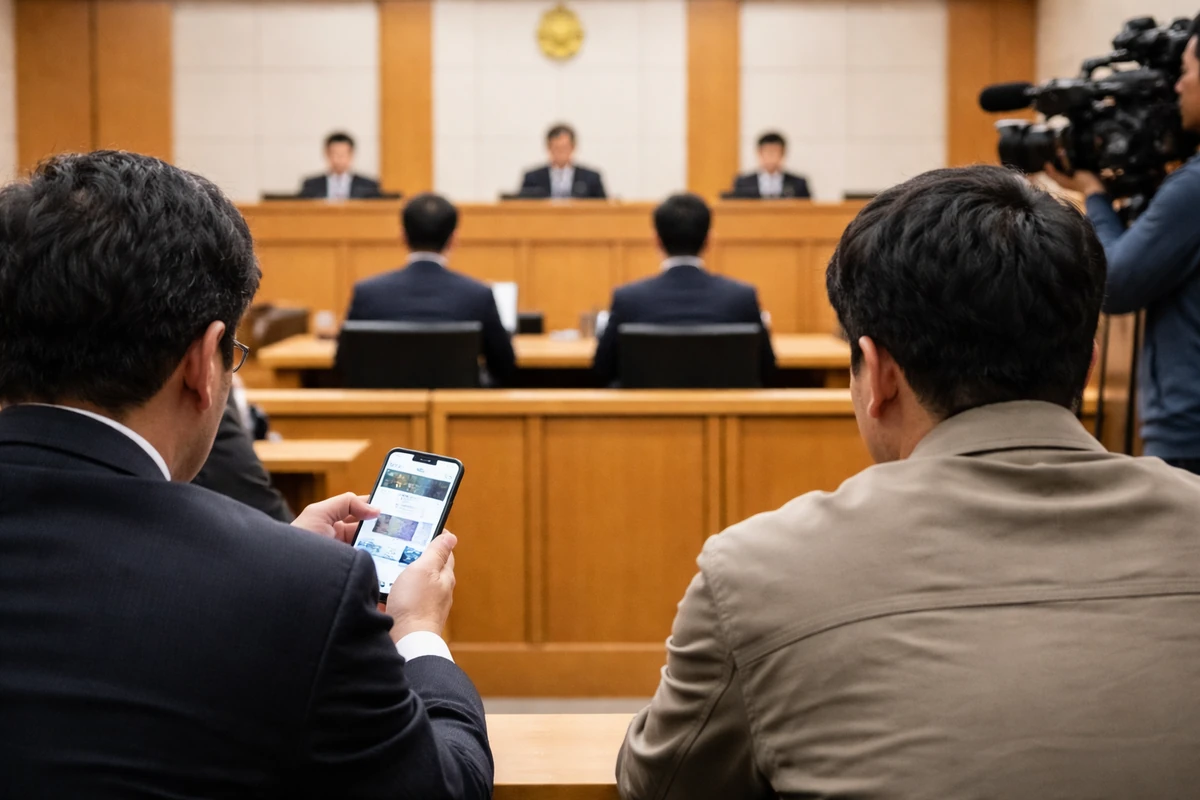
A court ruling that says less about guilt than about restraint
A South Korean court’s decision to reject an arrest request for a politically outspoken YouTuber has done more than keep one man out of custody. It has reopened a broader debate in one of America’s closest Asian allies: When political rhetoric moves online, how far should the state go in responding through the criminal justice system?
The case centers on Jeon Han-gil, described in South Korean media as a former Korean history lecturer turned YouTube commentator. Investigators have been looking into allegations that he defamed President Lee Jae-myung and Lee Jun-seok, the leader of the minor Reform Party. On April 16, the Seoul Central District Court declined to issue an arrest warrant, saying there was not enough reason to believe Jeon would destroy evidence or flee.
That distinction matters. In the American legal imagination, especially after years of intense debate over social media, misinformation and political speech, it can be tempting to read a court setback for prosecutors as a declaration that the underlying case is weak or politically tainted. But that is not what happened here. The court did not declare Jeon innocent. It did not say the allegations lack merit. It simply ruled that, at this stage, taking away his liberty before trial or further investigation was not justified.
In South Korea, where criminal defamation laws remain on the books and public debate often unfolds in a far more legally regulated environment than in the United States, that procedural line is significant. The ruling sends a message not only about this defendant, but also about the standards courts expect investigators to meet before using one of the strongest tools the state has: detention.
That is why the case is resonating beyond the details of what was said on YouTube. It touches on a familiar democratic tension, one Americans will recognize even if the legal framework is different: how to respond when digital political speech is inflammatory, potentially false and widely amplified without making the government look as if it is policing dissent.
Why this case matters in South Korea’s political climate
The political sensitivity of the case comes from more than the allegations themselves. According to the summary of the case in Korean media, the people identified as victims are not from the same political camp. One is the sitting president. The other is the leader of a smaller third-party force. That makes this harder to frame as a simple partisan dispute.
In the United States, a rough equivalent might be a case involving alleged false statements about both the president and a prominent third-party or insurgent political figure, all playing out on YouTube rather than on cable news or at a campaign rally. The story would immediately become bigger than the individual speaker. It would become a proxy battle over selective enforcement, free expression, political intimidation and whether the rules are being applied evenly across ideological lines.
South Korea’s political system has its own distinct history, but that dynamic is recognizable. President Lee is one of the most polarizing and consequential figures in Korean politics, with strong support and fierce opposition. Lee Jun-seok, though from a different political lane, represents another fault line in the country’s fragmented and increasingly personalized political culture. Bringing both names into one criminal-defamation investigation makes the case feel less like a private legal dispute and more like a stress test for how the state handles contested speech in a digital political arena.
It also arrives at a time when YouTube has become a major venue for political mobilization in South Korea. That shift resembles what happened in the U.S. over the past decade, when podcasts, YouTube channels, livestreams and algorithm-driven clips began competing directly with traditional news outlets for political influence. In South Korea, as in the U.S., the result is a media ecosystem where a single personality can build a loyal audience, shape partisan narratives and spread claims far faster than courts or regulators can react.
That changes the stakes. A controversial statement is no longer just a remark made in a room and reported the next day. It can become a recurring clip, a meme, a talking point and a weapon in factional politics within hours. For governments, the pressure to act grows. For courts, the pressure to act carefully grows too.
The real issue is not only speech, but punishment and process
Much of the public discussion around cases like this tends to fall into a familiar binary: freedom of expression versus the need to police falsehoods. But the sharper issue here is procedural. The question before the court was not whether offensive or inaccurate political speech should have consequences. The question was whether investigators had shown enough need to detain Jeon while the case continues.
That is an especially important distinction in South Korea, where defamation can be treated as a criminal matter. For many Americans, that alone may sound unusual. In the U.S., defamation is generally handled through civil litigation, not criminal prosecution, and public figures face a high legal bar when they sue because of First Amendment protections. South Korea, by contrast, has long maintained criminal defamation provisions that critics say can chill speech, while supporters argue they are necessary to protect reputation in a highly connected society where false allegations can spread quickly and cause serious harm.
Even within that more restrictive legal environment, however, detention is supposed to be exceptional. Courts generally look for concrete reasons such as a serious risk of flight or evidence tampering. In rejecting the arrest request, the Seoul court appears to have reaffirmed that principle: public controversy alone is not enough.
That matters because in politically charged cases, the form of an investigation can send as strong a message as the substance. An arrest request is not merely paperwork. In practice, it can signal that the state views the matter as grave and urgent. For supporters of the accused, it can look like a show of force. For supporters of the complainants, it can look like overdue accountability. And when a court refuses the request, that too can quickly take on symbolic meaning, whether or not the legal issues have actually been resolved.
In other words, the case is testing not just what was said, but how forcefully the government is allowed to answer political speech before the legal merits are settled. In a democracy, that is always dangerous terrain. The more political the speech, the easier it is for legal procedures to be interpreted as political retaliation. The more viral the platform, the stronger the temptation for authorities to move aggressively. Courts are often left to draw the line in public view.
What the ruling does and does not mean
One of the most persistent misunderstandings in politically sensitive legal cases, in South Korea and elsewhere, is the belief that a failed arrest request equals exoneration. It does not. The court’s ruling addressed only whether detention was necessary right now. Investigators can continue their work. They can gather more evidence, conduct additional questioning and decide later whether to pursue charges or seek another warrant if circumstances materially change.
Still, the decision is more than a technical delay. It raises the bar for investigators. If authorities want to justify another attempt to detain Jeon, they will likely need to show something more specific and compelling than the seriousness of the case or the prominence of the alleged victims. They would have to explain why the concerns identified by the court should now be viewed differently.
That is why the ruling can be understood as a signal to slow down and sharpen the legal theory. The court did not end the investigation. It essentially told investigators that if they want to use coercive measures in a politically loaded case, they need more than a broad argument about public impact.
For a democratic society, that kind of judicial braking function matters. It is easy for governments to argue that viral speech creates exceptional risks. Sometimes it does. But once that logic becomes enough, in itself, to justify detention, the threshold for state intervention in online political discourse can fall quickly. Courts serve as one of the few institutions capable of resisting that drift.
That is especially relevant in South Korea, where politics can be highly polarized and legal battles often become media spectacles. An arrest request against a well-known online commentator would never be read as a neutral bureaucratic step. It would be interpreted through partisan narratives, institutional mistrust and a broader anxiety about who gets to define disinformation in real time.
The court’s refusal to endorse detention does not eliminate those anxieties. But it does narrow one path: using pretrial custody too readily in a dispute rooted in contested political speech.
YouTube politics has changed the way democracies experience conflict
This case also illustrates how deeply platform politics has transformed South Korea. The old model of political communication, in which gatekeepers such as major newspapers and television broadcasters dominated the flow of information, has weakened dramatically. In its place is an ecosystem of personality-driven channels, fragmented audiences and recommendation algorithms that reward outrage, repetition and emotional certainty.
That is not uniquely Korean. Americans know the pattern well. The same forces that turned YouTube, podcasts and livestreaming into powerful engines of political persuasion in the U.S. have done something similar in South Korea, though with local characteristics shaped by the country’s media culture, legal system and history of intense ideological conflict.
The practical challenge for law enforcement is that digital speech cuts in two directions. On one hand, it leaves records. Videos, clips, comments and uploads can be preserved, making it easier in some ways to establish what was said and when. On the other hand, the speed and scale of circulation make it much harder to measure harm using older investigative assumptions. A clip can be edited, reposted, reframed or embedded in a larger conspiracy narrative almost instantly. By the time a legal process begins, the public effect may already be widespread and irreversible.
That can create pressure for dramatic intervention. But dramatic intervention carries its own risks. If authorities move too aggressively against a political YouTuber, they may strengthen the very narrative such figures often rely on: that entrenched institutions are trying to silence anti-establishment voices. In the U.S., that dynamic has played out repeatedly, with legal or platform-based penalties often recast by supporters as proof of persecution. South Korea faces a version of the same dilemma.
The lesson from the court’s ruling is not that misinformation is harmless or that states should simply tolerate viral falsehoods. Rather, it is that blunt instruments such as detention may be poorly suited to conflicts that are as much about public trust as they are about factual accuracy. A more durable response usually requires layers: rapid rebuttal, transparent explanation, evidence-based investigation and proportionate legal action when clearly warranted.
In that sense, this ruling points toward a broader institutional challenge. South Korea’s justice system, like those of many democracies, is still adapting to a world in which political influence is often exercised not by parties or newspapers but by digital creators who mix commentary, activism and entertainment into one potent stream.
The next move by investigators may shape the public meaning of the case
With the warrant request rejected, attention now turns to what investigators do next. Broadly speaking, they appear to have two options. One is to continue investigating without detention, focusing on the factual record and building whatever case they believe the evidence supports. The other is to consider another arrest request, but only if there are new facts strong enough to overcome the court’s concerns.
Either path carries risk. If investigators push again for detention without significantly different evidence, they may reinforce the perception that the case is being driven by political urgency rather than legal necessity. In a country where prosecutorial and police decisions are often scrutinized for partisan implications, that could deepen skepticism about the fairness of the process.
If, on the other hand, they proceed without seeking custody, critics may say authorities are going soft on politically consequential falsehoods simply because the suspect is a high-profile online figure. That is the bind facing law enforcement in platform-era politics: act too forcefully and look repressive; act too cautiously and look indifferent.
The way out of that trap is not maximal toughness. It is consistency. Investigators will be judged not only on whether they pursue the case, but on whether they can show that the same standards would apply regardless of whether the target was a pro-government commentator, an opposition activist or an internet celebrity with a large and loyal audience.
That is why the legal standard cited by the court matters so much. The judges were not weighing popularity or ideology. They were asking a more basic question: Is there a concrete need to detain this person now? By returning the discussion to that question, the court imposed a discipline that political actors often resist. It insisted that even in a fevered media environment, process still matters.
For Americans watching from afar, that may be the most legible part of the story. The institutions are different. The speech laws are different. The history is different. But the democratic dilemma is familiar. When political talk becomes extreme, personal and algorithmically amplified, governments feel pressure to act. Citizens worry about lies, but they also worry about power. Courts are asked to preserve room for accountability without making the justice system look like a weapon in a political war.
South Korea’s latest ruling does not solve that problem. But it does mark an important boundary. It says that in a case involving allegations of defaming major political figures, online reach and public outrage alone do not automatically justify pretrial detention. That may sound narrow. In the current media age, it is anything but.
A broader warning for democracies navigating misinformation
There is a temptation, in South Korea as in the United States, to search for a single legal answer to the disorder of online politics. But no court ruling can fully resolve the deeper problem revealed by this case. Democracies are trying to regulate harms that move at digital speed using institutions built for slower, more linear forms of public life. The mismatch shows up everywhere: in elections, in conspiracy movements, in harassment campaigns and in the blurring of journalism, commentary and propaganda.
The rejected warrant in Seoul is therefore best understood as a boundary marker, not a final judgment. It warns against conflating public importance with immediate need for detention. It reminds investigators that procedural legitimacy is not a secondary issue in political cases; it is central to public trust. And it suggests that if democratic states want to confront online falsehoods effectively, they will need responses more sophisticated than simply reaching for the most coercive option first.
That message may prove more important than the fate of any single YouTuber. In South Korea, where digital platforms have become central battlegrounds in national politics, the line between necessary law enforcement and perceived political pressure is thin. Once crossed, it can damage both the credibility of investigators and confidence in the fairness of the system.
For now, the court has not decided whether Jeon Han-gil broke the law. It has decided something narrower but still meaningful: that the state has not yet shown why this case requires custody rather than continued investigation in the ordinary course. In a polarized democracy, that kind of restraint can be easy to dismiss as procedural formalism. More often, it is the mechanism that keeps legal institutions from being swallowed by politics.
And that may be the clearest signal sent by the court’s ruling: not that political falsehoods do not matter, but that the legitimacy of the response matters just as much.
Comments
Post a Comment